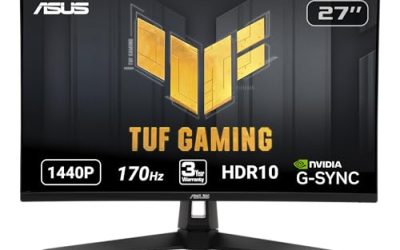
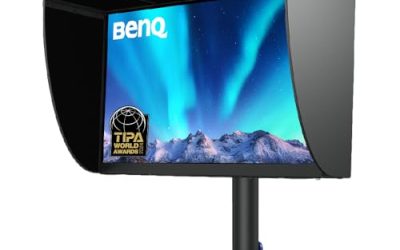
Buying a 4K 144Hz monitor is really a decision about connections, not just headline speed. Two screens can both advertise 144Hz at 3840×2160 while reaching that rate through different cables, and a console plugged into the wrong port may never see more than 120Hz. Panel choice matters just as much: fast IPS, local-dimming IPS and QD-OLED all render motion and contrast differently.
This guide is for PC gamers stepping up to 4K, console players who share one desk display, and anyone replacing an older 60Hz 4K panel. Every pick below was chosen from the panel type, resolution, refresh figure and port list printed in its Amazon listing title and details, and where a listing splits its refresh rate by connection, that split is stated plainly rather than smoothed over.
Our Top Picks


Top 3 picks at a glance

Quick Picks
As an Amazon Associate we earn from qualifying purchases.
| Product | Best for | Key spec from title |
|---|---|---|
| LG 27GP950-B | Compact desks mixing PC and console play | 27-inch Nano IPS, 144Hz, HDMI VRR up to 120Hz |
| Gigabyte M32U | Gaming plus desk work on one screen | 31.5-inch SS IPS, 144Hz, USB Type-C with KVM |
| Sony INZONE M9 | HDR play with real local dimming | 27-inch IPS, 144Hz, Full Array Local Dimming |
| ASUS ROG Swift PG32UCDM | QD-OLED contrast at 240Hz | 32-inch QD-OLED, 240Hz, 0.03ms GTG |
| MSI MPG 321URX QD-OLED | A second 240Hz OLED route | 31.5-inch QD-OLED, 240Hz, True Black HDR 400 |
How to Choose
Read the refresh rate per connection, not per headline
A 144Hz badge tells you the panel’s ceiling, not what each input delivers. The LG 27GP950-B in this roundup lists UHD 4K and VRR up to 120Hz over HDMI 2.1, while its 144Hz rate and 160Hz overclock run through DisplayPort with DSC. Console players therefore get a different ceiling from PC players on the very same screen. Before ordering, match your device to the port that carries the full rate, and treat any monitor whose listing hides the split as a question to resolve on the product page.
Pick the panel for the games you actually play
Nano IPS and SS IPS panels answer quickly and hold up well in bright rooms, which suits fast shooters and mixed daytime use. QD-OLED trades that brightness headroom for near-instant pixel response and deep blacks, so night-time sessions and cinematic titles gain the most. Local dimming sits between the two camps: the Sony INZONE M9 uses a full array backlight to deepen HDR scenes without changing panel family. Decide which weakness bothers you least, greyish blacks or a dimmer highlights ceiling, then shop inside that family.
Check the port list against your whole desk
One cable short can undo an otherwise perfect pick. The Gigabyte M32U lists two HDMI 2.1 ports, a DisplayPort 1.4 and USB Type-C with a built-in KVM, so a console, a gaming PC and a work laptop can share it without a separate switcher. The ASUS and MSI OLED models both list DisplayPort 1.4 with DSC alongside HDMI 2.1, which is the combination a high-end graphics card needs for full-rate 4K. Count your sources first, then confirm each one has a home.
Match screen size to viewing distance and GPU headroom
At 27 inches, 4K pixels sit dense enough that text stays crisp at arm’s length, and the smaller panel asks slightly less of your graphics card in fast scenes. Stepping to 31.5 or 32 inches fills more of your view and relaxes scaling for desktop work, though you will sit a little farther back. Neither size changes the frame-rate your GPU must produce at 3840×2160, so be honest about your card: a monitor bought for 144Hz only earns its keep when your system can feed it.
The 5 Best Options
LG 27GP950-B
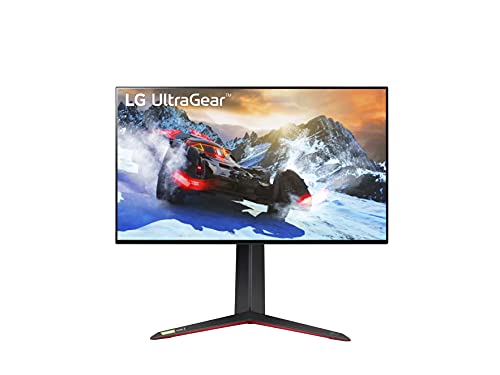
Builders working around a smaller desk often land on this LG, because it packs the full 4K 144Hz specification into a 27-inch Nano IPS panel. Its listing quotes a 1ms GtG response, DCI-P3 coverage of 98 percent and DisplayHDR 600, a combination aimed at fast play that still respects colour work. The important detail is the connection split: HDMI 2.1 carries VRR up to 120Hz, while 144Hz and the 160Hz overclock need DisplayPort with DSC. PC-first gamers lose nothing; console-first buyers should weigh that cap.
Specs
- 27-inch Nano IPS panel
- 3840×2160 resolution
- 144Hz refresh, overclock to 160Hz via DisplayPort with DSC
- HDMI 2.1 VRR up to 120Hz as listed
- 1ms GtG response
- DCI-P3 98 percent
- DisplayHDR 600
Best for: PC gamers on compact desks who also plug in a console occasionally.
Watch out for: the HDMI input tops out at 120Hz VRR per the listing, so a console cannot reach the panel’s full rate through it.
ASIN: B094RWMN8K
Gigabyte M32U
Anyone splitting one screen between a gaming rig and a work laptop should look closely at the M32U. The 31.5-inch SS IPS panel runs 3840×2160 at 144Hz, and the listing adds FreeSync Premium Pro plus a USB Type-C port with KVM switching, which lets peripherals follow whichever machine is active. Two HDMI 2.1 ports and a DisplayPort 1.4 cover consoles and PCs without cable swapping, and the stand adjusts for height. Response is quoted at 1ms, stated as MPRT and GTG in the listing details.
Specs
- 31.5-inch SS IPS panel
- 3840×2160 resolution
- 144Hz refresh
- 1ms MPRT/GTG response as listed
- FreeSync Premium Pro
- 1x DisplayPort 1.4, 2x HDMI 2.1
- USB Type-C with KVM
- Height adjustable stand
Best for: hybrid desks where one monitor serves gaming, consoles and a laptop.
Watch out for: availability on this model has been inconsistent in past checks, so confirm the live listing is the standard M32U before ordering.
ASIN: B083GRVFXN
Sony INZONE M9
HDR is the reason this Sony earns its place. Its 27-inch IPS panel pairs 144Hz at 3840×2160 with Full Array Local Dimming and DisplayHDR 600, so bright effects sit against genuinely darker backgrounds than an edge-lit screen manages. The listing names NVIDIA G-SYNC and HDMI 2.1 VRR support, two HDMI 2.1 ports, DisplayPort 1.4 and a USB Type-C input with DP Alt Mode. Response is quoted at 1ms GTG. Players whose libraries lean toward atmospheric single-player titles will notice the dimming long before they notice anything else here.
Specs
- 27-inch IPS panel
- 3840×2160 resolution
- 144Hz refresh
- Full Array Local Dimming
- DisplayHDR 600
- NVIDIA G-SYNC and HDMI 2.1 VRR
- 2x HDMI 2.1, DisplayPort 1.4
- USB Type-C (DP Alt Mode)
- 1ms GTG response
Best for: HDR-focused players who want local dimming in a 27-inch screen.
Watch out for: local dimming zones can halo around small bright objects on dark scenes, a trait worth accepting knowingly rather than discovering later.
ASIN: B0B3SHR8TF
ASUS ROG Swift PG32UCDM
This ASUS is the step into QD-OLED, and its listing leads with speed: a 32-inch panel at 3840×2160 running 240Hz with a 0.03ms GTG response. Colour coverage is quoted at 99 percent DCI-P3 with true 10-bit output, and the connection list covers DisplayPort 1.4 with DSC, HDMI 2.1 and USB-C with 90W delivery. G-SYNC Compatible support is named in the listing. Anyone whose GPU can push high frame rates at 4K gets the full benefit; the panel wastes none of that output.
Specs
- 32-inch QD-OLED panel
- 3840×2160 resolution
- 240Hz refresh
- 0.03ms GTG response
- G-SYNC Compatible
- 99 percent DCI-P3
- True 10-bit
- USB-C 90W
- DisplayPort 1.4 (DSC), HDMI 2.1
Best for: high-end PC builds chasing the fastest 4K panel in this group.
Watch out for: port versions for this model are partly recorded from listing summaries, so verify the DisplayPort and HDMI figures on the live product page.
ASIN: B0CV26XVMD
MSI MPG 321URX QD-OLED
MSI’s entry gives OLED shoppers a second route to the same headline numbers: 31.5 inches of QD-OLED at 3840×2160, 240Hz and a 0.03ms response. The listing highlights True Black HDR 400 certification and a USB Type-C input with DP alt mode, alongside one DisplayPort 1.4a and two HDMI 2.1 ports. That port mix suits a desk where a console and a PC both expect full-rate access. Buyers comparing it with the ASUS above are mostly choosing between HDR presentation styles and desk features rather than raw speed.
Specs
- 31.5-inch QD-OLED panel
- 3840×2160 resolution
- 240Hz refresh
- 0.03ms response
- True Black HDR 400
- 1x DisplayPort 1.4a, 2x HDMI 2.1
- USB Type-C with DP alt mode
Best for: OLED buyers who want 240Hz with a full HDMI 2.1 pair for consoles.
Watch out for: captured coverage of this listing disagrees on the USB-C wattage figure, so check the live listing rather than relying on any quoted number.
ASIN: B0CTSC3VS4
Which One Fits Your Situation
You play on PC and console at the same desk
Start with the Gigabyte M32U or the MSI MPG 321URX, since both list two HDMI 2.1 ports beside a DisplayPort input, letting each machine keep its own cable. The LG 27GP950-B still works here, but remember its listing caps HDMI VRR at 120Hz, so the console side of that desk runs below the panel’s ceiling while the PC side, fed over DisplayPort, does not.
Your room is bright and your sessions are long
An IPS panel handles glare and steady brightness with less fuss. The LG 27GP950-B suits a compact, well-lit desk, while the Sony INZONE M9 adds local dimming for evening HDR without leaving the IPS family. Either way, you avoid thinking about OLED care habits during all-day work sessions that mix spreadsheets with games.
You built a flagship GPU and want it used
Feed it the ASUS ROG Swift PG32UCDM or the MSI MPG 321URX. Both list 240Hz at 4K with sub-millisecond response figures, so a card that renders well past 144 frames per second at 3840×2160 finally shows everything it produces. Connect over DisplayPort with DSC, exactly as their listings describe, to reach those rates.
One monitor must also serve a work laptop
The Gigabyte M32U is the natural fit: its listing includes USB Type-C with a KVM, so the laptop docks through one cable and your keyboard and mouse follow the active machine. The ASUS PG32UCDM’s USB-C with 90W delivery is the alternative when you would rather have OLED for the gaming side of that same desk.
Common Mistakes
- Assuming 144Hz applies to every input, when some listings cap HDMI VRR at 120Hz and reserve the full rate for DisplayPort.
- Buying a 240Hz 4K OLED while your graphics card struggles to pass 100 frames per second at 3840×2160.
- Comparing response figures across brands without noticing one is quoted as GtG and another as MPRT.
- Forgetting to count sources, then discovering a console, PC and laptop cannot all stay connected at once.
- Judging HDR by the badge alone instead of checking whether the listing names local dimming or an OLED panel.
Frequently Asked Questions
Does a console reach 144Hz on these monitors?
Not through the LG 27GP950-B, whose listing caps HDMI VRR at 120Hz even though the panel runs faster over DisplayPort. Models listing full HDMI 2.1 support, such as the Gigabyte M32U and the two QD-OLED picks, are the safer route for console play, though you should still confirm the exact figures on the live listing before ordering.
Is 240Hz at 4K worth choosing over 144Hz?
Only when your PC can render near those rates at 3840×2160. The ASUS and MSI OLED models list 240Hz with 0.03ms response, which fast-paced titles reward, but a mid-range card will rarely feed them fully. If your frame rates sit closer to 120, a strong 144Hz IPS pick serves you just as well.
What does DSC do on the DisplayPort connection?
Display Stream Compression lets a DisplayPort 1.4 link carry 4K at high refresh rates that would otherwise exceed its bandwidth. The LG listing ties its 144Hz and 160Hz overclock figures to DisplayPort with DSC, and the ASUS listing names the same arrangement. Your graphics card must support DSC for those modes to appear.
Which size suits a normal desk, 27 or 32 inches?
A 27-inch panel like the LG or the Sony keeps 4K text crisp at close viewing distances and leaves room for speakers or a second screen. The 31.5 and 32-inch models fill more of your view and ease desktop scaling, at the cost of desk depth. Measure your viewing distance first, then pick.
Related guides
More from Amazon
Programs that pair well with the guide above. Offers and eligibility are set by Amazon and may change.
A free business account with business pricing and bulk-buying tools for work, shop or home office.
Create a business accountFree shipping on eligible items, Prime Video and more. Eligible new members can start with a free trial.
Start a Prime free trialAudiobooks and podcasts to listen to on the go. Eligible new members can start with a free trial.
Try Audible freeAd-free music streaming. Eligible new subscribers can start with a free trial.
Try Music Unlimited freeAs an Amazon Associate we earn from qualifying purchases.