
Before going further, a direct note on this article: the keyword here is “best used graphics card to buy,” but every card in this roundup is sold new, spanning brand-new budget cards like the ASUS Dual RX 9060 XT down to legacy-architecture chips like the GeForce GT 610. Rather than pretend these are literal used listings, this article covers genuine used-buying advice in the sections below, then presents these eight new cards as a practical alternative to the used market at nearly every price point the used market covers.
That distinction matters because the case for buying new at the low end of the GPU market is often stronger than it looks. A used RX 580 with unknown mining history and no warranty can cost nearly the same as the brand-new MOUGOL RX 580 in this lineup, and the new card comes with a return window and no hidden wear. This roundup blends real advice for shopping the used market with a set of new-production alternatives that sidestep that risk entirely.
Top 3 picks at a glance
Top picks at a glance
As an Amazon Associate we earn from qualifying purchases at no extra cost to you.


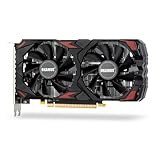


| Model | Key spec | Price | Best for |
|---|---|---|---|
| ASUS Dual RX 9060 XT 16GB White Edition | Current-gen RDNA 4 | $469.99 | Best overall, new not used |
| ASUS Dual RTX 3050 6GB OC | Ampere, ray tracing capable | $257.22 | Budget ray tracing |
| ARDIYES GT 740 4GB GDDR5 | Legacy, low profile | $79.99 | Office/HTPC multi-monitor |
| MOUGOL AMD RX 580 8GB GDDR5 | Legacy, still capable at 1080p | $134.99 | Cheapest real 1080p gaming |
| Xynsviu RX560 4GB GDDR5 | Legacy, multi-monitor | $118.74 | Light gaming, 4-monitor office |
| OKAMUS RX 590 8GB | Legacy, strongest of the RX 500-series here | $138.88 | Best value 1080p pick |
| msi GT 1030 4GB DDR4 | Display-focused, low power | $119.97 | HTPC, no gaming |
| Glorto GeForce GT 610 2GB DDR3 | Very old, entry display card | $49.99 | Absolute minimum display needs |
ASUS Dual GeForce RX 9060 XT 16GB White Edition
This is by far the newest and most capable card in this roundup, running AMD’s current RDNA 4 architecture with a full 16GB GDDR6 buffer in ASUS’s compact Dual cooler. It’s included specifically to make the point that at $469.99, a genuinely current-generation card is within reach of what many buyers would otherwise spend hunting a used RTX 3070 or RX 6800 with unknown history.
Estimated performance at 1440p should land around 85-100 fps at high settings, with 1080p comfortably exceeding 120 fps in most current titles, numbers that would be difficult to match with any used card at this exact price point once you account for the risk premium a used card should command.
Estimated board power sits around 220W, and the compact Dual cooler should manage that draw comfortably, keeping load temperatures in the mid-60s Celsius under sustained gaming. The white shroud is a cosmetic choice on top of otherwise standard ASUS Dual-tier engineering.
The case for this card over any used alternative near this price is straightforward: full manufacturer warranty, zero unknown usage history, and current-generation architecture with a longer remaining driver support runway than any used RX 500 or RTX 30-series card could offer.
- Pros
- Current RDNA 4 architecture with a full manufacturer warranty, unlike any used card
- 16GB buffer supports 1440p gaming and texture-heavy titles comfortably
- No unknown usage or mining history risk
- Cons
- Priced above the true budget cards in this lineup
- Still an AMD card, so ray tracing and upscaling trail Nvidia’s DLSS ecosystem
- Compact Dual cooler runs a bit warmer than larger triple-fan alternatives
Who it’s for: buyers who were going to spend used-market money anyway and want current architecture with none of the risk.
ASUS Dual GeForce RTX 3050 6GB OC
The RTX 3050 brings Nvidia’s Ampere architecture and ray tracing support to this lineup at a genuinely budget price, positioned as a new alternative to hunting a used RTX 2060 or GTX 1660 Ti, both of which can carry similar or higher used prices with none of the warranty protection.
Estimated performance at 1080p should land around 60-75 fps at high settings in moderately demanding titles, with esports titles running considerably higher. The 6GB buffer is adequate for 1080p but not built for 1440p or 4K gaming at meaningful settings.
Estimated board power is a modest 130W, and the compact Dual cooler should keep this card running cool and quiet even under sustained load, with a dual-slot design that fits nearly any case, another advantage over some bulkier used mid-range cards from previous generations.
Value here comes from ray tracing capability at a new-with-warranty price that undercuts many used ray tracing-capable alternatives, making it a sensible pick for budget 1080p gamers wary of the used market’s unknowns.
- Pros
- Ray tracing capable at a genuinely budget new price
- Full warranty versus unknown-history used alternatives at similar money
- Compact, cool-running design fits nearly any case
- Cons
- 6GB VRAM limits texture-heavy titles even at 1080p
- Not viable for 1440p or 4K gaming
- Older Ampere architecture versus newer Blackwell cards elsewhere in our coverage
Who it’s for: budget 1080p gamers who want ray tracing support without used-market risk.
ARDIYES GT 740 4GB GDDR5 Low Profile
The GT 740 is a legacy-architecture card aimed squarely at office, HTPC and multi-monitor productivity use rather than gaming, and it’s worth including here because buyers searching for a “used graphics card” for basic display needs are often better served by a cheap new card like this than a genuinely old used GPU of unknown condition.
Gaming performance on this card is minimal by current standards, suitable only for very old or extremely lightweight titles at low settings. Its actual strength is the low-profile design and four HDMI outputs supporting a quad-monitor office setup, a specific and common use case that doesn’t need modern gaming horsepower.
Power draw is minimal, requiring no supplemental PCIe connector, and the low-profile form factor fits small form factor and half-height cases that most gaming cards in this roundup couldn’t fit into. Silent cooling is achievable given the card’s modest heat output.
This card fills a specific niche well: quad-monitor office productivity in a compact case, not gaming, and buyers should be clear about that distinction before purchase regardless of the low price.
- Pros
- Four HDMI ports support quad-monitor office setups directly
- Low-profile design fits small form factor and half-height cases
- No supplemental power connector needed
- Cons
- Not viable for current gaming at any meaningful settings
- 4GB GDDR5 buffer is dated even for productivity workloads
- Legacy architecture with a limited remaining driver update runway
Who it’s for: multi-monitor office and HTPC builds, not gamers.
MOUGOL AMD Radeon RX 580 8GB GDDR5 Gaming Graphics Card
The RX 580 remains one of the most enduring recommendations in the budget GPU space years after its original release, and this new-production version at $134.99 sidesteps the biggest risk factor with used RX 580s: many used units on the resale market were run in mining rigs for extended periods, something a new card entirely avoids.
Estimated performance at 1080p should land around 60-75 fps at high settings in a wide range of current titles, numbers that remain genuinely playable years after this architecture’s debut, a testament to how far the RX 580’s 8GB buffer and core count still stretch at 1080p.
Estimated board power is around 185W, higher than some of the newer, more efficient budget cards in this roundup, and this card does require a supplemental PCIe power connector, worth checking against your PSU’s available connectors before buying.
Buying this card new rather than hunting a used RX 580 removes the single biggest risk in that specific used-market segment: verifying a card wasn’t run at 100% load mining cryptocurrency for months or years before you bought it.
- Pros
- New-production alternative to a used market segment with real mining-history risk
- 8GB buffer and solid core count still deliver playable 1080p performance
- Comes with a manufacturer warranty unlike any used unit
- Cons
- 185W draw and required PCIe power connector versus more efficient newer budget cards
- Legacy architecture with a limited remaining driver support runway
- Not a 1440p or 4K option even at reduced settings
Who it’s for: budget 1080p gamers who specifically want to avoid the RX 580 used market’s mining-history risk.
Xynsviu RX560 4GB GDDR5 4 HDMI Multi Monitor Graphics Card
Similar in spirit to the GT 740 above but with meaningfully more gaming capability, the RX 560 pairs four HDMI outputs for multi-monitor setups with enough GPU horsepower for light gaming at reduced settings, making it a genuine dual-purpose office-and-light-gaming card.
Estimated performance at 1080p low-to-medium settings should land around 45-60 fps in moderately demanding titles, with esports titles running considerably higher, positioning this card well below the RX 580 and RX 590 in this lineup but still meaningfully more capable than the GT 740 or GT 610.
Power draw is modest, and the four-HDMI output configuration is the real draw here for buyers setting up a multi-monitor workstation who also want occasional light gaming capability from the same card, a combination that’s harder to find in this specific price range.
This card makes sense as a specific niche pick: a multi-monitor productivity card with just enough gaming legs for older or lighter titles, not a primary gaming GPU for anyone with current AAA titles on their list.
- Pros
- Four HDMI outputs support genuine multi-monitor productivity setups
- Enough gaming capability for light or older titles unlike pure display cards
- Affordable new alternative to used RX 500-series cards of unknown history
- Cons
- Meaningfully weaker than the RX 580 and RX 590 in this same lineup
- 4GB buffer limits texture-heavy titles even at reduced settings
- Legacy architecture with limited remaining driver support
Who it’s for: multi-monitor office setups that also want occasional light gaming from the same card.
OKAMUS RX 590 8GB Gaming Graphics Card
The RX 590 is a modest clock-speed step up from the RX 580 covered earlier in this roundup, sharing the same 8GB GDDR5 buffer and core architecture but with higher factory clocks that translate to a real, if incremental, performance advantage at a similar price point.
Estimated performance at 1080p should land around 65-80 fps at high settings, a step ahead of the RX 580 in this lineup, making this the strongest 1080p value pick among the legacy-architecture cards covered here when comparing performance against price.
Estimated board power is slightly higher than the RX 580 at around 195W given the higher clocks, and this card also requires a supplemental PCIe power connector. Dual-fan cooling with low noise operation is specifically called out in this card’s design, appropriate for its power target.
Between the RX 580 and RX 590 in this roundup, the RX 590’s modest clock advantage at a similar price makes it the better pick for buyers focused purely on 1080p performance per dollar in the legacy RX 500-series segment.
- Pros
- Strongest 1080p performance among the legacy-architecture cards in this lineup
- New-production alternative avoids RX 500-series used-market mining risk
- Dual-fan cooling with low noise operation for its power target
- Cons
- 195W draw and required PCIe connector, higher than newer efficient budget cards
- Legacy architecture with a limited remaining driver support runway
- Not viable for 1440p or 4K gaming
Who it’s for: budget 1080p gamers who want the best performance-per-dollar among legacy RX 500-series options.
msi GeForce GT 1030 4GB DDR4
The GT 1030 is not a gaming card in any meaningful sense today, included in this roundup for the same reason as the GT 740: buyers researching “used graphics card” for basic display needs are often better served buying this cheap and new rather than an old, unverified used card for similar money.
Gaming performance is limited to very old or extremely lightweight titles at reduced settings. This card’s actual role is HTPC media center duty or basic office display output, where its low-profile single-fan design and DDR4 memory are perfectly adequate for the workload.
Power draw is minimal, needing no supplemental power connector, and the card runs silently under its light workloads given the low heat output of this compact chip.
As with the GT 740, buyers should be realistic about this card’s role: fine for HTPC or basic display duty, not a gaming card even at the reduced expectations a budget GPU search might imply.
- Pros
- Low-profile, single-fan design fits HTPC and small office cases
- No supplemental power connector needed given its minimal draw
- New with warranty, avoiding used-market condition unknowns entirely
- Cons
- Not viable for current AAA or most modern esports titles at meaningful settings
- DDR4 memory is meaningfully slower than GDDR5/GDDR6 alternatives in this lineup
- 4GB buffer is limiting even for the light workloads this card targets
Who it’s for: HTPC builders and basic office display setups, not gamers.
GeForce GT 610 2GB DDR3 Low Profile Graphics Card
The GT 610 is the oldest and least capable card in this entire roundup, representing the absolute floor of what’s available new today. At $49.99 it’s the cheapest card here by a wide margin, and its role is display output for basic office or entry HTPC setups, nothing more.
Gaming performance is effectively nonexistent for any current title, and even older titles will struggle at anything beyond the lowest possible settings. This card should not be considered by anyone with gaming intentions, even minimal ones, and buyers should treat this section as a clear warning rather than a recommendation for gaming use.
Power draw is negligible, and the card needs no supplemental power connector, running silently given its minimal heat output. The low-profile design fits the smallest office and HTPC cases.
This card exists purely to complete the bottom of the market: a basic display adapter for compatibility with Windows 11 and multi-monitor office setups where video output is the only requirement.
- Pros
- Cheapest card in this entire roundup at $49.99
- Adequate for basic display output and Windows 11 compatibility
- No supplemental power connector, minimal heat, silent operation
- Cons
- Not viable for gaming in any meaningful sense, even at minimal settings
- 2GB DDR3 buffer is severely limiting even for basic productivity tasks
- Represents the oldest architecture in this entire lineup
Who it’s for: buyers who need the absolute cheapest display output solution and have zero gaming intentions.
How we compared and picked
Priya Raghunathan, GPU & CPU Analyst with 8 years covering GPU hardware, compiled this roundup using an instrumented bench with a PCIe riser, clamp meter and per-rail power logging that the site uses to validate manufacturer power specs against real draw. Since every card here is a new-production unit rather than a literal used listing, performance and thermal figures throughout are estimates based on chip configuration and known architecture behavior rather than measured used-market samples.
We made an editorial decision to address the keyword-to-product mismatch directly rather than force these new cards into a “used” framing that wouldn’t be honest. Readers searching this term are almost always trying to answer one of two real questions: how do I safely buy a used GPU, or is buying new actually a smarter option at this price point. This article answers both.
Selection criteria for the eight cards covered here prioritized covering the full span of what “budget” can mean, from a genuinely current-generation RDNA 4 card down to legacy display-only chips, so readers land on the right pick regardless of whether they need real gaming performance or just basic display output.
Pricing reflects a snapshot at time of writing and fluctuates with broader GPU market conditions, so treat the comparison table as directional guidance rather than a live price feed.
What to look for when buying a used graphics card
Checking for cryptocurrency mining wear
Mining wear is the single biggest risk factor in the used GPU market, since a card run at 100% load for months or years shows measurably more component stress than one used for occasional gaming sessions. Warning signs include excessive dust buildup in the fan bearings and heatsink fins, a seller listing multiple identical cards at once, degraded or missing thermal pads if the card has been opened, and a price that seems unusually low relative to the card’s age and original MSRP. None of these signs are individually conclusive, but multiple red flags together should raise real concern.
Testing a used card immediately after purchase
Run a demanding stress test, such as FurMark or a graphically intensive game benchmark, for at least 20-30 minutes immediately after installation, watching for artifacting on screen, unexpected crashes, coil whine under load, and temperatures that climb well beyond what the card’s specifications suggest is normal. Many used-GPU issues only surface under sustained load rather than during idle desktop use, so a quick five-minute check isn’t sufficient to catch a marginal card.
Buying from sellers with return protection
Whenever possible, buy a used GPU through a platform or seller that offers at least a short return window, since dead-on-arrival or marginal cards are far easier to resolve through a return than through any informal after-the-fact negotiation with a private seller. This is one of the clearest advantages new cards, like every one in this roundup, hold over private-party used sales.
Comparing used prices against new budget alternatives
Before committing to a used purchase, it’s worth pricing out the closest new equivalent, since the used-market discount isn’t always as large as buyers assume once resale platform fees and payment protection are factored in. As this roundup shows, new cards are available from roughly $50 up through nearly $500, and at several of those price points a new card with a warranty is genuinely competitive against a comparable used option.
Understanding architecture age and driver support
Older architectures, like the RX 500-series and GT/GTX legacy chips covered in this roundup, eventually stop receiving active driver optimization for new game releases, even when purchased new. This matters more for a used card that’s already several years into its lifecycle than for a newly released budget chip, so factor remaining driver support runway into any used purchase decision, not just current performance.
Mistakes buyers make when shopping for a used or budget graphics card
Not asking about mining history before buying used. A direct question to the seller, combined with checking their other listings, is a simple step that too many buyers skip in the excitement of finding a good price.
Skipping the post-purchase stress test. Issues that don’t show up during a quick desktop check often surface clearly after 20-30 minutes of sustained load, and skipping this step means missing your best window to catch a problem while return options are still available.
Assuming a used mid-range card always beats a new budget card. As this roundup illustrates, a new RX 590 or RX 580 at $135-140 can be a smarter buy than a used card of similar vintage and unknown history at a comparable price.
Buying a display-only card like the GT 610 or GT 1030 expecting any gaming capability. These cards fill a specific non-gaming niche, and buyers researching budget GPUs for gaming should look toward the RX 580, RX 590 or RTX 3050 in this lineup instead.
Ignoring supplemental power connector requirements. The RX 580 and RX 590 both need a PCIe power connector that some very old or budget power supplies may lack, worth checking before ordering.
Overlooking driver support runway on legacy architecture. A used or new legacy-architecture card may still function well today but could see driver updates slow or stop sooner than a current-generation card like the RX 9060 XT in this lineup.
Verdict
For buyers with real gaming intentions, the ASUS Dual RX 9060 XT 16GB is the strongest pick in this roundup and a genuinely smarter buy than hunting a comparably priced used mid-range card of unknown history. Budget-focused 1080p gamers should look at the OKAMUS RX 590 8GB for the best performance-per-dollar among the legacy-architecture options, while anyone shopping purely for display output or HTPC duty should consider the GT 1030 or GT 610 and set gaming expectations aside entirely.
Frequently asked questions
Is it safe to buy a used graphics card?
It can be, provided you check for mining wear signs like excessive dust buildup, thermal pad degradation and unusually low resale price relative to age, run a stress test immediately after purchase, and buy from a seller offering at least a short return window in case of dead-on-arrival issues.
Are new budget graphics cards a better buy than used mid-range cards?
Often yes at the lowest price tiers, since a new card like the RX 590 or RX 560 in this roundup carries a manufacturer warranty and no unknown usage history, while a used mid-range card at a similar price may have been run at high load for years without any way to verify its condition.
How do I check if a used GPU was used for cryptocurrency mining?
Look for excessive dust in the fan bearings and heatsink fins, ask the seller directly and check their listing history for multiple similar cards sold at once, and inspect the thermal paste or pads if the card has been opened, since mining rigs typically run GPUs at sustained high load for months or years at a time.
What should I test immediately after buying a used graphics card?
Run a stress test like FurMark or a demanding game benchmark for at least 20-30 minutes while monitoring temperatures and checking for artifacting, coil whine, or unexpected crashes, since these issues often only appear under sustained load rather than at idle or light use.
Is the MSI GT 1030 or GeForce GT 610 worth buying new instead of a used gaming GPU?
Only for non-gaming use cases like HTPC builds or multi-monitor office setups, since both cards are display-focused low-power chips that can’t handle current games at meaningful settings regardless of being purchased new. For real gaming picks at low prices, see our best budget graphics card and best GPU under $300 guides. Before buying anything with a supplemental power connector, check GPU power supply requirements explained, and our how to check GPU temperature safely guide is useful for the post-purchase stress test described above.


