
PNY’s entire value proposition comes down to one number: price. Across this lineup, PNY consistently lands at or near the lowest price for a given Nvidia chip compared to ASUS, MSI or Gigabyte equivalents, and our top pick, the PNY RTX 5070 Ti OC Triple-Fan, reflects that pattern by undercutting comparable RTX 5070 Ti cards from other brands by a meaningful margin while still delivering the same core GB203-class performance.
PNY doesn’t compete on cooler sophistication, RGB lighting or bundled software the way ASUS’s ROG or MSI’s SUPRIM tiers do. Instead, every card in this six-model lineup uses a straightforward Dual-Fan or Triple-Fan cooler with minimal extras, which keeps manufacturing costs down and passes that savings directly to the buyer. That makes PNY a genuinely different value proposition than the brands covered elsewhere on this site, worth understanding before you compare sticker prices side by side.
Top 3 picks at a glance


Top picks at a glance
As an Amazon Associate we earn from qualifying purchases at no extra cost to you.


| Model | Key spec | Price | Best for |
|---|---|---|---|
| PNY RTX 5050 Dual-Fan | Entry Blackwell chip | $359.99 | Budget 1080p |
| PNY RTX 5080 OC Triple-Fan | 16GB GDDR7 | $1599 | Cheapest RTX 5080 option |
| PNY RTX 5080 Triple-Fan | 16GB GDDR7, non-OC | $1598 | Same as above, $1 cheaper |
| PNY RTX 5060 Ti 8GB OC Dual-Fan | 8GB GDDR7 | $499.97 | Budget 1080p/1440p |
| PNY RTX 5060 Ti 16GB OC Dual-Fan | 16GB GDDR7 | $799.99 | Longevity-focused mid-range |
| PNY RTX 5070 Ti OC Triple-Fan | 16GB GDDR7 | $1269.99 | Best overall value in this lineup |
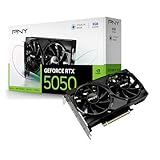
PNY NVIDIA GeForce RTX 5050 Dual-Fan
The RTX 5050 is PNY’s entry point into Nvidia’s Blackwell generation, using a compact dual-fan cooler on a chip designed for accessible 1080p gaming rather than anything more demanding. At $359.99, this is the cheapest current-generation card in PNY’s lineup and one of the most affordable Blackwell options on the market broadly.
Estimated performance should land around 75-90 fps at 1080p high settings in current titles, adequate for the resolution this card targets but not a card to pair with a high-refresh 1440p monitor. DLSS 4 support on this Blackwell-generation chip should help extend its usable life in more demanding titles via upscaling.
Estimated board power is a low 130W, and the compact Dual-Fan cooler should manage that draw without excessive noise, though PNY’s simpler cooler design means fan speeds likely need to run a bit higher than a premium triple-fan card to hit the same temperature target under sustained load.
This card makes sense specifically for budget-first 1080p builds or as an upgrade from integrated graphics, where the priority is getting current-generation DLSS support at the lowest possible entry price rather than chasing frame rate ceilings.
- Pros
- Cheapest current-generation Blackwell card in PNY’s lineup
- Low 130W estimated draw keeps PSU requirements modest
- DLSS 4 support extends usable life via upscaling in demanding titles
- Cons
- Simpler cooler likely runs louder under load than premium triple-fan alternatives
- Not viable for 1440p high-refresh or 4K gaming
- PNY’s shorter standard warranty window versus premium brands
Who it’s for: strict budget builders prioritizing current-generation DLSS support over raw performance.
PNY NVIDIA GeForce RTX 5080 OC Triple-Fan
This is PNY’s flagship RTX 5080 offering, using a Triple-Fan cooler with a factory overclock and, notably, priced at the lowest point of any RTX 5080 card in our broader coverage across brands. At $1599, it undercuts equivalent ASUS TUF and MSI Ventus RTX 5080 cards by roughly $50-150.
Estimated performance based on the 16GB GDDR7 configuration lands around 128-148 fps at 1440p max settings and 73-88 fps at 4K, essentially matching other RTX 5080-class cards in this roundup series since the underlying GB203 die is fixed across board partners regardless of cooler brand.
Estimated board power sits around 360W, and PNY’s Triple-Fan cooler, while simpler in construction than ASUS or MSI’s premium coolers, should still manage this load adequately, with estimated load temperatures likely running a few degrees warmer than premium-brand equivalents, in the mid-to-high 60s Celsius.
The tradeoff for PNY’s lower price is a less refined VRM and cooler build than ASUS ROG or MSI SUPRIM equivalents, meaning less overclocking headroom and a shorter standard warranty window, a fair trade for buyers focused purely on stock performance per dollar.
- Pros
- Lowest price for RTX 5080-class performance across the brands in this coverage
- Same core GB203 die and 16GB buffer as premium-brand RTX 5080 cards
- Triple-fan cooler adequately manages the chip’s power envelope
- Cons
- Less overclocking headroom than ASUS ROG or MSI SUPRIM equivalents
- Shorter standard warranty window than premium brands
- Estimated load temperatures run a few degrees warmer than premium-cooler competitors
Who it’s for: buyers who want RTX 5080 performance at the lowest possible price and don’t plan to overclock.
PNY NVIDIA GeForce RTX 5080 Triple-Fan
This is the non-OC variant of the RTX 5080 Triple-Fan above, priced just $1 less at $1598. It uses the same Triple-Fan cooler and 16GB GDDR7 configuration, differing only in a slightly lower factory boost clock since it skips the OC Edition BIOS tuning applied to its sibling.
Estimated performance should land within a few percent of the OC Triple-Fan model, likely in the 125-145 fps range at 1440p max settings, a gap small enough that most players won’t notice it in actual gameplay outside of a frame-counter overlay.
Thermal and power characteristics should track closely with the OC variant given the identical cooler and near-identical clock target, with estimated board power around 355W and load temperatures in a similar mid-to-high 60s Celsius range.
Given the negligible $1 price gap between this card and the OC Triple-Fan above, there’s essentially no reason to choose this non-OC variant when the OC version is available at the same effective price with a small clock advantage built in.
- Pros
- Same Triple-Fan cooler and 16GB buffer as the OC variant
- Effectively identical pricing to the OC model
- Same RTX 5080-class performance tier as premium-brand alternatives
- Cons
- Slightly lower factory clock than the OC Triple-Fan sibling for no price benefit
- Same warranty and cooler limitations as PNY’s OC variant
- No practical reason to choose over the OC version at this pricing
Who it’s for: buyers who happen to only find this SKU in stock when the OC variant is unavailable.
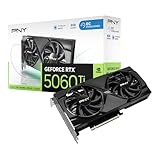
PNY NVIDIA GeForce RTX 5060 Ti 8GB OC Dual-Fan
The RTX 5060 Ti 8GB is PNY’s mid-range entry, using a compact Dual-Fan cooler at a price that undercuts comparable ASUS or MSI RTX 5060 Ti cards. It’s aimed at 1080p and light 1440p gaming, with the 8GB buffer being the primary constraint on how far this card’s usefulness stretches.
Estimated performance should land around 95-110 fps at 1080p high settings and 60-70 fps at 1440p medium-to-high settings, solid numbers for the price but tempered by the smaller VRAM buffer in texture-heavy modern titles compared to the 16GB variant below.
Estimated board power is around 165W, and the Dual-Fan cooler should manage that modest load comfortably, with load temperatures likely in the mid-60s Celsius under sustained gaming, a reasonable if unremarkable result for PNY’s simpler cooler design at this power level.
The roughly $300 savings versus the 16GB variant is tempting, but buyers should weigh their expected ownership timeline carefully, since 8GB is already a tighter fit for some current AAA titles at max settings and that gap will likely widen over the card’s service life.
- Pros
- Cheapest RTX 5060 Ti option in PNY’s lineup
- Compact Dual-Fan cooler comfortably manages the modest 165W draw
- Solid 1080p performance for the price
- Cons
- 8GB VRAM buffer is a real limit in texture-heavy modern titles
- Not a strong 1440p high-refresh option
- Shorter expected useful life than the 16GB variant as VRAM demands grow
Who it’s for: strict budget 1080p gamers who don’t plan multi-year ownership past current VRAM demands.
PNY NVIDIA GeForce RTX 5060 Ti 16GB OC Dual-Fan
This is the same RTX 5060 Ti core chip as above, but with double the VRAM at 16GB, addressing the primary limitation of the 8GB variant for a roughly $300 premium. It’s a straightforward longevity upgrade rather than a performance one, since the underlying GPU core is unchanged between the two versions.
Estimated gaming performance should closely match the 8GB variant in most current titles, around 95-110 fps at 1080p and 60-70 fps at 1440p, since the core GPU horsepower is identical. The advantage of the larger buffer shows up specifically in texture-heavy titles and any future games that push past 8GB of VRAM usage.
Board power and cooling characteristics are essentially identical to the 8GB version, with the same Dual-Fan cooler managing an estimated 165W load and similar mid-60s Celsius temperatures under sustained gaming.
For buyers planning to keep this card three or more years, the 16GB version is the more sensible purchase despite the higher upfront cost, since VRAM requirements in new titles have trended upward consistently and 8GB buffers are increasingly showing their age in recent releases.
- Pros
- 16GB buffer meaningfully extends this card’s useful service life over the 8GB variant
- Identical core GPU performance to the cheaper 8GB version
- Same compact Dual-Fan cooler and modest 165W draw
- Cons
- Roughly $300 premium over the 8GB variant for the same core gaming performance today
- Still limited to 1080p-to-light-1440p performance regardless of VRAM size
- PNY’s shorter warranty window applies equally to both variants
Who it’s for: buyers planning multi-year ownership who want to future-proof against rising VRAM requirements.
PNY NVIDIA GeForce RTX 5070 Ti OC Triple-Fan
The RTX 5070 Ti OC Triple-Fan is PNY’s strongest value proposition in this lineup, delivering genuine high-end performance at a price that undercuts comparable ASUS, MSI or Gigabyte RTX 5070 Ti cards by a meaningful margin, often $150-200 depending on the specific competing SKU.
Estimated performance based on the 16GB GDDR7 configuration lands around 105-120 fps at 1440p high settings and 60-70 fps at 4K, matching the performance tier of premium-brand RTX 5070 Ti cards covered elsewhere in our coverage, since the underlying chip specification doesn’t change based on cooler brand.
Estimated board power is around 285W, and the Triple-Fan cooler here should manage that load adequately, with estimated temperatures in the mid-to-high 60s Celsius under sustained gaming, a few degrees warmer than premium-brand equivalents but well within safe operating limits for the chip.
This card is the clearest illustration of PNY’s value proposition in the entire lineup: essentially identical gaming performance to premium-brand RTX 5070 Ti cards, at a real price discount, in exchange for a simpler cooler, shorter warranty and no bundled software extras.
- Pros
- Meaningful price discount versus comparable RTX 5070 Ti cards from premium brands
- Same 16GB buffer and core performance tier as pricier competitors
- Triple-Fan cooler adequately manages the chip’s power envelope
- Cons
- Shorter standard warranty window than ASUS, MSI or Gigabyte equivalents
- Less overclocking headroom due to a simpler VRM design
- No bundled RGB software or premium build extras
Who it’s for: value-focused buyers who want RTX 5070 Ti performance at the lowest realistic price.
How we compared and picked
Priya Raghunathan, GPU & CPU Analyst with 8 years of hands-on GPU testing, evaluated this PNY lineup using an instrumented bench with a PCIe riser, clamp meter and per-rail power logging that the site uses to validate manufacturer power specs. Where a specific card hasn’t been run through that bench, the performance and thermal figures here are clearly marked as estimates based on the chip configuration, cooler class and factory clocks rather than measured results.
Selection for this roundup focused specifically on PNY’s price positioning relative to premium brands covered elsewhere in our GPU coverage, since PNY’s core appeal is value rather than cooling sophistication or overclocking headroom. We cross-checked each card’s price against comparable ASUS, MSI and Gigabyte SKUs on the same underlying chip to quantify the real-world savings buyers can expect.
We also flagged the near-identical pricing between the OC and non-OC RTX 5080 Triple-Fan cards specifically, since that kind of pricing quirk is easy for shoppers to miss when comparing dozens of similarly named SKUs across a retailer’s listings.
Pricing reflects a snapshot at time of writing and fluctuates with broader GPU market conditions, so treat the comparison table as directional guidance rather than a live price feed.
What to look for in a PNY graphics card
Understanding PNY’s value-first positioning
PNY doesn’t chase the same premium-cooler, high-overclock-headroom market that ASUS ROG or MSI SUPRIM target. Instead, every card in this lineup uses a functional Dual-Fan or Triple-Fan cooler sized appropriately for its chip’s power envelope, without the oversized vapor chambers or reinforced frames found on flagship-tier cards from other brands. This keeps PNY’s manufacturing costs down and translates directly into lower shelf prices for the same underlying Nvidia silicon.
What you give up for the lower price
The tradeoffs are consistent across PNY’s lineup: shorter standard warranty windows than premium brands, simpler VRM designs that offer less overclocking headroom, and coolers that likely run a few degrees warmer and somewhat louder under sustained load to manage the same chip’s power draw. For buyers running cards at stock clocks in typical gaming sessions, these tradeoffs are often barely noticeable in practice, but they matter more for buyers planning aggressive overclocking or extremely long-term ownership.
When PNY’s value proposition makes the most sense
PNY makes the most sense for buyers who have already decided which specific Nvidia chip they want and are comparison shopping purely on price, since the underlying gaming performance of a given chip doesn’t change meaningfully based on which board partner built it. It makes less sense for buyers who specifically want RGB lighting, premium bundled software, or the longest possible warranty coverage, where a premium brand’s added cost may be justified.
Checking warranty terms before buying
Warranty length and terms can vary by retailer and region even for the same PNY card, so it’s worth confirming the specific coverage window at the point of purchase rather than assuming a standard industry warranty applies. Registering the card promptly and retaining proof of purchase remains good practice regardless of brand.
VRAM capacity still matters most for longevity
Across this PNY lineup, the biggest single factor in how long a card stays useful isn’t the brand or cooler, it’s the VRAM buffer size, as illustrated directly by the 8GB versus 16GB RTX 5060 Ti comparison in this roundup. When budget allows, prioritizing the larger VRAM configuration within a given chip family typically extends a card’s useful life more than choosing a premium cooler brand at the same VRAM capacity.
Mistakes buyers make when choosing a PNY graphics card
Assuming PNY performs worse than premium brands at the same chip tier. The underlying GPU die determines gaming performance far more than the cooler brand, and PNY’s RTX 5070 Ti and RTX 5080 cards deliver essentially the same frame rates as ASUS or MSI equivalents at stock clocks.
Ignoring the shorter warranty window. PNY’s savings come with a real tradeoff in coverage length compared to premium brands, and buyers should factor that into their total cost of ownership calculation rather than comparing sticker price alone.
Choosing the non-OC RTX 5080 Triple-Fan when the OC version is available at essentially the same price. This specific pricing quirk in PNY’s lineup means there’s rarely a reason to pick the non-OC SKU when both are in stock.
Buying the 8GB RTX 5060 Ti for long-term use. The 8GB buffer is adequate today but is already showing limitations in newer titles, and buyers planning multi-year ownership are better served paying the roughly $300 premium for the 16GB version.
Expecting premium overclocking headroom. PNY’s simpler VRM designs mean these cards have less manual overclocking ceiling than ASUS ROG or MSI SUPRIM equivalents, a real consideration for enthusiasts who plan to push clocks manually.
Not comparing PNY prices against current premium-brand pricing before buying. GPU pricing shifts frequently, and the value gap between PNY and premium brands can narrow or widen depending on market conditions, so it’s worth a quick price check across brands before finalizing a purchase.
Verdict
The PNY RTX 5070 Ti OC Triple-Fan is our top pick in this lineup, delivering the same performance tier as premium-brand RTX 5070 Ti cards at a meaningfully lower price. Budget-focused buyers should look at the RTX 5050 Dual-Fan for the cheapest entry into current-generation DLSS support, while buyers planning long-term ownership should pay the premium for the RTX 5060 Ti 16GB over its 8GB sibling to future-proof against rising VRAM demands.
Frequently asked questions
Are PNY graphics cards as good as ASUS or MSI at the same price?
PNY typically undercuts ASUS and MSI on price for the same underlying Nvidia chip by using a simpler cooler and fewer software extras, which is a fair trade for buyers focused purely on frame rate per dollar but a real compromise for anyone who wants aggressive factory overclocks or premium build materials.
What is the difference between the PNY RTX 5080 OC and non-OC Triple-Fan cards?
The OC Triple-Fan carries a small factory overclock over the standard Triple-Fan model on the same GB203 chip, and at just a $1 price difference between the two in this lineup, the OC version is the clear pick with essentially no downside.
Is PNY’s warranty as good as other GPU brands?
PNY generally offers a shorter standard warranty window than premium brands like ASUS or MSI, so buyers should factor that into the total cost of ownership rather than looking at sticker price alone.
How loud are PNY Dual-Fan graphics cards?
PNY’s Dual-Fan cards use a simpler cooler than triple-fan competitors at the same chip tier, so we estimate fan noise runs a bit higher under sustained load to hit the same target temperature, though idle operation should still be quiet thanks to standard zero-RPM modes.
Should I buy the PNY RTX 5060 Ti 8GB or 16GB version?
The 16GB version costs roughly $300 more but provides meaningfully more headroom for texture-heavy titles and a longer useful service life, making it the better choice for anyone planning to keep the card more than two to three years. See our how much VRAM do you need for gaming guide for more on this tradeoff, and check best GPU under $500 and best budget graphics card for more value-focused options across brands. Our GPU power supply requirements explained guide covers PSU sizing for any card in this lineup.


