
Low profile graphics card shopping has a wider performance spread than almost any other GPU category, and this list makes that spread obvious on purpose: it runs from a 2012-era display card that can’t meaningfully game at all to a current-generation RTX 5060 LP that genuinely can. This guide covers five low-profile cards honestly rather than pretending they’re interchangeable — several of them are built for basic display output and light desktop use, not gaming, and buyers shopping specifically for small-form-factor gaming performance need to know which is which before ordering. Since this is a GPU-focused pick rather than a CPU one, pair it with our best CPU for gaming guide or our best CPU for 1440p gaming picks if you’re planning a full small-form-factor build around it.
Top 3 picks at a glance
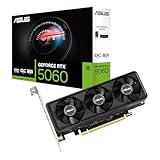
Top picks at a glance
As an Amazon Associate we earn from qualifying purchases at no extra cost to you.



| Model | Key spec | Price | Best for |
|---|---|---|---|
| ASUS RTX 5060 LP BRK | 8GB GDDR7, current-gen GPU core | Check on Amazon | Actual small-form-factor gaming |
| msi GT 1030 | 4GB DDR4, 64-bit bus | Check on Amazon | Very light esports/older titles |
| ARDIYES GT 740 | 4GB GDDR5, quad-HDMI | Check on Amazon | Office/multi-monitor, minimal gaming |
| GeForce GT 610 | 2GB DDR3 | Check on Amazon | Basic display output only, not gaming |
| Glorto GT 730 | 4GB DDR3 | Check on Amazon | HTPC/entry desktop use, minimal gaming |
ASUS GeForce RTX 5060 LP BRK
This is the only card in this roundup that belongs in a genuine “low profile gaming GPU” conversation without qualification. It packs 8GB of GDDR7 memory and a current-generation GPU core into a shortened low-profile cooler and bracket, an OC edition variant that runs slightly above reference clocks.
Estimated 1080p performance in current titles sits comfortably in playable-to-strong territory at high settings, and 1440p is realistic at medium-to-high settings in most games, which is a genuinely different performance class from every other card in this list — those figures are architecture-based estimates rather than results measured on this exact SFF configuration. Because it uses the same modern GPU silicon found in full-size RTX 5060 cards, it also supports current upscaling and frame-generation features that the legacy cards here have no equivalent for.
The catch is fit and power: this card needs a supplemental PCIe power connector and enough internal clearance behind the slot for its cooler, so it’s worth measuring your specific small-form-factor case before ordering rather than assuming “low profile” alone guarantees it fits.
- Pros
- Only card here with genuinely current-generation gaming performance
- 8GB GDDR7 supports 1080p and realistic 1440p play
- Supports modern upscaling features unavailable on the older cards in this list
- Cons
- Needs a supplemental power connector, unlike the passive-slot-power cards here
- Priced well above every other card in this roundup
- Cooler length/thickness still needs checking against specific SFF case clearance
Who it’s for: small-form-factor builders who want real current-generation gaming performance without a full-height card.
msi Gaming GeForce GT 1030
A long-running budget low-profile card, the GT 1030 pairs 4GB of DDR4 memory with a 64-bit bus and a single fan cooler. This specific variant uses DDR4 rather than the faster GDDR5 version of the same card that was sold alongside it, which is worth checking for if buying from a listing that doesn’t specify memory type clearly.
Estimated performance is well below current gaming standards: it can handle older esports titles and less demanding indie games at 1080p on low settings, but current AAA titles are out of reach at any playable frame rate. Its main practical use case today is as a display-output card for a media PC, a placeholder card in a system awaiting a real GPU, or light gaming on older titles specifically.
The 64-bit memory bus, narrower than the 128-bit bus on the DDR4 GT 1030’s better-specified GDDR5 sibling, is the main reason this variant lags even the modest expectations for the GT 1030 family generally.
- Pros
- Low price and low power draw for a functional discrete GPU
- Handles older or lightweight titles at 1080p low settings
- No supplemental power connector needed
- Cons
- DDR4 variant with a 64-bit bus trails the GDDR5 version of the same card
- Current AAA titles are not realistically playable on this card
- Weak value versus stepping up to the RTX 5060 LP for actual gaming
Who it’s for: HTPC builds, display-output placeholder use, or light gaming on older or less demanding titles only.
ARDIYES GT 740 4GB GDDR5
The GT 740 pairs a modest GPU core with 4GB of GDDR5 memory and four HDMI outputs, clearly aimed at multi-monitor office and home-theater setups rather than gaming. The quad-HDMI configuration is genuinely useful for digital signage or multi-display productivity work.
As a gaming card, expectations need to stay low: it’s suited to older, lightly-demanding titles at 1080p and not much beyond that. The GDDR5 memory is a step up from the DDR3 cards further down this list, but the underlying GPU core is old enough that memory bandwidth isn’t the limiting factor for gaming performance — the core itself is.
This card is best evaluated on its actual strength, which is silent, low-power multi-monitor output, rather than as a gaming purchase.
- Pros
- Four HDMI outputs genuinely useful for multi-monitor or signage setups
- Silent cooling and low power draw
- GDDR5 memory is a step up from the DDR3 cards in this list
- Cons
- GPU core is too weak for meaningful current gaming
- Positioned and priced closer to an office card than a gaming card
- No supplemental power connector limits any future core-bound headroom
Who it’s for: multi-monitor office or home-theater setups first, with only minimal gaming ambitions.
GeForce GT 610 2GB DDR3
The oldest and weakest card in this roundup, the GT 610 is built for basic display output — HDMI/VGA video signal for a small form factor or home-theater PC — rather than gaming in any meaningful sense. It’s worth being direct about this rather than stretching to find a gaming angle: this is not a gaming GPU by current standards.
Its 2GB of DDR3 memory and entry-level GPU core are sufficient for driving a desktop, watching video, and running the lightest possible legacy or browser-based games, and nothing more demanding than that. Buyers coming to this listing expecting any current game to run, even at minimum settings, should look elsewhere in this list, or realistically at the RTX 5060 LP.
Its genuine strengths are compatibility with very old systems (PCI Express 1.1) and passive slot-only power draw, which suit it to reviving or repurposing older small-form-factor hardware for non-gaming use.
- Pros
- Extremely low price and power draw
- Compatible with very old systems via PCIe 1.1
- No supplemental power connector needed
- Cons
- Not viable for current gaming at any real settings
- 2GB DDR3 memory is a hard ceiling even for light workloads
- Best suited to display-output or legacy-system use only
Who it’s for: display-output duty on an older or repurposed small-form-factor system, not gaming.
Glorto GeForce GT 730 4G Low Profile
A step above the GT 610 in memory capacity at 4GB, the GT 730 still runs on DDR3 memory and an entry-level GPU core, with dual HDMI, DisplayPort and VGA outputs for flexible connectivity on older or budget systems.
Like the GT 610, this card is realistically an entry-level/HTPC card rather than a gaming GPU, though its larger memory pool gives it slightly more headroom for very light or older titles than the GT 610 offers. PCI Express 2.0 x8 connectivity is another reminder of its positioning: modern gaming GPUs use PCIe 4.0/5.0 x16, and this card’s older, narrower interface reflects a much older design target.
Its practical value is as an inexpensive, low-power multi-output card for a compact desktop or HTPC build, not as a gaming purchase.
- Pros
- 4GB memory gives more headroom than the GT 610 for light workloads
- Flexible HDMI/DisplayPort/VGA output options
- Low power draw with no supplemental connector required
- Cons
- DDR3 memory and an entry-level core limit it well below gaming relevance
- Older PCIe 2.0 x8 interface reflects a dated overall design
- Priced close to the more capable GT 740 without a clear performance edge
Who it’s for: compact HTPC or budget desktop builds prioritizing display flexibility over any gaming ambition.
How we compared and picked
Priya Raghunathan built this ranking around a question that low-profile listings often obscure: is this card actually built for gaming, or is “low profile” the only thing it has in common with a gaming GPU?
Performance estimates above are grounded in each GPU core’s documented generation, memory type and bus width rather than bench numbers measured for every card in this exact small-form-factor configuration, and are labeled as estimates. Ranking weighed real gaming capability first, then power delivery method (slot-only versus supplemental connector), memory type and capacity, and connectivity flexibility for non-gaming use cases.
Cards that are clearly not viable gaming products, like the GT 610, are still included and ranked honestly rather than left out or oversold, since shoppers searching this exact keyword do encounter them in real marketplace listings.
What to look for in a low profile graphics card
Bracket height versus card length and thickness
“Low profile” specifically describes the mounting bracket height, following a shorter standardized dimension than a full-height bracket, and that’s the measurement that determines whether the card can physically mount in a slim case’s expansion slot opening. It says nothing about the card’s length or thickness. A low-profile bracket on a long, thick dual-slot cooler, like some low-profile GDDR7 cards, can still be too long or too wide for a genuinely compact small-form-factor case. Always cross-check card length and slot width against your specific case’s published internal clearance, not just the bracket height.
Slot power versus supplemental connector
The PCIe slot itself can supply up to roughly 75W without any additional cable, which is why the weakest cards in this list — the GT 610, GT 730 and GT 740 — need no supplemental power connector at all; their GPU cores simply don’t draw enough to require one. Higher-performance low-profile cards like the RTX 5060 LP exceed that budget and need a supplemental PCIe power cable, which means the case and power supply both need to support routing that cable to a card mounted in a low-profile bracket — not a given in every small-form-factor case.
Riser cables and SFF case airflow
Many small-form-factor cases mount the GPU vertically or at an angle using a PCIe riser cable rather than directly into the motherboard slot, which adds another compatibility variable: riser cables have their own generation and bandwidth rating (commonly PCIe 3.0 or 4.0), and pairing an older riser with a card that needs full PCIe 4.0 bandwidth can leave performance on the table. Airflow is a related concern — compact cases restrict fresh air to the GPU more than full towers do, so a low-profile card’s cooler needs to be adequate for the case’s actual airflow, not just quiet on an open test bench.
Matching the card’s real capability to your use case
The honest range in this roundup — from a 2012-era display card to a current gaming GPU, both marketed as “low profile” — means the single most important step is matching the card to what you actually need. A multi-monitor office build or HTPC has very different requirements from a small-form-factor gaming rig, and buying based on the “low profile” label alone, without checking whether the specific card is a modern gaming GPU or a legacy display card, is the most common mistake in this category.
Mistakes buyers make
Assuming any card labeled “low profile” is a gaming GPU; several of the cheapest, most common results for this exact keyword are legacy display cards with no realistic current gaming capability.
Ordering a low-profile card with a supplemental power connector requirement without confirming the small-form-factor case and PSU can actually route that cable.
Checking only bracket height and ignoring card length or cooler thickness, then finding the card physically doesn’t clear other components in a compact case.
Pairing a genuinely capable low-profile GPU like the RTX 5060 LP with a weak or outdated CPU, wasting headroom the same way our CPU and GPU combo guide covers for full-size builds.
Expecting a legacy DDR3 card like the GT 610 or GT 730 to run current games at any playable frame rate, even at the lowest settings.
Overlooking riser cable bandwidth in vertical-GPU small-form-factor cases, which can quietly cap a capable card’s real-world performance.
Verdict
For buyers who actually want to game on a small-form-factor build, the ASUS GeForce RTX 5060 LP BRK is the clear pick here — it’s the only card in this roundup with genuinely current gaming performance, and everything else on this list should be evaluated as a display or light-desktop card instead. Budget shoppers who only need light or older-title gaming should look at the msi GT 1030 with realistic expectations. Anyone who landed here wanting multi-monitor or HTPC output rather than gaming is better served by the ARDIYES GT 740 or the Glorto GT 730.
Frequently asked questions
What does “low profile” mean, and will any low-profile card fit any small case?
Low profile refers to the height of the card’s mounting bracket, which follows a shorter standardized dimension than a full-height bracket so the card fits cases with limited vertical clearance behind the expansion slots, including many small-form-factor and slim office cases. It doesn’t guarantee fit on its own — card length and thickness (single-slot versus dual-slot) still need to be checked against your specific case’s internal clearance, since a low-profile bracket with a long or thick cooler can still be too big for a compact chassis.
Can a low-profile GPU game at all, or are they just for office use?
It depends entirely on which card. Older, weaker low-profile cards like the GT 610 or GT 730 are built for basic display output and light desktop use, not modern gaming. Current-generation low-profile cards like the RTX 5060 LP use the same GPU silicon as their full-size counterparts in a shorter cooler and bracket, and are genuinely capable of modern gaming at 1080p and even 1440p — the low-profile form factor no longer automatically means low performance, it depends on the generation of the specific card.
Do low-profile GPUs need a supplemental power connector?
The oldest, weakest cards in this category, including the GT 610 and GT 730, draw all their power directly from the PCIe slot and need no additional connector, which is part of why they fit into very restrictive small-form-factor builds. Higher-performance current-generation low-profile cards like the RTX 5060 LP do need a supplemental PCIe power connector, so buyers need to confirm their small-form-factor case and power supply can actually route that cable before assuming any low-profile card will drop in without issue.
What’s the difference between GDDR5/GDDR6/GDDR7 memory on a card like the GT 740 vs the RTX 5060 LP?
Each memory generation roughly doubles usable bandwidth per pin over the previous one, which matters more as GPU compute power increases; a weak GPU core like the GT 740’s can’t use much bandwidth regardless of memory type, so its GDDR5 isn’t really a limiting factor. On a genuinely powerful GPU core like the RTX 5060 LP’s, GDDR7’s much higher bandwidth is necessary to keep the compute cores fed, especially at 1440p and higher settings where the card is actually pushing meaningful frame rates.
Is a used or older low-profile card like the GT 610/GT 730 worth buying today?
Only for non-gaming use cases: driving multiple monitors for productivity, basic HTPC video playback, or as a placeholder display card in a system waiting on a real GPU. For any current game beyond the lightest browser or indie titles, these cards will struggle badly even at the lowest settings, so buyers specifically looking for a low-profile gaming card should budget for something closer to the RTX 5060 LP instead.


