
High-performance solid-state drives (SSDs) have revolutionized how we work and play. But as data transfer rates have climbed to mind-boggling speeds, a new challenge has emerged in our home offices and gaming setups: heat. High-end PCIe Gen 5 NVMe drives can run incredibly hot, sometimes surpassing 80°C (176°F) under heavy use, leading to thermal throttling and sluggish performance.
To combat this, hardware manufacturers have introduced liquid-cooled SSD heatsinks. These liquid blocks promise to keep your storage running at ice-cold temperatures. However, adding liquid plumbing to a tiny storage drive raises a serious question for PC builders and home office enthusiasts alike: is a liquid cooled ssd heatsink actually worth it, or is it simply expensive overkill?
As an Amazon Associate we earn from qualifying purchases at no extra cost to you. Product prices and availability are accurate as of the date shown and are subject to change.

The Short Answer
For 95% of users, no, a liquid-cooled SSD heatsink is not worth it. It is only worth the high cost, installation complexity, and potential leak risks if you are a professional handling massive, sustained read/write operations (such as editing uncompressed 8K video or managing giant databases) on a PCIe Gen 5 SSD, and you already have an active custom liquid-cooling loop running through your system. For gamers, general home users, and everyday office workers, a basic passive aluminum or copper heatsink costing under $15 is more than sufficient to prevent thermal throttling.
What You Actually Get
To understand what you get with a liquid-cooled SSD heatsink, it helps to look at the physical footprint and engineering of these devices. A standard M.2 NVMe SSD uses the 2280 form factor, meaning it is just 22mm wide and 80mm long, with a weight of less than 10 grams.
When you opt for a liquid-cooled SSD block, you are replacing a lightweight metal plate with a much larger assembly. A typical liquid SSD water block or mini All-In-One (AIO) cooler features a copper or nickel-plated copper baseplate, an acrylic or metal top, and dual G1/4-inch thread ports for liquid fittings. This assembly can increase the height of your drive from a slim 3mm to over 40mm or 50mm, and can increase the weight to anywhere between 150g and 250g once filled with coolant.
While a standard SSD draws between 5 watts and 9 watts of power under load, newer PCIe Gen 5 drives can peak around 11 to 14 watts. A liquid-cooling block works by transferring this heat directly into a liquid loop, which then carries the thermal energy to a radiator. This can drop peak controller temperatures from a dangerous 80°C down to a chilly 35°C to 45°C. However, it is important to remember that while the SSD controller chip thrives under cool temperatures, the actual NAND flash memory chips store data more reliably when they operate at a warm, stable temperature (typically between 40°C and 50°C).
Pros
- Maximum Thermal Suppression: Liquid cooling offers the absolute lowest operating temperatures possible for an M.2 drive, keeping the controller well below its thermal throttling threshold even during hours of continuous file transfers.
- Elimination of Thermal Throttling: Unlike air-cooled drives that may eventually saturate their metal heatsinks during massive data writes, a liquid-cooled drive maintains consistent, peak transfer speeds indefinitely.
- Silent Operation: Active air-cooled SSD heatsinks rely on tiny 20mm or 30mm fans that spin at high RPMs, creating a high-pitched whine. Liquid blocks tap into your existing system fans and pump, keeping your workspace whisper-quiet.
- Stunning Aesthetics: For custom-loop enthusiasts, routing transparent tubes and colored coolant directly over the motherboard’s storage slots creates a highly customized, futuristic look for a home office showpiece.
Cons
- High Cost and Poor Value: While a premium passive heatsink costs less than $15, a liquid-cooled SSD block can cost anywhere from $40 to over $150, not including the hundreds of dollars required for the pump, reservoir, radiator, and tubing.
- Catastrophic Leak Risks: Introducing liquid fittings directly above your motherboard’s primary PCIe slot means that any small installation mistake or structural failure could drip coolant directly onto your expensive graphics card or CPU socket.
- Clearance and Space Issues: Because these blocks stand up to 50mm tall, they frequently conflict with large CPU air coolers, bulky graphics cards, or motherboard armor. They are completely unusable in small-form-factor (SFF) builds.
- Suboptimal NAND Lifespan: NAND flash memory actually requires a moderate amount of heat to write data efficiently. Keeping the flash memory too cold (below 30°C) can cause long-term wear and tear, reducing the overall lifespan of your drive.
- Complex Maintenance: When it comes time to upgrade your storage or replace a failing drive, you must drain your entire liquid-cooling loop, disconnect the fittings, reinstall the block, and refill the system—turning a 2-minute job into a multi-hour project.
Who Should Buy It
You should buy a liquid-cooled SSD heatsink if you are a hardware enthusiast, an extreme overclocker, or a creative professional working with sustained, drive-punishing workloads. If your daily routine involves rendering hours of raw footage, compiling massive software builds, or transferring multi-terabyte datasets across a high-speed local network, the constant thermal load will easily overwhelm passive cooling. In these specific environments, keeping a Gen 5 drive running at maximum speed without a single drop in performance is highly beneficial.
Who Should Skip It
You should skip the liquid-cooled heatsink if you are a gamer, an office worker, or a general PC user. Modern game engines load assets in quick, bursty intervals. Even during long gaming sessions, your SSD is idle most of the time, meaning it never stays hot long enough to throttle. As we look toward 2026, standard PC builds are prioritizing simplicity and reliability. For these setups, a liquid-cooled SSD block adds immense complexity, high costs, and unnecessary risks for zero noticeable improvement in boot times, game loading screens, or daily productivity apps.
Cheaper Alternatives
If you want to keep your high-speed NVMe drive running safely without the complexity of water pipes, there are several highly effective, budget-friendly passive and active air-cooled options available on the market today.
| Option | Approximate Cost | Trade-off |
|---|---|---|
| Motherboard Built-in Heatsink | Free (Included with motherboard) | Performance depends entirely on your PC case’s overall airflow; may struggle slightly with sustained Gen 5 write tasks. |
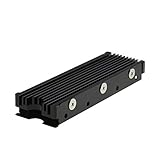
| MHQJRH M.2 2280 SSD Heatsink | $6.99 | Adds about 10mm of height; relies on passive aluminum fins, which can eventually saturate during continuous transfer loads exceeding 10 minutes. |
| Laptop NVMe M.2 Heatsink (Copper) | $8.99 (for a 2-pack) | Extremely low profile (ideal for tight spaces and laptops), but has limited surface area compared to bulky desktop-class passive blocks. |
| Active Mini-Fan SSD Heatsink | $15.00 – $30.00 | Provides excellent active cooling performance, but the tiny high-RPM fan can introduce a noticeable, high-pitched buzzing noise to your workspace. |
FAQ
Do PCIe Gen 4 SSDs need liquid cooling?
No. PCIe Gen 4 SSDs typically peak at power draws of 6 to 8 watts and operate perfectly fine under basic passive metal heatsinks. They do not generate enough sustained thermal output to justify any form of liquid cooling.
Can a liquid-cooled SSD heatsink leak and ruin my PC?
Yes. Any liquid-cooling component carries a risk of leakage. Because the M.2 slot sits directly on the motherboard, a leak at the SSD block can drip fluid onto your motherboard’s power delivery system, the PCIe slots, or your graphics card, potentially causing short circuits and permanent hardware damage.
Does cold NAND flash memory degrade faster?
Yes, to an extent. While the controller chip on your SSD needs to stay cool to prevent thermal throttling, the NAND flash memory chips actually prefer to run warm (between 40°C and 50°C) when writing data. Keeping the NAND chips excessively cold can increase electrical stress during write cycles, slightly reducing the drive’s long-term endurance.
Will a liquid-cooled SSD heatsink fit inside a PlayStation 5?
No. The PlayStation 5 has a very tight SSD expansion slot with strict height limitations (maximum of 11.25mm including the heatsink). Liquid-cooled blocks are far too tall and wide to fit inside the console, and the PS5 lacks the internal water loops required to run them.
Related guides
- Ram Disk vs Nvme Ssd for Temporary Cache Files: Which Is Right for Your Home
- Copper Heatsink vs Aluminum Heatsink for Nvme Ssd: Which Is Right for Your Home
- Portable Ssd vs Rugged External Hard Drive for Travel: Which Is Right for Your Home
- Hardware Raid vs Software Raid for Small Home Nas: Which Is Right for Your Home


