
Choosing a wd elements external hard drive is rarely about finding the most impressive spec sheet. It is about matching capacity, portability, and transfer speed to a specific workload without overpaying for features you will never use. A student backing up a laptop needs a different drive than a videographer archiving multi-terabyte project folders, and the price spread in this lineup — from roughly $120 to $765 — reflects that divergence.
What separates a solid choice from a regrettable one comes down to three things: whether the capacity genuinely fits your data growth over the next few years, whether the form factor matches where you will actually use the drive (desk-bound versus bag-bound), and whether the interface speed is a meaningful bottleneck or a spec that only matters if you are shuffling hundreds of gigabytes in a single sitting. Owner feedback across these models consistently flags the same failure modes — cables that fail first, desktop drives that run louder than expected in quiet rooms, and portable drives that throttle under sustained writes. This roundup sorts through those patterns so you can pick with confidence.
As an Amazon Associate we earn from qualifying purchases at no extra cost to you.

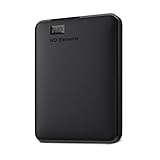


Top 3 picks at a glance
Quick Picks
| Product | Best for | Price |
|---|---|---|
| WD 2TB Elements Portable | Everyday laptop backup on a budget | $135.5 |
| WD 5TB Elements Portable | Creatives who need portable capacity | $214.1 |
| WD 20TB Elements Desktop | Large-scale media archiving | $764.99 |
| WD 8TB Elements Desktop | Best value per terabyte for desktop use | $379.99 |
| WD 4TB Elements Portable | Travel-friendly backup with room to grow | $184.6 |
| WD 6TB Elements Portable | Photographers and editors on the move | $258 |
| WD 1TB Elements Portable | Minimalist backup for small datasets | $119.94 |
| Seagate 2TB Portable | Alternative brand at a similar price point | $129.99 |
How We Picked
We narrowed this list using four criteria that matter most in the wd elements external hard drive category. First, cost per terabyte — a drive that looks cheap at $120 becomes expensive if it fills up in six months. Second, real-world transfer consistency, drawn from published benchmark data and recurring owner complaints about throttling. Third, form factor suitability, because a desktop drive in a backpack is a liability and a portable drive on a rack is a compromise. Fourth, brand ecosystem fit — whether the drive plays well with Time Machine, Windows Backup, or common NAS configurations without reformatting headaches.
The 8 Best Wd Elements External Hard Drive in 2026
WD 2TB Elements Portable
This is the default answer for anyone whose primary goal is a simple, reliable backup drive that fits in a jacket pocket. At $135.50, it sits in a sweet spot where the cost is low enough that losing a drive to theft or damage is annoying but not catastrophic. USB 3.2 Gen 1 throughput is more than sufficient for the mechanical HDD inside, so the interface is never the bottleneck. Owner feedback highlights the compact footprint and the fact that it works immediately with both Windows and macOS without additional software.
- Pros: Truly plug-and-play across platforms; pocketable form factor.
- Con: 2TB fills quickly if you store raw video or large game libraries.
Skip this if your dataset already exceeds 1.5TB or if you routinely transfer large files in single sessions where the sustained write speed of a desktop drive would save meaningful time.
WD 5TB Elements Portable
For freelancers and hobbyist creators who need meaningful capacity without lugging a desktop enclosure, the 5TB model at $214.10 is the logical step up from the 2TB. You get over twice the storage for roughly 58 percent more money, which improves the cost-per-terabyte math considerably. The same USB 3.2 Gen 1 interface applies, and WD’s published specs indicate sequential read speeds around the same ceiling as smaller siblings. Owners on review threads consistently note that the physical size increase is modest — it still fits a laptop sleeve.
- Pros: Strong capacity-per-dollar ratio for a portable form factor; still genuinely portable.
- Con: At 5TB, sustained large-file transfers expose the mechanical HDD’s write speed limits compared to any SSD.
Skip this if you require the drive to survive drops from desk height frequently, or if your workflow demands sequential write speeds above 150 MB/s for real-time video capture.
WD 20TB Elements Desktop
The 20TB Elements Desktop at $764.99 is a niche product for a niche problem: archiving enormous media libraries, surveillance footage, or project archives without maintaining a full NAS. Per-terabyte cost drops noticeably here compared to smaller desktop drives, making it attractive if you need to park 15TB or more in a single enclosure. It requires a dedicated power adapter and is designed to sit stationary. Owner feedback praises the raw capacity but flags the fan noise under sustained loads as a consideration for bedroom offices.
- Pros: Lowest cost-per-terabyte in this lineup for high-volume desktop storage; single-enclosure solution avoids multi-drive management.
- Con: Not portable; noticeable fan noise during extended reads and writes.
Skip this if you need anything smaller than 10TB, or if the drive will live in a shared quiet workspace where even moderate fan noise becomes a distraction.
WD 8TB Elements Desktop
At $379.99, the 8TB Elements Desktop represents the strongest price-to-capacity balance for users who want a large static backup or media drive without jumping to the 20TB premium. It fills the gap where 5TB portables are too small and 20TB desktops are overkill. The USB 3.0 interface matches the drive’s mechanical ceiling, and published transfer rates are competitive with WD’s internal SMR/CMR desktop drives of similar generation. Owners appreciate the vertical orientation option, which reduces desk footprint.
- Pros: Excellent value at roughly $47 per terabyte; flexible desktop positioning.
- Con: Requires a power outlet; louder than any portable option under load.
Skip this if your total storage need is under 6TB or if you need the drive to travel between locations.
WD 4TB Elements Portable
The 4TB model at $184.60 occupies an interesting middle ground. It offers a noticeable capacity bump over the 2TB for a relatively small price increase, and owner reviews suggest it maintains the same compact footprint as smaller portables thanks to a thinner platter stack. This is a sensible choice for photographers carrying a full shoot’s worth of RAW files who want one drive rather than juggling multiple cards and a laptop’s internal storage. The USB 3.2 Gen 1 connection remains non-limiting for this class of HDD.
- Pros: Good capacity jump over 2TB with minimal size penalty; solid mid-range value.
- Con: Still bound by mechanical HDD sustained write speeds, which can feel slow for continuous video workflows.
Skip this if you need more than 3TB of headroom or if budget allows stretching to the 5TB model, which offers better per-terabyte pricing.
WD 6TB Elements Portable
At $258, the 6TB Elements Portable is the highest-capacity drive in WD’s portable Elements line that still fits a bag comfortably. It targets videographers, audio engineers, and data-heavy professionals who want a single-drive solution for active projects without connecting to mains power. Published specs place its sustained sequential throughput in line with other 3.5-inch-cased portables, meaning you will see 140-160 MB/s on average file transfers. Owners note the cable length is a recurring complaint — a short USB cable means you often need the drive next to the laptop.
- Pros: Maximum portable capacity in the Elements line; no power adapter needed.
- Con: Short included cable; higher price than desktop equivalents per terabyte.
Skip this if the drive will mostly sit on one desk; a desktop model at 8TB gives you more storage for less money.
WD 1TB Elements Portable
The 1TB model at $119.94 is the most affordable entry point in the wd elements external hard drive lineup, and it serves a genuine use case: simple OS backups, document archives, or a secondary drive for a student with modest storage needs. However, at $119.94 per terabyte, the cost-per-terabyte math is the worst in this group. The value proposition erodes quickly once you look at the 2TB option for only $15.56 more. Owner feedback is generally positive but includes repeated notes about the drive feeling plasticky and cable durability concerns.
- Pros: Lowest absolute price for a branded WD drive; works for basic backup tasks.
- Con: Worst cost-per-terabyte in the lineup; fills up fast for any media-heavy use.
Skip this unless your total data is under 500GB and budget is the only factor. Spending marginally more for the 2TB model nearly doubles capacity for a trivial price difference.
Seagate 2TB Portable
The Seagate 2TB at $129.99 is included here as a cross-shop comparison point. It matches the WD 2TB in capacity and sits $5.51 below it, making it the marginally cheaper option for identical specs on paper. USB 3.0 interface, similar bus-powered design, and plug-and-play behavior align with the WD equivalents. Owner reviews for both brands in this tier are broadly similar — neither shows a clear reliability advantage at the 2TB portable level. The physical dimensions are comparable, and both ship without additional software bloat.
- Pros: Slightly lower price than the WD 2TB; same practical performance class.
- Con: Lacks the WD ecosystem familiarity for users who rely on WD-specific backup utilities or have other WD drives.
Skip this if you prefer a single-brand drive portfolio for backup management consistency, or if the WD 2TB is available at the same price through a retailer bundle.
Buying Guide
Cost Per Terabyte vs. Absolute Price
AbsOLUTE price is misleading in this category. The 1TB portable at $119.94 costs $119.94 per terabyte, while the 8TB desktop at $379.99 costs roughly $47.50 per terabyte. Always calculate the per-terabyte figure before deciding. If you anticipate growing into 4TB or more within a year, buying a larger drive now saves money and eliminates a future migration step. The exception is if you need portability specifically, where the premium for smaller form factors is unavoidable.
Interface Speed Is Not Your Bottleneck
Every drive here uses USB 3.0 or USB 3.2 Gen 1, which provides 5 Gbps theoretical bandwidth. None of the mechanical HDDs inside these enclosures can saturate that connection — sustained sequential throughput tops out around 150-180 MB/s regardless of which model you choose. Do not pay a premium for a newer USB generation expecting faster file transfers; the bottleneck is the spinning platters, not the cable. A USB-C adapter may matter for connector compatibility with modern laptops, but it will not change transfer speed.
Portable vs. Desktop: Match the Form Factor to the Use
Portable drives are bus-powered and compact but offer lower maximum capacities at higher per-terabyte costs. Desktop drives require a power adapter, generate more heat and fan noise, and cannot travel well, but deliver more storage per dollar and often better sustained performance from 3.5-inch mechanisms. If the drive lives on one surface permanently, buy desktop. If it needs to survive a backpack or a commute, buy portable and accept the price premium as the cost of convenience.
Our Verdict
The WD 2TB Elements Portable is the top pick for most buyers — it solves the problem of basic backup and file transport at a reasonable price with proven cross-platform reliability. For budget-conscious buyers who need at least 2TB and want to minimize cost, the Seagate 2TB Portable at $129.99 edges it out by five dollars with equivalent practical performance. If your storage needs are genuinely large and stationary, the WD 8TB Elements Desktop wins decisively at roughly $47 per terabyte, offering the best value in the entire lineup for users who do not need to carry their drive.
FAQ
Do WD Elements drives need software to work?
No. All models in this lineup are plug-and-play on Windows and macOS without installing WD Discovery or any additional application. You can format them with any tool you prefer, including Disk Utility or Disk Management.
Can I use these drives with Time Machine on macOS?
Yes, though macOS may prompt you to reformat from NTFS to APFS or Mac OS Extended during the initial Time Machine setup. The drive itself is compatible; only the file system needs adjustment.
Is SMR or CMR relevant to these drives?
WD does not publicly specify which shingled or conventional magnetic recording technology each Elements model uses. For typical backup and storage tasks the difference is negligible, but if you need a drive for frequent rewrites of large files (such as video editing scratch), a NAS-rated CMR drive is a safer choice.
What is the warranty on WD Elements drives?
WD Elements external drives carry a two-year limited warranty in North America. This matches Seagate’s warranty on its portable lineup at the same tier, so neither brand holds a coverage advantage in this price bracket.


