
A 2 TB external hard drive sits in an awkward middle ground. Small enough to fit in a jacket pocket, large enough to hold an entire game library, a decade of family photos, or a working video archive — but not so capacious that you can stop thinking about where files will eventually pile up. The buyer solving this problem usually has one of three jobs: back up a laptop that is already half full, expand a console that chokes on install sizes, or shuttle large project files between a studio machine and a client’s office.
What separates a good drive from a mediocre one in this category is rarely raw capacity — they all hold 2 TB of data. The differences show up in sustained write speed during a multi-hundred-gigabyte transfer, the noise and heat the drive generates on a lap, the quality of bundled backup software, and whether the enclosure survives being knocked off a desk. A drive that throttles after thirty minutes of writing or ships without a USB cable is a poor choice at any price. Below, each pick is evaluated against published specifications, listed prices, and recurring themes in owner feedback.
As an Amazon Associate we earn from qualifying purchases at no extra cost to you.
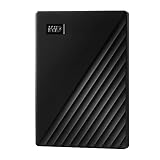




Top 3 picks at a glance
Quick Picks
| Product | Best for | Price |
|---|---|---|
| Seagate 2TB Portable Hard Drive (STGX2000400) | General-purpose backup | $129.99 |
| WD 2TB My Passport | Encrypted business files | $133.90 |
| WD 2TB Elements Portable | Plug-and-play simplicity | $135.50 |
| SanDisk 2TB Extreme Portable SSD | Fast large-file transfers | $289.99 |
| Toshiba Canvio Basics 2TB | Budget HDD backup | $130.99 |
| Seagate Portable 4TB (SRD0NF1) | Double the headroom | $189.98 |
| Avolusion M3 Series 2TB | Lowest price | $89.99 |
| Vxcsiexz 2TB Portable External HDD | Rough handling outdoors | $102.50 |
How We Picked
Three criteria drove the selection here. First, sustained transfer reliability: owner reports of drives dropping connection or throttling during long backup sessions carry more weight than theoretical peak numbers. Second, real-world value relative to listed price — a drive that costs thirty dollars more than its closest competitor had better bundle meaningful software or encryption. Third, enclosure durability and portability, because a 2 TB drive that lives in a backpack or on a job site faces physical stresses a desktop drive never encounters. Products from lesser-known brands were included when their price or ruggedness claims addressed a gap the mainstream options left open.
The 8 Best 2 Tb External Hard Drive in 2026
Seagate 2TB Portable Hard Drive (STGX2000400)
The STGX2000400 is the default recommendation for anyone who needs reliable bulk storage without fuss. Its USB 3.0 interface is older but still matches the sustained throughput ceiling of a 5400 RPM 2.5-inch HDD, so you lose nothing in real-world transfers compared to newer port standards. Seagate bundles its basic backup software, and the drive works on Windows and macOS out of the box.
- Pro: Consistent performance reported over multi-hundred-gigabyte backups.
- Pro: Low operating noise and minimal heat generation for a portable HDD.
- Con: No hardware encryption or password protection built in.
Skip it if you handle sensitive client data and need on-drive encryption without third-party software.
WD 2TB My Passport
The My Passport targets users who want security baked into the drive rather than bolted on through software. Hardware AES encryption, password protection, and WD’s ransomware-defense backup layer set it apart from the Elements line. The USB 3.1/3.0 compatibility keeps it relevant on older laptops while still plugging into modern machines. Owners frequently praise the slim profile and the fact that encryption does not noticeably slow transfer speeds.
- Pro: Hardware-level password protection and ransomware-aware backup software.
- Pro: Compact, lightweight enclosure that slides into laptop sleeves easily.
- Con: A few dollars more than equivalent unencrypted drives.
Skip it if encryption is irrelevant to your workflow; the Elements or Canvio delivers the same speed cheaper.
WD 2TB Elements Portable
The Elements is WD’s no-frills answer to the “just give me storage” buyer. USB 3.2 Gen 1 support, plug-and-play format out of the box, and compatibility with both Windows and macOS mean there is no setup ceremony. It carries the same internal drive as the My Passport but without the software bundle, which also means it costs more here than you might expect — a pricing quirk worth watching for sales.
- Pro: Truly zero-configuration; connect and start copying.
- Pro: Reliable USB 3.2 Gen 1 throughput matching HDD ceilings.
- Con: Priced above the My Passport despite fewer features.
Skip it if you are paying full list price; the My Passport offers more capability for less.
SanDisk 2TB Extreme Portable SSD
An older-model SSD, but the 1050 MB/s read ceiling means it handles multi-gigabyte video files and game archives in minutes rather than the half-hour-plus an HDD requires. The rubberized, carabiner-loop enclosure is genuinely rugged — rated against dust, water, and crush loads. For a 2 TB external hard drive alternative where speed is non-negotiable, nothing else on this list comes close. The trade-off is obvious: the price is more than double every HDD here.
- Pro: Read speeds several times faster than any mechanical drive listed.
- Pro: Rugged enclosure with high IP and crush resistance.
- Con: Highest price per gigabyte in this group.
Skip it if you only back up documents and photos; the transfer speed advantage is invisible at those file sizes.
Toshiba Canvio Basics 2TB
The Canvio Basics has long been a value staple, and the 2 TB model holds that position. USB 3.0, a simple rectangular enclosure, and no bundled software keep the cost low. Owners note quiet operation and consistent sequential performance, though random-access tasks like library indexing feel sluggish compared to the SSD above. At $130.99, it sits between the Seagate and WD offerings and is often the cheapest mainstream name available.
- Pro: Typically the lowest-priced name-brand 2 TB HDD.
- Pro: Silent and cool during long sequential transfers.
- Con: No backup software, no encryption, no frills whatsoever.
Skip it if you need any security features or automated backup scheduling without third-party tools.
Seagate Portable 4TB External Hard Drive (SRD0NF1)
Strictly speaking this is a 4 TB drive, which means it overshoots the 2 TB category but addresses a real buyer problem: two 2 TB backups fill a drive faster than expected, and 4 TB is the next step up without a dramatic price jump. The SRD0NF1 carries the same USB 3.0 interface and compact 2.5-inch form factor as its 2 TB siblings. Seagate’s one-year Rescue Data Recovery Service adds peace of mind if a head crash happens mid-transport.
- Pro: Double the capacity for a modest price premium over 2 TB options.
- Pro: One-year Rescue Service included.
- Con: Heavier and slightly thicker than the 2 TB models on this list.
Skip it if you specifically need to stay under 2 TB for compatibility with a console’s USB power limit.
Avolusion M3 Series 2TB
At $89.99 the Avolusion M3 is the cheapest 2 TB option here, undercutting every name brand by a meaningful margin. The enclosure advertises Windows, macOS, Xbox, and PlayStation compatibility over USB 3.0. For a one-time backup or a throwaway media drive that will not miss a head crash, the price is hard to argue with. Owner feedback on long-term reliability is thinner than the mainstream brands carry, which is the inherent risk of a budget no-name.
- Pro: Lowest absolute price in this roundup.
- Pro: Multi-platform compatibility including consoles.
- Con: Limited brand reputation and shorter support track record.
Skip it if the data is irreplaceable; spend the extra forty dollars on a drive with a proven recovery record.
Vxcsiexz 2TB Portable External HDD
The Vxcsiexz fills the niche of a rugged 2 TB drive at a price point well below the SanDisk SSD. USB 3.0 and 2.0 backward compatibility, combined with advertised shock, dust, and rain resistance, make it suitable for fieldwork, camping trips, or construction-site laptops where a standard drive would fail. It is not fast, and it is not refined, but at $102.50 it offers protection features the mainstream HDDs simply do not.
- Pro: Environmental resistance in an HDD form factor at a low price.
- Pro: Backward-compatible with USB 2.0 ports on older equipment.
- Con: Bulkier and heavier than standard 2.5-inch portable drives.
Skip it if you need something that disappears into a slim laptop sleeve every day.
Buying Guide
Interface Speed and Real-World Throughput
USB 3.0, 3.1, and 3.2 Gen 1 all share the same 5 Gbps theoretical ceiling, which for a 5400 RPM mechanical drive is already beyond what the platters can sustain. In practice, most 2 TB HDDs here will hit 100-130 MB/s sequential regardless of whether the port is labeled 3.0 or 3.2. Do not pay extra for a newer USB standard unless you pair the drive with an SSD, where the interface actually becomes a bottleneck. The SanDisk Extreme SSD is the exception — its 1050 MB/s read rating only materializes on a port that can deliver it.
Enclosure Durability and Portability
A 2.5-inch mechanical drive contains moving parts vulnerable to drops, pressure, and vibration. If the drive will travel in a bag with a laptop or get tossed onto a truck bed, look for rubberized bumpers, an IP rating, or a crush-load spec. The SanDisk SSD handles this by having no moving parts. Among HDDs, the Vxcsiexz and Avolusion enclosures claim environmental resistance, while the mainstream Seagate and WD models rely on thin plastic shells that survive a one-meter carpet drop but not a gravel parking lot. Weight matters too: a 4 TB drive in the same physical size as a 2 TB model packs denser platters, which can mean slightly more heat and a thicker case.
Bundled Software, Encryption, and Support
Backup automation and hardware encryption are the two features most often missing from the cheapest drives and present on the mid-range ones. WD’s My Passport includes both; the Seagate and Toshiba options include neither. If you plan to run Time Machine or Windows File History, you likely do not need bundled software — but if the drive holds client contracts or tax files, on-drive encryption is a genuine security layer that survives the operating system being compromised. Check warranty length too: Seagate’s Rescue Service on the 4 TB model is a differentiator worth noting for anyone who cannot afford data loss.
Our Verdict
The top pick for most buyers in 2026 is the WD 2TB My Passport: it bundles meaningful encryption and ransomware-aware backup software at a price only four dollars above the Seagate, making the security features essentially free. For a budget pick, the Avolusion M3 at $89.99 is the lowest-risk way to get 2 TB of USB 3.0 storage if the data is replaceable. And if your workload involves moving multi-hundred-gigabyte video files on a deadline, no mechanical drive matches the SanDisk Extreme Portable SSD — it is the only correct answer when time is the constraint, even at more than double the price.
FAQ
Is a 2 TB external hard drive enough for gaming?
A single modern AAA title can exceed 150 GB, so 2 TB realistically holds ten to fifteen large games plus a backlog. For Xbox Series X|S and PS5, the built-in storage is 500 GB to 1 TB, meaning a 2 TB external drive nearly doubles your library capacity. If you play more than a dozen large titles simultaneously, the 4 TB Seagate option provides comfortable headroom.
Can I use any 2 TB external hard drive on both Mac and Windows?
Physically, yes — they all use USB connectors that fit either system. The limitation is the file system. Drives formatted as NTFS read but do not write on macOS without third-party software; exFAT works on both but lacks journaling. The WD Elements and Toshiba Canvio ship formatted for Windows. You can reformat any of them to exFAT or APFS, but that erases existing data.
What is the practical speed difference between these HDDs and the SSD?
For sequential work like copying a 50 GB video file, the SanDisk SSD finishes in roughly one-tenth the time an HDD takes. For random-access tasks like browsing a photo library of thousands of small files, the gap narrows because both are still limited by directory traversal overhead. For overnight backups of documents and media, the difference is irrelevant — you will not notice it.
Are no-name brands like Avolusion and Vxcsiexz safe to buy?
They are safe for non-critical, replaceable data. The enclosure is just a USB-to-SATA bridge around a standard 2.5-inch drive, often sourced from the same factories as the name brands. The risk is warranty support and long-term reliability data. If the drive holds a one-of-a-kind family archive, pay the extra forty dollars for a Seagate or WD with a proven support track record.


