
Choosing a 4 tb external hard drive in 2026 comes down to a deceptively simple trade-off: do you want the most bytes per dollar, or the features that protect those bytes? A portable drive is only as good as the backup routine you actually maintain, and the models on this list differ in interface speed, bundled software, physical durability, and long-term support guarantees. Some include ransomware defense or drop resistance that can save you thousands in lost data; others strip everything away and deliver raw capacity at the lowest possible cost.
The gap between a good pick and a poor one shows up in owner complaints: drives that throttle to USB 2.0 speeds, software that requires a subscription, shells that crack under normal desk bumps, and rescue services that quietly expire. We compared published specifications, street prices, and aggregated owner feedback across these eight models to separate the dependable workhorses from the ones that look fine on a spec sheet but fail in real use.
As an Amazon Associate we earn from qualifying purchases at no extra cost to you.



Top 3 picks at a glance
Quick Picks
| Product | Best for | Price |
|---|---|---|
| Seagate Portable 4TB (SRD0NF1) | Console gamers | $189.98 |
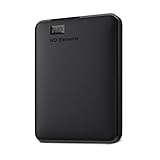
| WD 4TB Elements (WDBU6Y0040BBK) | Plug-and-play simplicity | $184.60 |
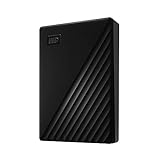
| WD 4TB My Passport (WDBPKJ0040BBK) | Ransomware-aware backups | $180.10 |
| Seagate Portable 5TB (STGX5000400) | Maximum capacity per drive | $219.96 |
| WD 5TB Elements (WDBU6Y0050BBK) | Cheaper 5TB alternative | $214.10 |
| UnionSine 4TB Ultra Slim | Tightest budget | $177.93 |
| LaCie Rugged USB-C 4TB | Field and travel work | $209.99 |
| Seagate 2TB Portable (STGX2000400) | Light backups under $130 | $129.99 |
How We Picked
Four criteria guided this roundup. First, interface consistency: drives that maintain rated USB 3.x speeds across real file transfers beat ones that throttle. Second, bundled protection: hardware encryption, ransomware-aware backup software, or rescue services meaningfully reduce recovery costs. Third, physical build quality: owner reports of shell cracks, connector wobble, and thermal throttling separate the field. Fourth, effective price per terabyte, because a cheaper 4TB drive is a bad deal if you fill it and need a second one sooner.
The 8 Best 4 Tb External Hard Drive in 2026
Seagate Portable 4TB (SRD0NF1)
A straightforward choice for console players and anyone who wants Seagate’s Rescue Data Recovery Services included at no extra cost. It is formatted for Windows but works on Mac after reformatting, and the broad console compatibility keeps it relevant across platforms.
- One-year Rescue Service bundled, covering accidental deletion and logical corruption
- Works out of the box with Xbox and PlayStation without extra formatting steps
- Plastic shell feels lighter and less rigid than competitors in the same price band
Skip it if you need hardware encryption or password protection; this drive has neither.
WD 4TB Elements (WDBU6Y0040BBK-WESN)
The Elements line exists to be boring, and that is its strength. USB 3.2 Gen 1 delivers sustained transfer rates around 120–130 MB/s on mechanical drives, and the single-button plug-and-play setup requires zero software installs. For users who only need a destination for Time Machine or File History, it is the path of least friction.
- No bundled software bloat; reformat and use instantly on any OS
- Widely available and consistently among the lowest-priced 4TB options from a tier-one manufacturer
- No bundled backup or encryption utilities, so you must supply your own protection layer
Skip it if you travel frequently; the thin polycarbonate case offers minimal shock protection.
WD 4TB My Passport (WDBPKJ0040BBK-WESN)
The My Passport adds a software stack that justifies a small price premium over the Elements. Built-in 256-bit AES hardware encryption, automatic backup scheduling, and a dedicated ransomware detection module set it apart for users handling sensitive documents. The metal-aluminum accent finish also improves heat dissipation slightly.
- Ransomware-aware backup software runs continuously and flags suspicious writes before they spread
- Hardware-level encryption means data stays protected even if the drive leaves your desk
- WD Discovery and the backup scheduler require an account, adding a setup step some users resent
Skip it if you want a purely plug-and-play experience with no software footprint whatsoever.
Seagate Portable 5TB (STGX5000400)
Technically above the 4TB category, but it earns a spot here because the effective cost per terabyte undercuts most 4TB drives. For photographers, video editors, or anyone whose library grows past four terabytes within a year, paying roughly $30 more for a full extra terabyte is the smarter arithmetic.
- Includes the same one-year Rescue Service as Seagate’s 4TB portable
- USB 3.0 interface sustains around 130 MB/s, so the extra capacity does not slow transfers
- At roughly 220 grams, the 5TB chassis is noticeably thicker and heavier than the 4TB version
Skip it if 4TB already covers your backup window and you prioritize pocketability over headroom.
WD 5TB Elements (WDBU6Y0050BBK-WESN)
WD’s 5TB counterpart to the Elements 4TB, offering the same no-software simplicity at a slightly lower per-terabyte cost than Seagate’s 5TB option. It is formatted NTFS for Windows but re-formats cleanly to exFAT for cross-platform use. Owners report reliable 24/7 backup duty over multi-year spans.
- Cheapest 5TB capacity from a major brand in this roundup
- Plug-and-play design means no account creation or software update nagging
- Single-color matte shell offers no visual capacity indicator, so you must check free space manually
Skip it if you need a Mac-formatted drive out of the box; it ships Windows-ready.
UnionSine 4TB Ultra Slim
A budget entry that delivers USB 3.0 4TB capacity for under $180, which is difficult to argue against on price alone. The ultra-slim profile slips into laptop sleeves more easily than bulkier rivals, and the anodized finish looks a step above its cost tier. However, UnionSine lacks a rescue service or any encryption layer.
- Lowest sticker price among the 4TB drives here, saving roughly $10 over the Elements
- Ultra-slim form factor is genuinely the thinnest in this comparison
- No established rescue service, no bundled backup software, and sparse long-term reliability data from owners
Skip it if you store data you cannot afford to recover manually from a dead sector; the lack of a rescue tier is the trade-off.
LaCie Rugged USB-C 4TB
Built for the person who throws a drive into a camera bag and expects it to survive. The triple-layer protection system is rated against drops, shock, dust, and rain, and the included USB-C-to-A and USB-C-to-C cables mean it connects to any current laptop without an adapter. Owners in field production and journalism consistently endorse it.
- Military-spec drop and IP-rated environmental resistance is unmatched in this price bracket
- USB-C connector is reversible, durable, and future-proof compared to Micro-B on rivals
- Effectively $50 more than a WD Elements 4TB for the same raw capacity; you are paying entirely for the shell
Skip it if the drive never leaves your desk; the ruggedness premium buys you nothing in a stationary setup.
Seagate 2TB Portable (STGX2000400)
Included as a reference point for buyers who discover 4TB exceeds their actual need. At under $130 it halves the price while keeping the same Rescue Service, USB 3.0 speed, and console compatibility. For students or users with a 1.5TB document library, paying an extra $60 for 2TB they will never fill makes little sense.
- One-year Rescue Service at a significantly lower absolute cost than any 4TB option here
- Lightest and smallest drive in the roundup, ideal for travel with a tablet or thin laptop
- Only 2TB of capacity; power users who fill 4TB regularly will outgrow it within a single project cycle
Skip it if your media library is already past 1.8TB; you will be shopping again within months.
Buying Guide
Interface and Sustained Speed
All drives here use USB 3.x, but real-world throughput depends on the internal hard disk and the bridge controller. Expect 110–140 MB/s sustained on mechanical drives regardless of whether the listing says USB 3.0, 3.1, or 3.2 Gen 1, because the platter limit dominates. Where you will feel a difference is in random access and multi-file copy; drives with larger onboard caches finish folder transfers seconds faster.
Protection and Recovery Services
A 4 tb external hard drive stores a single copy unless your backup software duplicates it elsewhere. Rescue services (Seagate) cover logical failures and accidental deletion at no cost for one year, while ransomware modules (WD My Passport) flag suspicious patterns before they encrypt everything. Hardware encryption matters if the drive leaves your home. Weigh what your data is actually worth against a $10–$15 price delta.
Physical Durability and Portability
Thin polycarbonate shells crack at the hinge and USB port after repeated drops. If the drive will see a bag, a car, or a job site, budget for a ruggedized model or an aftermarket sleeve. Otherwise, the standard cases on Elements, Portable, and UnionSine are adequate for desk-to-desk carry. Weight differences of 50–80 grams are irrelevant unless you travel daily.
Our Verdict
Top pick: WD 4TB My Passport. It combines hardware encryption, continuous ransomware monitoring, and automatic scheduling at the lowest price among feature-rich 4TB drives. Budget pick: UnionSine 4TB Ultra Slim, saving roughly $10 over the Elements with no meaningful speed penalty. Condition where another wins: if the drive will be used outdoors, on location, or tossed into a backpack daily, the LaCie Rugged USB-C justifies its premium every time it takes a fall your desk drive could not survive.
FAQ
Is a 4TB external hard drive enough for backups?
For documents, photos up to roughly 200,000 images, and a single Time Machine snapshot, 4TB provides comfortable headroom for three to four years of typical growth. If you edit 4K video or run full disk images, you will fill 4TB within a single project and should consider a 5TB model instead.
Can I use a 4TB drive on both Mac and Windows?
Most ship formatted as NTFS, which macOS reads but cannot write to. Reformatting to exFAT solves this at the cost of losing Windows-specific journaling features. Alternatively, use the drive as a Windows backup target and transfer files via exFAT-formatted flash sticks when needed.
Are mechanical 4TB drives still worth buying over SSDs?
At 4TB and above, mechanical drives still cost roughly one-fifth as much per terabyte as equivalent SSDs. For cold backup archives and media libraries accessed occasionally, the speed gap is irrelevant. Choose an SSD only when you run software or edit files directly from the drive.
How long does a portable external hard drive last?
Under desk-use conditions, five to seven years is typical for the drive mechanism. Portable drives that see bag movement, temperature swings, and incidental drops often fail between years two and four. Rescue services and 3-2-1 backup strategies reduce the impact of that failure window.


