
A failing internal drive, a laptop running out of space, or a photo library that has quietly swelled past what your system can comfortably handle — these are the concrete problems that send people shopping for a WD external hard drive. The category itself is not complicated: you plug in a cable, you drag files over, you walk away. But the differences between models determine whether you get a drive that quietly earns its keep or one that frustrates you within months.
What separates the good from the bad in WD’s external lineup comes down to a handful of decisions. Do you need encryption and backup software, or do you want the simplest plug-and-play experience possible? Are you carrying the drive between offices, or will it sit motionless on a desk for years? Is your budget tight enough that paying a small premium for software features feels wasteful, or are you protecting sensitive data that justifies the extra layer? The eight drives below answer those questions differently, and matching your situation to the right answer matters more than chasing the highest capacity or the lowest price.
As an Amazon Associate we earn from qualifying purchases at no extra cost to you.




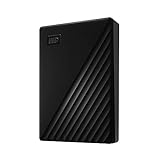


Top 3 picks at a glance
Quick Picks
| Product | Best for | Price |
|---|---|---|
| WD 2TB My Passport | Encrypted everyday backup | $133.90 |
| WD 2TB Elements Portable | Plug-and-play simplicity | $135.50 |
| WD 5TB Elements Portable | Mid-capacity portability | $214.10 |
| WD 20TB Elements Desktop | Bulk desktop storage | $764.99 |
| WD 6TB Elements Portable | Large portable files | $258.00 |
| WD 4TB My Passport | Balanced capacity and security | $180.10 |
| WD 5TB My Passport | Maximum portable capacity with encryption | $215.39 |
| WD 8TB Elements Desktop | High-capacity desktop on a budget | $379.99 |
How We Picked
We narrowed this list using three criteria that consistently predict owner satisfaction across the WD external range: price per terabyte relative to the drive’s feature set, the gap between what the included software actually does versus what it promises, and whether the physical form factor matches a realistic use pattern. A drive with encryption that sits on a desk behind a locked door wastes its security hardware; a barebones Elements model with no software feels hollow when it is being slipped into a laptop bag every day. We also weighted published USB standard compatibility because the difference between USB 3.0 and USB 3.1 Gen 1 is negligible, but the difference between a desktop drive that needs external power and a portable one that does not shapes your entire workflow. Price was never a tiebreaker on its own — it was always considered against capacity and features.
The 8 Best Wd External Hard Drive in 2026
WD 2TB My Passport
This is the My Passport model most people should consider first if they need a drive that travels. Its included backup software adds ransomware defense and password protection, which means a stolen or lost drive is far less damaging than an unprotected Elements model at the same price point. The USB 3.1 compatibility ensures it talks to both older and newer ports without fuss.
- Pro: Hardware encryption with password protection is the key differentiator for anyone storing sensitive files outside the home.
- Pro: The backup suite handles scheduled backups without third-party software, simplifying the routine.
- Con: At 2TB, you will feel the ceiling quickly if you are archiving video or large project folders.
Skip it if your files are not sensitive and you would rather spend the difference on capacity from an Elements drive.
WD 2TB Elements Portable
The Elements Portable strips the experience to its core: plug it in, it shows up, drag files over. For Windows and Mac users who already run their own backup solution or simply want a reliable archive target without software bloat, this is the cleanest option in WD’s lineup. The USB 3.2 Gen 1 connection is functionally identical to USB 3.0, so there is no meaningful speed penalty for most buyers.
- Pro: Zero setup friction — no accounts, no software installations, no prompts.
- Pro: Slightly lower price than the My Passport at equivalent capacity when software features are irrelevant to you.
- Con: No encryption means the drive is readable by anyone who picks it up.
Skip it if you carry the drive between locations or store anything you would not want exposed.
WD 5TB Elements Portable
This sits in the capacity sweet spot for portable storage: enough room for a full photo library, several seasons of video projects, or a system clone plus working files, without the thickness and weight penalty of 8TB-plus portables. The Elements simplicity carries over — plug and play, no software, no fuss. For creative professionals who need raw space and trust their own backup tools, the value per terabyte is among the best here.
- Pro: Generous capacity in a form factor that still fits comfortably in a laptop sleeve.
- Pro: Price per terabyte drops noticeably compared to the 2TB Elements model.
- Con: Still no built-in encryption or backup software.
Skip it if you need security features baked into the drive itself.
WD 20TB Elements Desktop
This is the heavy-duty option for people who treat an external drive as a secondary data vault. A media server, a surveillance system, a home office NAS replacement — these are the use cases where 20TB of plug-and-play storage earns its price. Because it requires external power and stays stationary, the lack of portability is not a drawback; it is the design. Owner feedback consistently highlights reliability over years of continuous operation.
- Pro: The highest raw capacity in this list, reducing the need to juggle multiple drives.
- Pro: Desktop form factor typically runs cooler and quieter than stacked portable drives doing the same job.
- Con: The upfront cost is substantial, and the drive is useless if you need to carry data anywhere.
Skip it unless your total storage need genuinely exceeds what the 8TB Elements Desktop covers.
WD 6TB Elements Portable
At the upper edge of what portable bus-powered drives can deliver, this model targets users who need more than 5TB but do not want to add a power adapter to their bag. The practical benefit is straightforward: fewer file-management headaches when your archive exceeds what smaller drives can hold. The Elements no-software philosophy means it integrates cleanly with existing backup pipelines.
- Pro: Excellent price per terabyte for a portable, bus-powered form factor.
- Pro: Compatible with both Windows and Mac without reformatting or driver installation.
- Con: Some laptop USB ports may deliver insufficient power, requiring a Y-cable or a closer port.
Skip it if your backup workflow depends on hardware encryption being present in the drive itself.
WD 4TB My Passport
This doubles the capacity of the 2TB My Passport while keeping every security feature intact, making it the logical choice for users who want encryption and scheduled backup software but have outgrown the smallest tier. The ransomware defense in the bundled software adds a layer of protection that matters more as these attacks target backup destinations directly. For freelance designers, accountants, or anyone whose files have professional or legal sensitivity, 4TB with security is the baseline.
- Pro: Meaningful capacity increase at a price still within reach of most budgets.
- Pro: Same encryption and backup software suite as the smaller model, so the security features scale with your data.
- Con: The price premium over an Elements drive at similar capacity is the tax you pay for software you may never use.
Skip it if you already run a third-party backup solution that handles scheduling and versioning.
WD 5TB My Passport
The highest-capacity My Passport in this roundup, this model serves users who need both a large portable drive and the security layer that WD’s software provides. For photographers working with raw files, or for anyone whose sensitive documents have accumulated over years without a backup, 5TB removes the pressure of pruning folders to fit. The USB 3.1 backward compatibility ensures it works on machines that predate the USB 3.0 standard by a wide margin.
- Pro: Best available capacity in a portable WD drive with integrated encryption.
- Pro: The ransomware defense feature provides ongoing protection for the backup destination, not just the source machine.
- Con: Slightly heavier and thicker than the 2TB My Passport, which may matter if you travel with the drive daily.
Skip it if you can separate your sensitive data onto a smaller encrypted drive and keep bulk files on a cheaper unencrypted model.
WD 8TB Elements Desktop
This desktop model occupies the most practical position in WD’s desktop range: large enough to store a full media library or multiple system backups, yet priced below the 20TB option enough that the value proposition remains clear. For home offices that have outgrown a 4TB drive but are not yet running a server farm, 8TB on a desktop eliminates the need for multi-drive management. Owner feedback frequently notes long-term reliability as a primary reason for repurchase.
- Pro: Strong price per terabyte for a desktop drive, making bulk storage accessible without a server-class investment.
- Pro: External power delivery means consistent performance regardless of your computer’s USB port quality.
- Con: Not portable — the power cable requirement locks it to one location.
Skip it if you have any need to move files between machines; a portable Elements or My Passport serves that job better.
Buying Guide
Portable vs. Desktop: The Decision That Shapes Everything
Portable drives are bus-powered, meaning a single USB cable draws all the electricity they need from your computer. This makes them convenient but imposes a ceiling: most portable WD drives top out around 6TB, and some laptops cannot supply enough current to a 5TB or 6TB portable drive through a single port without a Y-cable or a powered hub. Desktop drives require their own wall adapter, adding bulk and a second cable, but they run cooler, often faster, and reach capacities that portable models cannot. If the drive will live in a bag, buy portable. If it will sit next to your computer permanently, a desktop drive almost always delivers more terabytes per dollar and more stable performance over time.
Software Features: What You Actually Use vs. What You Ignore
The My Passport line bundles backup software, password protection, and ransomware defense. These features are genuinely valuable only in specific scenarios: if the drive leaves your home, if it stores tax documents or client files, or if you have never configured a backup routine and the included software lowers that barrier. For everyone else, these tools sit unused and represent a price premium over the identical-capacity Elements drive. Be honest about your habits before paying for software you will not enable.
USB Standard: Compatibility vs. Real-World Speed
WD markets these drives across USB 3.0, USB 3.1, and USB 3.2 Gen 1 designations, which can cause confusion. In practice, all three refer to the same 5Gbps signaling rate, so there is no performance difference between a drive labeled USB 3.0 and one labeled USB 3.1 or 3.2 Gen 1. What matters is mechanical fit and backward compatibility with your existing ports, both of which every drive here handles. Do not pay more or choose differently based on USB naming alone.
Our Verdict
The WD 2TB My Passport is the top pick overall because it balances price, capacity adequacy for most users, and the security features that make a portable drive safe to carry. The WD 2TB Elements Portable is the budget pick for anyone who does not need encryption and simply wants a reliable, software-free archive target at the lowest entry price. The WD 20TB Elements Desktop wins outright if your total storage need exceeds 8TB and the drive will never leave its shelf — no other model here approaches its capacity, and the price per terabyte is competitive once you account for the desktop form factor.
FAQ
Do WD external hard drives need to be formatted for Mac?
Most WD Elements and My Passport drives ship formatted for Windows (NTFS), which means they appear read-only on macOS. Reformatting to exFAT or APFS takes a few minutes through Disk Utility, and WD provides the same tools across both lines. If you work on both platforms, exFAT is the simplest cross-compatible choice.
Can I use a desktop drive as a portable backup?
Technically yes, but practically no. Desktop drives require a wall adapter and a second cable, making them awkward to carry and dependent on a power outlet. A portable bus-powered drive draws everything it needs from the USB port itself. Choose the form factor that matches how you actually move files, not how you theoretically could.
Is the ransomware defense on My Passport drives worth using?
The feature works by monitoring the backup folder for unusual modification patterns and alerting you before overwriting known-good versions. It is not a substitute for proper system-level antivirus, but it adds a useful layer specifically targeting backup corruption, which is a common ransomware tactic. If you use the included backup software at all, enabling this costs nothing extra.
How long do WD external drives typically last?
Owner-reported lifespans vary widely depending on usage patterns, but mechanical drives in general are rated for several years of intermittent use. Portable drives that are frequently jostled in bags tend to fail earlier than desktop drives that remain stationary. WD offers a limited warranty on all models listed here, so checking the specific warranty period before purchase is worthwhile.


