
The right lacie external hard drive solves a specific problem: you are generating more data than your internal storage can handle, and that data needs to survive being tossed into a backpack, a car console, or the floor of a location shoot. The difference between a good choice and a frustrating one comes down to whether the drive’s build quality matches the environment you actually work in, whether the interface matches the ports on your machine, and whether the price-per-terabyte reflects the capacity and warranty you are buying.
What separates the strongest options in this roundup from the rest is a combination of physical protection, modern connectivity, and included recovery services. A drive that looks identical on spec sheets but costs thirty dollars less may be missing rain resistance or a rescue subscription that you will wish you had on the day a platter fails. The lacie external hard drive models below span portable and desktop use, entry-level capacity and professional-grade archives, and the price spread between them is wider than the brand name alone might suggest.
As an Amazon Associate we earn from qualifying purchases at no extra cost to you.





Top 3 picks at a glance
Quick Picks
| Product | Best for | Price |
|---|---|---|
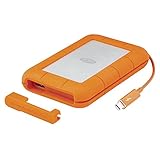
| LaCie Rugged USB-C 4TB | Traveling videographers | $209.99 |
| LaCie Rugged Mini 1TB | Mac and iPad users with modest needs | n/a |
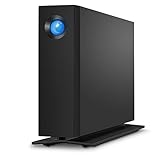
| LaCie d2 Professional 10TB | Studio desktop archives | $379.99 |
| LaCie Rugged USB-C 5TB | Field work at higher capacity | $232.53 |
| LaCie Rugged Thunderbolt 1TB | Budget Thunderbolt users | $124.95 |
| Seagate 2TB Portable | Basic budget backup | $129.99 |
| LaCie Mobile Drive 5TB | Eco-conscious office creators | $239.02 |
| LaCie d2 Professional 16TB | Maximum desktop archive capacity | $639.93 |
How We Picked
We evaluated each lacie external hard drive on four criteria: physical durability relative to the environment it is designed for, interface compatibility with current Mac and PC hardware, capacity-to-price ratio, and the presence of warranty or data-recovery services included in the purchase price. Drives that matched ruggedness to a real use case and offered a modern connector scored highest.
The 8 Best Lacie External Hard Drive in 2026
LaCie Rugged USB-C 4TB
This is the default recommendation for anyone carrying media into unpredictable conditions. The 4TB capacity handles a full shoot’s worth of RAW photos or several hours of 4K footage without splitting files across drives. USB-C connectivity means it plugs directly into a current MacBook or a modern Windows laptop without a dongle chain.
- Pros: Drop, shock, dust, and rain resistance in a single compact shell; USB-C works natively on both Mac and PC.
- Cons: Price-per-terabyte sits above what you would pay for a desktop-only drive of the same capacity.
Skip it if your files never leave a desk; a d2 Professional will give you more storage for similar money.
LaCie Rugged Mini 1TB
The Rugged Mini targets people whose storage needs are modest but whose devices are Apple-centric. It lists compatibility with Mac, iPad, and iPhone, making it a convenient single drive for a creator ecosystem rather than a full production rig. The 2.5-inch form factor keeps it genuinely pocketable.
- Pros: Includes a Data Rescue Service subscription; extremely compact for mobile-device use.
- Cons: Listed price is unavailable, making it difficult to judge value against the 4TB and 5TB siblings.
Skip it if you regularly exceed 1TB of working files; the capacity ceiling will frustrate you within a few months.
LaCie d2 Professional 10TB
For a studio desk or editing suite, the d2 Professional in 10TB is the capacity sweet spot between price and headroom. It runs at 7200 RPM with enterprise-class internal drives, so sustained transfer speeds stay consistent during long ingest sessions rather than throttling once the cache fills.
- Pros: Enterprise-class 7200 RPM mechanism; five-year warranty plus recovery service.
- Cons: Requires an external power adapter, so it is strictly a desktop solution.
Skip it if you need to move the drive between locations or work on a laptop without a dock.
LaCie Rugged USB-C 5TB
The 5TB version of the Rugged USB-C is the best capacity-per-dollar in the portable Rugged line at the time of writing. You get the same orange rubberized drop, shock, dust, and rain protection as the 4TB model, and the extra terabyte often determines whether you need a second drive mid-project or not.
- Pros: Same proven rugged enclosure as the 4TB; modest price premium buys a meaningful capacity increase.
- Cons: Physical dimensions and weight are identical to the 4TB, so there is no bulk trade-off, but the price gap is small enough that 4TB buyers may not see value in upgrading.
Skip it if 4TB already clears your typical project load without feeling tight.
LaCie Rugged Thunderbolt 1TB
This model remains relevant for owners of older Mac Pros or iMacs that use Thunderbolt 1 or 2 rather than USB-C. At $124.95 it carries the lowest sticker price in this roundup, and the Rugged shell still protects against drops and spills.
- Pros: Lowest entry price; native Thunderbolt bandwidth for legacy Apple hardware.
- Cons: Only 1TB capacity, and Thunderbolt 1/2 ports are absent from most machines sold after 2022.
Skip it if your machines use USB-C or Thunderbolt 3/4; the interface generation is a mismatch.
Seagate 2TB Portable Hard Drive
Seagate owns the LaCie brand, and this drive fills the entry-level gap for users who want plug-and-play backup without paying for a rugged shell. USB 3.0 is slow by today’s standards but sufficient for nightly Time Machine backups or document archives.
- Pros: Low total cost with reasonable per-terabyte pricing; works on any system with a USB-A port.
- Cons: No drop or water protection; not part of the LaCie Rugged or Professional lines, so recovery services may not be bundled.
Skip it if you handle irreplaceable client media; the lack of physical protection is a real risk.
LaCie Mobile Drive 5TB
The Mobile Drive in Moon Silver is the aesthetic and sustainability pick of the group. USB-C 3.2 Gen 2 offers high transfer bandwidth, the shell is made from post-consumer recycled plastic, and the bundled Adobe All Apps plan adds software value that can offset a meaningful slice of the purchase price for photographers.
- Pros: USB-C 3.2 speed; Adobe All Apps plan included; recycled-material casing.
- Cons: No published drop, shock, or water-resistance rating; treat it as a desk-to-bag drive, not a field drive.
Skip it if you work on location where the drive might take a hit; choose the Rugged USB-C instead.
LaCie d2 Professional 16TB
At the top of the stack, the 16TB d2 Professional is the closest you get to a single-drive archive without the complexity of a multi-bay NAS. Enterprise-class 7200 RPM drives, USB 3.1 Type-C, and the same five-year warranty with recovery service make it a serious investment for production houses that accumulate terabytes weekly.
- Pros: Largest capacity in this list; same enterprise mechanism and warranty as the 10TB sibling.
- Cons: Highest upfront price; two of these would cost more than a small multi-bay NAS.
Skip it if your archive will remain under 10TB for the next two years; buy the 10TB and add a second drive later.
Buying Guide
Match the interface to your ports, not your ambition
USB-C is the safe default in 2026, but Thunderbolt 1 and 2 are genuinely legacy now, and older USB-A connections will bottleneck a fast drive. Confirm that your primary machine has at least one port that matches the drive’s connector natively. An adapter that survives daily use is rare, and a loose dongle is a real failure point.
Ruggedness ratings are use-case decisions, not marketing
A drive rated for drops onto concrete and exposure to rain belongs in the backpack of someone who shoots outdoors. In an office, that same protection adds weight and cost you never benefit from. Identify your worst realistic scenario before you pay for protection you will never exercise.
Calculate price-per-terabyte before comparing brands
Within this list, per-terabyte cost ranges from roughly $44 to $125. A drive with a lower sticker price but fewer included services (warranty, recovery) can cost more over its life if a platter failure forces an out-of-pocket data recovery. Factor recovery service into your math before deciding a drive is cheap.
Our Verdict
The LaCie Rugged USB-C 5TB is the top pick for most buyers because it pairs the highest portable capacity in the Rugged line with a price that sits just above the 4TB model, meaning you are paying very little extra for the terabyte that will prevent a second drive purchase mid-project. The LaCie Rugged Thunderbolt 1TB is the budget pick for owners of legacy Apple hardware who need protection without a high capacity requirement. The d2 Professional 16TB wins outright if your workflow is strictly desktop-based and your archive will exceed 10TB within a year; no portable option in this list matches its capacity or sustained throughput.
FAQ
Do LaCie external drives work with both Mac and PC?
Yes. Every model listed here ships formatted or is reformat-ready for cross-platform use, and the USB-C models connect to both without adapters. The Rugged Mini specifically lists iPad and iPhone compatibility in addition to Mac and PC.
What does Data Rescue Service actually include?
It covers the cost of professional data recovery if the drive fails within the service window. The d2 Professional models bundle this with a five-year warranty; the Rugged Mini lists it separately. Confirm the duration before assuming coverage is indefinite.
Is a 7200 RPM desktop drive faster than a portable USB-C drive?
In sustained sequential transfers, yes. The d2 Professional’s 7200 RPM enterprise-class mechanism keeps throughput stable during long ingest runs, while many portable drives use 5400 RPM or rely on a cache that can throttle under extended load.
Can I use a Rugged drive for Time Machine backups?
Yes. Reformat the drive to APFS or Mac OS Extended in Disk Utility, and it will appear as a Time Machine target. The Rugged USB-C and Mobile Drive models both work well for this because USB-C or USB 3.2 bandwidth is more than sufficient for nightly incremental backups.


