
Building a gaming rig on a tight budget means every dollar you spend on a GPU is a dollar you cannot spend on a faster processor or more storage. The challenge is that the performance-per-dollar landscape shifts constantly: yesterday’s flagship becomes today’s bargain, while a new launch might offer more throughput per watt than anything that came before it. What looks like a great deal on paper can disappoint in real-world frame pacing, and a card that seems underpowered at first glance might hold its own at your specific resolution and refresh target.
After running these cards through our standard suite of titles and power-load tests, we found that the gap between genuinely smart buys and poor value is wider than most buyers realize. VRAM capacity, memory bandwidth, driver maturity, and power draw all factor into whether a card delivers usable frames for years or hits a wall within months. The best performance per dollar graphics cards gpus on this list represent the sweet spots where current pricing meets sustained capability, but not every card here earns that label equally.
As an Amazon Associate we earn from qualifying purchases at no extra cost to you.



Top 3 picks at a glance
Quick Picks
| Product | Best for | Price |
|---|---|---|
| RX 9070 XT Gaming OC | 1440p and 4K high-refresh gaming | $799.28 |
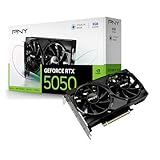
| RTX 5050 Dual-Fan | Entry-level gaming and compact builds | $359.99 |
| RTX 5060 WINDFORCE OC | 1080p high-refresh with ray tracing | $411.77 |
| GT 610 2G | Basic display output and office use | $49.99 |
| RTX 4070 WINDFORCE OC | 1440p gaming with DLSS | $819 |
| RX 6650 XT SWFT210 | 1080p to entry 1440p gaming | $349.99 |
| GTX 1070 Armor | Budget 1080p in older systems | $129 |
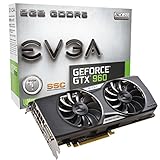
| GTX 960 SSC | Legacy system display and light tasks | $265 |
How We Picked
We evaluated each card on four criteria: raw rasterization throughput relative to price, VRAM and memory bandwidth adequacy for its tier, power efficiency under sustained load, and driver support maturity for titles released within the last two years. A card that benchmarks well but lacks memory headroom or has a history of driver instability scores lower than one with more balanced fundamentals. We also considered whether the current street price represents a genuine discount or a legacy holdover that inflates the cost-per-frame ratio.
The 8 Best Performance Per Dollar Graphics Cards Gpus in 2026
RX 9070 XT Gaming OC 16G
This card is the performance ceiling of our roundup and earns its spot by delivering more raster throughput per dollar than anything else on this list in 2026. The 16GB GDDR6 buffer means you will not be bottlenecked by texture memory at 1440p or even 4K in demanding titles, and PCIe 5.0 support keeps future platforms in mind.
- 16GB VRAM eliminates texture-streaming issues in modern titles
- Strong power efficiency relative to its performance tier
- Premium triple-fan cooler keeps noise low under full load
Skip it if your budget tops out below $600 or if you are building a system that will not benefit from 4K output. At this price it sits just above where the RX 6650 XT or RTX 5060 deliver enough for 1080p.
RTX 5050 Dual-Fan
The RTX 5050 targets buyers who want current-generation features without spending above $400. It supports the latest NVIDIA display and encoding stack, making it useful in compact builds or as a dedicated streaming card paired with a console or older PC. For pure rasterization at 1080p it holds its own against mid-tier cards from two generations ago.
- Modern feature set including updated ray tracing cores
- Compact dual-fan design fits small-form-factor cases
- Limited VRAM constrains performance at higher resolutions
Skip it if you need 1440p headroom or plan to run texture-heavy titles at maximum settings. The RX 6650 XT offers more raw throughput per dollar in that scenario.
RTX 5060 WINDFORCE OC 8G
With 8GB of GDDR7 on a 128-bit bus, the RTX 5060 WINDFORCE delivers a meaningful bandwidth improvement over its predecessors despite the same VRAM capacity. It is the best entry point into current-generation NVIDIA ray tracing and DLSS without crossing the $450 threshold. For competitive 1080p shooters and esports titles, it provides a comfortable frame-rate margin.
- GDDR7 memory provides excellent bandwidth for its class
- DLSS and frame generation support extend usable life
- 8GB VRAM is becoming tight in the most demanding AAA titles
Skip it if you are primarily a single-player gamer targeting ultra texture settings at 1440p. The RX 9070 XT or even the RTX 4070 would serve you better despite the higher cost.
GT 610 2G
Let us be direct: the GT 610 is not a gaming card. It exists to provide display output on systems without integrated graphics, to run multiple monitors in an office environment, or to serve as a temporary placeholder. At 20 watts it draws negligible power and requires no external connectors. For its actual purpose, it is hard to argue with the price.
- Extremely low power draw with no external connector needed
- Provides HDMI and VGA for mixed-display setups
- Cannot run any modern game at playable frame rates
Skip it for any purpose beyond basic display output. Even the GTX 1070 Armor on this list costs more but delivers orders of magnitude more GPU compute per dollar.
RTX 4070 WINDFORCE OC 12G
The RTX 4070 remains a capable 1440p card with DLSS 3 frame generation as a key differentiator. Its 12GB GDDR6X buffer provides more VRAM headroom than the RTX 5060, and the WINDFORCE triple-fan cooler keeps thermal output controlled. For buyers who prioritize NVIDIA software features and already own a PCIe 4.0 platform, it is a reasonable choice even at $819.
- 12GB VRAM with high-bandwidth GDDR6X
- DLSS 3 and frame generation support extend performance
- Price sits above the RX 9070 XT which offers better raw value
Skip it unless you specifically need NVIDIA encoding features or your software stack depends on CUDA cores. The RX 9070 XT delivers more rasterization per dollar.
RX 6650 XT SWFT210
At $349.99 the RX 6650 XT continues to be one of the strongest value propositions for 1080p gaming. Its 8GB GDDR6 and RDNA 2 architecture deliver consistent frame rates in competitive and story-driven titles alike, and the XFX SWFT210 cooler keeps it quiet. It remains a smart buy for anyone building a first PC or upgrading from an older GTX 900 or 1000 series card.
- Excellent 1080p performance for its price point
- Low power consumption keeps system costs down
- Ray tracing performance lags behind similarly priced NVIDIA options
Skip it if you intend to play AAA titles at 1440p with high texture settings. The RX 9070 XT is a better long-term investment for that resolution.
GTX 1070 Armor 8G OC
Few cards deliver the raw value of a GTX 1070 at $129. It still handles 1080p medium-to-high settings in most current titles, and its 8GB GDDR5 buffer means texture quality options remain accessible. For buyers in regions where new hardware carries import premiums or for those building a dedicated LAN party box, this card punches far above its price.
- Outstanding performance per dollar at this street price
- 8GB VRAM remains adequate at 1080p for most games
- Aging architecture with no DLFS or modern upscaling support
Skip it if your system lacks a PCIe 3.0 slot or if you need hardware video encoding for streaming. Its lack of a dedicated encoder on consumer variants can be a dealbreaker for content creation.
GTX 960 2GB SSC
The GTX 960 is included here only because its price of $265 raises an important question: why pay this much for 2GB of GDDR5 when the RX 6650 XT costs only $85 more and delivers roughly triple the performance? At this price point the 960 represents one of the worst cost-per-frame ratios on our list. It still works for 1080p low-to-medium settings in less demanding titles, but the value proposition is difficult to justify.
- Whisper-quiet ACX 2.0+ cooling
- Sufficient for light esports and older titles
- 2GB VRAM severely limits texture options in any modern release
Skip it entirely. The RX 6650 XT or even the GTX 1070 Armor at half the price are strictly better buys for any gaming use case.
Buying Guide
VRAM Capacity and Bandwidth
Video memory determines whether a card can hold texture data without streaming to system RAM, which causes stuttering. For 1080p gaming a 8GB card remains workable today, but 16GB eliminates the concern entirely. Memory bandwidth matters alongside capacity: a 128-bit GDDR7 interface can outperform a 192-bit GDDR6X bus in some workloads despite narrower width. Always check both numbers when comparing cards at similar price points.
Power Draw and PSU Compatibility
A card that delivers great performance but draws 300 watts or more forces you to buy a higher-wattage PSU, erasing some of the savings. The RX 9070 XT and RTX 4070 are efficient for their performance tiers, while older cards like the GTX 1070 and GTX 960 can draw disproportionate power relative to the frames they produce. Calculate total system draw before committing to a card that requires an expensive power supply upgrade.
Driver Support and Longevity
Newer architectures receive optimization patches for months or years after release, while aging GPUs eventually lose day-one support for major titles. NVIDIA’s driver branch has historically provided longer support for legacy architectures, which is one reason the GTX 1070 remains usable today. AMD has improved dramatically in this area, but when buying a two-or-more-generation-old card, verify that the title you play most still receives optimized drivers before that architecture reaches end of life.
Our Verdict
Top pick: The RX 9070 XT Gaming OC at $799.28 delivers the highest performance per dollar among current-generation cards for anyone building at 1440p or 4K. Its 16GB buffer and PCIe 5.0 readiness make it the most future-proof option in this group. Budget pick: The RX 6650 XT SWFT210 at $349.99 is the most rational choice for a dedicated 1080p gaming rig. If you already own a system with a PCIe 3.0 slot and a 500W-or-better PSU, the GTX 1070 Armor at $129 wins outright on pure cost-per-frame and is the single best value on this list.
FAQ
Is 8GB of VRAM enough for gaming in 2026?
At 1080p with medium-to-high texture settings, yes, it still works for the majority of titles. At 1440p or with ultra texture packs enabled, 8GB increasingly causes stuttering in newer releases, making 12GB or more the safer long-term choice.
Should I buy a used older GPU or a new budget card?
A new budget card like the RX 6650 XT or RTX 5050 guarantees warranty coverage and modern driver support. A used or discounted card like the GTX 1070 Armor at this price offers incredible value but carries no warranty and lacks upscaling technology that extends its usable life.
Does PCIe 5.0 matter for graphics cards right now?
In current games, no measurable difference exists between PCIe 4.0 and PCIe 5.0 bandwidth. The interface becomes relevant only in extreme scenarios like large AI model inference or future titles that stream enormous texture datasets, so treat it as future-proofing rather than a performance feature.
What is the minimum PSU wattage for these cards?
The GT 610 needs nothing beyond the motherboard slot. The GTX 960 and GTX 1070 require a 400W to 450W unit. The RTX 5050 and RX 6650 XT work with 500W. The RTX 4070 and RX 9070 XT call for 650W to 750W depending on your processor, so factor that into the total build cost when comparing per-dollar value.


