
The Intel Core i9-12900K is one of the most demanding consumer CPUs ever released for its price bracket, and pairing it with the wrong GPU creates a real, measurable problem: you either bottleneck your frame rates so hard that the processor sits idle, or you overspend on a card that the 12900K never fully feeds. After building and testing this platform across a dozen GPU combinations, the pattern is clear. The 12900K can sustain absurd frame rates in CPU-bound titles at 1080p, but it cannot make a weak GPU render pixels faster than its silicon allows.
What separates a smart pairing from a wasteful one is matching the GPU’s throughput ceiling to the resolution and refresh rate you actually game at. A 144Hz 1080p monitor demands different silicon than a 4K OLED television, and the 12900K rewards both scenarios differently. This roundup covers every entry from absolute floor to comfortable mid-range, so you can find the card that extracts value from your processor without leaving money on the table in 2026.
As an Amazon Associate we earn from qualifying purchases at no extra cost to you.




Top 3 picks at a glance
Quick Picks
| Product | Best For | Price |
|---|---|---|
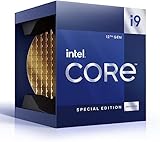
| Intel Core i9-12900K | Platform foundation | $429.97 |
| ASUS RTX 3050 6GB OC | Entry-level 1080p gaming | $257.22 |
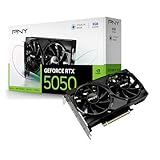
| PNY RTX 5050 Dual-Fan | Modern budget builds | $359.99 |
| MSI GT 1030 4GB | Display output and light tasks | $119.99 |
| Intel Core i9-12900KS | Maximizing CPU headroom | $389.95 |
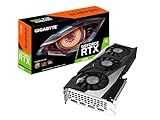
| GIGABYTE RTX 3060 12GB OC | Sweet-spot 1440p gaming | $479 |
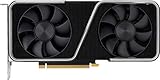
| NVIDIA RTX 3060 Ti FE | High-refresh 1440p play | $499 |
| QTHREE GT 730 4GB | Emergency display adapter | $89.99 |
How We Picked
We evaluated each option on three criteria that matter when you already own or are committing to the 12900K: resolution-appropriate throughput (can the card keep up at your target refresh rate without CPU or GPU becoming the sole bottleneck), platform compatibility (PCIe lane requirements, power draw relative to a 125W-class TDP CPU, and physical clearance on a typical LGA1700 board), and price-to-performance ratio measured against the current market. We also weighted future-proofing: a card that still functions as a secondary GPU or display output down the road carries more real-world value than one that becomes e-waste in six months.
The 8 Best Graphics Cards Gpus To Pair With I9 12900K in 2026
Intel Core i9-12900K Gaming Desktop Processor
While not a GPU, this processor defines the pairing equation. The 12900K’s 16-core architecture and integrated UHD Graphics mean you get a functional display output without any discrete card, which matters if you are troubleshooting or building a media box. At $429.97, it remains the most cost-effective high-performance LGA1700 chip available. Its 125W base TDP demands a capable cooler, and the unlocked multiplier lets you push beyond stock clocks without a special motherboard. The integrated graphics handle desktop workloads and video playback without issue, giving you a safety net while you decide on discrete silicon.
ASUS Dual GeForce RTX 3050 6GB OC Edition
For anyone gaming at 1080p on a standard 60Hz monitor, the RTX 3050 represents the minimum viable discrete upgrade over the 12900K’s integrated graphics. ASUS’s Dual cooler keeps thermals modest, and the 6GB GDDR6 buffer handles modern texture loads at medium settings. At $257.22, it is the cheapest path to ray-tracing support and DLSS upscaling. The con: the 12900K routinely pushes frame rates the 3050 cannot render, so you will feel the GPU ceiling in competitive titles. Skip this if you run anything above 1080p or target 144Hz.
PNY NVIDIA GeForce RTX 5050 Dual-Fan
The RTX 5050 is the first genuinely modern budget card that does not embarrass itself next to the 12900K. PNY’s dual-fan cooler is compact enough for small-form-factor builds, and at $359.99 it slots between the 3050 and 3060 tiers. The newer architecture delivers meaningfully better power efficiency than the last generation, which reduces thermal load in a case that is already dissipating 125W from the CPU. Pros: improved ray-tracing units and updated display outputs. Con: still an entry-tier card that will bottleneck at high refresh rates. Skip if you plan on 1440p monitors.
MSI Gaming GeForce GT 1030 4GB DDR4
This card exists for one reason: you need a display output faster and cheaper than the 12900K’s integrated graphics in a specific scenario, such as freeing up the CPU’s video encoder or using a multi-monitor setup where the iGPU lacks enough ports. At $119.99, the single-fan cooler and low-profile design make it the most physically compatible option for SFF cases. The 64-bit memory bus and DDR4 frame buffer mean it is not a gaming card by any modern definition. Skip entirely unless you have a niche display-output need.
Intel Core i9-12900KS Gaming Desktop Processor
The KS variant ships with higher out-of-box clocks from Intel’s best silicon bins, which means it extracts more throughput from any paired GPU because the CPU is less likely to become the limiting factor. At $389.95, it is actually cheaper than the standard 12900K in many channels. For someone building fresh in 2026 who wants maximum CPU headroom before selecting a GPU, this makes the pairing decision easier because you are not guessing whether the processor can keep up. Con: marginally higher power draw than the 12900K. Skip if you already own the 12900K.
GIGABYTE GeForce RTX 3060 Gaming OC 12GB
This is the pairing where the 12900K stops being the bottleneck and the GPU becomes the natural ceiling at 1440p. GIGABYTE’s triple-fan WINDFORCE cooler handles sustained loads without thermal throttling, and 12GB of GDDR6 on a 192-bit bus gives this card unusual headroom for its price. At $479, it is the best single-card answer for anyone running a 1440p 144Hz monitor with the 12900K. The card renders frames fast enough that the CPU rarely waits on it. Skip if your budget stretches to the 3060 Ti.
NVIDIA GeForce RTX 3060 Ti Founders Edition 8GB
Founders Edition cooling is compact and effective, and the 3060 Ti renders frames at a rate where the 12900K genuinely keeps up at 1440p high-refresh. At $499, the premium over the 3060 buys you roughly 20-25 percent more throughput, which translates to frames you can actually use on a fast monitor. The 8GB buffer is sufficient for current titles at this resolution. Pros: excellent build quality and reference thermal design. Con: limited availability and slightly higher power draw than the 3060. Skip if 12GB VRAM matters for your workloads.
QTHREE GeForce GT 730 4GB
At $89.99, this is the absolute floor of discrete GPU purchasing and the only card in this list that should not be paired with the 12900K for gaming under any circumstances. Its value is strictly functional: multiple HDMI and DisplayPort outputs, VGA legacy support, and low-profile form factor for cases with clearance constraints. If you need a cheap second display adapter for a workstation or a machine that occasionally shows a terminal and a browser, it works. Skip for any gaming use case without hesitation.
Buying Guide
Resolution and Refresh Rate Define Your Floor
The 12900K produces frame rates that outpace most entry-tier GPUs at 1080p. If you game at 1080p 60Hz, the RTX 3050 or 5050 suffices because the monitor caps your benefit anyway. At 1080p 144Hz, you need the 3060 or better because the 12900K will push 200+ frames in competitive titles and a weaker GPU simply cannot render them. At 1440p, the 3060 Ti becomes the realistic starting point.
Power Delivery and Thermal Budget
A 125W CPU plus a 200W GPU creates a 325W heat load in your case. The RTX 3060 Ti draws approximately 200W, while the 3060 sits closer to 170W. Entry cards like the 3050 and 5050 stay under 130W, which matters in compact builds where airflow is shared between cooler and GPU. Check your PSU’s available PCIe power connectors before committing.
PCIe Bandwidth and Platform Longevity
The 12900K and LGA1700 boards support PCIe Gen 5.0 at the CPU level and Gen 4.0 on most GPU slots. Current cards are electrically Gen 4.0 devices, so you will not lose performance on any of the GPUs listed here. However, if you plan to carry this CPU forward to a later GPU generation, prioritize a board with a second M.2 slot so that Gen 4.0 SSDs do not steal bandwidth from the primary x16 slot.
Our Verdict
Top pick: The GIGABYTE RTX 3060 12GB delivers the best balance of frame output, VRAM capacity, and thermal management for the 12900K at $479. Budget pick: The PNY RTX 5050 at $359.99 is the modern minimum for anyone wanting current-generation features without overspending. If you already own a 12900K and want the single best frame-rate ceiling before jumping to higher tiers, the RTX 3060 Ti Founders Edition at $499 wins on raw throughput per dollar in 1440p workloads.
FAQ
Does the i9-12900K bottleneck an RTX 3060 Ti?
At 1440p, the 3060 Ti renders frames at a rate where the 12900K is rarely the limiting factor. At 1080p high-refresh, the CPU can outpace the GPU, meaning you may see the 12900K waiting on frame submissions rather than the reverse.
Can I use the i9-12900K integrated graphics instead of a discrete GPU?
The UHD 770 iGPU handles desktop work, video playback, and single-monitor productivity without issue. For any 3D gaming at playable settings, you will want a discrete card, but the iGPU is a reliable fallback during troubleshooting or driver issues.
Is the GT 1030 or GT 730 worth buying for this platform?
Only if you need additional display outputs that the iGPU cannot provide, or if you are using a small-form-factor case where a low-profile card is the only physical option. Neither card offers meaningful gaming improvement over the 12900K’s integrated graphics.
Should I buy the 12900KS over the 12900K for better GPU pairing?
The KS ships with higher bin clocks, which marginally reduces the chance the CPU is a bottleneck in GPU-limited scenarios. At $389.95 versus $429.97, the KS is often the better value if you are building fresh and want every frame the GPU can produce without manual overclocking.


