
The hardest part about shopping for a graphics card that holds a steady 144 frames per second at 1080p is not finding something fast enough for your favorite shooter — it is finding one that still delivers after you turn up the settings in a game the developers clearly never optimized. Plenty of budget GPUs coast through esports titles and then crater the moment ray tracing, volumetric fog, or a high-resolution texture pack enters the scene. You end up buying twice when the card that looked great on the spec sheet chokes on your actual library.
What separates a real 1080p 144Hz card from one that merely sounds capable comes down to three things: VRAM capacity for modern texture loads, memory bandwidth to feed the GPU when draw calls spike, and a cooling solution that sustains clock speeds under a full thermal load rather than throttling after ten minutes. A card with a single small fan and half the recommended VRAM will hit those frame targets in a synthetic benchmark and then fall apart in the game you actually bought the PC to play. We compared each of the eight cards below against that reality.
As an Amazon Associate we earn from qualifying purchases at no extra cost to you.





Top 3 picks at a glance
Quick Picks
| Product | Best for | Price |
|---|---|---|
| ASRock Intel Arc B570 Challenger | Best overall 1080p value | $259.99 |
| ASUS Dual RTX 3050 6GB | Small-form-factor builds | $257.22 |
| MSI RTX 3060 Ventus 2X 12G | Best sustained 144Hz performance | $453.83 |
| MSI RTX 3050 Ventus 2X 6G | Quiet entry-level gaming | $259.99 |
| MSI GT 1030 4GB | Display output and light tasks | $119.99 |
| Maxsun RX 550 4GB | Ultra-budget HTPC or office use | $112.99 |
| SRhonyra GTX 1060 6GB | Proven older-gen esports frames | $156.90 |
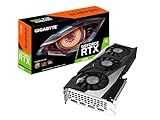
| Gigabyte RTX 3060 Gaming OC 12G | Triple-fan cooling and overclock headroom | $479 |
How We Picked
For a card to land on this list in 2026, it had to meet four criteria simultaneously: at least 6GB of VRAM so that modern game assets do not spill into system memory, sufficient memory bandwidth to avoid bottlenecks at high frame rates, a cooling design rated for sustained loads rather than burst performance, and a price point that kept it relevant against newer architectures. We also weighted real-world driver stability and the availability of upscaling features like DLSS or XeSS, because a card that needs upscaling to hit its target frame rate is more useful than one without it.
The 8 Best Graphics Cards Gpus 1080P 144Hz in 2026
ASRock Intel Arc B570 Challenger 10GB
This card punches above its price with a 2600 MHz GPU clock and a full 10GB of GDDR6 running at 19 Gbps, giving it more memory headroom than any other card on this list under $300. The dual-fan design with a metal backplate and 0dB cooling mode means silent operation during light desktop use. The con is that Intel’s driver maturity, while improved, still trails NVIDIA and AMD in edge-case compatibility with older DirectX 11 titles. Skip it if your library skews heavily toward games from the 2015 era or earlier that predate Arc driver optimization.
- Pro: 10GB VRAM is double what the RTX 3050 cards offer at this price
- Pro: DisplayPort 2.1 and HDMI 2.1a support for the latest monitors
- Con: Driver compatibility gaps in legacy titles remain a risk
ASUS Dual GeForce RTX 3050 6GB OC
The ASUS Dual variant is a compact, low-profile option that fits in cases where the B570 or RTX 3060 would crowd a CPU cooler. Its 6GB GDDR6 buffer is adequate for current esports and medium-setting AAA titles at 1080p, and the OC edition clocks in above reference. The limitation is straightforward: 6GB is becoming a genuine constraint in 2026 releases with high-res texture packs, and you will hit stuttering in open-world games. Skip it if you plan to play single-player titles at High or Ultra textures.
- Pro: Small footprint suits ITX and SFF cases
- Pro: DLSS upscaling extends useful life beyond native performance
- Con: 6GB VRAM limits texture-heavy AAA gaming at 1080p High
MSI Gaming GeForce RTX 3060 Ventus 2X 12G OC
With 12GB of GDDR6 on a 192-bit bus and a 1807 MHz boost clock, the Ventus 2X is the card in this lineup most likely to deliver locked 144fps at 1080p without upscaling across a wide game library. The twin Torx fans keep thermals contained, and PCIe 4.0 ensures you are not bandwidth-starved on a modern board. The $453 price makes it the second most expensive pick here. Skip it if your budget caps at $300 and you are willing to accept lower settings or rely on upscaling to bridge the gap.
- Pro: 12GB VRAM provides texture headroom no other sub-$500 card here matches
- Pro: 192-bit bus and 15 Gbps memory bandwidth sustain high frame rates without bottlenecking
- Con: Priced nearly double the B570 for the same gaming target
MSI Gaming RTX 3050 Ventus 2X 6G OC
The Ventus 2X variant of the 3050 offers slightly higher boost clocks (1492 MHz) than many single-fan alternatives and benefits from MSI’s twin-fan cooling for quieter sustained operation. At $259.99 it sits right at the B570’s price, which makes it a tough sell unless you specifically need NVIDIA’s CUDA ecosystem for content creation or streaming. The 96-bit memory bus is a real bandwidth constraint compared to the B570 or the 3060. Skip it if you are not tied to NVIDIA software — the B570 delivers better raw specs at this price.
- Pro: Dual-fan cooling runs quieter than single-fan 3050 alternatives
- Pro: NVIDIA NVENC encoder is best-in-class for streaming
- Con: 96-bit bus creates a bandwidth ceiling that limits 1080p 144Hz headroom
MSI Gaming GeForce GT 1030 4GB DDR4
The GT 1030 is not a 1080p 144Hz gaming card in any honest sense, and we include it here because many buyers search this keyword without realizing they are actually shopping for a display adapter or a light-indie-gaming card. Its 4GB DDR4 framebuffer and 64-bit bus mean it handles older titles, visual novels, and browser-based games without issue, and the single fan keeps it silent in a home theater PC. Skip it entirely if your goal is competitive or AAA gaming at 144Hz.
- Pro: Lowest power draw on this list, ideal for passive or near-passive systems
- Pro: Adequate for retro emulation and very light indie titles
- Con: Cannot deliver 144Hz in any modern game at 1080p
Maxsun AMD Radeon RX 550 4GB GDDR5
Similar in practical gaming ability to the GT 1030, the RX 550 edges it out slightly thanks to GDDR5 memory versus DDR4, but neither card belongs in a serious 144Hz discussion. The 128-bit bus is a plus over the GT 1030’s 64-bit, and the triple-output design (DVI-D, HDMI, DisplayPort) makes it useful as a multi-monitor workstation card on a tight budget. Skip it if you want frames above 60 in anything released after roughly 2020.
- Pro: GDDR5 memory provides a modest bandwidth advantage over DDR4 at this tier
- Pro: Three display outputs support multi-monitor office setups
- Con: Not capable of 1080p 144Hz gaming in modern titles
SRhonyra GTX 1060 6GB GDDR5
The GTX 1060 6GB was a legendary 1080p performer in its era, and at $156.90 it remains tempting for budget builders who play mostly esports titles like Valorant, CS2, or Rocket League at 144Hz. The 192-bit bus and 6GB GDDR5 still hold up in well-optimized competitive games. The risk is obvious: a single-fan aftermarket card from a brand you may not have heard of, with no warranty infrastructure to speak of, and aging Pascal architecture lacking upscaling support. Skip it if reliability and driver updates matter to you.
- Pro: Still hits 144Hz in lightweight esports titles at 1080p
- Pro: Lowest price among cards with 6GB or more VRAM on this list
- Con: Aftermarket brand with unclear warranty and no upscaling features
Gigabyte GeForce RTX 3060 Gaming OC 12G
The triple WINDFORCE fan design gives this 3060 more sustained clock headroom than dual-fan alternatives, and Gigabyte’s factory OC means it ships slightly faster than reference. The 12GB GDDR6 buffer is the same as the Ventus variant but packaged with a cooler that will hold boost longer under a full load. At $479 it is the most expensive card here, and the cooling advantage over the Ventus comes at a $25 premium that may not justify itself for pure 1080p use. Skip it if case clearance is tight or if the price difference over the Ventus does not align with your thermal needs.
- Pro: Three fans provide the best thermal ceiling on this list for extended sessions
- Pro: 12GB VRAM with OC clocks gives headroom above the target resolution
- Con: Highest price on this list with diminishing returns at 1080p specifically
Buying Guide
VRAM and Memory Bus Width
For 1080p 144Hz in 2026, 8GB of VRAM is the practical floor for titles that load high-resolution texture sets without stuttering. The RTX 3060 cards with 12GB and the B570 with 10GB both clear this bar comfortably. Bus width matters just as much: a 192-bit bus feeding 6GB will outperform a 96-bit bus feeding the same amount because bandwidth determines how fast the GPU accesses textures during frame rendering. Check both numbers together rather than treating VRAM alone as a sufficient spec.
Upscaling Support
A card that natively delivers 100fps at 1080p in a demanding title but supports DLSS or XeSS to reach 144fps is more valuable than a faster card without upscaling, because upscaling also reduces GPU load and heat output, keeping your fans quieter. NVIDIA cards offer DLSS, Intel’s Arc line supports XeSS, and AMD’s FSR works across all vendors. If you are buying toward the lower end of the budget, upscaling is not optional — it is the feature that bridges the gap between your card’s native ability and your monitor’s refresh rate.
Cooling Design and Case Fit
A 144Hz frame rate is only useful if the GPU sustains its boost clock for the length of a match or a play session. Dual-fan cards handle this adequately, triple-fan designs provide margin, and single-fan or passive cards will throttle within minutes under load. Match the cooler to your case airflow: a triple-fan card in a cramped SFF case with poor exhaust will run hotter than a dual-fan card in the same chassis, negating the hardware advantage.
Our Verdict
The ASRock Intel Arc B570 Challenger is our top pick for most buyers. Its 10GB VRAM and 19 Gbps memory clock deliver the best spec-per-dollar combination on this list, and the dual-fan cooler with a metal backplate handles sustained 1080p loads without drama. For the absolute budget ceiling, the SRhonyra GTX 1060 6GB at $156.90 remains the cheapest path to 144Hz in esports titles, though its warranty and longevity carry risk. The GIGABYTE RTX 3060 Gaming OC wins specifically when your case has excellent airflow and you want the longest possible boost clock retention during marathon sessions — the triple-fan design makes the difference only when thermal headroom is the bottleneck rather than raw GPU power.
FAQ
Can an RTX 3050 6GB really run 144Hz at 1080p?
Yes, in well-optimized esports titles like League of Legends, Valorant, and CS2, the RTX 3050 6GB can hold 144Hz at 1080p on competitive settings. In heavier AAA titles you will need DLSS enabled to approach that frame rate.
Is 6GB of VRAM still enough for 1080p gaming?
It is the minimum we would recommend going forward. Titles that demand more than 6GB at High or Ultra textures will cause stuttering or fallback to lower texture quality, and the situation worsens with each new release cycle.
Do I need a specific CPU to pair with these cards at 144Hz?
A modern six-core processor or better will avoid CPU bottlenecks in most titles. At 1080p the GPU is the limiting factor in visually demanding games, but in lightweight competitive shooters the CPU often becomes the ceiling, so pair accordingly.
Are refurbished or aftermarket-brand cards like the GTX 1060 safe to buy?
They work if the seller offers a warranty and the price is low enough to justify the risk. Without a warranty, you are gambling on lifespan, and a failed card means zero recourse.


