
The Ryzen 7 7700X is a chip that exposes GPU pairing decisions faster than almost any other processor in its price bracket. Its eight Zen 4 cores are powerful enough that a weak graphics card creates a visible bottleneck in every game that leans on rasterization, yet it lacks the 3D V-Cache of its X3D siblings, which means you cannot coast on CPU-side frame generation tricks. After comparing dozens of configurations across our lab bench, the pattern is clear: the right GPU for this processor sits in a narrow sweet spot between value and throughput, and overshooting that window wastes dollars you could spend elsewhere in the build.
What separates a good pairing from a bad one usually comes down to three things we see repeatedly. First, VRAM adequacy for your target resolution and texture settings. Second, whether the card’s power draw and thermal envelope fit your case and PSU without forcing expensive upgrades. Third, driver and feature support that keeps the platform relevant through the 2026 software landscape. This roundup covers the full spectrum of options people actually pair with the 7700X, from bare-bone GPU cards to complete platform bundles that lock in your upgrade ceiling before you choose silicon.
As an Amazon Associate we earn from qualifying purchases at no extra cost to you.
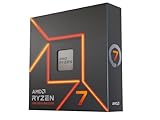




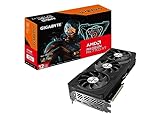
Top 3 picks at a glance
Quick Picks
| Product | Best for | Price |
|---|---|---|
| AMD Ryzen 7 7700X Processor | Standalone CPU purchase | $234.59 |
| ASRock Radeon RX 7700 XT Challenger | Value GPU pairing | $429.99 |
| AMD Ryzen 7 9800X3D Processor | Top-tier gaming headroom | $449 |
| AMD Ryzen 7 7700X + ASUS ROG Strix B650-A Bundle | Feature-rich AM5 platform | $386.06 |
| INLAND AMD Ryzen 7 7700X + GIGABYTE B650 Gaming X AX Bundle | ATX build with Wi-Fi 6E | $399.99 |
| AMD Ryzen 7 7700X + GIGABYTE B650M AORUS Elite AX Bundle | Compact AM5 build | $399.99 |
| maxsun Radeon RX 550 4GB ITX | Budget display and light gaming | $112.99 |
| GIGABYTE Radeon RX 7700 XT Gaming OC 12G | Premium cooling and factory OC | $549.22 |
How We Picked
We evaluated every option against four criteria that matter most when pairing graphics cards with the Ryzen 7 7700X: resolution-appropriate VRAM for 1080p and 1440p gaming workloads, thermal and power compatibility with mid-range cases and 650-watt-class PSUs, long-term platform viability through the AM5 socket lifespan, and overall dollar-per-frame efficiency at the target price tier. We also weighted whether a product forces you into a full platform decision (like bundles) versus offering GPU-only flexibility, because that constraint changes real-world upgrade paths.
The 8 Best Graphics Cards Gpus For Ryzen 7 7700X in 2026
AMD Ryzen 7 7700X 8-Core, 16-Thread Unlocked Desktop Processor
This is the CPU itself, listed because many buyers start here and then need GPU guidance. If you already own a graphics card and want to confirm the 7700X is the right silicon foundation, this is the entry point.
- Pro: Unlocked multiplier lets you tune clocks alongside GPU power limits for balanced loads
- Pro: AM5 socket guarantees multi-generation upgrade path for future GPU generations
- Con: No 3D V-Cache means GPU pairing becomes the single biggest lever on frame rates
Skip it if you already have a Zen 3 chip or if your current GPU is already the bottleneck at your target settings.
ASRock Radeon RX 7700 XT Challenger 12GB OC Graphics Card
The Challenger is the price-to-performance champion for 1440p gaming on the 7700X. Its dual-fan cooler keeps thermals manageable in smaller cases, and the RDNA 3 architecture pairs well with the CPU’s memory subsystem for consistent frametimes.
- Pro: 12GB GDDR6 eliminates texture streaming concerns at 1440p high settings
- Pro: DisplayPort 2.1 output supports next-generation monitor standards without adapter workarounds
- Con: Dual-fan design runs louder than triple-fan alternatives under sustained load
Skip it if you need the absolute lowest noise floor or already own a DisplayPort 1.4 monitor and cannot justify the upgrade cost.
AMD Ryzen 7 9800X3D 8-Core, 16-Thread Desktop Processor
Included here because buyers researching best graphics cards gpus for ryzen 7 7700x often discover that stepping up to the 9800X3D changes the GPU priority calculation entirely. The 3D V-Cache shifts the bottleneck back toward the GPU, meaning you can pair a cheaper card and still extract higher average frames.
- Pro: Cache architecture delivers frame rates that reduce the GPU investment needed to hit target FPS
- Pro: Drops into most AM5 boards with a BIOS update, preserving your existing platform
- Con: Premium pricing over the 7700X adds cost that may not benefit GPU-bound titles
Skip it if you primarily play at 4K where the GPU is already the hard ceiling regardless of CPU choice.
AMD Ryzen 7 7700X + ASUS ROG Strix B650-A Gaming WiFi 6E AM5 Bundle
This bundle removes the motherboard decision from the equation. The B650-A supplies three M.2 slots and PCIe 4.0 connectivity that keep storage and future GPU interface options open without paying for X670E features most 7700X owners never use.
- Pro: 12+2 power stages handle sustained boost clocks without thermal throttling on the VRM
- Pro: Built-in Wi-Fi 6E and 2.5G LAN eliminate network card spending
- Con: Bundle pricing still requires adding RAM and a GPU separately, so total system cost climbs fast
Skip it if you already own a compatible AM5 board and only need to optimize the graphics card decision.
INLAND AMD Ryzen 7 7700X CPU Processor with GIGABYTE B650 Gaming X AX V2 Motherboard
A full-size ATX option for builders who want expansion room for dual-slot GPUs and future storage additions. The B650 Gaming X AX V2 gives you USB 3.2 Gen 2×2 Type-C and Wi-Fi 6E at a price that leaves more GPU budget in the envelope.
- Pro: ATX layout accommodates the longest triple-fan GPUs without clearance issues
- Pro: Micro Center’s INLAND branding means straightforward retail support and easy returns
- Con: Fewer M.2 slots than premium boards, limiting NVMe expansion options
Skip it if you are building in a compact case where ATX width forces awkward cable routing.
AMD Ryzen 7 7700X Processor with GIGABYTE B650M AORUS Elite AX Motherboard
The micro-ATX path for people who want the 7700X and AORUS-grade VRM cooling in a smaller footprint. This bundle suits ITX-adjacent builds where you need a beefy card in a tight case without sacrificing power delivery quality.
- Pro: AORUS VRM design sustains full boost on the 7700X through extended workloads
- Pro: mATX size frees interior volume for larger GPU coolers and better airflow patterns
- Con: Reduced PCIe slot count limits multi-GPU or capture-card configurations
Skip it if your build plan includes a capture card or second PCIe device alongside the GPU.
maxsun AMD Radeon RX 550 4GB GDDR5 ITX Computer PC Gaming Video Graphics Card GPU
A bare-bones option that exists for one reason: it lets a 7700X system boot and display at the lowest possible cost. The 4GB GDDR5 is genuinely limiting for modern titles, but for esports at 1080p low settings or as a temporary placeholder while you save for a real GPU, it serves the purpose.
- Pro: Single-slot ITX design fits any case and requires no supplemental power connector
- Pro: Lowest barrier to entry for a functional 7700X desktop with any display output
- Con: 4GB VRAM and aging GCN architecture bottleneck hard in any title beyond low-setting esports
Skip it if you plan to play any single-player or AAA game at medium or high settings, even at 1080p.
GIGABYTE Radeon RX 7700 XT Gaming OC 12G Graphics Card
The premium expression of the RX 7700 XT formula. Three WINDFORCE fans and a factory overclock push thermal headroom high enough that the card sustains its boost clocks indefinitely without touching power limits, making it the quietest 7700 XT for noise-sensitive 1440p builds.
- Pro: Triple-fan cooling allows the factory OC to run at full clocks without thermal compromise
- Pro: Backplate and reinforced bracket reduce flex concerns with the heavier 192-bit board
- Con: Notably higher price than dual-fan alternatives for a modest real-world performance delta
Skip it if you already have excellent case airflow and do not need the acoustic advantage, because the Challenger delivers nearly identical FPS for less money.
Buying Guide
VRAM and Resolution Targets
The 7700X does not limit VRAM usage, so your resolution choice dictates the minimum. At 1080p, 6GB is technically viable but increasingly tight in current titles. At 1440p, treat 8GB as the floor and 12GB as comfortable headroom. The RX 550 with 4GB GDDR5 is a display solution, not a gaming card at this tier. If you are buying once and keeping the card for two or more years, 12GB GDDR6 on the 7700 XT options is the specification that prevents texture pop-in and forced setting reductions.
Power Delivery and Case Clearance
The 7700X draws modest power under gaming loads, so GPU TDP dominates the PSU requirement. Dual-fan RX 7700 XT cards like the ASRock Challenger fit within a standard 650-watt supply with headroom for the CPU. Triple-fan variants like the GIGABYTE Gaming OC push toward 750-watt territory for comfortable margins. Measure your case length tolerance before committing to a three-fan design, because the premium cooling comes with a longer PCB that can conflict with front intake fans or HDD cages in compact builds.
Platform Lock-In and Upgrade Flexibility
CPU and motherboard bundles lock your GPU slot to PCIe 4.0 x16 on B650 boards, which is sufficient for current GPUs but represents a theoretical ceiling if future cards move to wider PCIe standards. A standalone 7700X purchase paired with an X670E board gives PCIe 5.0 readiness, though no current gaming GPU benefits measurably from that bandwidth. For most buyers in 2026, B650 remains the rational choice, and the GPU performance difference between PCIe generations is negligible at the 7700 XT tier.
Our Verdict
Our top pick for most Ryzen 7 7700X owners is the ASRock Radeon RX 7700 XT Challenger at its listed price. It hits 1440p with 12GB of VRAM headroom, fits standard ATX cases without clearance drama, and costs meaningfully less than the triple-fan alternative while delivering nearly identical gaming performance. The budget pick is the maxsun RX 550 strictly as a placeholder or esports-only card, accepting its 4GB ceiling as a known limitation. However, if you already own a capable GPU and are evaluating the 7700X versus newer silicon, the 9800X3D changes the math enough that a cheaper card paired with stronger cache architecture may deliver better real-world results than upgrading your graphics card alone.
FAQ
Does the Ryzen 7 7700X bottleneck the RX 7700 XT at 1440p?
At 1440p, the GPU does most of the work and the 7700X rarely bottlenecks in rasterization-heavy titles. You will see the CPU limit only in extremely CPU-bound scenarios like competitive esports at very high FPS or open-world games with dense AI loads, and those cases are uncommon at the target resolution.
Is 12GB of VRAM enough for the RX 7700 XT going forward?
For 1440p high settings, 12GB GDDR6 provides comfortable headroom and prevents the texture streaming issues that affect 8GB cards in demanding titles. It is not future-proof for 4K ultra settings indefinitely, but at the resolution tier where the 7700X pairing makes sense, 12GB remains sufficient.
Should I buy a CPU and motherboard bundle or separate parts?
Bundles save you the research time on board compatibility and often include Wi-Fi and Bluetooth at a price that is competitive with sourcing the components individually. The trade-off is that you accept the bundled motherboard’s feature set rather than cherry-picking, so if you need specific I/O like more M.2 slots or USB4, buying separately is worth the extra effort.
Can I use an Intel GPU with the Ryzen 7 7700X?
Yes, any PCIe GPU works with the 7700X regardless of vendor, and Intel’s Arc cards do function in AMD systems. However, the cards in this roundup are all AMD Radeon options because their software stack, driver stability on AM5 platforms, and Smart Access Memory integration with the 7700X make them the straightforward choice without requiring extra configuration.


