The best AGP graphics card for most retro builders in 2026 is the Radeon HD 3850 AGP, the fastest widely available AGP card that still runs Windows XP games well. If you want something cheaper and period-correct for a Pentium 4 or Athlon XP system, the GeForce 6800 GT and Radeon 9800 Pro are the classic picks. No new AGP cards are made today, so every option below is used, new-old-stock or collector-priced, and your decision depends on your motherboard, power supply, operating system and the games you want to run.
As an Amazon Associate we earn from qualifying purchases at no extra cost to you.


Our Top Picks

Top 3 picks at a glance
Quick comparison of the best AGP cards
| Pick | Best for | Key specs | Typical used price* |
|---|---|---|---|
| Radeon HD 3850 AGP (Sapphire, HIS and others) | Best overall, fastest XP-era gaming | RV670 GPU, 256-bit bus, 256MB or 512MB GDDR3, external power | $100–$250+ |
| Radeon X1950 Pro AGP | Fast, with a period-correct feel | RV570 GPU, 36 pixel shaders, 256-bit bus, 256MB or 512MB, external power | $100–$250 |
| GeForce 7800 GS AGP | Fastest Nvidia AGP, Shader Model 3.0 | G70-based, 256MB, 256-bit bus, external power | $150–$350+ |
| GeForce 6800 GT AGP | Best classic Nvidia card, Win98 option | NV40, 16 pixel pipes, 256-bit bus, 128MB or 256MB | $50–$150 |
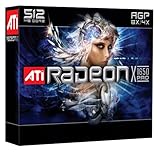
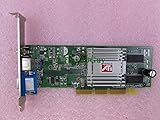
| Radeon 9800 Pro | Best for Windows 98 and DirectX 8/9 games | R350, 8 pipes, 256-bit bus, 128MB (some 256MB) | $40–$100 |
| GeForce 6600 GT AGP | Best budget pick | 128MB, 128-bit GDDR3, 8 pipes, bridge chip, external power | $30–$80 |
| Radeon HD 4670 AGP | Cool, efficient late-era card | 320 stream processors, 512MB, 128-bit bus | $100–$200 |
*Rough used-market ranges. They swing widely with condition, brand, memory size and collector demand. Check current sold listings before you pay.
Best overall: Radeon HD 3850 AGP
This is the card to buy if you want the most performance from an AGP slot. It is a late AGP release from ATI/AMD partners such as Sapphire and HIS. A bridge chip adapts the modern RV670 GPU to the AGP interface. Per AMD’s launch specs for the PCIe HD 3850, the GPU has 320 stream processors and a 256-bit memory bus. The AGP versions come in 256MB and 512MB, and you should prefer 512MB.
Who it suits: Windows XP builds with a fast Athlon XP, Athlon 64 or Pentium 4 or Pentium D on an AGP 8x board. It handles most mid-2000s games at 1280×1024 and higher.
Main trade-off: It needs an external power connector, so it needs a PSU with enough 12V capacity. It is also scarce and carries a collector premium. The faster the card, the more your old CPU becomes the limit.
Best for a period-correct build: Radeon X1950 Pro AGP
The X1950 Pro AGP delivers Shader Model 3.0 and a strong 256-bit design. It suits builders who want a late-AGP flagship feel without HD 3850 prices. It runs hot and needs external power. Used cards often have tired fans, so budget for cleaning and fresh thermal paste.
Best Nvidia: GeForce 7800 GS AGP
The 7800 GS was Nvidia’s last big AGP card, built on the G70 family with a 256-bit bus and 256MB of memory. Gainward and a few other partners sold it. It is the best choice if you prefer Nvidia drivers or want to avoid ATI quirks in older games. The trade-off is rarity: prices are high and fakes or mislabeled cards are a real risk.
Best classic value: GeForce 6800 GT AGP
The 6800 GT is a native AGP design with 16 pixel pipes and 256-bit memory, so it has no bridge-chip complications. It handles 2004–2006 games well. It also works on Windows 98SE and ME, because Nvidia’s last Win9x driver release (the 81.98 series) supports the GeForce 6 family. The trade-off is that Shader Model 3.0 games from 2007 onward will struggle.
Best for Windows 98: Radeon 9800 Pro
For a Windows 98SE or early XP machine, the 9800 Pro is easy to find and well supported. Late Win9x drivers from ATI’s Catalyst 6.x era cover it. It has Shader Model 2.0 only, so some late games will refuse to run. Use it for 1999–2004 titles, where it works well.
Best budget: GeForce 6600 GT AGP
This card has a 128-bit bus and 128MB, and it is inexpensive. It uses a bridge chip and needs a power connector. It is a good first AGP card for a Pentium 4 or Athlon XP system with a modest PSU. Expect to lower resolution or detail in later DX9 games.
Best cool and quiet: Radeon HD 4670 AGP
The HD 4670 AGP uses a lower-power GPU than the HD 3850. If your case airflow is poor or your PSU is weak, it makes more sense. It lacks the 256-bit bus of the HD 3850, so it is slower at higher resolutions. Driver support for these late AGP cards depends on the Catalyst release, so confirm the driver for your exact model before buying.
How to choose: decision criteria with numbers
1. Check slot voltage and keying
AGP 4x and 8x cards use 1.5V signaling. Older 3.3V-only slots (AGP 1x/2x) are keyed differently. A card with a “universal” notch fits both slot types but may not work on every board. Match the card’s notch to your slot, and never force a card in. Check your motherboard’s maximum AGP mode (4x or 8x) in its manual.
2. Do a power budget
Here is a worked example for an Athlon XP 3200+ system with an HD 3850 AGP. The CPU’s maximum power is about 77W according to AMD’s spec. Using round numbers:
- CPU: about 77W
- Graphics card: about 105W if it matches the PCIe HD 3850’s rated board power. AGP versions vary by brand, so treat this as an estimate.
- Motherboard and RAM: about 30W
- Hard drive, optical drive and fans: about 20W
The total is about 232W of DC load. The AGP slot can supply roughly 40–50W to the card per the AGP 3.0 spec, so about 55–65W comes through the Molex connector. At 12V that is around 5A on the 12V rail. Add 1–2A for drives and fans and you need roughly 7A on 12V. A decent 350–400W PSU with 12V rails rated 15A or more handles this easily. A cheap or very old 250W unit may not.
3. Match the card to the CPU
| Your system | Sensible card | Reason |
|---|---|---|
| Pentium III or Athlon Thunderbird, Windows 98 | Radeon 9800 Pro or GeForce 6600 GT | A faster card is held back by the CPU |
| Pentium 4 or Athlon XP, Windows 98SE/XP dual-boot | GeForce 6800 GT | Win9x driver support and a good CPU match |
| Athlon 64 or Pentium 4 HT, Windows XP | Radeon X1950 Pro or GeForce 7800 GS | Shader Model 3.0 and strong performance |
| Fast Athlon 64, Pentium D or Core 2 on an AGP board, Windows XP | Radeon HD 3850 AGP | Fastest AGP option for 2007-era games |
| Small case or weak PSU | GeForce 6600 GT or Radeon HD 4670 AGP | Lower power draw and heat |
4. Pick the right operating system
Windows 98SE suits games up to about 2003. Windows XP is the best general choice for AGP cards, including the HD 3850. Newer cards have limited or no support on Windows 98, so check driver availability for the exact model first.
5. Inspect for fakes and wear
Because AGP cards are scarce, relabeled or reflashed cards appear in listings. Ask for a GPU-Z screenshot or a short video showing the card running a game. Check memory size, bus width and the cooler’s condition. Look for bulging capacitors and dried thermal paste. Skip any listing with stock photos only.
For performance expectations, published reviews show that these cards typically deliver playable frame rates at 1024×768 to 1280×1024 in games from their era. Results vary with settings, resolution, CPU, drivers and patch level, so use period reviews of your specific card as a guide.
Frequently Asked Questions
What is the fastest AGP graphics card?
The Radeon HD 3850 AGP, along with the HD 3870 AGP variants, is generally considered the fastest widely available AGP class. The Radeon X1950 Pro AGP and GeForce 7800 GS AGP follow closely. Availability and driver support differ by brand, so check the exact model before buying.
Can I use a PCIe graphics card in an AGP slot?
No. AGP and PCIe slots are physically and electrically incompatible, and no passive adapter makes a PCIe card work in an AGP slot. Only cards built for AGP, or those that use a bridge chip designed for it, will work.
Do AGP graphics cards work on modern Windows?
Not in any practical way. AGP motherboards are limited to old CPUs and chipsets, and driver support ends around the Windows XP and Vista era. Windows XP is the sweet spot for the best AGP cards.
Is it worth building an AGP retro PC in 2026?
It is worth it if you want authentic hardware for DirectX 8 and DirectX 9 games, or you want to preserve an older system. It costs more than emulation or a modern PC with compatibility settings, because parts are scarce. Buy for the experience rather than performance per dollar.
Do AGP cards need extra power?
Most faster cards do, including the HD 3850 and X1950 Pro, and many 6600 GT cards. Midrange and older cards such as the Radeon 9600 may run from slot power alone. Check the card’s specifications and make sure your PSU has a free Molex or suitable connector with enough 12V capacity.
Related guides
More from Amazon
Programs that pair well with the guide above. Offers and eligibility are set by Amazon and may change.
A free business account with business pricing and bulk-buying tools for work, shop or home office.
Create a business accountFree shipping on eligible items, Prime Video and more. Eligible new members can start with a free trial.
Start a Prime free trialAudiobooks and podcasts to listen to on the go. Eligible new members can start with a free trial.
Try Audible freeAd-free music streaming. Eligible new subscribers can start with a free trial.
Try Music Unlimited freeAs an Amazon Associate we earn from qualifying purchases.