For GPU crypto mining in 2026, the best card is the one with the most memory bandwidth per watt at a price you can recover, which in practice means the GeForce RTX 5070 Ti among new cards and a used RTX 3060 Ti or RTX 3080 for the cheapest entry. No graphics card is guaranteed to be profitable. Bitcoin is dominated by ASIC machines, Ethereum stopped being minable when it moved to proof of stake in 2022, and most GPU-friendly coins have thin margins that depend on your electricity rate. Treat any GPU purchase for mining as a gamble that the card still has to justify as a gaming or compute card.
Quick comparison of the picks
| Pick | Best for | Key specs (manufacturer spec sheets) | Price range |
|---|---|---|---|
| GeForce RTX 5070 Ti | Best overall new card | 16 GB GDDR7, 256-bit, about 896 GB/s, 300 W board power | Premium mid-range |
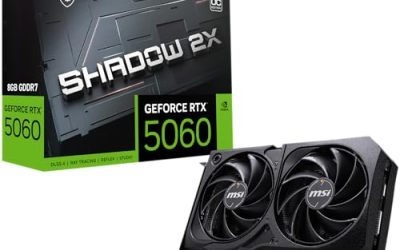
| GeForce RTX 5060 Ti 16 GB | Best new low-power card | 16 GB GDDR7, 128-bit, about 448 GB/s, 180 W | Mid-range |
| Used GeForce RTX 3060 Ti | Best budget entry | 8 GB GDDR6, 256-bit, 448 GB/s, 200 W | Budget (used) |
| Used GeForce RTX 3080 (10 GB) | Best used for bandwidth | 10 GB GDDR6X, 320-bit, about 760 GB/s, 320 W | Budget to mid-range (used) |
| Radeon RX 9070 | Best AMD pick | 16 GB GDDR6, 256-bit, about 640 GB/s, 220 W | Mid-range |
| GeForce RTX 5090 | Best if mining is a side job for AI work | 32 GB GDDR7, 512-bit, about 1,792 GB/s, 575 W | Ultra-premium |
Before you buy: what mining a GPU can and cannot do in 2026
Three facts shape every decision below.
- Bitcoin is out of reach for GPUs. It uses SHA-256, and purpose-built ASICs are many times more efficient than any graphics card.
- Ethereum mining is gone. Many older “best mining GPU” lists still describe the 2021 market and are stale.
- What remains is a patchwork of smaller GPU-minable coins and compute-rental markets. Their profitability changes with coin price, network difficulty and algorithm updates, and ASICs periodically arrive for coins that were GPU-friendly. Check a current profitability calculator against your own electricity rate before buying anything.
Because the algorithm you end up mining may change, the safest purchase is a card that also games well, resells easily and handles AI or rendering work.
Best overall: GeForce RTX 5070 Ti
The RTX 5070 Ti pairs 16 GB of GDDR7 on a 256-bit bus (about 896 GB/s) with a 300 W rated board power. That gives roughly 3 GB/s of memory bandwidth per rated watt, among the best ratios on a mainstream card. It suits someone who wants a high-end gaming card that can mine in the background. The trade-off is the purchase price: a premium-tier card takes a long time to pay back from mining alone, so buy it for gaming first.
Best new low-power card: GeForce RTX 5060 Ti 16 GB
With a 180 W rating, a 128-bit bus and 448 GB/s, this card gives about 2.5 GB/s per watt and is easy on the power supply. The 16 GB model also avoids the VRAM limits that hurt 8 GB cards on memory-heavy algorithms. It suits small rigs or a single gaming PC that mines overnight. The trade-off is lower absolute output per card, so a multi-card rig needs more slots, risers and upfront spending for the same total hashrate.
Best budget entry: used GeForce RTX 3060 Ti
The RTX 3060 Ti has a 256-bit bus, 448 GB/s and a 200 W rating. It has often been cited as a sweet spot among older cards, and many sellers have them. The trade-offs are real:
- Many used units come from mining farms, with worn fans and dried thermal pads.
- Only 8 GB of VRAM limits future algorithm options and modern gaming.
- There is no manufacturer warranty on most used units.
Best used for raw bandwidth: GeForce RTX 3080 10 GB
At about 760 GB/s on a 320-bit bus, the RTX 3080 delivers high output on memory-bound algorithms. It also draws up to 320 W, so undervolting matters. Reducing the power limit and tuning the memory clock typically trims a large share of power draw for a small loss in hashrate on bandwidth-bound workloads. It suits people with cheap electricity and the patience to tune. The trade-off is heat and the risk of a worn, used board.
Best AMD pick: Radeon RX 9070
The RX 9070 has 16 GB of GDDR6, a 256-bit bus (about 640 GB/s) and a 220 W rating, or about 2.9 GB/s per watt on paper. It is a strong gaming card with efficiency that beats the higher-tier RX 9070 XT (304 W) on a bandwidth-per-watt basis. The trade-off is software: miner support and tuning tools for newer AMD architectures can lag behind NVIDIA, so confirm that your chosen mining software supports the card before buying.
Best for AI side work: GeForce RTX 5090
The RTX 5090 has 32 GB of GDDR7 on a 512-bit bus (about 1,792 GB/s) and a 575 W rating. Its mining efficiency on paper is similar to the RTX 5070 Ti, so mining is not why you would buy it. It suits creators and developers who run local AI models or heavy rendering and want to use idle time for compute. The trade-off is cost, a power connector that needs careful installation, and a power supply and case that can handle the load.
How to choose: the numbers that matter
Bandwidth per watt as a quick filter
Many GPU algorithms are limited by memory speed rather than core speed. Dividing bandwidth by rated board power gives a rough ranking. It is a proxy only: real efficiency depends on the algorithm, power limit and silicon quality.
| Card | Bandwidth (GB/s) | Rated power (W) | GB/s per watt |
|---|---|---|---|
| RTX 5090 | 1,792 | 575 | 3.1 |
| RTX 5070 Ti | 896 | 300 | 3.0 |
| RX 9070 | 640 | 220 | 2.9 |
| RTX 5070 | 672 | 250 | 2.7 |
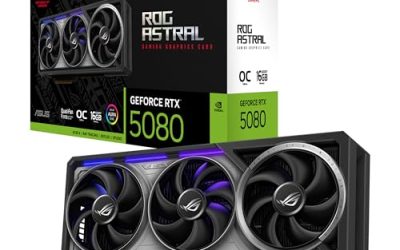
| RTX 5080 | 960 | 360 | 2.7 |
| RTX 4070 | 504 | 200 | 2.5 |
| RTX 5060 Ti 16 GB | 448 | 180 | 2.5 |
| RTX 3080 10 GB | 760 | 320 | 2.4 |
| RTX 3060 Ti | 448 | 200 | 2.2 |
| RX 9070 XT | 640 | 304 | 2.1 |
Worked example: electricity and power supply
Electricity is the cost you cannot avoid, so calculate it first.
- A card running at 200 W for 24 hours uses 200 × 24 ÷ 1000 = 4.8 kWh per day, or about 144 kWh over 30 days.
- Power-limiting the same card to 70 percent (140 W) cuts that to 3.36 kWh per day, about 101 kWh per month. You save roughly 43 kWh a month, while hashrate on memory-bound algorithms often drops by much less than 30 percent.
- Multiply your monthly kWh by your local rate, then subtract the result from the revenue a profitability calculator shows for your card. If the figure is near zero or negative, do not buy.
For a six-card rig, size the power supply like this: 6 cards × 140 W (power-limited) = 840 W, plus about 100 W for the motherboard, CPU, drives and fans, for 940 W. Keep sustained load near 80 percent of the PSU rating: 940 ÷ 0.8 ≈ 1,175 W, so a 1,200 W unit is the sensible minimum. Cards spike above their limits at startup, so do not run at the edge.
Decision matrix: your situation to the right card
| Your situation | Best choice | Reason |
|---|---|---|
| One gaming PC, mine overnight occasionally | RTX 5070 Ti or RX 9070 | Strong gaming use, high bandwidth per watt |
| Small PSU (650 W or less) | RTX 5060 Ti 16 GB | 180 W rating, simple power connection |
| Very cheap electricity, tight upfront budget | Used RTX 3060 Ti or RTX 3080 | Lowest purchase cost per unit of bandwidth |
| High electricity rates | Do not mine, or limit to the most efficient card you already own | Power cost is likely to exceed revenue |
| Want AI and rendering plus idle-time compute | RTX 5090 | 32 GB VRAM and the highest bandwidth |
| Want warranty and lowest risk | Buy new | Used mining cards have unknown wear |
Used-card checks
- Ask for photos of the actual card, including the backplate and fans, and request a stress-test screenshot.
- Check that fans spin freely and that idle temperatures are normal after a short test.
- Plan to replace thermal paste and pads on older boards. This is often the biggest cause of heat issues.
- Use a payment method that offers buyer protection.
Tuning settings and the reasoning
- Power limit around 60-75 percent: efficiency curves flatten near the top, so the last watts add little output.
- Core clock reduced: memory-bound algorithms barely use core speed, so lower core clocks save power for almost no loss.
- Memory clock raised modestly: raise it in small steps and stop at the first sign of errors or rejected shares.
- Fan curve set for stable temperatures: keeping memory junction temperature well under the manufacturer’s limit extends card life.
Frequently Asked Questions
Can you still make money mining crypto with a graphics card in 2026?
Sometimes, but it is marginal and depends heavily on your electricity rate and the coin you mine. Use a current profitability calculator with your own power cost and assume difficulty will rise. If you cannot show a clear margin after electricity, the card is better used for gaming.
Can graphics cards mine Bitcoin?
Technically yes, but in practice no. Bitcoin uses SHA-256, which ASIC miners run far more efficiently than any GPU, so a graphics card would cost more in power than it could earn.
Is the RTX 5090 worth buying for mining?
Not for mining alone. Its efficiency on paper is similar to the RTX 5070 Ti, but it costs far more and draws 575 W. It makes sense only if you also need its 32 GB of VRAM for AI or professional work.
Is a used mining GPU safe to buy?
It can be, if the seller is reputable and you check the fans, temperatures and thermal pads. Constant load wears fans and can dry out thermal materials, but steady temperatures are not always more damaging than gaming cycles. Expect to refresh the thermal paste and pads, and buy with buyer protection.
Does NVIDIA or AMD work better for mining?
It depends on the algorithm and software. NVIDIA cards usually have the broadest miner support and tuning tools, while AMD cards such as the RX 9070 can be very efficient when the software supports them. Check your chosen miner’s supported-hardware list before buying.
How much power supply do I need for a mining rig?
Add up the power-limited wattage of every card, add about 100 W for the rest of the system, then divide by 0.8 to keep sustained load near 80 percent of the rating. For six cards at 140 W each, that works out to roughly 1,200 W.
Related guides
More from Amazon
Programs that pair well with the guide above. Offers and eligibility are set by Amazon and may change.
A free business account with business pricing and bulk-buying tools for work, shop or home office.
Create a business accountFree shipping on eligible items, Prime Video and more. Eligible new members can start with a free trial.
Start a Prime free trialAudiobooks and podcasts to listen to on the go. Eligible new members can start with a free trial.
Try Audible freeAd-free music streaming. Eligible new subscribers can start with a free trial.
Try Music Unlimited freeAs an Amazon Associate we earn from qualifying purchases.