
Every backup plan eventually hits the same wall: cloud storage fees compound month after month, and transferring hundreds of gigabytes over a consumer connection makes you question whether you are paying for convenience or enduring a slow, invisible tax. A western digital external hard drive solves that problem directly. You buy capacity once, plug it in, and your photos, project files, or media library sit on a disk you physically control. No subscription, no upload throttle, no server migration drama.
What separates a worthwhile pick from a frustrating one in this category comes down to three things: whether the interface matches what your computer actually supports, whether the included software adds real protection or just occupies space on your taskbar, and whether you are paying a fair price for the capacity tier you need. A drive with USB 3.2 Gen 1 and no encryption software is perfectly valid if you only shuttle files between machines. A drive with ransomware defense is pointless if you forget to enable it. We compared published specs, current pricing, and recurring themes from owner feedback across every model below to sort signal from noise.
As an Amazon Associate we earn from qualifying purchases at no extra cost to you.
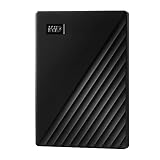



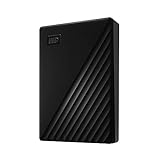
Top 3 picks at a glance
Quick Picks
| Product | Best for | Price |
|---|---|---|
| WD 2TB My Passport | Portable backup with security features | $133.9 |
| WD 5TB Elements Portable | High-capacity portable without frills | $214.1 |
| WD 2TB Elements Portable | Straightforward plug-and-play portability | $135.5 |
| WD 8TB Elements Desktop | Desktop bulk storage on a budget | $379.99 |
| WD 20TB Elements Desktop | Maximum capacity for media archives | $764.99 |
| WD 1TB Elements Portable | Lowest entry cost for a portable drive | $119.94 |
| WD 4TB My Passport | Larger secure backup on the go | $180.1 |
| WD 6TB Elements Portable | Pulling large libraries without a desktop unit | $258 |
How We Picked
We weighed four criteria across every model. First, capacity per dollar, because the entire point of a hard drive over an SSD is volume at a reasonable price. Second, interface compatibility, since USB 3.0, 3.1, and 3.2 Gen 1 are technically different standards and some older machines only negotiate reliably with one or two of them. Third, included software and security, where password protection and ransomware defense justify a premium only if you intend to use them. Fourth, form factor and power requirements, because a portable drive runs off a single cable while a desktop unit needs its own adapter and occupies more desk space.
The 8 Best Western Digital External Hard Drive in 2026
WD 2TB My Passport (WDBYVG0020BBK-WESN)
This is the model for people who want a drive that does more than just store data. The bundled backup software includes defense against ransomware, which means it actively monitors for suspicious file modifications before they encrypt your library. Password protection adds a layer that a plain Elements drive simply does not offer. At $133.9, it costs almost the same as the 2TB Elements but gives you meaningful software tools. Owners consistently praise the compact size and the reliability of the included backup scheduler.
- Ransomware defense and password protection at no price premium over the equivalent Elements model
- USB 3.1/3.0 compatibility means it works with older systems without negotiating issues
- Requires WD Discovery software to unlock security features, which some users find cluttery
Skip this if you only shuttle files between machines with no sensitive data and do not want background software.
WD 5TB Elements Portable (WDBU6Y0050BBK-WESN)
For anyone who needs substantial portable capacity without paying for software they will never enable, this is the straightforward answer. USB 3.2 Gen 1 delivers the highest interface rating in WD’s portable lineup, and the plug-and-play design means it works immediately on both PC and Mac without formatting headaches at first connection. At $214.1, it occupies the middle of the capacity-to-price curve in the portable family.
- USB 3.2 Gen 1 interface gives it a forward-compatible edge over older 3.0-only drives
- Genuine plug-and-play with no bundled software or account creation required
- At 5TB, a single drive failure means a large chunk of your backup is gone with no redundancy
Skip this if you want encryption or backup scheduling built in.
WD 2TB Elements Portable (WDBU6Y0020BBK-WESN)
The most basic functional western digital external hard drive for casual use. No software, no password lock, no fancy extras. You plug it in and Windows or macOS assigns it a drive letter. At $135.5, it is marginally more expensive than the My Passport 2TB, which makes the value question sharp: you are paying slightly less for the My Passport and getting more features, so this model only wins if you actively dislike background software on your system.
- Completely software-free operation makes it ideal for kiosk or shared-environment use
- Lightweight and pocketable, runs entirely off USB bus power
- Price is higher than the feature-rich My Passport at the same capacity
Skip this in favor of the My Passport 2TB unless you specifically want zero installed software.
WD 8TB Elements Desktop (BWLG0080HBK-NESN)
When your library outgrows what a portable drive can hold comfortably, a desktop unit becomes the sensible upgrade. The 8TB Elements Desktop uses USB 3.0 and draws its own power, which means it spins a larger platter set and sustains throughput across long sequential transfers better than a bus-powered drive. At $379.99, it offers solid capacity for a home server or media archive without jumping to extreme price tiers.
- External power adapter enables sustained performance and reliability for large sequential workloads
- Simple USB 3.0 connection works universally without driver confusion
- Bulkier and requires a dedicated outlet near your desk or shelf
Skip this if you travel with your backup or lack a stable desk location for it.
WD 20TB Elements Desktop (WDBWLG0200HBK-NESN)
Twenty terabytes in a single external unit is a statement about how large modern media and project libraries have become. This drive targets photographers, video editors, and collectors who want one device holding an entire archive rather than managing multiple smaller disks. The $764.99 price translates to roughly $38 per terabyte, which places it in a reasonable range for desktop capacity. It uses the same plug-and-play USB 3.0 approach as its 8TB sibling.
- Highest single-drive capacity in this roundup, reducing the number of physical units you manage
- Cost per terabyte is competitive with mid-range desktop drives from other brands
- A single 20TB failure event demands you already have a second copy somewhere else
Skip this if your total data volume fits comfortably under 10TB and you prefer smaller backup units.
WD 1TB Elements Portable (WDBUZG0010BBK-WESN)
The entry point at $119.94. This drive exists for people who need more than a USB flash stick but do not have a large library yet. One terabyte holds a modest photo collection or a few projects, and the USB 3.0 interface transfers files faster than older 2.0 hardware. The value proposition weakens when you notice the 2TB My Passport costs only $13.96 more and doubles your capacity while adding encryption.
- Lowest absolute price point for someone testing whether they need an external drive at all
- Compact and genuinely portable, slips into a laptop sleeve without adding noticeable weight
- Poor capacity-per-dollar compared to the 2TB options in this same family
Skip this unless your total storage need is well under one terabyte.
WD 4TB My Passport (WDBPKJ0040BBK-WESN)
If the 2TB My Passport is the security-first pick for smaller libraries, the 4TB version serves the same role at double the capacity. You get the same backup software with ransomware defense, the same password protection, and the same USB 3.1/3.0 compatibility. At $180.1, the price per terabyte drops noticeably compared to the 2TB model, making it the better buy if your data exceeds 1.5TB.
- Balances security features and capacity at a lower per-terabyte cost than the 2TB My Passport
- Still compact enough for a backpack without a separate power brick
- Owners report the bundled WD software occasionally interferes with third-party backup tools
Skip this if you already run a dedicated backup solution and want a plain data drive.
WD 6TB Elements Portable (WDBHJS0060BBK-WESN)
This is the largest capacity WD offers in a bus-powered portable form factor. At $258, it lets you carry a substantial library without the power adapter and desk space that a desktop unit demands. USB 3.2 Gen 1 and 3.0 compatibility cover a wide range of host systems. For videographers or photographers who need to move large files between machines on location, this is the most practical single-drive solution in WD’s portable line.
- 6TB in a portable bus-powered enclosure is unusually practical for field work
- No software or account creation, just raw capacity when you plug it in
- Physically larger and heavier than the 1TB and 2TB portables, noticeable in a laptop bag
Skip this if you can keep your drive stationary; a desktop model will offer better sustained performance.
Buying Guide
Interface Standards and What They Mean for You
USB 3.0, 3.1, and 3.2 Gen 1 all deliver 5 Gbps nominal throughput, so in practice a drive labeled 3.2 Gen 1 and one labeled 3.0 will perform identically on the same host port. The real difference appears in backward compatibility quirks: some older controllers negotiate reliably with 3.0-labeled drives but stall or disconnect with drives advertising 3.1 or 3.2. If your primary machine is more than five years old, a drive that explicitly lists 3.0 compatibility (like the My Passport models) is the safer bet.
Portable versus Desktop: Capacity, Power, and Portability
Portable drives run on USB bus power, which limits them to smaller platters and therefore smaller capacities per unit. Desktop drives draw from an external adapter, allowing larger platter sets, higher sustained throughput, and better thermal management during long transfers. The decision is physical: if you carry your backup to a client site or between two buildings, you need a portable. If it lives on a shelf next to your PC, a desktop model gives you more terabytes per dollar and more reliable operation over years of continuous use.
Security Features: When Encryption and Ransomware Defense Earn Their Keep
Password protection and ransomware defense are only useful if you are storing data that would harm you if exposed. A freelance designer holding client NDA material benefits enormously from the My Passport encryption suite. A person backing up personal holiday photos gains almost nothing from it. The My Passport models include these tools at effectively the same price as equivalent Elements drives, so the real question is not cost but whether you will remember to enable and maintain them.
Our Verdict
The top pick is the WD 4TB My Passport at $180.1. It delivers the best capacity-to-security ratio in the portable line, with ransomware defense and password protection that justify carrying it alongside a laptop. For a budget pick, the WD 2TB My Passport at $133.9 remains the smartest entry-level choice if your library fits in two terabytes. The condition that shifts the winner: if you are a photographer or video editor moving terabytes between machines on location, the 6TB Elements Portable at $258 is the only drive here that combines field-portable size with enough room for a full project, and its software-free simplicity means no driver conflicts on unfamiliar systems.
FAQ
Do I need to format a WD external drive before using it with a Mac?
WD Elements and My Passport drives ship formatted for Windows (NTFS). On a Mac, the drive will mount read-only by default. You will need to reformat it as exFAT or APFS in Disk Utility to get full read and write access, unless your workflow is one-directional.
Is USB 3.2 Gen 1 meaningfully faster than USB 3.0 for a mechanical hard drive?
No. Both standards provide 5 Gbps bandwidth, and a mechanical hard drive with a 5400 or 7200 RPM spindle cannot saturate either connection. The interface label matters for compatibility with your host controller, not for transfer speed differences between these two standards.
Can I use a desktop Elements drive as a backup target for my PC?
Yes, plug-and-play via USB 3.0 works as a destination for Windows File History, macOS Time Machine (after reformatting to HFS+ or APFS), or any third-party backup application. External power ensures it stays active during long overnight backup sessions without sleeping.
How long should I expect these drives to last?
Mechanical hard drives have no fixed expiration, but industry-wide failure data suggests annual failure rates rise noticeably after three to five years of use. Keep a second copy of anything critical and treat any single drive, regardless of capacity, as a temporary holding location rather than permanent archival storage.


