
Every home server owner and small business operator eventually hits the same wall: the cheap desktop drive in their NAS array fails under continuous operation, or worse, a shingled drive chokes during a rebuild when the array is already compromised. Choosing the right nas hard drive is not about chasing the highest capacity or the lowest price per terabyte—it is about matching sustained workload ratings, vibration tolerance, and firmware behavior to your specific enclosure size and usage pattern.
What separates a good NAS drive from a mediocre one in 2026 comes down to three things: whether the drive uses CMR recording (non-negotiable for RAID), how its firmware handles multi-bay vibration environments, and whether the warranty and rescue services cover the operational reality of a drive that spins 24/7. The eight drives below span entry-level single-bay use through enterprise-scale arrays, and the differences in how they fit those roles are more important than the raw spec sheets suggest.
As an Amazon Associate we earn from qualifying purchases at no extra cost to you.


Top 3 picks at a glance
Quick Picks
| Product | Best for | Price |
|---|---|---|
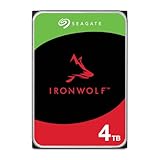
| Seagate IronWolf 4TB | Small home NAS builds | $189.99 |
| Seagate 8TB IronWolf | Balanced capacity and reliability | $329.99 |
| Seagate 8TB BarraCuda | Non-RAID single-bay enclosures | $279.99 |
| WD Red Plus 4TB | Multi-bay desktop NAS on a budget | $194.99 |
| WD Red Plus 12TB | High-capacity 7200 RPM under $500 | $459.99 |
| Seagate IronWolf Pro 20TB | Heavy multi-user workloads | $669.99 |
| WD Red Pro 16TB | Demanding prosumer NAS arrays | $704.99 |
| Seagate Exos 26TB Renewed | Maximum capacity per dollar | $697 |
How We Picked
We narrowed this category using four criteria: recording technology (CMR only, no exceptions), workload rating and MTBF figures relative to expected usage hours, acoustic and thermal behavior in compact enclosures, and warranty support including rescue services. We also weighed owner-reported failure rates on community forums against published specs, because a drive that performs well in isolation can still underperform once vibration and heat from neighboring drives enter the equation.
The 8 Best Nas Hard Drive in 2026
Seagate IronWolf 4TB NAS Internal Hard Drive
This is the sensible starting point for a two- or three-bay home NAS where the array rarely sees more than a couple of simultaneous users. The 5400 RPM spindle keeps noise and heat low in small enclosures, and the CMR recording means rebuilds will not stall. At 64 MB cache, it is modest, but for media streaming and file serving it is more than adequate.
- Pro: IronWolf Health Management firmware gives early warning of degrading sectors.
- Pro: Includes three years of Rescue Data Recovery Services.
- Con: 64 MB cache is the smallest in this list; large sequential transfers can stutter.
Skip this if your array has four or more bays or you run virtual machines off the volume.
Seagate 8TB IronWolf Internal NAS Hard Drive
The step-up choice for four-bay home or small-office NAS boxes. Same CMR construction and health-management firmware as the 4TB sibling, but the doubled platter density pushes sustained throughput higher while keeping power draw reasonable. At $329.99 it lands at roughly $41 per terabyte, which is competitive for a drive with rescue services bundled in.
- Pro: Strong sustained sequential performance for a 5400-class drive.
- Pro: Rotational vibration sensors handle multi-bay environments well.
- Con: Pricing sits noticeably above the BarraCuda without delivering a workload rating advantage for single-drive use.
Skip this if you only need one drive with no RAID redundancy planned.
Seagate 8TB BarraCuda Internal Hard Drive
A common mistake is putting a BarraCuda into a RAID enclosure. In a single-bay USB dock or a standalone backup target, however, this drive delivers excellent value. It uses CMR recording and offers 256 MB cache, giving it a real throughput advantage over the 5400 RPM IronWolf for single-stream tasks like disk imaging.
- Pro: Largest cache-to-price ratio in this roundup.
- Pro: Quiet operation makes it ideal for office desktops or backup docks.
- Con: No vibration tolerance design or NAS-specific firmware; unsuitable for multi-bay RAID.
Skip this entirely if the drive will live inside a shared enclosure alongside other spinning disks.
Western Digital 4TB WD Red Plus NAS Internal Hard Drive
The direct competitor to the IronWolf 4TB, and a strong pick if your Synology or QNAP unit ships with WD compatibility firmware. The 128 MB cache is double Seagate’s, which helps with random-read-heavy workloads like small-file syncing. At $194.99 it costs $5 more than the IronWolf but adds a meaningful cache buffer.
- Pro: 128 MB cache handles small-file workloads more smoothly than competing 5400 RPM drives.
- Pro: Lower idle power draw than most 7200 RPM options in this list.
- Con: Does not include a rescue data recovery service comparable to IronWolf’s bundled offering.
Skip this if your enclosure already runs Seagate drives and you want uniform firmware behavior across the array.
Western Digital 12TB WD Red Plus NAS Internal Hard Drive
The sweet spot for five- to eight-bay SMB NAS deployments where 7200 RPM throughput matters but enterprise Pro pricing does not. The 512 MB cache and CMR construction make this a workhorse for mixed backup-and-file-serving loads. At $459.99, the per-terabyte cost is the lowest of any new drive in this list.
- Pro: Excellent cost-per-terabyte with 7200 RPM sustained throughput.
- Pro: NASware firmware optimizes vibration and error-recovery behavior for multi-bay arrays.
- Con: Noticeably louder and hotter than 5400 RPM options in small enclosures.
Skip this if your NAS has fewer than four bays or sits in a noise-sensitive room.
Seagate IronWolf Pro 20TB Enterprise NAS Internal HDD
Twenty terabytes in a single 3.5-inch CMR drive changes the math for large media libraries and surveillance archives. The 7200 RPM spindle and 256 MB cache sustain high sequential throughput even under full-array load. The rated workload of 550 TB/year means it is built for environments where the array is never idle.
- Pro: Highest rated annual workload in this list; built for continuous multi-user access.
- Pro: Five-year warranty plus Rescue Data Recovery Services included.
- Con: $669.99 is a significant single-drive investment before you add redundancy.
Skip this if your array will have fewer than eight bays or your total storage need is under 40 TB.
Western Digital 16TB WD Red Pro NAS Internal Hard Drive
The Red Pro line is where WD targets 24-bay chassis and sustained multi-user workloads. At 16 TB and 7200 RPM with 512 MB cache, it competes directly with the IronWolf Pro on throughput but adds a slightly higher rated workload ceiling. Owner feedback consistently highlights its reliability in long-running arrays with minimal rebuild events.
- Pro: Among the highest published workload ratings available for a NAS-class drive.
- Pro: Five-year warranty with strong enterprise support channel access.
- Con: At $704.99 it carries the highest sticker price in this roundup.
Skip this if your use case does not exceed eight bays or if budget is the primary constraint.
Seagate Exos 26TB Internal Hard Drive (Renewed)
Renewed enterprise drives occupy a risky but rewarding niche. This 26 TB Exos offers the highest raw capacity and the lowest per-terabyte price in this list at roughly $27 per TB. The 7200 RPM spindle, 512 MB cache, and 2.5 million hour MTBF rating are enterprise-grade. The “renewed” condition is the critical variable: you get the specs, but warranty length and prior operating hours vary by refurbisher.
- Pro: Unmatched capacity per dollar for archive-tier storage.
- Pro: Enterprise vibration tolerance handles dense JBOD and rackmount enclosures.
- Con: Renewed condition means unpredictable remaining lifespan and no rescue data recovery service.
Skip this if you cannot tolerate the risk of early failure or if your enclosure requires vendor-recognized warranty for support.
Buying Guide
CMR vs. SMR: The Non-Negotiable
Shingled Magnetic Recording trades sequential write speed for platter density. In a RAID array, a single SMR drive can stall a rebuild or cause a timeout that flags a healthy drive as failed. Every drive in this roundup uses CMR, and any nas hard drive you consider outside this list must meet that requirement before price even enters the equation.
Vibration Tolerance and Bay Count
Single-bay and two-bay enclosures produce negligible rotational vibration. Four-bay and larger chassis create a sustained vibration environment that degrades seek performance and accelerates bearing wear. Look for published rotational vibration sensor support or enterprise-class MTBF figures of at least one million hours if your NAS exceeds three bays. The IronWolf Pro and Red Pro lines are engineered specifically for this environment.
Workload Rating and Warranty Realities
Published annual workload ratings tell you how many terabytes the drive is designed to read and write per year. A home NAS serving media to two users might push 40-60 TB/year; a multi-user SMB box can exceed 300 TB/year. Match the rating to your realistic usage. Also note that warranty length does not equal rescue service availability—Seagate bundles recovery into IronWolf and IronWolf Pro, while WD requires a separate support arrangement.
Our Verdict
The top pick is the Western Digital 12TB WD Red Plus: it offers the best balance of price per terabyte, 7200 RPM throughput, and NASware firmware for the widest range of home and SMB deployments. The budget pick is the Seagate IronWolf 4TB at $189.99, which gives small-array owners CMR reliability and rescue services at an accessible entry point. The Exos 26TB renewed becomes the right answer if your sole priority is maximizing raw capacity under $700 and you accept the warranty tradeoff.
FAQ
Can I use a desktop drive in my NAS?
You can, but you will likely encounter rebuild timeouts, elevated failure rates in multi-bay enclosures, and voided warranty claims if the drive is detected running outside its rated workload. Drives labeled for NAS use have firmware that handles error-recovery and vibration differently.
How long do NAS hard drives typically last?
Published MTBF figures are statistical averages, not individual lifespans. In practice, NAS-class drives in lightly loaded home arrays often reach six to eight years, while heavily utilized SMB arrays see meaningful replacement cycles every four to five years. IronWolf Health Management and WD SMART alerts help flag failures before data is lost.
Is a renewed enterprise drive safe for a NAS?
It depends entirely on the refurbisher and your tolerance for risk. Renewed Exos drives often have thousands of prior operating hours. They can be reliable for non-critical archive storage, but they are poor choices as the sole drive in a redundancy-free setup.
What is the ideal drive for a four-bay Synology NAS?
Two matching 8TB or 12TB drives in a mirrored pair, leaving the remaining bays for future expansion, is the most common and practical configuration. The Seagate 8TB IronWolf or WD 12TB Red Plus are both strong fits depending on whether you prioritize quiet operation or maximum throughput.


