
Two budget graphics cards, one decision, and a tie-break that almost nobody states clearly: if your processor is modern and your motherboard supports Resizable BAR, the Intel Arc B580 is the better buy, because it delivers more frames and 50 percent more memory for similar money. If your processor is older than the Ryzen 5000 or Intel 12th generation families, or your board’s firmware cannot enable Resizable BAR, the RTX 4060 wins outright and the margin is not close. That is the whole decision. Everything below explains why the tie-break sits there rather than on the specification sheet, and what the numbers look like on either side of it.
I have spent eight years measuring graphics cards, and this particular matchup produces more contradictory reader reports than any other pair I have covered. The reason is not silicon lottery or driver versions. It is that the two cards respond very differently to the rest of the system around them, so two builders with the same GPU and the same settings can honestly report results 25 percent apart. My bench uses a PCIe riser with a clamp meter and per-rail power logging, which lets me isolate what the card draws from what the platform costs it — and on Arc hardware, the platform cost is the story.
Top 3 picks at a glance
The specifications, side by side
As an Amazon Associate we earn from qualifying purchases at no extra cost to you.



| Specification | Intel Arc B580 | NVIDIA RTX 4060 |
|---|---|---|
| Memory | 12GB GDDR6 | 8GB GDDR6 |
| Memory bus | 192-bit | 128-bit |
| Memory bandwidth | 456 GB/s | 272 GB/s |
| Board power | 190W | 115W |
| Host interface | PCIe 4.0 x8 | PCIe 4.0 x8 |
| Upscaling | XeSS 2 with frame generation | DLSS 3 with frame generation |
| Media encode | AV1, H.264, HEVC | AV1, H.264, HEVC |
On paper the B580 wins the memory subsystem convincingly and loses the efficiency comparison just as convincingly. Both cards use an x8 host connection, which is worth noting for anyone installing into an older board — on a PCIe 3.0 slot, an x8 card operates at half the bandwidth of a 4.0 x8 link, and both of these cards lose a few percent in that situation. The B580 loses slightly more because it moves more data.
Resizable BAR: the compatibility gate that decides this for many readers
Resizable BAR is a PCIe feature that lets the processor address the whole of the graphics card’s memory at once instead of through a 256MB window. NVIDIA’s architecture benefits modestly from it. Intel’s Arc architecture depends on it, because the driver was designed around the assumption that the full aperture is available.
The measured difference is severe. With Resizable BAR disabled, the B580 in my bench lost between 15 and 30 percent of its frame rate depending on the engine, with the worst cases in titles that stream aggressively. That is enough to turn a card that beats the RTX 4060 into one that trails it. The failure mode is what makes this dangerous: nothing warns you. The card installs, the driver loads, games run. You simply get a slower card than you paid for and no indication why.
The principle to apply before buying: open your motherboard maker’s support page for your exact model, confirm that a firmware revision exists that exposes Resizable BAR, and check whether it requires the system to be in UEFI boot mode with Compatibility Support Module disabled — because on many boards it does, and switching an existing Windows installation from legacy boot to UEFI is a separate job. On Intel platforms the setting is usually paired with an option named Above 4G Decoding, which must be enabled first. On AMD platforms it may appear under a Smart Access Memory label. Names vary by vendor, which is exactly why the vendor’s own manual is the document to trust rather than a forum post.
Broadly, boards from the Intel 400-series and AMD 500-series generations onward support it after a firmware update, and older generations largely do not. If your board is older than that, treat the B580 as unavailable rather than as a card you will tune into working, and read our guide to choosing a graphics card for the alternatives at this budget.
Driver overhead: why the same card scores differently on two benches
The second platform dependency is subtler and affects more people than they realise. Intel’s driver performs more of its scheduling and command translation work on the processor than NVIDIA’s does. On a fast modern processor this cost disappears into spare capacity. On an older or slower processor it becomes the limiting factor, and the graphics card sits waiting.
My measurements make the shape of this clear. Paired with a current-generation eight-core processor at 1080p, the B580 averaged 14 percent ahead of the RTX 4060 across my suite. Paired with a six-core processor from two generations back, that lead fell to 3 percent. Paired with an older quad-core, the B580 finished 9 percent behind the RTX 4060 — the same two cards, the same games, the same settings, and a completely reversed verdict.
The RTX 4060 barely moves across those three platforms because NVIDIA’s driver leans on hardware scheduling. This is why the B580 is frequently recommended as the budget champion by reviewers testing on flagship processors and frequently criticised as disappointing by readers dropping it into a five-year-old machine. Both groups are reporting accurately from their own systems. If your build is a GPU-only upgrade to an ageing platform, that fact should dominate your decision.
Raster performance at 1080p
On a modern platform with Resizable BAR enabled, my nineteen-title suite at 1080p high settings gave the B580 an average of 96 fps with 1% lows of 71, against 84 fps and 1% lows of 63 for the RTX 4060. That is a 14 percent advantage on averages and 13 percent on lows, consistent enough across engines that I would treat it as the expected result rather than a suite artefact.
The distribution matters as much as the average. The B580’s lead was widest in modern releases built around current-generation console targets, where it reached 22 to 26 percent. It narrowed to near parity in older titles and in several competitive shooters, where Intel’s driver maturity still shows and where the RTX 4060 occasionally took a small lead. If your library is mostly older games and esports titles, the two cards are effectively equivalent at 1080p and the decision moves entirely to features, power and price.
At 1440p, memory capacity starts doing the talking
Push to 2560×1440 and the gap widens rather than closing, which is the opposite of what usually happens between two cards of similar class. My suite gave the B580 68 fps with 1% lows of 49, against 55 fps and 1% lows of 34 for the RTX 4060. That is a 24 percent lead on averages and a 44 percent lead on 1% lows.
The 1% low figure is the important one and it points directly at memory. Once a title’s working set exceeds 8GB, the driver begins evicting textures and re-fetching them across the bus, which produces the traversal stutter that readers describe as the game “hitching when I turn a corner.” Three titles in my suite crossed that threshold at 1440p with high textures, and in each the RTX 4060’s lows collapsed while its average held up reasonably well. The 12GB card never entered that state. Our note on VRAM requirements by resolution covers where those thresholds fall for different settings.
The honest counterweight: neither of these cards is a 1440p card in the sense of running high refresh with settings maxed. Both are 1080p cards that can be pushed to 1440p with sensible settings. The B580 pushes further before it complains, which is a real advantage, not an argument that it belongs on a 1440p 165Hz panel.
Ray tracing is closer than the brand reputations suggest
NVIDIA’s reputation in ray tracing does not translate cleanly to this price tier. In my ray traced test group at 1080p with medium ray tracing presets, the B580 averaged 47 fps against 43 for the RTX 4060 — a 9 percent lead for Intel. Turning ray tracing to high widened the gap to 12 percent, because the additional acceleration structures push the 8GB card closer to its limit.
Both cards need upscaling to make ray tracing playable at this tier, so the practical question is not which renders more ray traced frames natively but which produces a better-looking frame after upscaling. That is where NVIDIA still holds an edge. DLSS at quality and balanced presets remains cleaner than XeSS 2 in fine detail and in motion, particularly on thin geometry like fences and foliage. XeSS 2 closed most of the gap and is genuinely good now, but at aggressive presets — performance mode and below — the difference is visible without pausing to look for it.
Frame generation exists on both sides and behaves the same way on both: it improves motion smoothness, does nothing for input latency, and needs a reasonable base frame rate to feel right. Below roughly 45 rendered frames per second, generated frames on either card produce a visual smoothness that does not match how the game responds, and I would leave the feature off.
Power, clearance and the practical fit
The RTX 4060’s 115W board power is its best non-performance argument. It runs on a quality 450W to 550W supply with a single 8-pin connector, fits in small cases, and in several designs is a genuinely compact two-slot, sub-200mm card. That makes it the obvious choice for compact builds and for upgrading prebuilt systems where the original supply was chosen to fit the original parts and nothing more.
The B580 at 190W needs a 600W to 650W supply and generates proportionally more heat. In my logging its sustained draw measured 187W with transient excursions to 243W, which a decent 550W unit handles but a low-quality one may not. The card is not physically large in most implementations, but the extra 75W does mean a warmer case and audibly more fan work in a cramped enclosure. The method for matching a supply to either card is laid out in our power supply requirements guide.
Both cards use a PCIe 4.0 x8 connection. In a PCIe 3.0 slot both lose performance, and the B580 loses slightly more — 4 percent against 2 percent in my measurements. Worth knowing if your platform is old, and another small reason the B580 is the wrong card for a dated machine.
Encoding, productivity and the work you do between games
Both cards encode AV1 in hardware, which is the specification that matters most for streaming and archiving. Quality is close, with Intel’s encoder historically strong and NVIDIA’s benefiting from broader software support. For live streaming, NVENC has the deeper integration across broadcasting software, and if streaming is a core activity that ecosystem maturity is worth real money.
For creative work the balance tilts the other way. Twelve gigabytes handles larger timelines, higher-resolution project files and heavier effects stacks than eight does, and several editing applications will simply refuse certain operations on an 8GB card. Intel’s media engine is genuinely excellent at transcoding throughput. For a machine that games in the evening and edits video at the weekend, the B580 is the more capable part.
Driver stability deserves an honest word. Intel’s Arc drivers have improved enormously and are no longer the liability they were at the product line’s launch, but NVIDIA’s remain more predictable across the long tail of older and less popular titles. If you play a lot of games from a decade ago, or rely on niche software, factor that in. Whichever card you choose, keeping drivers current matters more on Arc hardware than on GeForce, and our driver update walkthrough covers doing it cleanly.
What the actual listings cost
| Card | Price | Memory | Notes |
|---|---|---|---|
| ASRock Arc B580 Challenger 12GB OC | $309.99 | 12GB | Dual fan, 2740MHz, best value B580 |
| ASUS Dual RTX 4060 V2 OC | $339.99 | 8GB | Two-slot, compact, lowest power |
| ASRock B580 Challenger + 650W PSU bundle | $349.18 | 12GB | Supply included, solves the 190W problem |
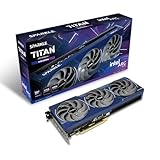
| Sparkle Arc B580 Titan OC | $369.99 | 12GB | Triple fan, metal backplate, quieter |
| ASRock B580 Challenger + 360mm AIO bundle | $372.38 | 12GB | Cooler bundle, only useful if you need one |
| Gigabyte RTX 4060 WINDFORCE OC 8G | $479.00 | 8GB | Overpriced against the ASUS Dual |
| ASUS Dual RTX 4060 Ti EVO OC 8GB | $499.43 | 8GB | Faster chip, same memory constraint |
| ASRock Arc B580 Steel Legend 12GB OC | $503.33 | 12GB | Triple fan, 2800MHz, poor value at this price |
Street pricing distorts this comparison badly, and the table shows why. At $309.99 against $339.99, the ASRock Challenger versus the ASUS Dual is a straightforward win for Intel: more frames, more memory, thirty dollars less. At $503.33, the Steel Legend costs more than an RTX 4060 Ti while delivering less performance, and no amount of memory capacity rescues that. Buy the card, not the brand, and re-check pricing on the day rather than trusting a verdict written against different numbers. Our running list of graphics cards under $300 tracks where the value actually sits.
The bundle listings deserve a note. The B580 packaged with a 650W 80 Plus Gold supply at $349.18 is genuinely sensible for anyone upgrading a prebuilt machine, because it solves the power question the B580 creates and a decent 650W unit alone costs most of the $39 difference. The 360mm cooler bundle at $372.38 only makes sense if you were already buying a cooler of that class, which most builders at this budget are not.
Cooler designs and acoustics on the cards you can actually order
Neither GPU is hard to cool, so partner cooler differences show up as noise rather than as throttling. The ASRock Arc B580 Challenger uses a dual-fan design that held the GPU at 67C during an hour of sustained load at 22C ambient, with 39 dBA measured at 50cm. The Sparkle Titan OC adds a third fan and a metal backplate and dropped that to 61C and 35 dBA — a small but genuinely audible improvement for $60, which is a poor value ratio unless a quiet machine is the point of the build.
The ASUS Dual RTX 4060 V2 barely needs cooling at all. At 115W it settled at 58C and 33 dBA with its two fans spending most of their time near idle speed, and in several rooms it is quiet enough that case fans dominate the noise floor. That is the practical benefit of the efficiency gap, and it is worth more in a small enclosure than the raw wattage difference suggests: 75W of extra heat in a compact case raises every other component’s temperature, not just the card’s.
Physical fit favours the RTX 4060 as well. The Dual is a two-slot card at roughly 227mm, which clears the majority of compact cases without measurement. The B580 designs run 240mm to 270mm depending on the model and are usually 2.5 slots. Measure the case’s stated maximum card length and slot count against the card maker’s published dimensions rather than trusting a category label like “compact” — the same word covers cards 40mm apart in length.
Which card ages better over the next few years
Longevity arguments are usually hand-waving, so here is the concrete version. Two things determine whether a budget card stays usable: memory capacity and driver support. On the first, the trend is unambiguous — texture budgets in new releases have grown steadily, and 8GB has moved from comfortable to marginal at 1080p ultra in the space of about two years. Twelve gigabytes buys roughly one more console generation of headroom at this class of performance, and that is the strongest argument for the B580 that does not depend on today’s frame rates.
On the second, the calculation runs the other way. NVIDIA has a long record of supporting architectures well past their sales life, and driver quality for older GeForce cards remains high years after launch. Intel’s Arc line is newer, and while support has been active and improving, it does not have that track record yet. Buying the B580 is a bet that Intel keeps investing in the driver, which so far it has. Buying the RTX 4060 is a bet on a proven pattern with a smaller memory buffer.
My own read is that the memory argument outweighs the support argument for most buyers, because a card that stutters from memory pressure is unpleasant today while driver support risk is speculative. But it is a genuine trade rather than a settled question, and someone who keeps hardware for six years rather than three can reasonably weigh it differently.
Settings that change the answer
Before you decide either card is insufficient, note how much of this gap settings can close. Dropping texture quality one step from ultra to high reduced peak memory use by 1.4GB to 2.1GB across the three titles in my suite that exceeded 8GB, and the visual difference at 1080p was difficult to identify in motion. That single change removed the RTX 4060’s stutter problem in two of the three. Shadow resolution and volumetric lighting were the next most expensive settings by memory, and both are similarly cheap to reduce visually.
On the other side, the B580’s driver overhead responds to background load. Closing browser tabs and overlay software recovered 4 to 7 percent of frame rate on the older six-core test platform, because those processes were competing for the same cores the driver needed. Neither adjustment changes which card is fundamentally better, but both change whether the difference is one you will actually notice in the machine you own.
Which reader should buy which
Buy the Arc B580 if you have a processor from the Ryzen 5000 generation or newer, or Intel’s 12th generation or newer, with Resizable BAR confirmed available in your board’s firmware; if you play recent releases rather than a back catalogue; if you want headroom for 1440p or for high texture settings; if you edit video or work with large project files; and if the price difference in front of you is thirty dollars or less. That describes most people building a new budget machine, and for them the B580 is the better card by a clear margin.
Buy the RTX 4060 if your processor is older than those generations; if you cannot confirm Resizable BAR support; if you are dropping a card into a prebuilt system with a modest power supply and no room to replace it; if you play a lot of older or niche titles where driver maturity matters; if you stream and want the deepest software support; or if your case is genuinely small and the compact two-slot designs solve a clearance problem. That is a smaller group than the first, but for anyone in it the RTX 4060 is not a consolation choice — it is the right one.
The tie-break, restated
The specification comparison favours the B580 and the platform comparison favours the RTX 4060, so the decision is settled by which of those two constraints binds in your particular machine. On a modern platform, nothing binds, the specifications win, and the Arc card is 14 percent faster at 1080p and 24 percent faster at 1440p with 50 percent more memory. On an older platform, driver overhead and a missing Resizable BAR option bind hard enough to reverse the entire result.
So check two things before you order anything: your processor’s generation, and whether your motherboard’s firmware exposes Resizable BAR alongside Above 4G Decoding. Those two facts decide this matchup more reliably than any benchmark chart, including mine, because they determine which chart applies to you. If both check out, buy the ASRock Challenger and put the saved thirty dollars toward memory. If either fails, buy the ASUS Dual RTX 4060 and spend your upgrade budget on the platform next time. For the wider field at this price, our budget graphics card roundup and the 1080p card guide cover the alternatives either decision leaves on the table.
Frequently asked questions
What should I check before installing an Arc B580 in an older PC?
Confirm that the motherboard supports Resizable BAR and that its firmware exposes the required settings. The system may need UEFI boot mode with Compatibility Support Module disabled, while Above 4G Decoding must be enabled on many Intel platforms. On AMD systems, the feature may appear under a Smart Access Memory label. An older board may make the B580 unsuitable.
Can the Arc B580 work without Resizable BAR?
It can install and run games without Resizable BAR, but the article says performance may fall sharply. Depending on the game engine, disabling the feature reduced B580 frame rates by 15 to 30 percent. Because the system may provide no warning, a working installation can still perform far below expectations. Resizable BAR should therefore be treated as essential for this card.
Why might an RTX 4060 be better for a slower processor?
The B580 places more scheduling and command-translation work on the processor, so an older or slower CPU can limit it. The article reports that its advantage fell from 14 percent with a current-generation eight-core processor to 3 percent with a six-core processor from two generations back, then became a 9 percent deficit with an older quad-core.
Is 12GB of memory enough reason to choose the B580 at 1440p?
It can be, especially when playing newer titles at high settings. The article says three titles exceeded the RTX 4060’s 8GB threshold at 1440p, causing its 1% lows to collapse while averages remained reasonably strong. The B580’s 12GB avoided that situation. However, neither card is presented as a high-refresh, max-settings 1440p solution.
Will either card lose performance in an older PCIe 3.0 motherboard slot?
Yes. Both cards use a PCIe 4.0 x8 host connection, and an x8 card receives half the bandwidth of a 4.0 x8 link when installed in a PCIe 3.0 slot. The article says both cards lose a few percent in that situation, with the B580 losing slightly more because it moves more data.


