
Backing up a full photo library, archiving work projects, or adding storage to a laptop with a soldered-down drive are the most common reasons someone shops for an external drive. The category looks deceptively simple from a distance—capacity and a USB port—but the real differences sit in software bundles, encryption options, connector types, and how well a product matches the machine you actually plug it into. A drive that ships with ransomware-resistant backup tools is a different purchase decision than one that simply stores files and asks nothing of you.
What separates a worthwhile pick from a mediocre one comes down to three things: whether the included software adds genuine value or just gets in the way, whether the physical design survives being tossed into a bag alongside your other cables, and whether the cost per terabyte makes sense for the capacity you actually need. In 2026 the external drive market still splits between no-frills portables and drives with added security layers, and the gap in price between those two approaches is narrower than most buyers expect.
As an Amazon Associate we earn from qualifying purchases at no extra cost to you.


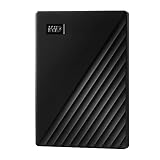


Top 3 picks at a glance
Quick Picks
| Product | Best for | Price |
|---|---|---|
| Seagate Portable 2TB | General everyday backup | $129.99 |
| Seagate Portable 5TB | Max capacity in a portable HDD | $219.96 |
| Seagate Portable 1TB | Light-use travel or secondary backup | $119.80 |
| Seagate Portable 4TB | Media libraries and console storage | $189.98 |
| WD Elements 2TB | Plug-and-play without software | $135.50 |
| WD My Passport 2TB | Users who need encryption and ransomware defense | $133.90 |
| YOTUO 500GB | Low-cost expansion or console game storage | $34.99 |
| UnionSine 1TB Ultra Slim | Thinnest form factor at entry-level capacity | $84.72 |
How We Picked
We compared every product on published interface specifications, listed capacity, included software features, connector options, price, and recurring themes in owner feedback. The criteria that mattered most were: cost per terabyte as a baseline value metric; whether the bundled software (backup tools, encryption, password protection) adds security or just complexity; physical robustness cues from the design language and user reports about durability over months of daily carry; and compatibility breadth, meaning the drive works out of the box across PC, Mac, and gaming consoles without requiring reformatting or driver installs.
The 8 Best External Drive in 2026
Seagate Portable 2TB
A dependable middle ground for anyone who needs a straightforward backup target without fussing over software. Seagate’s Rescue Service inclusion for one year is a meaningful safety net that most competitors omit at this price. The USB 3.0 connection handles sustained transfers at the full 5 Gbps bandwidth, and the drive is recognized by PC, Mac, PlayStation, and Xbox without extra configuration.
- Included one-year Rescue Service adds recovery value at no extra cost
- Cost per terabyte sits near the lower end for the 2TB class in this roundup
- Design is functional rather than compact; noticeable depth when pocketed
Skip this if you need hardware encryption or ransomware-specific backup software built in.
Seagate Portable 5TB
The highest-capacity portable HDD in this comparison, aimed at people archiving large media collections or running a secondary library that would overwhelm a smaller drive. The per-terabyte cost drops well below the 2TB models, making it the cheapest way to add bulk storage in a single cable. Owners consistently note it draws enough power from a single USB port without a separate adapter, which is not a given at 5TB in a 2.5-inch form factor.
- Lowest cost per terabyte of any drive listed here
- Rescue Service included for one year, matching the rest of the Seagate line
- Heavier than smaller-capacity siblings; not ideal for frequent travel
Skip this if your laptop’s USB ports struggle to deliver consistent power, or if you only need a few hundred gigabytes.
Seagate Portable 1TB
A sensible choice when you want a dedicated travel or secondary backup volume without overpaying for capacity you will not fill. It carries the same Rescue Service and broad compatibility as Seagate’s other portables, and the 1TB size keeps the drive light enough to slip into a laptop sleeve without adding noticeable bulk.
- Same software and service package as the higher-capacity Seagate models
- Compact footprint makes it the easiest Seagate drive to carry daily
- Highest cost per terabyte among the Seagate portable line in this list
Skip this if you expect to store video files, RAW photo archives, or full system backups—capacity becomes the limiting factor quickly.
Seagate Portable 4TB
Targets the console-gamer and media-collector niche where you need more than a laptop can hold internally but do not want the physical heft of a 5TB model. The SRD0NF1 designation indicates a slightly different internal configuration from the STGX-series drives, and owner reports suggest a marginally warmer running temperature under sustained write loads.
- Strong per-terabyte value, second only to the 5TB model in this comparison
- Works as PS4 and Xbox game storage straight out of the box
- Runs warm during prolonged transfers; consider using it on a hard surface
Skip this if you plan to use it primarily as a quiet, desk-side backup target and temperature noise matters to you.
WD 2TB Elements Portable
The definition of a no-nonsense drive. WD ships this with zero software preinstalled, which means nothing to uninstall, nothing that phones home, and nothing that might conflict with your existing backup workflow. It formats and goes. For people who already run Veeam, Acronis, or Time Machine and want a clean storage target, the Elements is the least intrusive option here.
- Completely software-free, so no bloat or conflicts with existing backup tools
- USB 3.2 Gen 1 (equivalent to USB 3.0) is backward compatible with older machines
- No warranty recovery service comparable to Seagate’s Rescue offering
Skip this if you want encryption or password protection without sourcing third-party software.
WD 2TB My Passport
Priced almost identically to the Elements but adds a full security suite: 256-bit AES hardware encryption, WD Discovery with automatic backup, and specifically designed ransomware defense that can detect and block encryption events before they spread. For users handling sensitive client work or personal financial records, the software layer justifies choosing this over the Elements despite the marginally lower price tag on the My Passport.
- Ransomware defense and password protection are built into the included software
- Hardware encryption does not consume CPU cycles during normal file transfers
- Requires WD software to be installed for backup features; not plug-and-play like the Elements
Skip this if you prefer a zero-software workflow or already manage encryption through BitLocker or FileVault.
YOTUO 500GB
The cheapest entry point in this roundup by a wide margin, at under $35. It covers 500GB across USB 3.0 and USB-C, making it one of the few drives here with a reversible connector option. The capacity suits a game library expansion or a one-time file transfer, but it is not designed as a long-term archive.
- Includes both USB-A 3.0 and USB-C connectivity in a single drive
- Lowest absolute price makes it a low-risk impulse buy for a specific task
- Highest cost per terabyte in this comparison; poor value if you need long-term storage
Skip this if your backup target exceeds a few hundred gigabytes or if you need software support and warranty recovery services.
UnionSine 1TB Ultra Slim
Aimed at buyers who prioritize portability above nearly everything else. The “Ultra Slim” designation reflects a genuinely thinner chassis that slides into a sleeve or envelope pocket more easily than the Seagate and WD drives in this list. At 1TB and under $85 it occupies a middle ground in both size and price, and the USB 3.0 interface matches the transfer ceiling of the more expensive options.
- Thinnest profile in this comparison; easiest to carry alongside a laptop
- Competitive cost per terabyte for a slim-form-factor drive at 1TB
- Brand has a smaller support footprint and fewer community-reported firmware updates than Seagate or WD
Skip this if you value long-term brand support, data recovery services, or software bundles over physical slimness.
Buying Guide
Interface and connector type
USB 3.0, USB 3.1, and USB 3.2 Gen 1 all describe the same 5 Gbps signaling rate, so do not be misled by marketing labels suggesting one is faster than another. The practical distinction is connector shape: drives offering USB-C out of the box (like the YOTUO here) save you from carrying an adapter to newer laptops that have dropped USB-A entirely.
Cost per terabyte and capacity sizing
Divide the price by the capacity to see the real unit cost. The 5TB Seagate lands well below $50 per terabyte, while the 500GB YOTUO exceeds $65 per terabyte. Buy the capacity you actually need for the next two years, not the lowest price tag, because replacing a full drive later means double-handling your migration.
Software, encryption, and recovery services
Two layers of protection matter: whether the drive supports hardware or software encryption (WD My Passport includes both), and whether the manufacturer offers a recovery service (Seagate’s one-year Rescue is included across its line). If you carry sensitive data, prioritize encryption. If the data is irreplaceable but not confidential, the recovery service is worth more.
Our Verdict
The Seagate Portable 2TB is our top overall pick because it balances per-terabyte cost, broad compatibility, and the one-year Rescue Service in a way that covers the most buyer scenarios without unnecessary software overhead. For budget buyers who only need to expand a console or move a few projects, the YOTUO 500GB wins on absolute price alone. However, if you handle sensitive work files and need encryption plus ransomware defense without adding third-party tools, the WD My Passport 2TB is the better choice despite its slightly higher cost.
FAQ
Do I need to format an external drive before using it?
Most drives in this comparison arrive pre-formatted in a cross-platform filesystem or NTFS with a reformat prompt for Mac users. If your drive came formatted for Windows and you need it on macOS, a quick reformat to exFAT makes it readable on both without third-party drivers.
Is USB 3.2 Gen 1 faster than USB 3.0?
No. USB 3.2 Gen 1 and USB 3.0 describe the same 5 Gbps interface under different naming conventions. A drive labeled “USB 3.2 Gen 1” like the WD Elements performs identically to one labeled “USB 3.0” on the same cable and port.
Can an external hard drive be used for gaming?
Yes, both PS4 and Xbox One accept external HDDs for game storage and installation, and the Seagate and WD drives listed here explicitly support that use case. Performance for loading times will not match an internal drive, but the capacity expansion is immediate and requires no reformatting in most cases.
How long do portable hard drives typically last?
Consumer HDDs of this type commonly remain functional for three to five years with normal use, though drop damage and power irregularities shorten that window. The drives with the best owner-reported longevity tend to be those used primarily for scheduled backups on a desk rather than daily carry.


