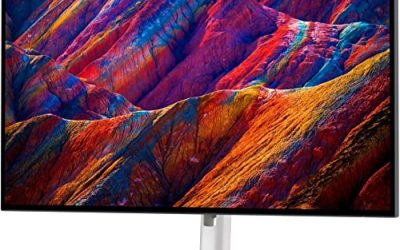
Our Short List of 3
All 4 Picks at a Glance
| Product | Specs | Action |
|---|---|---|
 BenQ ZOWIE XL2546K 24.5-Inch 240Hz | Check price on Amazon | |
 BenQ ZOWIE XL2546X 24.5-Inch 240Hz Fast TN | Check price on Amazon | |
 BenQ ZOWIE XL2411K 24-Inch 144Hz | Check price on Amazon | |
 ASUS VG248QE 24-Inch 144Hz | Check price on Amazon |
The best TN monitors are built for one thing above all: speed. Twisted nematic panels remain the quickest display technology for competitive gaming, with refresh rates up to 360 Hz and response times that keep fast motion sharp. When a target crosses the screen in a fraction of a second, a TN panel shows it cleanly, while slower panels smear it. That clarity is why professional players and competitive gamers still choose TN, even as other panel types win on color and viewing angles.
TN panels trade some color richness and viewing angle for that speed, so they suit a specific user: someone who sits directly in front of the monitor, plays fast games, and values motion clarity over cinematic color. This guide covers TN monitors from proven 144 Hz models to 240 Hz esports displays, all in the 24-inch class that dominates competitive play. Each pick is a real TN monitor, not a different panel type, and each one is explained in terms of refresh rate, response, and what it demands from your graphics card.
Our Top Picks
Top 3 picks at a glance
How to Choose
Refresh Rate
Refresh rate is the headline number for a TN monitor. A 144 Hz panel updates more than twice as often as a 60 Hz display, and a 240 Hz panel doubles that again. Higher refresh rates make motion smoother and reduce the time between a game event and its appearance on screen. Choose 144 Hz for a good balance of speed and affordability, 240 Hz for serious competitive play, and higher rates only if your graphics card can actually deliver those frame rates.
Response Time and Motion Blur
Response time measures how quickly a pixel changes color, and a slow response creates ghosting behind moving objects. TN panels lead here, with quoted times around 1 ms and real-world motion that stays clean. Look for a monitor with a well-implemented overdrive setting, and be wary of the most aggressive overdrive modes, which can create inverse ghosting that looks worse than a little blur.
Resolution and Size
Most competitive TN monitors are 24 to 25 inches at 1080p, and that combination is deliberate: at that size, 1080p looks sharp, text stays readable, and a mid-range graphics card can push high frame rates. Larger or higher-resolution TN monitors exist, but they demand far more graphics power to reach the same refresh rates. For competitive play, 1080p at 24 inches remains the sweet spot.
Color and Viewing Angles
TN panels have narrower viewing angles and less color depth than IPS or VA panels, so colors shift when you view the screen from the side or from above. Sitting directly in front of the monitor at eye height minimizes the issue, and modern TN panels look far better than the washed-out TN displays of a decade ago. If you also edit photos or watch films from a couch, a TN monitor is the wrong tool; for a desk and a chair, it is fine.
Adaptive Sync
Adaptive sync matches the monitor’s refresh rate to the graphics card’s frame rate, which removes tearing and stutter. Look for FreeSync or G-Sync compatibility, and confirm that it works over DisplayPort at the refresh rate you plan to use. Adaptive sync matters most when frame rates vary, which they do in most real games.
Stand and Ergonomics
Competitive players adjust their monitor constantly, so a stand with height, tilt, swivel, and pivot adjustment matters. A good stand lets you set the screen at eye height and angle it exactly where you want it, and a small base leaves room for a large mouse pad. VESA mounting is a useful fallback if you prefer an arm.
Connectivity
DisplayPort is the connection that carries the highest refresh rates, so confirm the monitor has a DisplayPort input and that your graphics card does too. HDMI is useful for a console or a second device, but it may cap the refresh rate depending on the version. A headphone jack and a couple of USB ports are convenient extras, not essentials.
Top Picks
BenQ ZOWIE XL2546K 24.5-Inch 240Hz
View the BenQ ZOWIE XL2546K on Amazon
The BenQ ZOWIE XL2546K is a 24.5-inch 1080p TN monitor running at 240 Hz, built specifically for esports. Its DyAc+ motion-clarity technology reduces blur during fast movement, and the TN panel delivers the quick response that competitive players rely on. The included side shields block distractions, the small base leaves room for a wide mouse sweep, and the S-Switch controller makes on-screen settings quick to change between games.
Who it is for: serious competitive players who want a proven esports monitor with motion clarity as the priority. Caveats: it is a TN panel, so colors and viewing angles trail IPS monitors; you need a graphics card that can sustain high frame rates to make 240 Hz worthwhile.
BenQ ZOWIE XL2546X 24.5-Inch 240Hz Fast TN
View the BenQ ZOWIE XL2546X on Amazon
The BenQ ZOWIE XL2546X is the newer generation of the XL2546 line, with a fast TN panel at 240 Hz and DyAc 2 motion clarity. It keeps the esports focus of its predecessor — side shields, S-Switch, a compact base — while refining the panel and motion handling. The 1080p resolution at 24.5 inches keeps frame rates high and the image sharp at a normal desk distance.
Who it is for: competitive players buying the current generation of the ZOWIE line, and anyone who wants the newest motion-clarity technology in a TN monitor. Caveats: as a newer model, it may carry a higher cost than the XL2546K for similar real-world performance; the TN trade-offs on color and viewing angle still apply.
BenQ ZOWIE XL2411K 24-Inch 144Hz
View the BenQ ZOWIE XL2411K on Amazon
The BenQ ZOWIE XL2411K is a 24-inch 1080p TN monitor at 144 Hz, and it remains one of the most sensible entry points into fast competitive displays. The TN panel gives quick response times and clean motion, the DyAc technology option helps with blur, and the compact stand and small base suit a crowded desk. It is a straightforward monitor with no extras that distract from its job.
Who it is for: players moving up from a 60 Hz display who want a real competitive upgrade without paying for 240 Hz, and anyone building a first esports setup. Caveats: 144 Hz is a big step up from 60 Hz but a visible step below 240 Hz for players who already own a fast monitor; the TN panel’s color and viewing angles are modest.
ASUS VG248QE 24-Inch 144Hz
View the ASUS VG248QE on Amazon
The ASUS VG248QE is a 24-inch 1080p TN monitor at 144 Hz that has served competitive players for years, and it remains a solid budget route into fast displays. The TN panel delivers the quick response that made it a classic, with a 1 ms quoted response time and a stand that adjusts for height, tilt, swivel, and pivot. It is a simple, proven monitor with no complicated features to configure.
Who it is for: budget-conscious players who want a genuine 144 Hz TN panel and a fully adjustable stand. Caveats: it is an older model, so confirm the listing and included accessories before ordering; the panel and color performance reflect its age next to newer TN monitors.
Comparison Table
| Monitor | Size | Resolution | Refresh Rate | Best For |
|---|---|---|---|---|
| BenQ ZOWIE XL2546K | 24.5-inch | 1080p | 240 Hz | Proven esports performance |
| BenQ ZOWIE XL2546X | 24.5-inch | 1080p | 240 Hz | Newest DyAc motion clarity |
| BenQ ZOWIE XL2411K | 24-inch | 1080p | 144 Hz | First fast monitor |
| ASUS VG248QE | 24-inch | 1080p | 144 Hz | Budget 144 Hz upgrade |
Which One Is Right for You?
If you play competitively and your graphics card can sustain high frame rates, the BenQ ZOWIE XL2546K is the proven 240 Hz choice, with the XL2546X as the newer alternative if you want the current generation. Players stepping up from a standard display should choose the XL2411K, which delivers the full 144 Hz experience at a more approachable level, while the ASUS VG248QE suits a tight budget and a first fast monitor. Whichever you choose, connect over DisplayPort, enable adaptive sync, and sit directly in front of the screen at eye height — that is where a TN panel looks and performs its best.
Getting the Most From a TN Monitor
A TN monitor performs best when it is set up correctly, and a few adjustments make a visible difference. Connect over DisplayPort, which carries the highest refresh rates, and set the refresh rate in your operating system to match the monitor — a 240 Hz panel running at 60 Hz wastes its main advantage. Enable adaptive sync in the graphics driver so the refresh rate follows the frame rate, which removes tearing without adding input lag. Set the overdrive to a middle level rather than the maximum: the middle setting keeps motion clean, while the highest setting can create inverse ghosting that looks worse than a little blur. Adjust the brightness and contrast to suit your room rather than leaving them at maximum, since a very bright screen causes eye fatigue during long sessions. Sit directly in front of the monitor at eye height, with the screen about an arm’s length away, which is where a TN panel looks its best and where its viewing-angle limits matter least. Finally, match the monitor to your graphics card: a 240 Hz display needs a card that can deliver frame rates near that level in the games you play, or the extra refresh rate goes unused.
Frequently Asked Questions
Are TN monitors still worth buying?
Yes, for competitive gaming. TN panels remain the quickest option for motion clarity and response time, and they suit players who prioritize speed over color richness. If you mostly watch films or edit photos, an IPS panel is the better choice, but for fast shooters a TN monitor still earns its place.
Is 240 Hz noticeably better than 144 Hz?
Yes, though the jump from 60 Hz to 144 Hz is bigger than the jump from 144 Hz to 240 Hz. At 240 Hz, motion looks smoother and tracking a moving target feels more connected, but you need a graphics card that can deliver frame rates near 240 to see the benefit.
Do TN monitors look bad?
Modern TN monitors look much better than early ones, with acceptable color when viewed straight on. They still trail IPS panels for color depth and viewing angles, so they suit a single user sitting directly in front of the screen rather than a group watching from the side.
What cable should I use with a TN gaming monitor?
Use DisplayPort. It carries the highest refresh rates and works with adaptive sync on most monitors and graphics cards. HDMI can work for lower refresh rates, but it may cap the frame rate depending on the HDMI version on both the monitor and the card.
Disclosure: As an Amazon Associate, we may earn from qualifying purchases.
Related guides
More from Amazon
Programs that pair well with the guide above. Offers and eligibility are set by Amazon and may change.
A free business account with business pricing and bulk-buying tools for work, shop or home office.
Create a business accountFree shipping on eligible items, Prime Video and more. Eligible new members can start with a free trial.
Start a Prime free trialAudiobooks and podcasts to listen to on the go. Eligible new members can start with a free trial.
Try Audible freeAd-free music streaming. Eligible new subscribers can start with a free trial.
Try Music Unlimited freeAs an Amazon Associate we earn from qualifying purchases.