Our Short List of 3
All 4 Picks at a Glance
| Product | Specs | Action |
|---|---|---|
 ASUS ProArt Display PA279CRV 27-Inch 4K | Check price on Amazon | |
 Dell UltraSharp U2723QE 27-Inch 4K | Check price on Amazon | |
 LG 27UP850-W 27-Inch 4K | Check price on Amazon | |
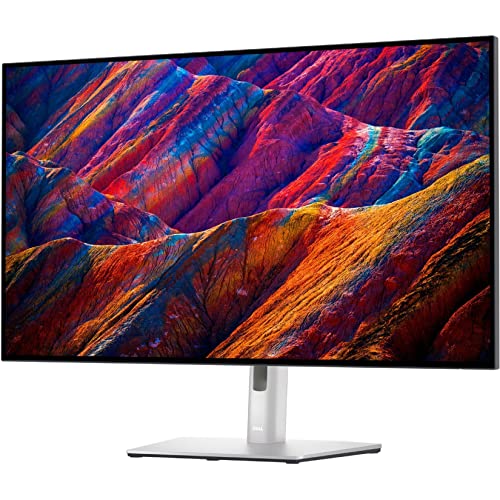 Dell UltraSharp U3223QE 32-Inch 4K | Check price on Amazon |
A creator’s monitor is a tool, not a decoration. When you edit photos, grade video or design graphics, the screen is the reference for every decision you make, and a panel that shifts colour or crushes shadows will mislead you at every step. The best monitors for creators deliver accurate, consistent colour, sharp 4K resolution and a wide colour gamut, so the image on screen matches the image your audience sees.
This guide covers the best monitors for creators across several sizes and budgets, from a factory-calibrated 27-inch panel that suits a first editing setup to a wide 32-inch display that gives you room for a timeline and a playback window side by side. Every pick below is a real monitor sold on Amazon US, and each one is matched to a different kind of creative work, so you can find the panel that suits your craft.
Our Top Picks
 ASUS ProArt PA279CRV 27 Inch 4K UHD USB-C27 Inch24.1 x 8.46 x 16.07 Inches18.25 poundsCheck on Amazon
Top 3 picks at a glance
How to Choose
1. Colour accuracy and calibration
Colour accuracy is the most important quality in a creator monitor, and it is measured by how closely the panel reproduces a known colour. Look for a monitor with a low Delta E figure, which measures colour error, and prefer a factory-calibrated panel that ships with a calibration report. A monitor that supports hardware calibration lets you keep it accurate over time with a colorimeter.
2. Colour gamut coverage
A wide colour gamut lets a monitor show more of the colours a camera captures. Look for high coverage of the sRGB space for web work, Adobe RGB for print, and DCI-P3 for video. A monitor that covers a high percentage of DCI-P3 suits video editing and modern content, while Adobe RGB coverage matters more for print photography.
3. Resolution and screen size
A 4K panel shows fine detail in photos and video, and it gives you room for toolbars, timelines and playback windows without crowding the image. A 27-inch 4K panel is the sweet spot for most creators, while a 32-inch panel suits video editing where the timeline needs room. At 4K, text and interface elements stay sharp, which matters during long editing sessions.
4. Panel technology and uniformity
IPS panels are the standard for creator work, because they offer accurate colour and wide viewing angles. Look for a panel with good uniformity, which means the brightness and colour stay consistent from the centre to the edges, because a panel that is brighter in the middle than at the corners will mislead your edits. Some creator monitors include uniformity compensation to even out the backlight.
5. Bit depth and banding
A 10-bit panel shows over a billion colours, which gives you smoother gradients in skies, skin tones and shadows than an 8-bit panel. Some panels are native 10-bit and some use 8-bit plus frame rate control to simulate it; both are better than a plain 8-bit panel for gradient-heavy work, but native 10-bit is the more accurate choice when you can confirm it.
6. Connectivity and workflow
A creator monitor needs the right inputs for your computer and your peripherals. USB-C with power delivery lets a laptop dock with a single cable, while HDMI and DisplayPort cover desktops and other devices. A built-in USB hub is handy for a colorimeter, an external drive or a card reader, and it keeps the desk tidy.
7. Ergonomics and viewing angle
Creative work means long hours at the screen, so a height-adjustable stand that sets the panel at eye level matters. A monitor that tilts, swivels and pivots lets you work in portrait for a magazine layout or share the screen with a client, and a matte finish cuts reflections in a room with windows.
Top Picks
ASUS ProArt Display PA279CRV 27-Inch 4K
View the ASUS ProArt Display PA279CRV on Amazon
The ASUS ProArt Display PA279CRV is the best all-round monitor for creators in this guide, and it is the one to begin with when you want accurate colour at a sensible outlay. It is a factory-calibrated 4K IPS panel with wide colour coverage across the sRGB and DCI-P3 spaces, and it supports hardware calibration for creators who want to keep it accurate over time. The matte finish cuts reflections, and the slim bezels keep the focus on the image.
It offers HDMI, DisplayPort and USB-C with power delivery, and its adjustable stand covers height, tilt, swivel and pivot. It is best for photo editing, video editing and design work on a single monitor, and for a creator who wants a calibrated panel without a premium badge. The caveat is that it is tuned for accuracy rather than punch, so its picture can look less vivid than a consumer monitor until you get used to natural colour. There is also a conflicting code in some listings for this model line, so confirm the exact ASIN on the live Amazon page before ordering.
BenQ PD2705U 27-Inch 4K
View the BenQ PD2705U on Amazon
The BenQ PD2705U is the design-focused pick, and it is built for creators who work across photo, video and design. Its 27-inch 4K IPS panel covers a wide colour range, supports 10-bit colour and ships factory calibrated, and it includes BenQ’s uniformity technology to keep brightness even across the panel. Its dual-view mode lets you compare two colour spaces side by side, which helps when you prepare the same image for print and for the web.
It connects over HDMI, DisplayPort and USB-C with power delivery, and it includes a built-in USB hub and a KVM switch for creators who use two computers. It is best for a designer or photographer who switches between colour spaces, and for a dual-computer setup where the KVM saves desk space. The caveat is that its HDR support is modest, so judge it on its colour accuracy and uniformity rather than its HDR label. Confirm the exact model on the live page before ordering.
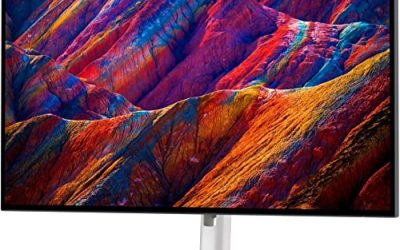
Dell UltraSharp U2723QE 27-Inch 4K
View the Dell UltraSharp U2723QE on Amazon
The Dell UltraSharp U2723QE is the premium all-rounder, and it is the monitor to choose when you want the deepest blacks and the most polished build in the 27-inch class. Its IPS Black panel delivers stronger contrast than a standard IPS display, with 4K resolution, wide colour coverage and factory calibration that keeps skin tones natural. The three-sided ultrathin bezel and the fully adjustable stand suit a clean, modern desk, and the USB-C hub with power delivery docks a laptop with a single cable.
It is best for a creator who wants one monitor for photo work, video editing and everyday use, and for anyone who works in a dim room where the deeper blacks of IPS Black show their worth. The caveat is that its HDR support is modest, and its premium build carries a higher outlay than the ASUS or BenQ models. Confirm the exact listing on the live Amazon page, since third-party sellers are common for this model.
LG 27UP850-W 27-Inch 4K
View the LG 27UP850-W on Amazon
The LG 27UP850-W is the value pick for creators, and it delivers a bright, colourful 4K IPS panel with wide colour coverage at a lower outlay than the calibrated models. Its 27-inch display supports HDR, covers a wide colour range and shows photos and video with the warm, vivid look that suits modern content. The slim white design and thin bezels suit a bright studio, and the adjustable stand covers tilt, height and pivot.
USB-C with power delivery lets a laptop connect with one cable, and the two HDMI ports make it easy to switch between a computer and a camera or a console. It is best for a creator on a budget, a student setup or a second monitor for a growing studio. The caveat is that it is not factory calibrated to the same standard as the ProArt or the BenQ, so budget for a colorimeter if colour accuracy is critical to your work. Confirm the exact model on the live page before ordering.
Dell UltraSharp U3223QE 32-Inch 4K
View the Dell UltraSharp U3223QE on Amazon
The Dell UltraSharp U3223QE is the big-screen pick, and it gives creators room to work with a 32-inch 4K IPS Black panel. The larger screen fits a video timeline and a playback window side by side, or a photo and its toolbars without crowding, and the IPS Black technology delivers deeper blacks and stronger contrast than a standard IPS display. Colour accuracy is excellent, with wide coverage and factory calibration, and the thin bezels keep the large cabinet looking clean.
Connectivity mirrors its smaller sibling, with HDMI, DisplayPort and a USB-C hub, so it works as both a creative display and a workstation monitor. It is best for video editing, where the timeline needs room, and for a dedicated studio desk where the monitor is the centre of the setup. The caveat is size: it needs a deep desk and a sturdy stand position, and it dominates a small room. Confirm the exact listing on the live page, since this model is sold through several sellers.
Comparison Table
| Monitor | Size | Resolution | Colour | Best for |
|---|---|---|---|---|
| ASUS ProArt PA279CRV | 27 inch | 4K | Wide gamut, calibrated | All-round creator work |
| BenQ PD2705U | 27 inch | 4K | 10-bit, wide gamut | Design, dual colour spaces |
| Dell UltraSharp U2723QE | 27 inch | 4K | IPS Black, calibrated | Premium all-rounder |
| LG 27UP850-W | 27 inch | 4K | Wide gamut | Value creator monitor |
| Dell UltraSharp U3223QE | 32 inch | 4K | IPS Black, calibrated | Video editing, big workspace |
Which One Is Right for You?
If you want one monitor that does everything well, the ASUS ProArt PA279CRV is the safest choice: it is calibrated, accurate and well connected. If you switch between colour spaces, the BenQ PD2705U is the pick, while the Dell UltraSharp U2723QE suits creators who want the deepest blacks and the most polished build. For a lower outlay, the LG 27UP850-W covers the basics well, and for video editing, the Dell U3223QE gives you the room a timeline needs. Whichever you pick, calibrate it with a colorimeter and work in a room with controlled light, because even the best panel needs the right conditions to show its true colour.
Frequently Asked Questions
Do I need a calibrated monitor for creative work?
Yes, if colour accuracy matters to your output. A factory-calibrated monitor ships with accurate colour, and a colorimeter lets you keep it accurate over time as the panel ages. Without calibration, you cannot trust that the colours you see match the colours your audience sees.
What is the difference between sRGB, Adobe RGB and DCI-P3?
These are colour spaces that define the range of colours a monitor can show. sRGB covers the colours of the web, Adobe RGB covers a wider range suited to print, and DCI-P3 covers the colours used in modern video. Choose a monitor that covers the colour space your work is delivered in.
Is 4K necessary for a creator monitor?
For most creators, yes. A 4K panel shows fine detail in photos and video, and it gives you room for toolbars, timelines and playback windows without crowding the image. At 27 inches, 4K is sharp without making interface text too small, and it is the standard for modern creative work.
What does 10-bit colour mean?
A 10-bit panel shows over a billion colours, which gives you smoother gradients in skies, skin tones and shadows than an 8-bit panel. Some panels are native 10-bit and some use 8-bit plus frame rate control to simulate it; both are better than a plain 8-bit panel for gradient-heavy work, but native 10-bit is the more accurate choice when you can confirm it.
Disclosure: As an Amazon Associate, we may earn from qualifying purchases.
Related guides
More from Amazon
Programs that pair well with the guide above. Offers and eligibility are set by Amazon and may change.
A free business account with business pricing and bulk-buying tools for work, shop or home office.
Create a business accountFree shipping on eligible items, Prime Video and more. Eligible new members can start with a free trial.
Start a Prime free trialAudiobooks and podcasts to listen to on the go. Eligible new members can start with a free trial.
Try Audible freeAd-free music streaming. Eligible new subscribers can start with a free trial.
Try Music Unlimited freeAs an Amazon Associate we earn from qualifying purchases.