Our Short List of 3
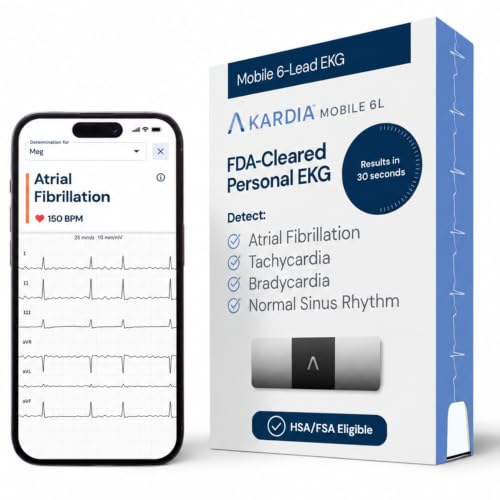
- Best for: Home users who want the fullest ECG detail to share with a clinician.
- Six-lead ECG recording with six views of the heart
- Results in 30 seconds on the Kardia app
- Detects AFib, bradycardia, and tachycardia
- Unlimited recordings stored in the app

- Best for: Quick rhythm checks at home or on the go with the simplest setup.
- Single-lead ECG recording from two fingertips
- Results in 30 seconds on the Kardia app
- Detects AFib and irregular arrhythmias
- Unlimited recordings stored in the app
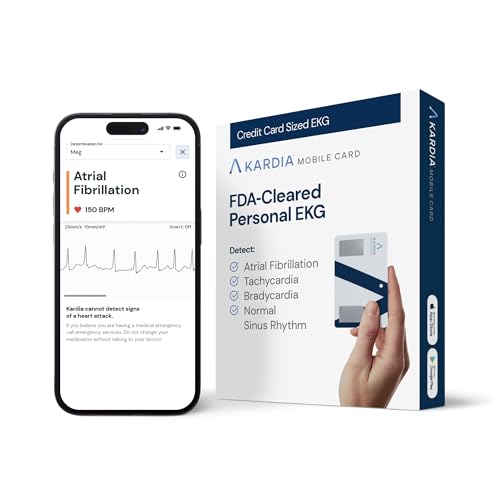
- Best for: People who want an ECG monitor in their wallet at all times.
- Credit-card size at 85.6 by 54.0 by 1.2 millimetres
- Weighs 7.4 grams and fits in a wallet
- Single-lead ECG recording in 30 seconds
- Detects AFib, bradycardia, and tachycardia
All 3 Picks at a Glance
| Product | Specs | Action |
|---|---|---|
| KardiaMobile 6L |
| Check price on Amazon |
| KardiaMobile 1-Lead |
| Check price on Amazon |
| KardiaMobile Card |
| Check price on Amazon |
A home ECG monitor turns a worried moment into a recorded trace you can show a clinician, but the right one depends on how much detail you need and how you want to read the result. Some record a single lead in 30 seconds with two fingers, others record six leads for a fuller picture, and a few carry their own screen so no phone is needed at all. The four monitors below cover each of those paths, and every one stores readings you can share later.
This guide is for people who want to track their heart rhythm at home, for travellers who want a monitor in a pocket or wallet, and for anyone whose clinician asked for ECG traces between visits. Each monitor was chosen from the names and specs on its Amazon page, with lead count, recording time, and storage checked against the listing before it earned a place here.
Our Top Picks
Top 3 picks at a glance
Quick Picks
As an Amazon Associate we earn from qualifying purchases
| Product | Best for | Key spec from title |
|---|---|---|
| KardiaMobile 6L | Fullest detail at home | Six-lead ECG with results in 30 seconds |
| KardiaMobile 1-Lead | Pocket travel and quick checks | Single-lead ECG with results in 30 seconds |
| KardiaMobile Card | Wallet carry anywhere | Credit-card size with 2,000 EKG battery life |
| EMAY Portable ECG Monitor | Screen without a phone | Stand-alone LCD screen with on-device storage |
How to Choose
Lead count and detail
Lead count decides how much of the heart the trace shows. A single-lead monitor records one view in 30 seconds from two fingertips, which is enough for a quick rhythm check and for spotting AFib, bradycardia, and tachycardia. A six-lead monitor adds a third electrode on the knee or ankle and records six views, giving a clinician more to work with when the rhythm looks unusual. If your clinician asked for detailed traces, pick six leads; if you want fast checks on the go, one lead is enough.
Screen or phone-only recording
Some monitors have no display at all and show every result on a phone app, while others carry a small screen that shows the heart rate and trace on the device itself. A phone-only monitor is smaller and lighter, but it is useless without a charged phone nearby. A stand-alone screen suits a bedside table or a bag without a phone, and it lets you check the heart rate at a glance. Decide which you will actually reach for, because a monitor left in a drawer records nothing.
Storage and sharing
A monitor earns its place when the readings survive the moment, so check how many recordings it stores and how they leave the device. Unlimited app storage keeps years of traces on your phone, while on-device storage holds a set number you can review on the screen. Look for a monitor that exports a PDF report or shares a trace by message or email, because a clinician needs the waveform, not just a heart rate number. Check whether sharing needs an account or works straight from the app.
Battery, size, and subscriptions
Portable ECG monitors run on coin cells or rechargeable batteries, and the difference shows up in daily use. A coin-cell device can last months and never needs a charger, while a rechargeable one needs a cable nearby. Credit-card and pocket sizes fit a wallet or jacket, while a six-lead device is larger but still fits a pocket. Check whether the core rhythm detection needs a subscription, because some monitors charge monthly for extra rhythm types while basic AFib detection stays free.
The 4 Best Options
KardiaMobile 6L
- Best for: Home users who want the fullest ECG detail to share with a clinician.
- Six-lead ECG recording with six views of the heart
- Results in 30 seconds on the Kardia app
- Detects AFib, bradycardia, and tachycardia
- Unlimited recordings stored in the app
Home users who want the fullest ECG detail to share with a clinician.
Six-lead recording needs the bottom electrode on a knee or ankle, so it takes a steadier hand than a fingertip check.
The KardiaMobile 6L is the pick for the fullest detail at home, because it records six leads in 30 seconds and gives a clinician six views of the heart instead of one. Two thumbs rest on the top electrodes while the bottom electrode touches the left knee or ankle, and the Kardia app shows the trace with a result for AFib, bradycardia, and tachycardia. Recordings are unlimited, the device is pocket size, and a single CR2016 coin cell powers around 200 hours of use.
Watch out for: Six-lead recording needs the bottom electrode on a knee or ankle, so it takes a steadier hand than a fingertip check.
KardiaMobile 1-Lead
- Best for: Quick rhythm checks at home or on the go with the simplest setup.
- Single-lead ECG recording from two fingertips
- Results in 30 seconds on the Kardia app
- Detects AFib and irregular arrhythmias
- Unlimited recordings stored in the app
Quick rhythm checks at home or on the go with the simplest setup.
A single lead shows less detail than six leads, so a clinician may ask for a fuller trace after an unusual result.
The KardiaMobile 1-Lead is the benchmark pocket monitor, because it records a single-lead ECG in 30 seconds from two fingertips and flags AFib and irregular rhythms on the phone screen. The device is small enough for a pocket or purse, the Kardia app stores unlimited recordings, and the result arrives fast enough to repeat a check when the first trace looks noisy. It is the simplest route to a recorded trace at home, and it works with most smartphones without extra hardware.
Watch out for: A single lead shows less detail than six leads, so a clinician may ask for a fuller trace after an unusual result.
KardiaMobile Card
- Best for: People who want an ECG monitor in their wallet at all times.
- Credit-card size at 85.6 by 54.0 by 1.2 millimetres
- Weighs 7.4 grams and fits in a wallet
- Single-lead ECG recording in 30 seconds
- Detects AFib, bradycardia, and tachycardia
People who want an ECG monitor in their wallet at all times.
The card has no display, so every result needs a phone running the Kardia app.
The KardiaMobile Card is the wallet pick, because it is the size of a credit card, weighs 7.4 grams, and slides into a wallet where it is always within reach. Bluetooth connects it to the Kardia app, a single-lead ECG records in 30 seconds from two thumbs on the electrodes, and the built-in battery lasts for around 2,000 recordings with no charging ever needed. It detects AFib, bradycardia, and tachycardia, and the card shape means it goes everywhere a wallet goes.
Watch out for: The card has no display, so every result needs a phone running the Kardia app.
EMAY Portable ECG Monitor
The EMAY Portable ECG Monitor is the pick for a screen without a phone, because its built-in LCD shows the heart rate and trace on the device itself and stores readings on board. A 30-second recording starts with a single button, the monitor works stand-alone or paired with a phone app and PC software, and there is no subscription for the core recording and storage. The handheld shape fits a bedside drawer, and the screen makes it easy to check a result the moment the recording ends.
Specs
- Stand-alone device with an LCD screen and on-device storage
- Records ECG and heart rate in 30 seconds
- No subscription required for recording and storage
- Compatible with smartphone app and PC software
- Handheld design with a single-button start
- Stores readings on the device for later review
Best for: Home users who want to see the result on a screen without a phone.
Watch out for: The on-device storage holds a set number of readings, so move older traces to the app or PC before the memory fills.
Which One Fits Your Situation
Fullest detail at home
Choose the KardiaMobile 6L when a clinician wants the most detail from a home trace. Six leads give six views of the heart in 30 seconds, recordings are unlimited in the app, and the coin-cell battery lasts for months. It is the strongest choice for regular tracking between visits when the rhythm sometimes looks unusual.
Quick checks in a pocket
Choose the KardiaMobile 1-Lead when you want the fastest check with the least setup. Two fingertips on the electrodes give a single-lead trace in 30 seconds, the device fits a pocket or purse, and unlimited app storage keeps every result. It suits daily checks and the moments when a symptom appears away from home.
Wallet carry everywhere
Choose the KardiaMobile Card when the monitor must always be with you. At credit-card size and 7.4 grams it lives in a wallet, the battery covers around 2,000 recordings with no charging, and Bluetooth sends each result to the phone in 30 seconds. It is the pick for travellers and for anyone who wants a monitor that is never left behind.
Screen without a phone
Choose the EMAY Portable ECG Monitor when you want the result on a screen, not a phone. The LCD shows the heart rate and trace as soon as the 30-second recording ends, on-device storage keeps readings without an app, and no subscription is needed. It fits a bedside table and suits buyers who prefer a device that works on its own.
Common Mistakes
- Recording with cold or dry fingers, which weakens the signal and makes the trace noisy.
- Moving or talking during the 30-second recording instead of sitting still.
- Treating a single unusual result as a diagnosis instead of repeating the check and sharing the trace with a clinician.
- Buying a phone-only monitor when you often leave the phone in another room.
- Letting on-device storage fill up without moving older readings to the app or PC.
Frequently Asked Questions
What is the difference between a 1-lead and a 6-lead ECG?
A 1-lead ECG records one view of the heart from two fingertips for quick rhythm checks. A 6-lead ECG adds a third electrode on the knee or ankle and records six views, giving a clinician more detail for unusual rhythms. Pick six leads when your clinician asked for detailed traces, and one lead for fast checks.
Can a home ECG monitor diagnose a heart problem?
No. A home ECG monitor records a trace and flags common rhythm patterns, but it does not diagnose heart disease or replace a clinician. When a result looks unusual, repeat the recording and share the trace with your clinician, who can read it in the context of your health history and other tests.
Do I need a subscription for a home ECG monitor?
Not for the core features. The monitors in this guide record ECGs and store the results without a monthly fee, and basic AFib detection works without one. Some apps charge for extra rhythm types or longer reports, so check the app listing if a specific feature matters to you before buying.
How do I share readings with my clinician?
Open the app, pick the trace, and export it as a PDF report or share it by message or email. The report includes the waveform, the heart rate, and the time of the recording, which is what a clinician needs. Bring the report to your visit or send it ahead, and mention any symptoms you felt during the recording.
Related guides
More from Amazon
Programs that pair well with the guide above. Offers and eligibility are set by Amazon and may change.
A free business account with business pricing and bulk-buying tools for work, shop or home office.
Create a business accountFree shipping on eligible items, Prime Video and more. Eligible new members can start with a free trial.
Start a Prime free trialAudiobooks and podcasts to listen to on the go. Eligible new members can start with a free trial.
Try Audible freeAd-free music streaming. Eligible new subscribers can start with a free trial.
Try Music Unlimited freeAs an Amazon Associate we earn from qualifying purchases.