Our Short List of 3
All 4 Picks at a Glance
| Product | Specs | Action |
|---|---|---|
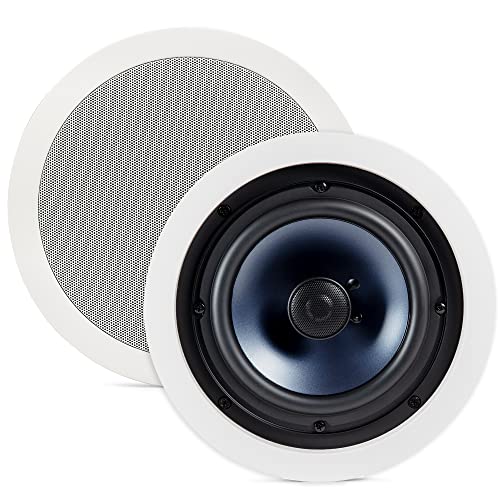 Polk Audio RC80i In-Ceiling Speaker | Check price on Amazon | |
 Klipsch CDT-5650-C II In-Ceiling Speaker | Check price on Amazon | |
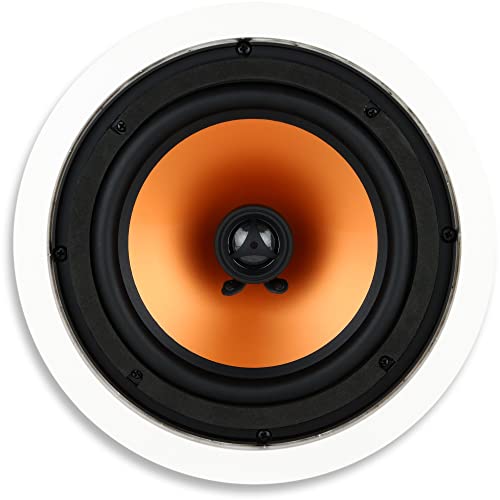 Micca M-8C In-Ceiling Speaker | Check price on Amazon | |
 Yamaha NS-IC800 In-Ceiling Speaker | Check price on Amazon |
The best height speakers add the missing dimension to home theater: sound from above. A standard surround setup places sound around you, but height channels place it overhead — rain falling, a helicopter passing, a crowd roaring from above — and the difference is immediate. Height speakers carry the overhead channels in Dolby Atmos and DTS:X systems, and they turn a good surround setup into a genuinely immersive one. They work in two main forms: in-ceiling speakers mounted flush in the ceiling, and on-ceiling or wall-mounted modules aimed down from above.
This guide covers height speakers that suit a dedicated theater room or a living room, with an emphasis on models that blend into the ceiling, match common surround speakers, and handle the power and frequency range that overhead effects demand. Each pick is a real speaker designed for overhead use, and each one is explained in terms of room type, installation effort, and how it pairs with the rest of a surround system.
Our Top Picks
Top 3 picks at a glance
How to Choose
In-Ceiling Versus On-Ceiling
In-ceiling speakers sit flush in the ceiling and disappear visually, which suits living rooms and dedicated theaters alike. They need a ceiling you can cut into and enough depth above it for the speaker body. On-ceiling and wall-mounted height modules sit on the surface and suit rooms where cutting the ceiling is not possible, such as rentals or concrete ceilings. In-ceiling models usually sound more natural for overhead effects, while surface models are easier to install and remove.
Aimable Tweeters
Overhead effects sound best when the tweeter points at the listening position rather than straight down. Aimable tweeters let you angle the high frequencies toward the seats, which improves clarity and keeps dialogue and effects focused. Look for a pivoting tweeter or an angled baffle, especially if the speakers will sit well forward or behind the main seating.
Woofer Size and Bass
Height channels carry effects and ambience more than deep bass, so a 6.5-inch or 8-inch woofer is usually enough. Larger woofers reach lower and sound fuller, which helps in big rooms, while smaller woofers suit compact rooms and shallow ceilings. The crossover in your receiver handles the lowest frequencies anyway, sending them to the subwoofer, so the height speaker’s job is clean mids and highs.
Timbre Matching
Speakers from the same family share a tonal character, which keeps sound smooth as it moves from the front speakers to the height channels. If your main speakers are Klipsch, a Klipsch height speaker will blend more naturally than a mismatched brand. Matching is not mandatory — room correction in a modern receiver helps — but it is the easiest way to get a seamless soundfield.
Power Handling and Sensitivity
Height channels receive less power than the front speakers, but they still need to keep up during loud scenes. Check the sensitivity rating: a higher number means the speaker plays louder from the same amplifier power. Power handling should match or exceed what your receiver sends to those channels, with headroom for peaks. Overly sensitive speakers are rarely a problem; underpowered ones sound thin when the action peaks.
Installation and Ceiling Depth
Measure the space above your ceiling before buying. In-ceiling speakers need a mounting depth that varies by model, and insulation, joists, and wiring can all get in the way. A speaker with a shallow mount suits tight ceilings, while a deeper model may need a back box or an open attic. If you are unsure, a quick look above the ceiling with a flashlight saves a return.
Moisture and Room Use
Most height speakers are designed for dry indoor rooms, but bathrooms, kitchens, and covered patios need moisture-resistant models. If the room sees steam or humidity, look for a speaker rated for damp locations. For a standard living room or theater, any of the picks below works without special treatment.
Top Picks
Polk Audio RC80i In-Ceiling Speaker
View the Polk Audio RC80i In-Ceiling Speaker on Amazon
The Polk RC80i is a long-running in-ceiling speaker with an 8-inch woofer and a 1-inch aimable tweeter, and it remains one of the most installed height speakers for home theater. The larger woofer gives overhead effects a full, natural weight, and the aimable tweeter lets you point the highs at the seating area. Moisture-resistant materials suit bathrooms and kitchens as well as theaters, and the paintable grille blends into the ceiling.
Who it is for: homeowners building a four-speaker Atmos height layer in a living room or theater, especially where a full, warm overhead sound matters. Caveats: the 8-inch size needs a standard ceiling cutout and enough depth above the ceiling; it is sold as a single speaker, so plan on two or four units for a complete height layer.
Klipsch CDT-5650-C II In-Ceiling Speaker
View the Klipsch CDT-5650-C II In-Ceiling Speaker on Amazon
The Klipsch CDT-5650-C II pairs a 6.5-inch woofer with a 1-inch titanium tweeter in a horn, plus a swiveling woofer and tweeter that let you aim the whole soundfield at the listener. That adjustability is its main strength: in rooms where the ceiling placement is not perfect, you can still direct the sound to the seats. The horn-loaded tweeter is efficient and detailed, which helps overhead effects cut through during loud scenes.
Who it is for: Klipsch surround owners who want a timbre-matched height layer, and rooms where the ceiling position needs aiming flexibility. Caveats: the model line has seen revisions, so confirm the exact model and listing before ordering; it is a single speaker, so budget for two or four.
Micca M-8C In-Ceiling Speaker
View the Micca M-8C In-Ceiling Speaker on Amazon
The Micca M-8C is a straightforward 8-inch in-ceiling speaker with a pivoting 1-inch tweeter, built for listeners who want solid overhead sound without a premium outlay. The larger woofer gives effects a natural body, the pivoting tweeter aims the highs at the seats, and the paintable grille disappears into a white ceiling. It is a practical choice for a first Atmos setup or for filling out a second zone.
Who it is for: first-time Atmos builders and budget-conscious theater owners who need two or four height speakers at a sensible cost. Caveats: it is a simpler speaker than the Klipsch or Polk picks, with less refinement in the top end; it is sold singly, so count the units you need before ordering.
Yamaha NS-IC800 In-Ceiling Speaker
View the Yamaha NS-IC800 In-Ceiling Speaker on Amazon
The Yamaha NS-IC800 is an 8-inch in-ceiling speaker with a 1-inch swivel tweeter and a design tuned for clear, balanced sound in home theater and whole-home audio. Yamaha’s long history in both speakers and receivers shows in the voicing: smooth mids, clean highs, and enough bass to make overhead effects feel present rather than thin. It pairs well with Yamaha receivers and with any neutral surround system.
Who it is for: listeners who want a balanced, unfussy height speaker from a brand with deep receiver and speaker experience, especially in Yamaha-based systems. Caveats: it is sold as a single unit, so a four-speaker height layer needs four purchases; check ceiling depth, since the 8-inch driver needs a standard cutout.
Comparison Table
| Speaker | Woofer | Tweeter | Mounting | Best For |
|---|---|---|---|---|
| Polk Audio RC80i | 8-inch | 1-inch aimable | In-ceiling | Full, warm overhead sound |
| Klipsch CDT-5650-C II | 6.5-inch | 1-inch horn, aimable | In-ceiling | Klipsch systems, aim flexibility |
| Micca M-8C | 8-inch | 1-inch pivoting | In-ceiling | First Atmos setup, value |
| Yamaha NS-IC800 | 8-inch | 1-inch swivel | In-ceiling | Balanced sound, Yamaha systems |
Which One Is Right for You?
If you want a full, warm height layer and a speaker with a long track record, the Polk RC80i is the safest all-round pick. Klipsch surround owners should choose the CDT-5650-C II for timbre matching and its aimable driver, which helps when ceiling placement is less than perfect. The Micca M-8C suits a first Atmos build or a second room where value matters most, and the Yamaha NS-IC800 fits balanced systems and Yamaha receivers. Whichever you choose, install two height speakers for a basic Atmos layer and four for a fuller overhead field, aim the tweeters at the seats, and run your receiver’s room correction after installation — it makes a bigger difference overhead than anywhere else.
Placement Tips for Height Speakers
Placement decides how convincing the overhead effect feels. For a two-speaker height layer, mount the speakers in the ceiling above and slightly in front of the main seating, angled toward the listeners so the sound arrives from above and ahead. For a four-speaker layer, place one pair in front of the seating and one pair behind it, keeping the front and rear pairs roughly symmetrical so effects can travel smoothly overhead from one end of the room to the other. Keep each speaker clear of ceiling fans, light fixtures, and air vents, since those objects block or scatter the sound. A good rule is to aim for an angle of roughly 45 degrees from the listener to each height speaker, which puts the sound clearly overhead without feeling disconnected from the rest of the system. After installation, run the receiver room correction with the microphone at the main seat, and listen to a familiar film scene with rain or a flyover to confirm the height layer blends with the front and surround speakers. If the overhead sound feels detached, check the speaker levels and the aim of the tweeters before changing anything else.
Frequently Asked Questions
How many height speakers do I need?
Two height speakers give a basic Atmos layer and a clear sense of overhead sound. Four height speakers — two in front of the seating and two behind — give a much fuller overhead field and smoother movement of effects above you. Most receivers support either layout, so begin with two and add the second pair later if you want more.
Do height speakers need to match my main speakers?
Matching helps, since speakers from the same family share a tonal character and blend more smoothly. It is not mandatory: modern receivers use room correction to balance different speakers, and height channels carry effects rather than dialogue, so a close match is usually enough.
Can I install in-ceiling speakers in a rental?
Cutting a ceiling is usually not allowed in a rental, and it is a permanent change. Renters should look at on-ceiling or wall-mounted height modules that attach with brackets, or up-firing modules that sit on top of the front speakers. Those options need no cutting and can move with you.
Do I need a special receiver for height speakers?
Yes. Height channels need a receiver that supports Dolby Atmos or DTS:X and has amplifier channels assigned to them, typically a 7.1-channel receiver or larger for a two-speaker height layer, and a 9.1-channel receiver for four height speakers. Check the receiver’s channel count and its Atmos speaker layouts before buying height speakers.
Disclosure: As an Amazon Associate, we may earn from qualifying purchases.
Related guides
More from Amazon
Programs that pair well with the guide above. Offers and eligibility are set by Amazon and may change.
A free business account with business pricing and bulk-buying tools for work, shop or home office.
Create a business accountFree shipping on eligible items, Prime Video and more. Eligible new members can start with a free trial.
Start a Prime free trialAudiobooks and podcasts to listen to on the go. Eligible new members can start with a free trial.
Try Audible freeAd-free music streaming. Eligible new subscribers can start with a free trial.
Try Music Unlimited freeAs an Amazon Associate we earn from qualifying purchases.