Our Short List of 3

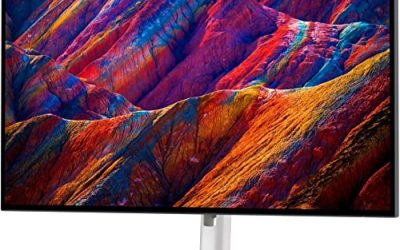
- Best for: Developers who want one sharp 4K screen that charges their laptop over a single cable.
- 27-inch UHD IPS display, 3840 x 2160 resolution
- VESA DisplayHDR 400, DCI-P3 95 percent colour gamut
- USB-C with 96W Power Delivery
- Height, pivot and tilt adjustable stand

- Best for: Front-end developers and designers who need calibrated colour on a sharp 4K coding screen.
- 27-inch 4K UHD IPS display, 3840 x 2160 resolution
- 99 percent DCI-P3 and 99 percent Adobe RGB coverage
- Calman Verified, factory pre-calibrated to Delta E under 2
- USB-C with 96W Power Delivery

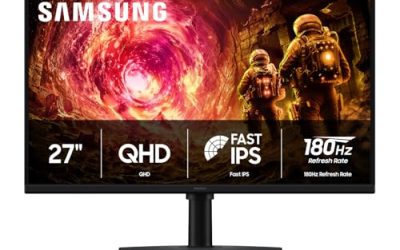
- Best for: A first 4K coding monitor for a laptop-first desk, with speakers included.
- 27-inch 4K UHD IPS display, 3840 x 2160 resolution
- 60Hz refresh rate, 8 ms grey-to-grey response time
- USB-C with 65W Power Delivery
- 99 percent sRGB, 1.07 billion colours
All 3 Picks at a Glance
| Product | Specs | Action |
|---|---|---|
| LG 27UP850-W |
| Check price on Amazon |
| ASUS ProArt PA279CRV |
| Check price on Amazon |
| Dell S2722QC |
| Check price on Amazon |
A programming monitor earns its place by making text easy to read for hours at a time. Code is small, dense and full of similar-looking characters, so a screen that renders it softly or crams too little onto one view slows every task, from tracing a bug through nested calls to comparing two files side by side. The choice that matters most is not refresh rate or gaming features. It is how many sharp lines of code fit on screen at once, and whether your eyes still feel fresh when the working day ends.
This guide is for developers, students and anyone who writes code for a living, whether on a laptop at a small desk or a desktop in a home office. Every monitor below was picked from its Amazon product listing, looking for sharp resolution, a panel that stays readable at an angle, and connections that suit a coding setup.
Our Top Picks
 ASUS ProArt PA279CRV 27 Inch 4K UHD USB-C27 Inch24.1 x 8.46 x 16.07 Inches18.25 poundsCheck on Amazon
Top 3 picks at a glance
Quick Picks
As an Amazon Associate we earn from qualifying purchases
| Product | Best for | Key spec from title |
|---|---|---|
| LG 27UP850-W | A sharp 4K screen with one-cable laptop docking | 27-inch 4K UHD IPS, USB-C with 96W Power Delivery |
| ASUS ProArt PA279CRV | Front-end work where colour accuracy matters | 27-inch 4K IPS, 99 percent DCI-P3, USB-C 96W |
| Samsung ViewFinity S65UA | Editor and documentation open side by side | 34-inch curved ultrawide, 100Hz, USB-C 90W |
| BenQ PD2705U | A Mac-ready 4K screen with a shortcut puck | 27-inch 4K IPS, USB-C 65W, HotKey Puck |
| Dell S2722QC | A first 4K coding screen with built-in speakers | 27-inch 4K USB-C, built-in dual 3W speakers |
How to Choose
Resolution and Text Sharpness
Resolution decides how crisp code looks and how much of it fits on screen. A 27-inch 4K panel packs roughly 163 pixels per inch, so brackets, semicolons and indentation stay distinct even at small font sizes, and anti-aliased text stops looking fuzzy at the edges. A 1440p panel at the same size shows fewer lines and softer glyphs, which matters when you scan long files all day. Ultrawide 1440p trades some vertical sharpness for width, so it suits side-by-side windows rather than maximum line counts. Pick the resolution by the smallest font size you read comfortably, then check that your laptop or graphics card can drive it at full resolution over the cable you plan to use.
Size, Shape and How Much Code Fits
A 27-inch 16:9 screen is the safe centre of a coding setup, wide enough for an editor plus a terminal or browser, and tall enough that you are not scrolling every few seconds. A 34-inch 21:9 ultrawide replaces a two-screen arrangement with one continuous canvas, which keeps the editor, documentation and a preview in view without a bezel in the middle. A 32-inch 4K screen shows even more at once but needs a deeper desk, since sitting too close to a large panel forces constant head movement. Measure your viewing distance before choosing, and remember that a curved ultrawide helps at the edges only when you sit centred in front of it.
USB-C Docking and Ports
A USB-C port that carries video, data and charging turns a monitor into a docking station, so a laptop connects with one cable and charges while you work. Check the wattage: 96W covers most full-size laptops, while 65W suits thin-and-light machines and may leave a powerful laptop draining slowly under load. A built-in USB hub keeps a keyboard, mouse and headset plugged into the monitor instead of the laptop, which makes undocking painless. If you run two machines, look for a KVM switch or a second video input, and confirm the monitor has the HDMI or DisplayPort input your desktop needs alongside the USB-C port.
Eye Comfort and a Stand That Adjusts
Long coding sessions punish a fixed screen, so ergonomics deserve the same attention as resolution. A stand with height, tilt, swivel and pivot adjustment lets you set the top of the screen near eye level and rotate the panel upright for reading long files, which many developers do with a second screen. Flicker-free backlights and low blue light modes reduce strain during late sessions, and a matte anti-glare finish keeps overhead lights and windows from washing out dark editor themes. If the included stand falls short, a VESA mount opens up arms and wall mounts, so check the mounting pattern before you buy.
The 5 Best Options
LG 27UP850-W
- Best for: Developers who want one sharp 4K screen that charges their laptop over a single cable.
- 27-inch UHD IPS display, 3840 x 2160 resolution
- VESA DisplayHDR 400, DCI-P3 95 percent colour gamut
- USB-C with 96W Power Delivery
- Height, pivot and tilt adjustable stand
Developers who want one sharp 4K screen that charges their laptop over a single cable.
LG lists this model as discontinued in some regions and a successor exists, so confirm the exact model and seller on the listing. Confirm it is still sold before buying.
The LG 27UP850-W is the straightforward way to get a sharp 27-inch 4K screen that also docks a laptop. Its IPS panel renders text cleanly at full resolution, and the USB-C connection charges a connected laptop while carrying the picture, so a single cable replaces a charger and a video lead on the desk. The stand adjusts for height, pivot and tilt, which helps when you rotate the screen upright to read long files. Wide colour coverage and HDR support make it a capable second screen for design work as well as code.
Watch out for: LG lists this model as discontinued in some regions and a successor exists, so confirm the exact model and seller on the listing. Confirm it is still sold before buying.
ASUS ProArt PA279CRV
- Best for: Front-end developers and designers who need calibrated colour on a sharp 4K coding screen.
- 27-inch 4K UHD IPS display, 3840 x 2160 resolution
- 99 percent DCI-P3 and 99 percent Adobe RGB coverage
- Calman Verified, factory pre-calibrated to Delta E under 2
- USB-C with 96W Power Delivery
Front-end developers and designers who need calibrated colour on a sharp 4K coding screen.
The listing bundles a short Adobe Creative Cloud trial with an expiry date, so check what is included before counting on it. Confirm it is still sold before buying.
The ASUS ProArt PA279CRV suits developers whose work crosses into front-end design, where the colours on screen have to match what ships to users. Each unit arrives factory calibrated and Calman Verified, with broad coverage of both the DCI-P3 and Adobe RGB gamuts, so interface mockups and documentation screenshots render faithfully. The 27-inch 4K panel keeps code sharp, while USB-C with strong power delivery and DisplayPort daisy-chaining support a tidy multi-screen desk. An ergonomic stand rounds out a screen built for long, colour-sensitive working days.
Watch out for: The listing bundles a short Adobe Creative Cloud trial with an expiry date, so check what is included before counting on it. Confirm it is still sold before buying.
Samsung ViewFinity S65UA
The Samsung ViewFinity S65UA is the pick for coders who live with two windows open at once. Its 34-inch curved ultrawide panel stretches across the desk with room for an editor on one side and documentation, a terminal or a preview on the other, without a bezel splitting the view. The 1000R curve keeps the far edges within comfortable reach, and USB-C charging plus a built-in hub and Ethernet turn it into a docking station for a laptop. Eye-care certification and a height-adjustable stand support the long sessions that a wide canvas invites.
Specs
- 34-inch curved ultrawide, 21:9 aspect ratio, 1000R curve
- 3440 x 1440 Ultra WQHD resolution, VA panel
- 100Hz refresh rate, HDR10 with 1 billion colours
- USB-C with 90W charging power
- HDMI, DisplayPort, Ethernet and USB hub
- TUV-certified Intelligent Eye Care
- Height adjustable stand
Best for: Developers who want an editor and reference material open together on one wide screen.
Watch out for: The listing has described the panel type inconsistently in the past, so check the panel details on the listing before buying. Confirm it is still sold before buying.
BenQ PD2705U
The BenQ PD2705U is built for developers who also work in design tools and switch between a Mac and a PC. Its factory-calibrated 4K IPS panel covers the sRGB and Rec.709 gamuts used across web and video work, and the included HotKey Puck switches colour modes and inputs without digging through on-screen menus. A KVM switch shares one keyboard and mouse between two connected machines, which suits a laptop-plus-desktop desk. USB-C carries video and charging in one cable, and the Mac-ready tuning keeps text and colour consistent on Apple hardware.
Specs
- 27-inch 4K UHD IPS display, 3840 x 2160 resolution
- 99 percent sRGB and Rec.709, Delta E 3 or less
- Factory calibrated with calibration report, AQCOLOR technology
- USB-C with 65W Power Delivery
- HotKey Puck G2 and KVM switch
- HDMI, DisplayPort and USB hub
- HDR10 support, Mac-ready
Best for: Developers on a Mac who also do design work and switch between two machines.
Watch out for: USB-C charging tops out at 65W, so a power-hungry laptop may drain slowly under heavy load. Confirm it is still sold before buying.
Dell S2722QC
- Best for: A first 4K coding monitor for a laptop-first desk, with speakers included.
- 27-inch 4K UHD IPS display, 3840 x 2160 resolution
- 60Hz refresh rate, 8 ms grey-to-grey response time
- USB-C with 65W Power Delivery
- 99 percent sRGB, 1.07 billion colours
A first 4K coding monitor for a laptop-first desk, with speakers included.
Two similar Dell 4K model numbers circulate with different ASINs, so verify the exact model on the listing. Confirm it is still sold before buying.
The Dell S2722QC is the sensible entry point into 4K coding: a 27-inch sharp panel with the one-cable USB-C connection that keeps a laptop desk tidy, plus built-in speakers for calls and video without extra hardware on the desk. Its IPS panel covers the sRGB gamut used by most web work, and AMD FreeSync keeps scrolling smooth at the standard refresh rate. Two HDMI inputs leave room for a second machine or a console beside the laptop. For a first dedicated coding screen, it covers the essentials without asking for a premium panel or a calibration feature set.
Watch out for: Two similar Dell 4K model numbers circulate with different ASINs, so verify the exact model on the listing. Confirm it is still sold before buying.
Which One Fits Your Situation
You Code on a Laptop and Want One Cable
Pick the LG 27UP850-W when your laptop is your only machine and you want the screen to charge it. Its 96W USB-C delivery covers larger laptops that the 65W models may struggle with, and the sharp 4K panel keeps small code fonts readable. The Dell S2722QC is the fallback when the budget is tighter and built-in speakers matter more than maximum charging power.
You Keep Docs Open Beside Your Editor
Pick the Samsung ViewFinity S65UA when your workflow is two windows at once. The ultrawide canvas holds an editor and a browser or terminal together without a bezel between them, and the built-in hub and Ethernet keep a laptop docked with one cable. It is the only pick here that replaces a dual-screen arrangement on its own.
Your Work Crosses Into Design and Colour
Pick the ASUS ProArt PA279CRV when interface colours have to be right, since its factory calibration and wide gamut coverage suit front-end and design work. The BenQ PD2705U is the alternative when you switch between a Mac and a PC, because its KVM switch and HotKey Puck make sharing one desk between two machines painless.
Your Desk Is Small or Your Budget Is Tight
Pick the Dell S2722QC when space and spending both need watching. A single 27-inch 4K screen fits a compact desk, the USB-C connection keeps cables to one, and the built-in speakers remove a separate purchase. Skip the ultrawide here, since a 34-inch curved panel needs depth and width that a small desk cannot give.
Common Mistakes
- Buying a 1080p screen at 27 inches or larger, where code text turns soft and line counts drop sharply.
- Choosing a monitor for refresh rate instead of resolution, when coding rewards sharp text far more than fast motion.
- Assuming every USB-C port charges a laptop, without checking the wattage against what the laptop actually draws.
- Placing a wide or ultrawide screen on a shallow desk, where the edges sit too close and force constant head turning.
- Skipping the stand check and ending up with a fixed screen that cannot reach eye level or rotate upright for long files.
Frequently Asked Questions
Is 4K worth it for programming?
Yes, at 27 inches and above, 4K makes the clearest difference for coding. Text renders with sharper edges at small font sizes, and more lines fit on screen without scrolling, which helps when tracing logic through long files. A 1440p panel costs less and still works well, but the jump to 4K is visible every time you read code. Check that your machine can drive 4K first.
Is an ultrawide better than two monitors for coding?
An ultrawide suits coders who constantly glance between an editor and reference material, since one continuous panel removes the bezel gap and keeps window management simple. Two separate screens win when you want one screen upright for reading long files, or when you run different content at different scaling. A 34-inch ultrawide is the closest single-screen substitute for a dual setup.
Do I need USB-C on a programming monitor?
USB-C is worth having when a laptop is your main machine, because one cable carries video, data and charging while keeping the desk tidy. It is less important for a desktop-only setup, where HDMI or DisplayPort does the same job for video. If you do choose USB-C, check the power delivery wattage, since a port that only carries video will not charge your laptop.
What size monitor is best for programming?
A 27-inch screen is the best starting point for most developers, offering room for an editor plus a side panel without dominating the desk. A 34-inch ultrawide suits coders who work with two windows side by side all day, while a 32-inch 4K screen fits those who want maximum lines on screen and have a deep desk. Match the size to your viewing distance first.
Related guides
More from Amazon
Programs that pair well with the guide above. Offers and eligibility are set by Amazon and may change.
A free business account with business pricing and bulk-buying tools for work, shop or home office.
Create a business accountFree shipping on eligible items, Prime Video and more. Eligible new members can start with a free trial.
Start a Prime free trialAudiobooks and podcasts to listen to on the go. Eligible new members can start with a free trial.
Try Audible freeAd-free music streaming. Eligible new subscribers can start with a free trial.
Try Music Unlimited freeAs an Amazon Associate we earn from qualifying purchases.