Asking which company makes the best computer monitors sounds simple, but the honest answer is that no single brand wins at everything. One company leads in office displays with strong warranties, another dominates gaming panels, and a third is the default choice for color-critical design work. The brand matters because it decides the warranty terms, the panel quality you can expect, and how easy a replacement is if something goes wrong.
This guide compares the major monitor companies side by side: Dell, LG, Samsung, ASUS, BenQ, Acer, MSI and Gigabyte. It explains how to judge a brand by its product range, panel technology, warranty and support, then matches each company to the buyers it serves best, whether you need a gaming display, an office workhorse or a creator monitor.
As an Amazon Associate we earn from qualifying purchases
How to Choose
Judge the breadth and focus of the product range
A company’s catalog tells you where its engineering effort goes. Dell and LG sell everything from basic office panels to professional color displays, while ASUS splits its range into clearly labeled families for gaming, creators and everyday use. Focus matters as much as breadth: BenQ concentrates on designer, photographer and eye-care monitors, so its features run deep in those areas. Start by identifying the two or three brands that specialize in your kind of work, then compare models inside those ranges instead of shopping the whole market at once.
Compare warranty length and pixel policies
Monitors are long-term purchases, and warranty terms separate the serious brands from the rest. Look at the length of coverage, whether the policy includes advance replacement shipping, and how the company treats defective pixels. Premium lines such as Dell’s UltraSharp range have historically carried stricter bright-pixel guarantees than entry-level models, and several gaming brands now include burn-in coverage on their OLED displays. Read the actual policy for the exact model you are considering, because terms often differ between a company’s budget and flagship families even under the same logo.
Understand where the panels come from
Only a handful of factories actually manufacture LCD and OLED panels, mainly LG Display, Samsung Display and a few large suppliers in China and Taiwan. Every brand buys from this same pool, so two monitors from rival companies can share very similar glass. What the brand adds is the electronics, calibration, firmware, housing and quality control around that panel. This is why judging a company by its tuning and consistency matters more than the panel origin alone. Brands that factory-calibrate their creator lines or bin panels for gaming models earn their premium through that extra work.
Check support channels and firmware updates
Good support shows up years after purchase, when you need a firmware fix, a replacement stand part or a warranty claim handled without weeks of back and forth. Established companies such as Dell, LG and BenQ maintain regional service networks, published support pages for each model and downloadable firmware updates. Smaller or newer brands may sell attractive specifications but offer thinner documentation and slower responses. Before buying, visit the support page for the model you want, confirm drivers and manuals exist for your operating system, and check how warranty claims are started in your country.
The Major Monitor Companies at a Glance
Dell: the office and all-round benchmark
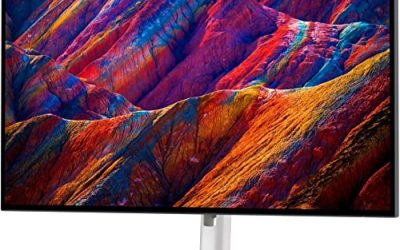
Dell is the safest default recommendation for most buyers. Its UltraSharp line is a long-running staple of offices and home workstations, known for consistent color, sturdy stands with full ergonomic adjustment and strong warranty handling for business customers. Dell also sells Alienware gaming monitors, including well-regarded OLED models, so the company covers both desks and gaming setups. The trade-off is a catalog that can feel overwhelming and styling that leans corporate. If you want one brand that rarely disappoints across office, general use and high-end categories, Dell is the name most IT departments reach for first.
LG: panel maker with a strong retail range
LG is unusual because its sister company manufactures the panels that many rivals buy, and LG’s own monitors often showcase that technology early. The UltraGear family is a fixture of gaming shortlists, the UltraFine line targets Mac users and creators, and the UltraWide range helped popularize curved widescreen productivity displays. LG monitors tend to offer good color performance and competitive features at each tier. Warranty handling and service quality can vary more by region than Dell’s business-focused operation, so check local support terms. For buyers who want modern panel technology in a mainstream brand, LG is a first stop.
Samsung: display giant with bold designs
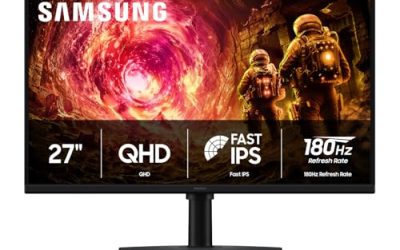
Samsung is one of the world’s largest display manufacturers, and its monitor range leans into distinctive designs: the curved Odyssey gaming line, the ViewFinity creator models and smart monitors that borrow features from its televisions. Samsung’s QD-OLED gaming displays are among the most talked-about in the category, and its panels also appear inside competitors’ products. The breadth is impressive, though the sheer number of similar model names can confuse comparisons, and menu systems are not everyone’s favorite. Choose Samsung when cutting-edge panel types, dramatic curves or an entertainment-friendly smart monitor appeal to you.
ASUS: the gamer and creator specialist
ASUS organizes its monitors into clear families: ROG and ROG Swift for gaming, ProArt for color-critical creative work, TUF Gaming for value-focused players and ZenScreen for portable displays. That structure makes shortlisting easy, because the badge on the box already tells you the intended audience. ROG models regularly appear among the fastest gaming monitors available, while ProArt displays are factory calibrated for design and video work. ASUS also sells motherboards and graphics cards, which some builders like for a matched setup. Prices on flagship ROG models run high, but the specialization is genuine and the range is deep.
BenQ: focused on eyes, color and craft
BenQ takes a narrower path than the giants and does it well. Its PD series serves designers, the SW series targets photographers with wide-gamut panels and hardware calibration support, and the MOBIUZ line handles gaming with an emphasis on color and built-in audio. BenQ also talks more than most brands about eye comfort, with low-blue-light modes and brightness that adapts to ambient light on many models. The company will not match Dell or Samsung for sheer catalog size, and it skips some headline gaming extremes. For design, photography and long hours of reading-heavy work, that focus is exactly the point.
Acer, MSI and Gigabyte: the value and gaming challengers
Acer’s Predator and Nitro lines deliver gaming specifications at aggressive prices, and its everyday monitors fill office budgets worldwide. MSI has grown from motherboards into a respected monitor brand, with well-reviewed gaming and QD-OLED models plus a solid productivity range. Gigabyte, including its AORUS gaming label, competes on features such as built-in KVM switches and high refresh rates for the money. None of the three matches Dell’s business support machine, and model quality varies more across their wide catalogs. For gamers and home users watching value per specification, these challengers deserve a place on any shortlist.
Which One Fits Your Situation
You are equipping a home office or a whole team
Start with Dell. UltraSharp models combine dependable color, height-adjustable stands and business-grade warranty processes that scale from one desk to a department. LG is the alternative if you want an ultrawide for multitasking. Either way, standardizing on one brand simplifies spare cables, mounts and support contacts across every workstation you manage.
You are buying primarily for gaming
Shortlist ASUS ROG, LG UltraGear and Samsung Odyssey first, then compare Acer Predator, MSI and Gigabyte for value. These families carry the high refresh rates, fast response tuning and OLED options competitive players look for. Match the brand to your panel preference, and confirm the specific model’s firmware supports your console or graphics card features before ordering.
You do photo, video or design work
Look at BenQ’s PD and SW lines, ASUS ProArt and Dell UltraSharp models with strong factory calibration. These brands publish color specifications carefully and support hardware calibration on their creator models. Samsung ViewFinity and LG UltraFine are also credible. Prioritize the brand whose calibration tools and warranty support are strongest in your region.
You want the most screen for a tight budget
Acer, MSI and Gigabyte frequently undercut the bigger names on refresh rate and panel size, and LG’s entry models are worth checking too. You may give up some stand quality, warranty convenience or quality-control consistency. Buy from a retailer with an easy return process so a panel with defects can be exchanged without a fight.
Common Mistakes
- Assuming one brand is best at everything, when each company has strong and weak families inside its own catalog.
- Judging a monitor by the brand logo instead of the specific model’s panel, warranty terms and measured performance.
- Ignoring the dead-pixel and burn-in policy until after purchase, when the exact model’s coverage is what actually protects you.
- Overlooking firmware support, then discovering your monitor never receives fixes for compatibility issues with newer graphics cards or consoles.
- Mixing up model names within a brand, since a single letter difference can mean a different panel, stand or warranty tier.
Frequently Asked Questions
Which monitor brand is the most reliable overall?
Dell is the name most often cited for dependable office monitors, thanks to its UltraSharp warranty handling and business support network. LG and Samsung also have long track records at large scale. Reliability still varies by model line, so treat the brand as a starting filter and check the warranty terms and support options for the exact display you plan to buy.
Do all brands use the same panels in their monitors?
Mostly, yes. A small group of manufacturers, led by LG Display and Samsung Display, supplies panels to nearly every brand. The companies differ in the electronics, calibration, firmware, housing and quality control they wrap around that glass. That is why two monitors with similar panel specifications can still behave differently in color accuracy, uniformity and everyday usability.
Is a gaming brand like ASUS or Acer worse for office work?
Not necessarily. ASUS and Acer both sell dedicated productivity and creator lines alongside their gaming models, and those displays work perfectly well for office tasks. The gaming families simply prioritize refresh rate and response over ergonomics or color precision. What matters is choosing the right product family for your work, not avoiding a brand because it also markets to players.
How important is the brand when buying a monitor?
The brand decides your warranty experience, firmware support and quality-control consistency, so it matters more than many buyers expect. It matters less than the individual model’s panel quality, ergonomics and features, though. A sensible approach is to shortlist two or three trusted companies using this guide, then pick the specific model that fits your desk, budget and type of work.
Related guides
More from Amazon
Programs that pair well with the guide above. Offers and eligibility are set by Amazon and may change.
A free business account with business pricing and bulk-buying tools for work, shop or home office.
Create a business accountFree shipping on eligible items, Prime Video and more. Eligible new members can start with a free trial.
Start a Prime free trialAudiobooks and podcasts to listen to on the go. Eligible new members can start with a free trial.
Try Audible freeAd-free music streaming. Eligible new subscribers can start with a free trial.
Try Music Unlimited freeAs an Amazon Associate we earn from qualifying purchases.