
Shopping for NAS drives, you’ll hit the same wall most home builders do: the spec sheets look nearly identical until you spot that one difference—5400 RPM versus 7200 RPM—and suddenly you’re wondering if the faster drive is worth $40 more per unit, or whether you’re paying for speed you’ll never actually use. The honest answer is that neither choice is wrong. What matters is how many people stream from your NAS, whether you run sustained transfers, and how much noise and heat you can tolerate in the room where the box lives. This guide breaks down the tradeoffs so you can pick once and stop second-guessing.
Top 3 picks at a glance
Quick Verdict
For most home NAS users—two to four people, mixed streaming and backups, a few security cameras—5400 RPM drives are the smarter buy. They run cooler (roughly 3–5W less under load), cost $20–$60 less per drive at the 8TB tier, and their vibration characteristics suit multi-bay enclosures. Choose 7200 RPM if you regularly saturate your network with large sustained transfers, run a Plex server with multiple simultaneous 4K streams, edit video straight off the NAS, or use 10GbE. The premium buys headroom you only need under heavy load.
As an Amazon Associate we earn from qualifying purchases at no extra cost to you. Product prices and availability are accurate as of the date shown and are subject to change.



Side by Side
| Factor | 5400 RPM NAS Drive | 7200 RPM NAS Drive |
|---|---|---|
| Comfort (noise/heat) | Quieter idle, around 20–22 dBA; runs 3–5W cooler under load | Noticeably warmer; expect 8–11W under load vs. 5–7W |
| Durability rating | Typically 180TB/year workload rating, 3-year warranty | Typically 300TB/year workload rating, 5-year warranty |
| Price range | Roughly $200–$330 for 8TB NAS-class models | Roughly $280–$380 for 8TB NAS-class models |
| Maintenance | Less heat means fans run slower and filters clog slower | Requires better enclosure airflow; fan works harder year-round |
| Space needed | Standard 3.5″ bays, about 5.8 x 4 x 1 inch; identical footprint | Same 3.5″ footprint; just needs more airflow clearance |
| Look/appeal | No visible difference—both hide inside the enclosure | Same; only spec-sheet and sticker differences |
| Resale value | Modest; home NAS buyers are price-sensitive on used drives | Better; Pro-tier drives hold value due to warranty length |
| Power draw (idle) | Approximately 3.5–4.5W per drive | Approximately 4.5–6W per drive |
| Real-world throughput | Sufficient to saturate 1GbE in many cases | Comfortably saturates 1GbE; benefits 2.5GbE/10GbE setups |
| Best for | Backups, media streaming, home offices, low-noise spaces | Sustained heavy workloads, multiple simultaneous users, video editing |
Where 5400 Wins
Noise-sensitive rooms. A NAS often lives in a living room, hallway closet, or home office—the same space where you sleep or take calls. Slower-spinning platters generate less motor noise and less vibration, and in a multi-bay enclosure, vibration management matters enormously. Four 7200 RPM drives in a small chassis can produce a low hum that’s far more intrusive than four 5400 RPM equivalents.
Heat management. Each watt a drive burns becomes heat your enclosure must expel. Dropping 3–5W per drive across four bays saves 12–20W continuously—meaningful for a device that runs 24/7, both for your electric bill and for how hard the enclosure’s single small fan has to work, which in turn affects noise.
Typical home workloads. Streaming a movie to a TV requires 15–25 Mbps; a 4K remux needs up to 100 Mbps. Even a modest 5400 RPM drive delivers well over 150 MB/s on outer tracks—more than 1.2 Gbps. In other words, a single 5400 RPM drive can outpace a gigabit Ethernet connection, which is why the bottleneck in most home setups is the network, not the disk. A capable router like the TP-Link AXE5400 Tri-Band WiFi 6E (around $99) will happily move data faster than either drive class can feed it over typical wireless clients.
Budget. At the 8TB tier, NAS-class 5400 RPM drives routinely undercut 7200 RPM models by $50 or more. Across a four-bay array, that’s $150–$200 saved—enough to buy an entire extra drive for redundancy.
Where 7200 Rpm Hard Drive for Nas Wins
Sustained transfers. When you’re moving hundreds of gigabytes—initial migrations, restoring a backup, ingesting camera footage—7200 RPM drives maintain higher sequential throughput, often 20–30% faster than comparable 5400 RPM models at the same capacity. A single backup job that takes 40 minutes on a 5400 RPM array might take 30 minutes on 7200 RPM drives. For a nightly job, irrelevant. For a weekend-long migration, welcome.
Random I/O under concurrency. With multiple family members simultaneously browsing photo libraries, streaming different media, and syncing files, higher rotational speed shortens average seek and rotational latency. A 7200 RPM platter completes a full rotation in about 8.3ms versus 11.1ms at 5400 RPM—a ~25% reduction in worst-case wait per read. You feel this when several people hit the NAS at once, not when one person streams a movie.
Higher workload ratings and warranties. Pro-tier 7200 RPM drives are built for 300TB/year of writes and carry 5-year warranties versus the 3-year/180TB ratings typical of 5400 RPM NAS drives. The Western Digital 8TB WD Red Pro (7200 RPM, CMR, 256MB cache, around $380) is a good example of this class. If you write large volumes daily—camera archives, surveillance footage—this headroom is the real reason to pay the premium.
CMR technology. Most 7200 RPM NAS drives use conventional magnetic recording (CMR) rather than shingled (SMR). CMR avoids the dramatic write-speed collapses that SMR drives exhibit during large rewrites, which matters for RAID rebuilds and ZFS-based systems.
Future-proofing. If there’s any chance you’ll upgrade to 2.5GbE or 10GbE networking, 7200 RPM drives keep pace better. On a 2.5GbE link, a 5400 RPM drive can become the limiting factor; 7200 RPM models generally won’t.
Cost Over 5 Years
Assume a 4-bay array of 8TB drives. Four 5400 RPM NAS drives at roughly $300 each run about $1,200. Four 7200 RPM Pro drives at roughly $380 each run about $1,520—a $320 difference upfront.
Power narrows the gap slightly. At a ~4W difference per drive under mixed load, running 24/7, that’s about 140 kWh per year across four drives, or roughly $21/year at $0.15/kWh—about $105 over five years. So the total five-year gap lands around $400–$425 in favor of the 5400 RPM array.
Offsetting that: 7200 RPM Pro drives carry 5-year warranties versus 3, so a drive failure in year 4 is a free replacement on the Pro tier but a ~$300 out-of-pocket purchase on the standard tier. If your failure risk feels higher than average (dusty room, hot climate, 24/7 heavy writes), the longer warranty effectively closes much of the price gap. If your NAS mostly idles and serves weekend movie nights, it probably doesn’t.
Which One for Your Home
Small Apartment
Space is tight and the NAS may sit within a few feet of your desk or bed. Go 5400 RPM. The lower noise and heat matter more than the throughput you’ll sacrifice, especially since apartment internet speeds—not disk speed—will cap your remote access anyway. A 2-bay 5400 RPM array in a mirrored setup covers most apartment needs for well under $600 in drives.
Family with Kids or Pets
Multiple simultaneous users—kids streaming shows, a parent syncing photos, security cameras writing continuously—push you toward the middle. A mixed approach works well: 5400 RPM drives for a dedicated surveillance or backup volume, and one or two 7200 RPM Pro drives for the shared media and document pool. If pets knock things around or the NAS lives in a warm room, the Pro drives’ higher workload ratings and 5-year warranties earn their keep. Also keep the enclosure off the floor and its vents clear of pet hair.
Rental Property or Temporary Setup
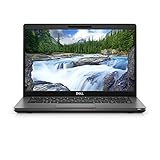
Whether it’s a NAS for a rental you own or a setup you’ll move when the lease ends, prioritize portability and cost. A rental where you physically relocate every year or two favors 5400 RPM drives: cheaper to replace if something breaks in a move, lighter on the wallet, and you won’t mourn the resale hit. Pair the NAS with a compact client or laptop for management—something like a renewed Dell Latitude 5400 with a 256GB SSD and 8GB RAM (around $230) handles NAS administration and offsite backup configuration without needing a dedicated desktop.
Long-Term Home
If you’re settling in for a decade and expect your data habits to grow—more cameras, a home lab, maybe video editing—buy 7200 RPM CMR drives with 5-year warranties. The per-year cost premium shrinks as the horizon extends, and you avoid the pain of rebuilding an array partway through because workloads outgrew slower drives. Buy the best drives you can afford at day one; capacity upgrades later mean migrating everything anyway.
FAQ
Does 5400 vs 7200 RPM matter over gigabit Ethernet?
Usually less than you’d think. A single 5400 RPM NAS drive typically sustains 150–180 MB/s sequentially, which exceeds the ~115 MB/s ceiling of a 1GbE link. The difference only surfaces with multiple simultaneous users, many small random reads, or multi-gigabit networking.
Can I mix 5400 and 7200 RPM drives in the same NAS?
Technically yes in most RAID implementations, and it’s a common way to phase in upgrades. However, the array will perform at the level of the slowest drive, and mismatched capacities complicate RAID layouts. For best results, match drives within each RAID volume.
Are all NAS drives SMR now?
No. Most NAS-focused drives from major manufacturers use CMR, but some lower-cost models in specific capacities have used SMR. Check the spec sheet for “CMR” or “conventional recording” before buying—SMR drives in a RAID array can cause multi-day rebuild times.
How long will a NAS hard drive actually last?
Backblaze’s public failure statistics consistently show annualized failure rates around 1–2% for most drive models, though individual drives can fail at any point. Backups matter more than RPM class: keep a second copy of irreplaceable data outside the NAS regardless of which drives you choose.


