
Storage is one of those purchases where the right choice feels invisible and the wrong one becomes very visible the moment you need it. A 5TB external hard drive sits in an unusual sweet spot: large enough to hold a full backup of a multi-drive gaming rig or a photographer’s annual catalog, yet portable enough to toss in a backpack without guilt. The problem is that the market is flooded with drives that look identical on a spec sheet but diverge sharply on real-world reliability, bundled software, and how gracefully they handle being knocked off a desk.
What separates a worthwhile purchase from a regrettable one in this category comes down to a few concrete factors. Transfer consistency over sustained workloads matters more than burst speeds. Whether the drive ships with actual backup or encryption software — or just a bare USB cable — determines how much setup friction you face. And for people who travel with their data, physical resilience and warranty terms are not luxuries. The eight drives below represent the range available in 2026, from budget plug-and-play options to rugged and desktop-class alternatives that trade portability for capacity or protection.
As an Amazon Associate we earn from qualifying purchases at no extra cost to you.


Top 3 picks at a glance
Quick Picks
| Product | Best for | Price |
|---|---|---|
| WD 5TB Elements Portable | Simple, no-frills backup on a budget | $214.10 |
| Seagate Portable 5TB | Console and multi-platform compatibility | $219.96 |
| WD 5TB My Passport | Encryption and automated backup out of the box | $215.39 |
| WD 6TB Elements Portable | Buyers who need a capacity buffer beyond 5TB | $258.00 |
| Seagate Portable 4TB | Smaller budgets where 5TB is overkill | $189.98 |
| Seagate One Touch 8TB | Desktop archive with USB-C connectivity | $269.99 |
| LaCie Rugged USB-C 4TB | Field work in harsh environments | $209.99 |
| WD 5TB My Passport Ultra | Modern USB-C laptops needing premium security | $292.00 |
How We Picked
We narrowed the field by weighing four criteria: usable capacity at a fair per-terabyte price, connection type and compatibility across platforms, whether the included software actually delivers on its promises (ransomware defense, encryption, scheduled backups), and real-world owner reports on noise, heat, and long-term reliability. Drives that checked only one or two boxes made the list as category-specific picks; the top spots went to options that balanced several of these without demanding a compromise on any single front.
The 8 Best 5Tb External Hard Drive in 2026
WD 5TB Elements Portable
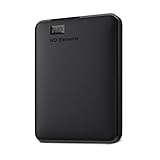
This is the drive for someone who wants storage, not a project. It plugs in over USB 3.2 Gen 1 (backward compatible with 3.0), formats for Windows out of the box, and gets out of the way. For Mac users the NTFS formatting requires a quick reformat, which is a minor but real friction point.
- Pro: Lowest full-5TB price in the group at $214.10, making it the default budget choice.
- Pro: Plug-and-play on Windows with zero software to install or configure.
- Con: No included encryption, backup utility, or ransomware protection — you supply your own.
Skip this if you need security features or plan to leave sensitive project files on the drive without third-party encryption software.
Seagate Portable 5TB
Seagate’s entry targets the broadest hardware compatibility, explicitly calling out PS4, Xbox, PC, and Mac. The included one-year Rescue Data Recovery Service adds a layer of safety that WD omits at this price tier. Owner feedback consistently notes quiet operation during extended transfers.
- Pro: Multi-platform compatibility without reformatting, useful for households with mixed devices.
- Pro: One-year data recovery service included, a meaningful hedge against mechanical failure.
- Con: Priced a few dollars above the WD Elements for essentially the same raw capacity and interface.
Skip this if you already run dedicated backup software and do not value the recovery service.
WD 5TB My Passport
The My Passport line adds a software layer that the Elements lacks: password protection, hardware-level encryption, and backup scheduling with ransomware defense. At $215.39 it costs roughly one dollar more than the Elements, making the upgrade essentially free.
- Pro: Bundled security suite handles encryption and automated backups without third-party tools.
- Pro: Nearly identical price to the bare-bones Elements, so the software is a net gain.
- Con: The included backup software has a learning curve and can behave inconsistently across macOS updates.
Skip this if you prefer command-line backup tools like rsync or already run a separate NAS-based workflow.
WD 6TB Elements Portable
Not a 5TB drive, but it earns its spot because the jump to 6TB costs only about $44 more. For buyers filling their first 5TB quickly, this is the rational step up. Same plug-and-play simplicity, same USB 3.2 Gen 1 interface.
- Pro: Twenty percent more capacity for under twenty percent more cost compared to the 5TB Elements.
- Pro: Identical no-software experience, so it suits people who want storage without management overhead.
- Con: Slightly taller enclosure changes the footprint in tight carrying cases.
Skip this if strict size constraints matter or if you only need 5TB and the price gap feels unnecessary.
Seagate Portable 4TB
A 4TB alternative at $189.98 that works well when 5TB is more than you need. Same USB 3.0 interface, same Rescue Service, same multi-platform support. The smaller capacity also means marginally shorter initial full-drive backups.
- Pro: Lowest per-dollar entry point among Seagate portables while keeping the recovery service.
- Pro: Lighter and slimmer enclosure improves portability for daily commute use.
- Con: Only 4TB usable, so a single large media project can fill it faster than expected.
Skip this if you are backing up more than roughly 3TB of data; the per-terabyte math favors the 5TB model.
Seagate One Touch 8TB
This is a desktop-class drive with USB-C compatibility and an 8TB capacity, aimed at people who archive rather than travel. It requires external power, which eliminates it from the truly portable category but doubles usable space for a modest premium over the 5TB portables.
- Pro: Double the capacity of any 5TB drive here for under $300, strong per-terabyte value.
- Pro: USB-C and USB-A support makes it flexible with modern and older machines alike.
- Con: Needs a wall adapter, so it is not a travel companion.
Skip this if you need something that fits in a laptop bag or works on a train without an outlet.
LaCie Rugged USB-C 4TB
Built for photographers and videographers working outdoors, the Rugged line survives drops, dust, rain, and shock. At $209.99 for 4TB, the price reflects the housing rather than raw storage volume.
- Pro: Physical resilience far beyond any other drive in this list, rated for field abuse.
- Pro: USB-C native with backward compatibility, clean connection to current MacBook and Windows laptops.
- Con: Only 4TB, and the per-terabyte cost is the highest here.
Skip this if your drive stays on a desk or in a padded case; you are paying for protection you will never use.
WD 5TB My Passport Ultra
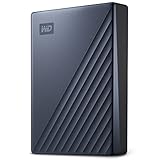
The Ultra is the premium sibling to the standard My Passport, adding USB-C and USB 3.1 support alongside the same encryption and ransomware-defensive backup software. The blue finish and $292 price tag target buyers who want current-gen connectivity without a desktop drive.
- Pro: USB-C port eliminates the need for an adapter on modern laptops.
- Pro: Full software suite matches the standard My Passport at a design and connectivity upgrade.
- Con: Costs roughly 75 dollars more than the standard My Passport for the same 5TB of spinning storage.
Skip this if your machines already have USB-A and you cannot justify the connector premium.
Buying Guide
Interface and Platform Compatibility
USB 3.2 Gen 1 and USB 3.0 are electrically identical at 5 Gbps, so the naming difference between the WD and Seagate drives is cosmetic. What matters is the physical connector and whether the drive ships formatted for your OS. Drives like the WD Elements arrive NTFS-ready for Windows; Mac users either reformat to APFS or use exFAT for dual compatibility. The My Passport Ultra and LaCie Rugged ship USB-C, which removes adapter friction on current-generation laptops.
Bundled Software and Security
The dividing line between $190 drives and $290 drives in this list is almost entirely software. WD’s My Passport and Ultra lines include AES-256 encryption, password prompts, and backup scheduling with ransomware detection. Seagate’s Rescue Service covers data recovery if the mechanism fails but does not prevent unauthorized access. If you store client work, tax documents, or medical records, encryption is not optional — factor the software into your per-terabyte evaluation rather than looking at raw capacity alone.
Capacity vs. Portability Trade-offs
5TB is the ceiling for most bus-powered portable drives that fit in a jacket pocket. Once you go beyond that, you move into 6TB enclosures that are marginally taller or desktop-class drives that need external power. Decide early whether you are choosing a drive that lives in a bag or one that sits on a shelf next to your workstation. The per-terabyte price improves as capacity grows, but only if the larger drive actually travels with you.
Our Verdict
The WD 5TB My Passport is the top pick. At $215.39 it delivers the full 5TB target capacity, includes encryption and automated backup software that the Elements omits, and costs essentially the same. It covers the widest range of buyer needs without compromise.
The WD 5TB Elements Portable is the budget pick. If you already have your own backup workflow and encryption solution, paying less for raw storage makes sense.
However, if your workflow involves a modern USB-C-only laptop and you want current connectivity without adapters, the My Passport Ultra is the one that wins despite its premium.
FAQ
Is a 5TB external hard drive still worth buying in 2026 versus an SSD?
Yes, if your priority is capacity per dollar and the drive sits mostly idle for backups or archives. Portable SSDs at 5TB cost several times more and the speed advantage is irrelevant for sequential backup jobs that run overnight. For active project files you edit daily, an SSD is the better tool.
Do I need to reformat a Windows-formatted drive for macOS?
For read-only use, macOS reads NTFS without issue. For read-write access, you need to reformat to APFS (macOS only) or exFAT (cross-platform). The process takes under ten minutes via Disk Utility but erases all data, so do it before you load files.
How long does a typical 5TB mechanical portable drive last?
Owner reports and manufacturer MTBF specs suggest five to seven years of intermittent use for bus-powered portables that are not dropped or overheated. Drives that run continuously — such as those used as always-on Time Machine targets — tend to fail sooner. The Seagate Rescue Service and WD’s limited warranty provide a partial safety net.
Can I use a 5TB portable drive directly with a PS4 or Xbox?
Yes. The Seagate Portable 5TB explicitly lists PS4 and Xbox compatibility. Drives under a certain power-draw threshold connect via a single USB port without an external adapter. You will need to format for the console, which erases the drive, so keep a separate partition or cable plan if the drive doubles as a PC backup target.


