
A 2tb external hard drive sits in the most contested spot in portable storage. Enough capacity to carry a full project library, a console game collection, or months of family photos, but not so large that the price climbs past the point of reason. The problem for buyers is that the category looks uniform on a spec sheet—2TB means 2TB, USB means USB—until you realize that interface generation, included software, physical durability, and whether the thing is a spinning drive or an SSD all change what you actually get for your money.
We compared published specifications, list prices, and aggregated owner feedback across the eight drives below. What separates the good from the bad in this group is rarely raw capacity. It is whether the drive does its job without drama: fast enough for your workflow, backed by software you will actually use, and durable enough to survive the bag or glovebox where it lives between sessions.
As an Amazon Associate we earn from qualifying purchases at no extra cost to you.
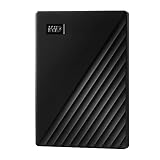





Top 3 picks at a glance
Quick Picks
| Product | Best for | Price |
|---|---|---|
| Seagate 2TB Portable (STGX2000400) | Straightforward bulk backup | $129.99 |
| WD My Passport (WDBYVG0020BBK) | Security-conscious users | $133.90 |
| WD Elements (WDBU6Y0020BBK) | Plug-and-play simplicity | $135.50 |
| SanDisk Extreme Portable SSD | Field-pro-grade ruggedness | $289.99 |
| Seagate Portable 4TB (SRD0NF1) | Console gamers needing extra room | $189.98 |
| Toshiba Canvio Basics 2TB | Windows users on a tight budget | $130.99 |
| Avolusion M3 Series 2TB | Lowest price per gigabyte | $89.99 |
| Samsung T7 Portable SSD 2TB | Speed-critical creative work | $397.99 |
How We Picked
We weighted four criteria for this category: real-world interface speed relative to price, software and hardware protection for sensitive data, physical durability for transport, and owner-reported reliability over the first year of use. A drive that matches on paper but fails in the field does not make the list. We also flagged where a product belongs to a different capacity tier or drive type than the headline keyword suggests, so buyers can match expectations to the actual item in the cart.
The 8 Best 2Tb External Hard Drive in 2026
Seagate 2TB Portable Hard Drive (STGX2000400)
The STGX2000400 is the reference design for a no-frills 2tb external hard drive. Seagate ships it with a USB 3.0 connection and a compact housing that fits in a laptop sleeve without complaint. It appeals to buyers who simply want to offload files and move on.
- Pro: Lowest name-brand HDD price in this group at $129.99.
- Pro: Backed by Seagate’s 1-year Rescue Data Recovery Service, a tangible safety net for drive failures.
- Con: USB 3.0 caps sustained transfer rates well below what newer interfaces deliver, so large media libraries crawl.
Skip this if you regularly move multi-gigabyte video files or run games from the drive. It serves best as a scheduled backup target.
WD 2TB My Passport (WDBYVG0020BBK-WESN)
WD layers password protection and Acronis backup software with ransomware defense onto a standard 2TB HDD in a slim black shell. USB 3.1 Gen 1 keeps throughput competitive with the Elements line. The My Passport targets professionals who carry client files and cannot risk an unlocked drive.
- Pro: Hardware-level password protection plus software encryption gives a real security posture most budget drives lack.
- Pro: Bundled Acronis software automates scheduled backups and monitors for ransomware-like write patterns.
- Con: The bundled software can be overkill or intrusive for users who prefer manual copies; the subscription upsell is persistent.
Skip it if you only need a dump-and-go archive and will never open WD Discovery.
WD 2TB Elements Portable (WDBU6Y0020BBK-WESN)
The Elements strip away software, encryption, and bells for a pure plug-and-play experience. USB 3.2 Gen 1 is backward compatible with USB 3.0 ports, and the drive formats out of the box for both PC and Mac without reformatting hassles.
- Pro: Zero setup friction—connect it and it mounts, no installer, no account.
- Pro: USB 3.2 Gen 1 interface nominally supports 5 Gbps, matching the practical ceiling of a 2.5-inch HDD.
- Con: No included backup software or encryption; you are on your own for data protection.
Skip it if you need built-in security or scheduled backup automation without third-party tools.
SanDisk 2TB Extreme Portable SSD (Old Model)
This is not a traditional 2tb external hard drive but an SSD with a rubberized overmold shell, IP-rated dust and water resistance, and read speeds up to 1050MB/s. The “old model” designation means a newer revision exists, yet the listed price of $289.99 still undercuts current-generation rivals.
- Pro: Physically rugged—survives drops, rain, and dust, making it suitable for field work.
- Pro: Sequential reads up to 1050MB/s mean 4K video projects load without bottlenecking the timeline.
- Con: Nearly double the price of any HDD here, and the older controller may lack the latest firmware optimizations.
Skip it if you are archiving files you access once a month; the speed premium goes to waste.
Seagate Portable 4TB External Hard Drive (SRD0NF1)
At 4TB this drive doubles the headline capacity keyword, yet it lands in this roundup because buyers frequently shop “2tb external hard drive” and discover 4TB options at a modest premium. The SRD0NF1 adds Xbox and PlayStation compatibility and ships with Seagate’s 1-Year Rescue Service.
- Pro: 4TB at $189.98 works out to roughly $47.50 per terabyte, cheaper per gigabyte than most 2TB entries.
- Pro: Explicit console support with a single-cable setup for extended game libraries.
- Con: Spinning 2.5-inch platters mean mechanical fragility; it is not a drive to leave in a backpack on a motorcycle.
Skip it if you strictly need 2TB and want the smallest possible form factor.
Toshiba Canvio Basics 2TB (HDTB520XK3AA)
Toshiba’s Canvio Basics is a matte-black, no-indicator, no-software drive that pre-formats for Windows. USB 3.0 throughput matches the Seagate above, and the physical shell is noticeably slim for its capacity.
- Pro: Under $131 for a 2TB HDD from a tier-one manufacturer; easy to justify as a secondary archive.
- Pro: Compact footprint slips into tight spaces where bulkier drives will not.
- Con: Ships exFAT-formatted for Windows only; Mac users must reformat before first use, losing Time Machine compatibility out of the box.
Skip it if you work across macOS and need zero-friction compatibility.
Avolusion M3 Series 2TB (Black)
At $89.99 the Avolusion M3 is the cheapest 2TB option in this roundup by a clear margin. USB 3.0 connectivity, Windows and Mac compatibility, and Xbox/PlayStation support are all listed. The catch is brand trust.
- Pro: Lowest absolute cost per terabyte in the group; roughly $45 per TB.
- Pro: Multi-platform out of the box without reformatting.
- Con: Limited owner-review volume and no data recovery service; a failure here means you buy another drive with no safety net.
Skip it if the data on the drive is irreplaceable or if you value warranty support and recovery options.
Samsung T7 Portable SSD 2TB
The T7 reads up to 1,050MB/s over USB 3.2 Gen 2 and encloses a NVMe drive in an aluminum unibody with hardware encryption. It is the fastest entry here and arguably the best 2tb external hard drive experience if “hard drive” is read loosely to mean “portable storage.”
- Pro: NVMe-based performance shaves minutes off every large transfer; editing directly from the drive is feasible.
- Pro: AES-256 hardware encryption and a durable metal shell with no moving parts.
- Con: $397.99 is three times the price of the Seagate HDD above; you are paying for speed you may never need.
Skip it if your workflow tolerates transfer times under a few minutes and budget is the priority.
Buying Guide
Interface Speed vs. Real Throughput
A 2.5-inch spinning HDD physically cannot saturate USB 3.0 (5 Gbps) or USB 3.2 Gen 2 (10 Gbps); its sustained rate caps near 100-130MB/s regardless of the port label. The interface spec matters most when comparing SSDs, where the SATA ceiling (~550MB/s) versus NVMe Gen 2 (~1,050MB/s) is a genuine daily difference. For HDDs, look past the USB number and focus on whether the drive includes software that automates backups, since speed will bottleneck at the platters.
Software, Encryption, and Recovery Services
Drives bundled with backup and ransomware-defense software (the My Passport) or with data-recovery plans (Seagate’s Rescue Service) deliver value that is hard to price separately. If you skip those bundles, budget for a third-party backup tool and consider whether an unrecoverable drive failure is an acceptable risk. The Avolusion M3 illustrates the tradeoff: lowest sticker price, no safety net.
Physical Durability and Use Context
A drive that lives on a desk needs no overmold or drop rating. One that rides in a camera bag or glovebox benefits from the rubberized shock housing on the SanDisk Extreme or the moving-parts-free T7. Match the enclosure to how the drive travels, and you will avoid the single most common complaint in owner feedback: a drive that failed after a minor bump.
Our Verdict
The WD My Passport (WDBYVG0020BBK-WESN) is our top pick because it bundles security software, ransomware monitoring, and backup automation into a drive that costs only $3.91 more than the cheapest tier-one competitor. For the budget pick, the Seagate STGX2000400 delivers name-brand reliability, a recovery service, and the lowest HDD price at $129.99. If your priority is raw speed and you edit large files on location, the Samsung T7 at $397.99 justifies its premium over every HDD here by making direct-from-drive work sessions practical.
FAQ
Is a 2tb external hard drive still worth buying over an SSD in 2026?
For bulk archival where access speed is not critical, a 2TB HDD costs roughly half as much as a comparable SSD and delivers more storage per dollar. SSDs win for active workflows that demand low-latency random access or large sequential throughput.
Can I use a Windows-formatted 2TB drive on a Mac?
Drives pre-formatted NTFS (like the Toshiba Canvio Basics) will read on macOS but cannot write without third-party drivers. Reformatting to exFAT or APFS resolves this, but erases existing data, so plan the reformat before loading files.
Does the USB 3.0 vs. 3.2 label affect performance on a hard drive?
Not meaningfully for a spinning HDD. Both 5 Gbps standards exceed the mechanical drive’s internal transfer ceiling of roughly 120-130MB/s, so you will see near-identical throughput regardless of the port version on your computer.
How long do portable 2TB hard drives typically last?
Owner feedback across major brands clusters around three to five years of regular use before failure rates rise noticeably. Drives kept on a desk and powered sparingly outlast those transported daily. A backup strategy covering two independent copies matters more than the lifespan of any single unit.


