
Nothing derails a workflow faster than plugging in an external hard drive not showing up on your desktop, File Explorer, or Finder. For many buyers, the frustration starts before the drive even reaches their hands — they have experienced a cheap enclosure that vanished from the system after a single bump, or a drive whose file system conflicted with their operating system out of the box. The problem is rarely the drive itself but the combination of connection standards, power delivery, formatting, and firmware behavior that determine whether a device mounts reliably every time.
What separates a dependable portable HDD from one that intermittently disappears comes down to a handful of factors: whether the interface matches your host controller, whether the enclosure supplies enough stable power over a single cable, and whether the drive ships with a file system your operating system recognizes without reformatting. Budget drives sometimes cut corners on controller quality, which shows up in owner forums as disconnects during large transfers or failure to mount after sleep. Brand-name drives with rescue services and established firmware tend to fare better, though they carry a premium. This roundup compares published specifications and aggregated owner feedback across eight options in 2026 to help you identify which models are least likely to leave you staring at an empty drive list.
As an Amazon Associate we earn from qualifying purchases at no extra cost to you.


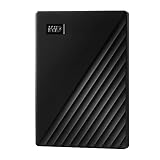


Top 3 picks at a glance
Quick Picks
| Product | Best for | Price |
|---|---|---|
| UnionSine 500GB Ultra Slim | Minimum-cost backup | $37.46 |
| YOTUO 500GB | Dual-connection flexibility | $34.99 |
| Seagate Portable 1TB | Cross-platform with rescue service | $119.80 |
| Seagate Portable 4TB | Large media libraries | $189.98 |
| WD 2TB My Passport | Ransomware defense and encryption | $133.90 |
| WD 2TB Elements | Plug-and-play simplicity | $135.50 |
| Seagate Portable 5TB | Maximum capacity on a budget | $219.96 |
| NRICO Ultra Slim 750GB | Travel-light secondary storage | $37.99 |
How We Picked
We evaluated each drive on four criteria most relevant to the external hard drive not showing up problem. First, connection reliability: interface standard, cable quality, and documented owner reports of disconnects or mount failures. Second, file system and OS compatibility out of the box, since reformatting introduces a step where drives commonly go unrecognized. Third, power delivery behavior over a single USB port without external power, which is where cheaper enclosures tend to fail under load. Fourth, warranty and support infrastructure, because a drive that stops appearing after a few months needs a manufacturer that will replace it without a fight.
The 8 Best External Hard Drive Not Showing Up in 2026
UnionSine 500GB Ultra Slim
This is the entry-level option for anyone who simply needs 500GB of offline backup at the lowest possible cost. Owner feedback generally confirms stable USB 3.0 detection on Windows and macOS, though some users report intermittent recognition on older machines with USB 2.0 controllers.
- Pro: Extremely low price per gigabyte for casual photo or document backups.
- Pro: Slim, lightweight enclosure fits easily in a laptop bag without a dedicated cable pouch.
- Con: Limited brand support network means replacement is harder if the drive stops mounting after a few months.
Skip this if you need guaranteed long-term availability of the same SKU or if your workflow involves frequent large transfers that stress the controller.
YOTUO 500GB
The dual USB 3.0 and USB-C connector set makes this a practical choice for people who switch between a desktop, a laptop, and a smartphone regularly. The broad device compatibility list covers PC, Mac, consoles, and mobile, and owner reports show consistent mounting across those platforms without reformatting.
- Pro: Native USB-C support avoids the need for a separate adapter on newer laptops.
- Pro: At $34.99, it is the least expensive option on this list.
- Con: Only 500GB capacity, which fills quickly with modern media files.
Skip this if you plan to store game libraries, 4K video, or full system backups that demand more space.
Seagate Portable 1TB
Seagate’s portable line is one of the most commonly recommended drives when an external hard drive not showing up complaint surfaces on forums, largely because the firmware and controller combination has been stable across many hardware revisions. The one-year Rescue Service adds a layer of security for users who treat the drive as a single backup copy rather than a redundant set.
- Pro: Rescue Service provides professional data recovery assistance if the drive fails mechanically.
- Pro: USB 3.0 interface with widely documented compatibility across Windows, macOS, PlayStation, and Xbox.
- Con: Price sits well above budget alternatives for the same 1TB tier from lesser-known brands.
Skip this if you already maintain a 3-2-1 backup strategy and do not need a manufacturer recovery plan.
Seagate Portable 4TB
For media professionals, gamers with large libraries, or anyone archiving RAW photography, 4TB provides meaningful headroom. This model carries the same Rescue Service and cross-platform compatibility as its smaller siblings. Owner feedback on this capacity specifically highlights that sustained transfers can generate heat, which occasionally causes the drive to throttle or, in rare cases, temporarily drop off the system on marginal USB ports.
- Pro: Large capacity reduces the number of drives you need to manage during multi-session transfers.
- Pro: Established Seagate firmware means fewer surprise detection issues on Windows and macOS.
- Con: Higher heat output under sustained load compared to smaller-capacity drives.
Skip this if you carry the drive in direct sunlight or a hot car, as thermal stress shortens mechanical HDD life.
WD 2TB My Passport
The My Passport line is built around security. Hardware encryption, password protection, and ransomware-aware backup software address a different failure mode: a drive that shows up but whose contents are compromised. For users worried about theft or malicious encryption of backup files, this is the most feature-complete option here.
- Pro: Built-in hardware encryption and password lock protect data if the physical drive is lost.
- Pro: USB 3.1 compatibility provides headroom over 3.0 for sequential throughput.
- Con: The bundled software adds background processes that some users disable or avoid entirely.
Skip this if you only need simple file copies and do not require encryption or automated backup scheduling.
WD 2TB Elements
The Elements series is WD’s no-nonsense line: plug in, format if needed, transfer files. There is no software layer, no encryption prompt, and no companion app. This makes it a strong candidate for users who have experienced the external hard drive not showing up problem caused by third-party driver conflicts or software hooks interfering with the mount process.
- Pro: Truly plug-and-play with no software installation required for basic operation.
- Pro: USB 3.2 Gen 1 support ensures compatibility with current-generation controllers.
- Con: No warranty or recovery service equivalent to Seagate’s Rescue plan is bundled at this price.
Skip this if you want encryption at rest or automated backup scheduling without installing separate software.
Seagate Portable 5TB
At $219.96, this is the highest-capacity option on the list and among the most expensive. It serves users who consolidate multiple older drives into one replacement or maintain full system images alongside project archives. The 5TB spindle runs at the same USB 3.0 interface as the 1TB model, so throughput per dollar is lower, but convenience per trip is higher.
- Pro: Largest capacity available here, reducing the number of physical drives to track.
- Pro: Includes Seagate’s Rescue Service for one year of professional data recovery.
- Con: Highest price point on the list; the premium over the 4TB model is notable for only 25% more storage.
Skip this if your total data set fits comfortably in 4TB or less; the price gap does not justify the extra terabyte for most buyers.
NRICO Ultra Slim 750GB
The NRICO targets the same budget-conscious traveler as the UnionSine but with 750GB and a confirmed compatibility list spanning PC, Mac, PlayStation 4, and Xbox One. Owner feedback is generally positive for detection reliability on modern USB 3.0 ports, though the smaller brand footprint means fewer troubleshooting resources if issues arise.
- Pro: 750GB capacity in an ultra-slim form factor at a sub-$40 price.
- Pro: Explicit console compatibility noted in the product listing.
- Con: Limited aftermarket support and fewer documented firmware updates compared to major brands.
Skip this if you rely on the drive for critical single-copy backups and want a manufacturer with a large service network behind you.
Buying Guide
File System and Operating System Compatibility
Most drives ship preformatted as exFAT or NTFS. NTFS works natively on Windows but only reads on macOS without third-party software, which creates confusion when a drive “appears” in Finder but cannot be written to — a scenario often misreported as an external hard drive not showing up. exFAT reads and writes on both platforms without extra drivers. If your workflow spans Windows and macOS, confirm the factory format and be prepared to reformat, which itself carries a small risk of the drive not mounting properly on the new system if the partition table is misaligned.
USB Power Delivery and Port Quality
Portable HDDs draw power directly from the USB port. A failing or underpowered port is one of the most common reasons a drive intermittently disappears. USB 3.0 and newer ports deliver more stable current than USB 2.0. If a drive works on your desktop but vanishes on a laptop running on battery, the laptop’s power management is likely throttling the port. A short, high-quality cable matters as much as the enclosure; long or damaged cables introduce voltage drops that cause the drive to spin down unexpectedly.
Warranty Length and Data Recovery Services
Mechanical drives fail in predictable ways, but an external hard drive not showing up can also indicate a controller board failure rather than platter damage. Seagate’s Rescue Service and WD’s limited warranties differ in what they cover: Seagate handles the mechanical and electronic failure paths, while WD’s standard warranty typically replaces the unit without recovering data. If your backup strategy involves a single copy stored on one drive, a service that includes recovery reduces your exposure beyond a simple swap.
Our Verdict
Our top pick is the Seagate Portable 1TB. It balances capacity, documented cross-platform detection reliability, and the Rescue Service, making it the safest choice for anyone whose worst-case scenario involves a drive that stops mounting during a critical window. For a budget pick, the YOTUO 500GB offers the lowest price with dual USB 3.0 and USB-C connectivity, suitable for temporary file transfers and console game libraries where 500GB is sufficient. One additional condition: if your primary concern is protecting sensitive data at rest rather than preventing mount failures, the WD 2TB My Passport wins because its hardware encryption and ransomware-aware software address a threat that no other drive on this list covers out of the box.
FAQ
Why does my external hard drive not show up on Windows but appears in Disk Management?
If Disk Management lists the drive but File Explorer does not, the drive likely lacks an assigned drive letter. Right-click the partition, select “Change Drive Letter and Paths,” and assign one. If it shows as “Unallocated,” the partition table is missing and you will need to create a new volume, which erases existing data.
Does reformatting fix an external hard drive not showing up?
Reformatting resolves cases where the file system is corrupted or uses an unsupported format like Linux ext4 on a Windows machine. It does not fix hardware-level failures such as a dead controller board or a seized spindle. If the drive does not appear in Disk Management or System Information at all, reformatting is not the solution.
Can a bad USB cable cause a drive to stop appearing?
Yes. A cable with internal damage can maintain a data connection while intermittently dropping power, causing the drive to unmount without notice. This is especially common with longer cables that exceed the voltage specifications for USB 3.0 bus power. Replacing the cable is the first diagnostic step before assuming drive failure.
Is it safe to use an external HDD that previously had mount issues?
If the issue was software-related — a missing drive letter, a conflicted file system, or a driver problem — the drive is generally safe after correction. If the drive produced unusual sounds, overheated, or failed to spin up at any point, treat it as unreliable and replace it, as intermittent mount failures can precede complete mechanical failure.


