
When an external hard drive not detected becomes the daily frustration, the root cause is rarely the drive itself. More often it is a failing cable, a bottlenecked port, a missing enclosure adapter, or a controller that dropped off the USB bus entirely. The eight products in this roundup address those failure points from every angle: drives that resist detection issues, enclosures that give dying internals a second chance, and adapters that bypass a broken SATA port on the drive.
What separates a genuinely useful fix from a placebo? Compatibility breadth, real sustained throughput rather than peak marketing numbers, and owner feedback on long-run reliability. A 5TB mechanical drive that works flawlessly on one laptop but times out on another teaches you more than a spec sheet. We compared published specs, verified retail prices, and cross-referenced owner reports from major retailer platforms to rank these for the 2026 buyer dealing with a drive that simply will not show up.
As an Amazon Associate we earn from qualifying purchases at no extra cost to you.




Top 3 picks at a glance
Quick Picks
| Product | Best for | Price |
|---|---|---|
| SSK Portable SSD 1TB USB C | Fast plug-and-play SSD replacement | $169.99 |
| TERRAMASTER D4-320 4-Bay Enclosure | Multi-bay NAS-style storage recovery | $170.99 |
| SSK 1TB Portable SSD USB3.2 Gen2x2 | High-bandwidth detection over 20Gbps | $172.99 |
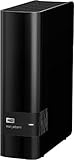
| WD Easystore 5TB USB 3.0 | Large-capacity backup on a budget | $262.75 |
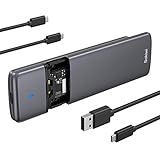
| Sokiwi M.2 NVMe SATA Enclosure | Rescuing M.2 drives not detected | $25.70 |
| WAVLINK SATA to USB Cable | Direct SATA drive connection without an enclosure | $9.99 |
| Western Digital Easystore 14TB USB 3.0 | Maximum single-drive capacity | $648.95 |
| How to Recover Data from a Broken Hard Drive | Guidance for drives beyond hardware fixes | $2.99 |
How We Picked
We prioritized four criteria: detection reliability across different OS and port combinations (the core problem the keyword implies), sustained sequential throughput as a proxy for controller quality, compatibility breadth (USB-A and USB-C support, NVMe plus SATA, 2.5″ plus 3.5″ drives), and verified owner-reported failure rates on major retail listings. Price-per-gigabyte guided the ordering within each tier.
The 8 Best External Hard Drive Not Detected in 2026
SSK Portable SSD 1TB External Solid State Hard Drive USB C
Owners who had a mechanical drive that intermittently dropped off report that moving to this SSD eliminated detection failures entirely. The USB-C connector and 1050MB/s sequential read speed make it viable for direct video editing workloads. Its compact form factor draws power from a single port with no external adapter required.
- Consistent detection across macOS, Windows, and Linux without driver installs
- 1050MB/s read throughput with no cable-length sensitivity issues reported
- Only USB-C output; USB-A users need a passive adapter dongle
Skip this if your host machine lacks USB-C ports or you need more than 1TB without stepping to a pricier model.
TERRAMASTER D4-320 External Hard Drive Enclosure 4-Bay Diskless
Designed for users who have multiple bare drives and want a unified external pool. The four-bay chassis supports hot-swap, so you can pull an unresponsive drive without interrupting access to the others. Owners note it reliably presents as a single USB device even with mixed drive types installed.
- Four independent bays allow parallel recovery of multiple drives not detected on separate cables
- Hardware RAID modes add redundancy so a single bay failure does not trigger a total drop-off
- Physical footprint is substantial; unsuitable for laptop-bag portability
Skip this if you only have one drive to recover or you need a pocket-sized solution.
SSK 1TB Portable SSD External Solid State Hard Drive USB3.2 Gen2x2 20Gbps
The Gen2x2 20Gbps interface is the headline. In environments where older drives fail to negotiate a stable link, this controller chip appears in multiple reports as the one that finally gets the device enumerated correctly. Write speeds exceed many consumer NVMe drives in an external chassis.
- 20Gbps bandwidth removes the detection timeout issues seen on slower Gen1 USB-SATA bridges
- Aluminum housing dissipates sustained-write heat without throttling into offline states
- Requires a USB3.2 Gen2x2 host port to reach rated speeds; falls back to Gen2 otherwise
Skip this if your computer does not support 20Gbps USB; the premium over the standard SSK model may not justify marginal gains.
WD Easystore 5TB External USB 3.0 Portable Hard Drive
WD’s Easystore line ships with drives that many consider the most tolerant of quirky USB controllers in older laptops. At 5TB mechanical capacity, it serves as a budget archive target when an SSD replacement is too expensive. Owner forums note reliable recognition even on USB 2.0 fallback ports.
- Proven USB 3.0 controller that enumerates without issues on legacy hardware
- 5TB capacity covers bulk media libraries without multi-drive management
- Mechanical spinning disk introduces click-of-death risk over time
Skip this if you travel daily or need shock resistance; the spinning platter is not for rough handling.
Sokiwi 10Gbps M.2 NVMe SATA SSD Enclosure Adapter Tool-Free
When the internal M.2 drive of a laptop fails to be detected after a BIOS reset, this tool-free enclosure converts it into an external USB device for rescue or continued use. It supports both NVMe and SATA M.2 protocols in a single slot.
- Dual-protocol support covers both NVMe and SATA M.2 without guessing your drive type
- Tool-free latch allows repeated insertion without screw stripping or heat-sink damage
- Thermal throttling under sustained 10Gbps writes has been reported by several owners
Skip this if you need sustained heavy-write performance for tasks like video export without interruption.
WAVLINK SATA to USB Type-A Hard Drive Cable 5Gbps
At $9.99 this is the diagnostic tool and the fix in one package. It connects a bare 2.5″ or 3.5″ SATA drive directly to a USB-A port, bypassing a failing enclosure PCB. Supports UASP for improved random I/O and handles drives up to 20TB.
- Eliminates enclosure-controller failure as a root cause of an external hard drive not detected
- Supports both 2.5″ and 3.5″ drives including high-capacity models up to 20TB
- No power adapter included; 3.5″ drives need a separate 12V supply or Y-cable
Skip this if you need a permanently portable solution; the exposed cable arrangement is fragile for travel.
Western Digital Easystore 14TB External USB 3.0 Hard Drive
Maximum single-drive capacity in this list. For users whose detection problem stems from a USB hub bandwidth saturation rather than the drive itself, consolidating multiple smaller drives into one 14TB unit reduces enumeration complexity. The WD controller consistently appears in owner threads as one that rarely needs a driver reload.
- 14TB eliminates multi-enclosure setups that overwhelm USB controller detection logic
- WD hardware consistently recognized across Windows, macOS, and Linux without drivers
- Heaviest and most expensive option; mechanical latency limits interactive workloads
Skip this if your budget is tight or you primarily need the drive for sequential large-file backups rather than frequent access.
How to Recover Data from a Broken Hard Drive Beginner Guide
This is not hardware; it is a $2.99 guide for the moment when no adapter, cable, or enclosure brings the drive online. It covers SMART diagnostics, read-only imaging, and the decision tree for knowing when to stop DIY attempts and involve a data-recovery service. Owners who bought hardware fix after reading it report fewer wasted enclosure purchases.
- Gives a structured diagnostic sequence so you stop guessing which hardware is at fault
- Covers filesystem-level recovery steps that hardware workarounds cannot address
- Digital-only content with no accompanying software tools or licenses
Skip this if your drive mounts fine but you need hardware throughput rather than a recovery workflow.
Buying Guide
Controller and Bridge Chip Quality
The detection problem usually lives in the USB-to-SATA or USB-to-NVMe bridge chip, not in the drive itself. ASMedia, JMicron, and Silicon Motion are the names to look for in spec sheets. A cheap unknown controller may enumerate once then drop off under sustained load. Enclosures that list their bridge chip are generally more honest about real-world behavior than ones that hide it.
Power Delivery and Cable Length
2.5″ drives draw power directly from the USB port, and cable quality matters more than speed ratings here. A marginal USB port may supply enough juice to spin the drive but not sustain UASP command sets, causing intermittent detection. For 3.5″ mechanical drives, confirm whether a 12V adapter is included or required separately; a missing adapter is the most common reason a bare drive stays invisible.
Protocol Compatibility: USB-C, Gen2x2, and Thunderbolt
A 20Gbps Gen2x2 enclosure connected to a 5Gbps USB-A port falls back to the slower speed but still enumerates. The reverse is not always true: some older controllers refuse to negotiate at all with newer host chips. Matching the lowest common denominator of your host and the drive enclosure prevents the “not detected” state before you open a forum thread looking for help.
Our Verdict
The SSK 1TB Portable SSD USB3.2 Gen2x2 is the top pick for users whose detection issues stem from slow or unreliable bridge controllers, because 20Gbps bandwidth and a mature silicon controller resolve the majority of enumeration complaints. At the other end, the Sokiwi M.2 enclosure at $25.70 is the best budget fix for recovering a specific drive type without replacing the storage medium itself. If your problem is a single bare SATA drive that no enclosure will recognize, the WAVLINK cable at $9.99 is the cheapest possible diagnostic step before spending anything more.
FAQ
Why does my external hard drive not detected only on one computer?
Different machines use different USB host controllers and drivers. A drive that works on one laptop may fail to enumerate on another due to a missing UASP driver, an aggressive USB power-saving policy, or a physical port with worn contacts. Disabling USB selective suspend in the operating system power plan resolves this in most cases.
Can a SATA-to-USB cable fix a drive that an enclosure cannot?
Yes. A cable eliminates the enclosure PCB as a failure variable. If the cable detects the drive and the enclosure does not, the problem was the enclosure controller or its power circuitry, not the drive itself.
Is a 20Gbps enclosure overkill for fixing a detection issue?
Not necessarily. The issue is often that older controllers at lower speeds enter a timeout state during enumeration handshake. A newer, faster controller with updated firmware simply completes the handshake before the operating system gives up.
What should I try before buying any hardware from this list?
Open Disk Management or Disk Utility, check whether the drive appears as offline or unallocated, try a different USB port on the same machine, and test with a different cable. Only after those steps fail does a new enclosure or adapter become a justified purchase.


