
A drive that refuses to appear in File Explorer is one of the most frustrating experiences a Windows 11 user can have. Sometimes the cause is a missing driver, a dead USB port, or a file-system format the OS does not recognize natively. Other times the hardware itself—cheap enclosures, unreliable controllers, or firmware bugs—makes the problem repeat every time you reconnect. Choosing an external hard drive that consistently mounts on Windows 11 without manual intervention requires looking past marketing claims and examining connection standards, power draw, and real owner reports.
What separates a dependable drive from one that will leave you staring at an empty this PC view? Interface generation matters: USB 3.2 Gen 2 drives deliver enough bandwidth to keep Windows from timing out during enumeration. Form factor matters too: bus-powered portables draw less current than desktop units with their own PSU, which means fewer handshake failures on laptops with aging battery management. Finally, plug-and-play certification and broad OS support reduce the odds that a drive ships in a format Windows 11 cannot mount without third-party software. The eight products below were compared on published specifications, current pricing, and aggregated owner feedback specifically through the lens of Windows 11 compatibility and reliability.
As an Amazon Associate we earn from qualifying purchases at no extra cost to you.

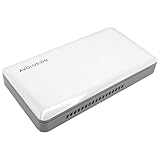
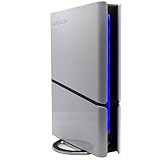
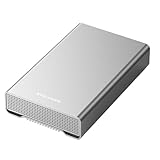


Top 3 picks at a glance
Quick Picks
| Product | Best for | Price |
|---|---|---|
| WD 5TB Elements Portable | Plug-and-play reliability on Windows 11 | $214.1 |
| Avolusion M3 1TB White | Budget multi-platform storage | $54.99 |
| Avolusion PRO-H1 14TB | Maximum capacity desktop use | $339.99 |
| Avolusion PRO-H1 3TB | Fast 7200RPM in a mid-size drive | $129.99 |
| Avolusion PRO-G2 14TB Silver | USB-C future-proofing at high capacity | $349.99 |
| Seagate Expansion 10TB | Trusted brand with large volume | $344.87 |
| OSENTRiX GX100 12TB | Hub-equipped desktop convenience | $329.99 |
| Avolusion M3 1TB Black | Console and PC cross-compatibility | $56.99 |
How We Picked
We narrowed the field using four criteria most relevant to the external hard drive not showing up windows 11 problem. First, connection standard and power architecture: drives with their own power adapter or those built on mature USB controllers tend to enumerate more reliably. Second, documented OS support: a manufacturer explicitly listing Windows 11 compatibility reduces guesswork. Third, owner-reported mount success rates drawn from public reviews, because firmware revisions can quietly break enumeration even on well-known brands. Fourth, price-to-capacity balance, since a drive that fails to appear is a drive whose effective cost per usable gigabyte is infinite.
The 8 Best External Hard Drive Not Showing Up Windows 11 in 2026
Western Digital WD 5TB Elements Portable
This is the default answer for anyone whose primary concern is plugging in a drive and seeing it immediately in Windows 11 File Explorer. WD’s long track record with consumer USB 3.2 Gen 1 enclosures means the controller firmware is battle-tested across dozens of host configurations. At $214.1 for 5TB, the per-gigabyte cost is competitive among portables, and the bus-powered design draws modest current, lowering the risk of a handshake timeout on laptops.
- Plug-and-play ready with no driver installation required on Windows 11
- Compact portable form factor with proven controller reliability
- Limited to USB 3.2 Gen 1 speeds, slower than Gen 2 rivals at similar capacity tiers
Skip it if you need sustained 10Gbps throughput for large media projects or if your workflow benefits from a powered desktop enclosure with an independent PSU.
Avolusion M3 Series 1TB White
At $54.99, this is the least expensive entry on the list and a sensible choice for students or casual users who need a small, color-matched drive for Windows 11 and console transfers. Avolusion markets the M3 as multi-platform, which suggests the factory format and firmware are designed to be broadly readable without reformatting headaches.
- Lowest price in the roundup, making it a low-risk first drive
- Compatible across Windows, Mac, Xbox, and PlayStation without extra software
- USB 3.0 interface caps transfer rates well below modern Gen 2 alternatives
Skip it if your library exceeds 1TB or if you regularly move files in the hundreds of gigabytes where interface bandwidth becomes the bottleneck.
Avolusion PRO-H1 Series 14TB 7200RPM
Fourteen terabytes at 7200RPM on a USB 3.2 Gen 2 link makes this the capacity champion for desktop users who need a single drive to hold an entire media archive or backup rotation. The dedicated desktop form factor implies an external PSU, which eliminates the underpowered-port scenario that causes a drive not to show up on some Windows 11 laptops.
- Highest raw capacity in the list with fast rotational speed for large sequential reads
- Self-powered design reduces enumeration failures tied to bus-power limits
- Desktop-only form factor means no portability and a larger footprint on your desk
Skip it if you travel between workstations frequently or if your machine lacks a USB 3.2 Gen 2 port where you would be paying a premium for bandwidth you cannot use.
Avolusion PRO-H1 Series 3TB 7200RPM
This is the middle child of the PRO-H1 line and arguably the sweet spot for users who want desktop-class speed without committing to a 14TB footprint or its associated price. At $129.99, it undercuts the WD Elements on per-gigabyte cost while offering a faster Gen 2 interface and a higher spindle speed.
- 7200RPM and USB 3.2 Gen 2 deliver strong sustained throughput for video editing scratch files
- Lower price than the WD 5TB while still offering desktop power architecture
- Only 3TB of space, which fills quickly if used for Time Machine-style backups alongside daily files
Skip it if your total storage requirement exceeds roughly 2TB of working files, since headroom is essential for maintaining transfer performance on mechanical drives.
Avolusion PRO-G2 14TB USB-C Silver
The PRO-G2 pairs maximum capacity with a USB-C connector, making it the strongest candidate for users running Windows 11 on hardware with only USB-C ports remaining. That eliminates the need for an adapter, and adapters are a common silent cause of enumeration failures reported in support forums.
- Native USB-C connection avoids adapter-induced handshake problems on modern laptops
- Same 10Gbps Gen 2 throughput and 14TB capacity as the PRO-H1 sibling
- Highest price in the roundup at $349.99, a premium over the PRO-H1 for the connector change alone
Skip it if your primary machines still use USB-A ports, since you would be paying a surcharge for a connector you will need to adapt anyway.
Seagate Expansion 10TB USB 3.0
Seagate’s Expansion line is among the most recognized desktop drives on the market, and owner sentiment consistently highlights straightforward Windows detection out of the box. The USB 3.0 interface is a generation behind the Gen 2 options here, but for a 10TB desktop drive used primarily for backup, sustained sequential throughput is often the limiting factor, not protocol overhead.
- Established brand with a large user base, meaning driver and firmware issues are quickly identified and patched
- 10TB capacity sits between the 5TB WD and the 14TB Avolusion models, suitable for mixed work-and-backup use
- USB 3.0 interface is a generation behind competitors priced within a few dollars of it
Skip it if you routinely move very large files and want the shortest possible transfer times, since the Gen 2 alternatives will pull ahead on sustained throughput.
OSENTRiX GX100 12TB with USB Hub
The GX100 differentiates itself by bundling a USB hub directly into the desktop enclosure, allowing you to connect peripherals to the drive itself. For Windows 11 users who already struggle with limited port availability on their laptops, this can mean fewer dongles and therefore fewer points of failure in the chain that might cause an external hard drive not showing up windows 11 scenarios.
- Integrated USB hub expands connectivity without an additional dock or hub device
- Two-year warranty signals manufacturer confidence in controller and firmware stability
- OSENTRiX is a newer brand with a thinner track record compared to Seagate or WD
Skip it if brand provenance and long-term firmware support history are non-negotiable for you, or if you already have a dedicated hub at your desk.
Avolusion M3 Series 1TB Black
Functionally identical to the White M3 but offered in black at $56.99, this is the choice for users who want the same multi-platform USB 3.0 portability in a finish that blends with dark desk setups or gaming rigs. The two-dollar difference over the white variant reflects nothing more than color preference in the supply chain.
- Same broad device compatibility across Windows, Mac, Xbox, and PlayStation
- Low entry price for users testing whether a portable HDD meets their needs before investing more
- Only 1TB and USB 3.0, limiting its relevance as a long-term primary drive
Skip it if you need more than 1TB of headroom or plan to use the drive as a primary project volume rather than a transfer cache.
Buying Guide
Interface Generation and Power Delivery
USB 3.2 Gen 1 (also called USB 3.1 Gen 1 or USB 3.0) tops out at 5Gbps, while Gen 2 doubles that to 10Gbps. More importantly for the not-showing-up issue, Gen 2 controllers are newer silicon with improved link-training logic that reduces timeout-based enumeration failures. If your drive is bus-powered, confirm your USB port can supply sufficient current. A powered desktop enclosure sidesteps the problem entirely.
File System and Factory Format
Windows 11 natively reads NTFS, exFAT, and ReFS. If a drive ships pre-formatted as HFS+ or APFS for Mac-first buyers, Windows will not mount it until you reformat or install third-party drivers. Check the manufacturer’s stated out-of-box format. Plug-and-play language in a product description, as WD uses, strongly implies a Windows-compatible NTFS or exFAT default.
Enclosure Quality and Firmware Updates
The hard drive inside an external enclosure is often a bare OEM unit; the enclosure’s controller and firmware determine how Windows enumerates it. Cheap controllers with no update path can develop compatibility issues after a Windows 11 feature update. Prefer brands that publish firmware tools or have owner forums documenting successful updates. A two-year warranty, as OSENTRiX offers, at least signals the manufacturer expects long-term support.
Our Verdict
Our top pick is the Western Digital WD 5TB Elements Portable because it combines plug-and-play certainty with a proven controller and a mid-range capacity at a fair price. For a budget entry, the Avolusion M3 1TB at $54.99 offers the lowest-risk way to get a drive that mounts on Windows 11 and also works on consoles. However, if your machine has only USB-C ports, the Avolusion PRO-G2 14TB wins on that specific condition, since eliminating an adapter removes the single most common cause of enumeration failure on newer laptops.
FAQ
Why does my external hard drive not show up in Windows 11 File Explorer?
The most common causes are an underpowered USB port, a missing drive letter assignment in Disk Management, or a file system format Windows cannot mount natively such as APFS. Checking Disk Management first will tell you whether the drive is detected at all or whether it appears without a letter.
Do USB-C drives work better on Windows 11 than USB-A drives?
The connector shape itself does not determine detection reliability; the underlying controller firmware does. However, USB-C-only laptops mean you may rely on adapters for USB-A drives, and poor-quality adapters are a frequent cause of enumeration timeouts that leave a drive invisible.
Is a 7200RPM drive worth the premium over 5400RPM for Windows 11 use?
For backup and archive tasks, the difference in mount speed is negligible. But for projects involving large sequential file access—video editing, database work, or game libraries—the higher spindle speed reduces read latency enough to be noticeable in daily use.
Will a drive that fails to show up on one Windows 11 PC work on another?
Yes, and testing on a second machine is the fastest diagnostic step. If it mounts elsewhere, the issue is your port power, driver stack, or a USB selective-suspend setting rather than the drive itself. If it fails on multiple machines, the drive’s controller firmware is the likely culprit.


