
Anyone who has ever yanked a USB cable without first choosing to eject external hard drive through the operating system knows the dread of a corrupted file system. Data loss doesn’t announce itself with a warning—it quietly corrupts a directory table, a partition map, or an in-progress write buffer, and you discover the damage only when the drive mounts as unreadable or a critical backup turns out to be missing. The problem is not theoretical. Drive failures caused by unsafe removal are among the most common support tickets in data-recovery forums, and they hit users with cheap, poorly documented enclosures hardest because those drives often lack robust power-loss protection or journaling firmware.
What separates a good portable hard drive from a mediocre one in 2026 is less about raw transfer speed and more about resilience during unplanned disconnection, compatibility across ecosystems, and whether the manufacturer gives you enough headroom to actually back up what matters. Capacity, connection type, warranty structure, and enclosure build quality all factor in. We compared published specifications, list prices, and aggregated owner feedback across eight products that span budget 500GB sticks to a 5TB desktop-class drive and even a dual-bay duplicator for people who need to clone drives rather than simply store files.
As an Amazon Associate we earn from qualifying purchases at no extra cost to you.




Top 3 picks at a glance
Quick Picks
| Product | Best for | Price |
|---|---|---|
| UnionSine 500GB Ultra Slim | Ultra-budget casual storage | $37.46 |
| YOTUO 500GB | Cross-platform phone and console use | $34.99 |
| Seagate Portable 1TB | Reliable single-drive backup | $119.80 |
| Maxone 500GB Ultra Slim | Minimalist desk setup | $37.99 |
| StarTech Dual-Bay Duplicator Dock | Cloning and drive migration | $89.99 |
| Seagate Portable 5TB | Large media libraries | $219.96 |
| WD 2TB Elements | Windows-first plug-and-play backup | $135.50 |
| YOTUO 1TB | Dual-connection versatility on a budget | $82.99 |
How We Picked
Three criteria drove our shortlist. First, safe-eject friendliness: drives with solid firmware and quality controllers tolerate accidental disconnection far better than bare-bones enclosures, which matters because the single most common user error is forgetting to eject external hard drive before unplugging. Second, connection flexibility and real-world compatibility—a USB-C option or broad device support eliminates the need for dongles that encourage rushed removals. Third, capacity-to-price ratio backed by warranty and service options, because a drive you are afraid to trust is a drive you will underuse. We also weighted owner-reported reliability patterns, particularly around whether drives maintain healthy SMART data over months of daily use.
The 8 Best Eject External Hard Drive in 2026
UnionSine 500GB Ultra Slim Portable External Hard Drive
At $37.46, the UnionSine is the cheapest way to get a 500GB HDD into a bag or drawer. It is for students, travelers, or anyone who needs a throwaway transfer volume without committing significant money. Owners praise its thin profile, which slips into laptop sleeves alongside a notebook, and its plug-and-play USB 3.0 compatibility with Windows without driver hunting. The downside is a sparse documentation footprint: few owners mention an included manual or software suite, so the safe-eject process falls entirely on the operating system. Skip this drive if you need hardware-level encryption, a long warranty, or a unit that can serve as a Time Machine destination with confidence.
- Pro: Extremely low cost per GB
- Pro: Slim form factor fits crowded laptop bags
- Con: Minimal manufacturer software and documentation
YOTUO 500GB External Hard Drive
Priced at $34.99, the YOTUO edges out the UnionSine while adding a USB-C port alongside USB 3.0 Type-A, making it genuinely cross-platform for phones, Macs, and consoles. It suits users who regularly eject external hard drive across different device types and want a single cable solution. Owners highlight the wide compatibility list—PS4, Xbox One, Xbox 360, smartphones—as a strength, and the dual-connector design reduces reliance on adapters. The trade-off is the 500GB ceiling, which fills quickly with game installs or photo libraries. Skip it if your backup target is a full system image or a large media collection.
- Pro: USB-C and USB-A in one enclosure
- Pro: Broad console and mobile compatibility
- Con: 500GB limits practical use beyond transfer work
Seagate Portable 1TB External Hard Drive
The Seagate 1TB at $119.80 is the default recommendation for anyone building a first external backup habit. Seagate’s one-year Rescue Service adds a layer of accountability that budget drives simply do not offer: if the unit fails, data recovery is included rather than left to third-party labs. Owners consistently note the drive’s compatibility with PS4, Xbox, Mac, and PC without reformatting headaches, and the single USB 3.0 cable keeps desk clutter minimal. The price per gigabyte is noticeably higher than the budget entries, and the Rescue Service covers only one year. Skip it if you want multi-year warranty coverage or need USB-C without an adapter.
- Pro: Rescue Service included, raising confidence in data safety
- Pro: Works across major platforms out of the box
- Con: One-year rescue window only
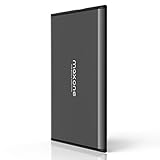
Maxone 500GB Ultra Slim Portable External Hard Drive
At $37.99, the Maxone mirrors the UnionSine in price and capacity while offering a charcoal-grey finish that reads slightly more professional on a desk. It is for office workers or freelancers who need a low-profile drive for daily file transfers and prefer not to explain a flashy enclosure to a client. Owners like the slim build and straightforward Windows detection. The main limitation is the same as the UnionSine: 500GB fills fast, and there is little to no bundled software, meaning the safe-eject routine depends entirely on the OS. Skip this if you need more than a transient scratch volume.
- Pro: Neutral charcoal finish suits professional settings
- Pro: Reliable plug-and-play with no driver issues
- Con: Same capacity and software limitations as similarly priced rivals
StarTech Dual-Bay 2.5/3.5in SATA Duplicator Dock
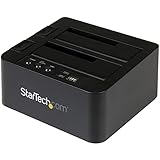
The StarTech SDOCK2U313R is not a storage drive—it is a duplicator, rated at 28GB per minute, and it serves a distinct workflow. If you are a technician, small IT shop, or enthusiast who regularly migrates OS images or clones drives in bulk, this dock lets you copy SATA drives without a computer or software. Priced at $89.99, it replaces the need to install each drive internally. Owners appreciate the dual-bay design and the standalone operation that eliminates eject external hard drive mistakes during long clone jobs. Skip it entirely if you only need to store and transfer files on a single portable HDD.
- Pro: Standalone cloning with no host computer required
- Pro: Handles both 2.5-inch and 3.5-inch SATA drives
- Con: Serves a niche use case, not general storage
Seagate Portable 5TB External Hard Drive
At $219.96, the Seagate 5TB is the capacity play in this lineup. It is for photographers, videographers, and media collectors who need a single-volume backup of a large library and do not want to manage multiple smaller drives. Owners report stable USB 3.0 throughput and the same Rescue Service as the 1TB model. The physical trade-off is weight and size: this is a desktop-leaning portable, not a pocket drive, and it draws noticeable bus power. Skip it if your budget is under $150 or if you plan to carry the drive daily in a backpack.
- Pro: Highest capacity here, suitable for full media archives
- Pro: Rescue Service provides a recovery safety net
- Con: Larger and heavier than pocketable alternatives
WD 2TB Elements Portable External Hard Drive
The WD Elements 2TB at $135.50 is the middle ground between affordability and capacity that most Windows users should consider. It ships formatted for Windows and requires a reformat for Mac, which is a minor friction point but worth knowing. Owners highlight the single-connection USB 3.2 Gen 1 cable and the drive’s quiet operation during transfers. The 2TB sweet spot covers most personal backup needs without pushing into desktop-drive territory. Skip it if you need USB-C without an adapter or if your OS is macOS and you want zero reformatting on first plug-in.
- Pro: Balanced 2TB capacity for most users
- Pro: Quiet operation and proven controller reliability
- Con: Ships exFAT/NTFS formatted; Mac users must reformat
YOTUO 1TB External Hard Drive
At $82.99, the YOTUO 1TB doubles the capacity of its 500GB sibling while keeping dual USB-C and USB 3.0 connectors and the same broad device compatibility list. It is for users who outgrew the 500GB tier but still want the flexibility of console, phone, and computer use from one drive. Owners note the value proposition: a USB-C-capable 1TB HDD for under $90 is rare. The enclosure lacks any encryption or password software, so sensitive data demands a separate encrypted volume or OS-level BitLocker. Skip it if you need hardware encryption or a vendor-backed data-recovery plan.
- Pro: Best 1TB price among USB-C-capable drives here
- Pro: Works with phones, consoles, and desktops from one cable set
- Con: No hardware encryption or included recovery service
Buying Guide
Connection Type and Eject Safety
USB 3.0 Type-A remains universal but forces many Mac and modern-laptop users through a dongle or hub. Each adapter in the chain adds a physical step where a rushed unplug becomes more likely. USB-C and USB 3.2 Gen 1 drives reduce friction because they plug directly into current hardware. Whichever connector you choose, train yourself to always eject external hard drive through the system tray or Finder before pulling the cable. The OS-level eject command flushes pending writes and unmounts the file system; skipping it is the leading cause of the corruption that makes people shop for replacements.
Capacity vs. Your Actual Backup Target
A 500GB drive works for document archives and small photo collections but fills within months if you back up application data or game libraries. The 1TB tier covers most single-user laptop backups with headroom. Two terabytes handles a full desktop with media folders. Anything beyond 2TB is for creative professionals or households sharing one archive. Buy at roughly 1.5 to 2 times your current data footprint so the drive does not force a premature replacement cycle.
Warranty, Recovery Service, and Long-Term Trust
A standard one-year manufacturer warranty covers mechanical failure but not human error. Seagate’s Rescue Service goes a step further by including professional data recovery for eligible drives, which directly addresses the exact failure mode—unsafe removal during a write—worried buyers should care about. If you cannot find a bundled recovery option, factor in the cost of a third-party service or decide that the data on the drive is expendable enough to accept that risk.
Our Verdict
Top pick: Seagate Portable 1TB. The Rescue Service is the single most useful differentiator in this group because it directly mitigates the catastrophic outcome of forgetting to eject external hard drive. For most users, 1TB is enough capacity, and the cross-platform plug-and-play record is well documented.
Budget pick: YOTUO 500GB at $34.99. You get USB-C, USB-A, and broad device support for the lowest price in the lineup.
If your workflow involves cloning drives for repair shops or lab environments, the StarTech Dual-Bay Duplicator Dock at $89.99 fills a role none of the portable drives can replace.
FAQ
Why does my computer refuse to eject my external hard drive?
A background process, open file, or indexing service holds a lock on the drive. Close all applications that might access it, wait a few seconds, and try again; if it persists, a system restart clears the lock without forcing removal.
What happens if I unplug the drive without ejecting it?
Any data still in the write buffer is lost, and the file system can enter an inconsistent state that prevents the drive from mounting properly on the next connection. The damage is often invisible until you open a specific folder or file.
Is it safe to leave an external drive plugged in permanently?
For most modern drives with USB power management, leaving them connected is fine. The risk comes from frequent hot-swapping without ejecting, power surges without a surge protector, or mechanical damage from the drive being bumped while the head is over the platter.
Do I need to format a drive before first use?
Windows-format drives typically require a reformat (exFAT or APFS) for Mac use, and vice versa. The YOTUO and Seagate models in this list are generally recognized across platforms without intervention, but always confirm the preinstalled file system on the product page before purchasing for a mixed-environment workflow.


