
Upgrading from an RX 6900 XT to an RX 9070 is worth it mainly for 1440p and 4K players who want much better ray tracing and FSR 4 upscaling, because the raster gain is a moderate roughly 20-30% at higher resolutions and close to nothing at CPU-limited 1080p. If you only play rasterized games at 1080p or 1440p and your RX 6900 XT is still hitting your monitor’s refresh rate, keeping it and waiting is the reasonable call; if you want FSR 4 image quality, playable ray tracing and 80 W less heat, the RX 9070 is a meaningful step up with the same 16 GB of memory.
As an Amazon Associate we earn from qualifying purchases at no extra cost to you.

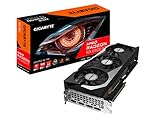


Our Top Picks
 ASUS Prime Radeon RX 9070 EVO 16GB GDDR6RX9070|OC|16GB|EVO|Black12 x 5 x 0.1 inches2.4 poundsCheck on Amazon

Top 3 picks at a glance
What Actually Changes
The RX 6900 XT was AMD’s $999 RDNA 2 flagship in October 2020. The RX 9070 launched in March 2025 at $549 on RDNA 4, the architecture AMD rebuilt around stronger ray tracing and dedicated AI acceleration for FSR 4. On paper the new card looks smaller: 3,584 stream processors against 5,120, and a 64 MB Infinity Cache against 128 MB. In practice, higher clocks, faster per-unit throughput and 644.6 GB/s of memory bandwidth more than make up for it.
| Spec | RX 6900 XT | RX 9070 |
|---|---|---|
| Architecture | RDNA 2.0 | RDNA 4.0 |
| Release date | 28 October 2020 | 6 March 2025 |
| Launch MSRP | $999 | $549 |
| Stream processors | 5,120 | 3,584 |
| Boost clock | 2,250 MHz | 2,520 MHz |
| Process | 7 nm | 5 nm |
| TDP | 300 W | 220 W |
| Memory | 16 GB GDDR6 | 16 GB GDDR6 |
| Bus / bandwidth | 256-bit / 512.0 GB/s | 256-bit / 644.6 GB/s |
| Cache | 4 MB L2 + 128 MB L3 | 8 MB L2 + 64 MB L3 |
| Interface | PCIe 4.0 x16 | PCIe 5.0 x16 |
| Power connectors | 2x 8-pin | 2x 8-pin |
| Length / width | 267 mm / 3-slot | 267 mm / 2-slot |
| Outputs | 1x HDMI 2.1, 2x DP 1.4a, 1x USB-C | 1x HDMI 2.1b, 3x DP 2.1a |
The Raster Gain by Resolution
Most benchmark compilations put the RX 9070 roughly 25-30% ahead of the RX 6900 XT at 1440p and 4K in modern games, with newer titles tending to favor RDNA 4 by more. At 1080p the gap is much smaller and in some datasets the two are essentially level, because both cards are fast enough that the CPU becomes the limit. Reviews from outlets such as TechPowerUp and Hardware Unboxed placed the RX 9070 above the RX 7900 GRE in raster at launch, which itself sat ahead of the RX 6900 XT, consistent with that range.
| Resolution | Approximate RX 9070 gain | Does the upgrade pay off? |
|---|---|---|
| 1080p | 0-10% | Rarely, unless using RT or FSR 4 |
| 1440p | About 15-30% | Yes for high-refresh players and RT users |
| 4K | About 25-30% | Yes, especially with FSR 4 |
In practical terms, a game running around 60-70 FPS at 1440p ultra on the RX 6900 XT would typically land in an approximate 75-90 FPS band on the RX 9070. These numbers vary with settings, CPU, driver version and game patches.
Ray Tracing: The Biggest Jump
RDNA 4 doubled ray-intersection throughput per compute unit compared with RDNA 3 and added features aimed at more complex RT workloads, so the improvement over RDNA 2 is much larger than the raster gain. In ray-traced games, the RX 9070’s lead over the RX 6900 XT is commonly far beyond the 25-30% raster figure, turning titles that were borderline on the old card into playable experiences at 1440p with upscaling. Path tracing remains demanding on any AMD card, but RT effects in games like Cyberpunk 2077, Indiana Jones and the Great Circle or Spider-Man 2 become far more usable.
FSR 4: The Feature That Changes the Math
FSR 4 is AMD’s machine-learning upscaler, and it is officially limited to RDNA 4 hardware such as the RX 9070. Reviewers have broadly found its image quality a large step above FSR 3 and much closer to DLSS, especially in Performance and Balanced modes where FSR 3 showed shimmering and ghosting. For an RX 6900 XT owner, this means the RX 9070 can run a lower internal resolution with better visuals, effectively adding more performance on top of the raw raster gain. FSR 4 is supported in a growing list of games, and many FSR 3.1 titles can be upgraded to it through the AMD driver. Frame generation is available on both cards through FSR 3 and AMD Fluid Motion Frames, so that alone is not a reason to switch.
VRAM Stays the Same
Both cards carry 16 GB of GDDR6 on a 256-bit bus. This upgrade does not buy more capacity, but the RX 9070’s higher bandwidth helps at 4K. Since 16 GB remains comfortable for 1440p and most 4K gaming in 2026, VRAM is not a reason to upgrade, and also not a concern with the new card.
Power, PSU and Fit
Using GPU TDP plus CPU plus about 150 W of headroom:
- RX 6900 XT: 300 W + 125 W + 150 W = 575 W.
- RX 9070: 220 W + 125 W + 150 W = 495 W.
Any quality power supply that already runs the RX 6900 XT, typically 650-750 W, will handle the RX 9070 with more margin. Both use two 8-pin connectors, so no new cables are needed. The reference lengths are identical at 267 mm, and the RX 9070’s two-slot design is thinner than the 6900 XT’s three-slot cooler, though partner RX 9070 models vary in size, so check case clearance for the specific card. PCIe 5.0 on the RX 9070 offers no real gaming penalty on PCIe 4.0 boards with a full x16 link.
The 80 W reduction means less heat and fan noise. Over three hours of gaming per day, it also saves roughly 88 kWh a year, or about $13 at $0.15 per kWh.
Net Cost of the Upgrade
A used RX 6900 XT usually sells for about $300-$380 in 2026. If the RX 9070 is bought near its $549 launch MSRP, the net upgrade cost is roughly $170-$250. For a 25-30% raster gain at 1440p and 4K plus far better ray tracing and FSR 4, that works out to around $6-$10 per percentage point of raster improvement. If street prices for the RX 9070 sit well above MSRP, the value drops quickly, and the RX 9070 XT becomes worth comparing for a larger jump.
Who Should Upgrade and Who Should Wait
| Player profile | Recommendation |
|---|---|
| 1080p competitive gamer | Keep the RX 6900 XT |
| 1440p high-refresh, raster only | Optional; worthwhile if the net cost is low |
| 1440p with ray tracing | Upgrade |
| 4K gaming | Upgrade, ideally considering the RX 9070 XT too |
| Small case, heat or noise concerns | Upgrade for efficiency |
| Older CPU (pre-Zen 3 or similar) | Upgrade the CPU first |
A useful check before buying: if GPU utilization in your favorite games already sits well below 95% on the RX 6900 XT, the CPU is the bottleneck, and a new graphics card will deliver less than the benchmarks suggest.
Frequently Asked Questions
How much faster is the RX 9070 than the RX 6900 XT?
In rasterized games, roughly 25-30% at 1440p and 4K according to most benchmark compilations, and much less at 1080p where the CPU often limits both. In ray-traced games the RX 9070’s advantage is considerably larger.
Can the RX 6900 XT use FSR 4?
Not officially. AMD supports FSR 4 only on RDNA 4 Radeon RX 9000 cards. The RX 6900 XT continues to use FSR 3 and AMD Fluid Motion Frames.
Do I need a new power supply for the RX 9070?
Usually not. The RX 9070 is rated at 220 W versus 300 W for the RX 6900 XT, and both use two 8-pin connectors, so a power supply that ran the old card handles the new one comfortably.
Is the RX 9070 XT a better upgrade than the RX 9070?
It is faster and draws more power, so it suits 4K players or anyone wanting a larger jump from the RX 6900 XT. If the price difference is small, the XT model gives a more noticeable upgrade; if it is large, the RX 9070 offers better efficiency per dollar.
What is a used RX 6900 XT worth in 2026?
Typically around $300-$380 depending on the model, condition and remaining warranty. Reference cards and models with mining history often sell toward the lower end.
Will my current CPU hold back an RX 9070?
It can at 1080p and in high-refresh esports games, especially with older six-core processors. At 1440p and 4K the GPU does most of the work, so the upgrade shows its full benefit there. Checking GPU utilization in current games is a quick way to judge whether the CPU is the limit.

