
The RTX 3080 Ti is the faster card, by roughly a quarter at 1440p, more at 4K, and by a wide margin with ray tracing on, so it is the pick for 4K and ray-traced gaming when the used price gap is modest. The RX 6800 is the better buy for most 1440p players on a budget because it costs far less, draws about 100 W less, and carries 16 GB of VRAM against the 3080 Ti’s 12 GB.
As an Amazon Associate we earn from qualifying purchases at no extra cost to you.

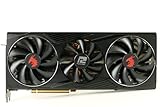


Our Top Picks
Top 3 picks at a glance
Two Very Different Price Classes at Launch
These cards were never meant to compete directly. AMD launched the RX 6800 in October 2020 at $579 as its entry into the high end, while NVIDIA released the RTX 3080 Ti in May 2021 at $1,199 as a near-flagship sitting just under the RTX 3090. Years later, on the used market, the price gap has narrowed enough that buyers genuinely cross-shop them, which is why the comparison matters now.
Architecturally they take opposite approaches. The RX 6800 uses RDNA 2 on TSMC 7 nm with a 256-bit GDDR6 bus backed by a 128 MB Infinity Cache. The RTX 3080 Ti uses Ampere on Samsung 8 nm with a much wider 384-bit GDDR6X bus delivering 912.4 GB/s, and a far larger shader array.
| Specification | RX 6800 | RTX 3080 Ti |
|---|---|---|
| Architecture | RDNA 2.0 | Ampere |
| Release date | 28 October 2020 | 31 May 2021 |
| Launch MSRP | $579 | $1,199 |
| Shaders | 3840 stream processors | 10240 CUDA cores |
| Boost clock | 2105 MHz | 1665 MHz |
| Process | 7 nm | 8 nm |
| TDP | 250 W | 350 W |
| VRAM | 16 GB GDDR6 | 12 GB GDDR6X |
| Memory bus | 256-bit | 384-bit |
| Bandwidth | 512.0 GB/s | 912.4 GB/s |
| Cache | 4 MB L2 + 128 MB L3 (Infinity Cache) | 6 MB L2 |
| Interface | PCIe 4.0 x16 | PCIe 4.0 x16 |
| Power connectors | 2x 8-pin | 1x 12-pin (Founders Edition) |
| Length (reference) | 267 mm | 285 mm |
| Width | 2-slot | 2-slot |
| Outputs | 1x HDMI, 2x DisplayPort, 1x USB Type-C | 1x HDMI, 3x DisplayPort |
Rasterized Gaming Performance
No major outlet published a single headline number for this exact pairing, but it can be pieced together from overlapping reviews. Hardware Unboxed/TechSpot’s 30-game comparison found the RTX 3080 Ti about 11% faster than the RX 6800 XT at 1440p and about 20% faster at 4K. TechPowerUp’s launch data puts the RX 6800 XT around 15% ahead of the RX 6800. Chaining those results places the RTX 3080 Ti roughly 25-30% ahead of the RX 6800 at 1440p and roughly 35-40% ahead at 4K in traditional rendering.
At 1080p the gap shrinks because the 3080 Ti is often limited by the CPU, and the RX 6800’s Infinity Cache is very effective at lower resolutions. As an illustration, a game that averages around 100 fps on the RX 6800 at 1440p would typically land somewhere in the 125-130 fps area on an RTX 3080 Ti, though actual results shift with settings, CPU, patches and drivers.
Ray tracing
Ray tracing is where the cards separate decisively. RDNA 2’s first-generation ray accelerators lose much more performance when ray tracing is enabled, and TechPowerUp placed the RX 6800’s RT performance in the general neighborhood of an RTX 2080-class card. TechSpot measured the RTX 3080 Ti about 58% faster than even the RX 6800 XT at 1440p in Metro Exodus Enhanced Edition. Against the slower RX 6800, the 3080 Ti’s lead in heavy ray tracing commonly exceeds 50% and can be much larger in path-traced titles, where the RX 6800 is not a realistic option.
Upscaling and Frame Generation
The RTX 3080 Ti supports DLSS 4 Super Resolution with the transformer model, plus Ray Reconstruction, and it can use FSR 3 frame generation where games offer it. It does not support DLSS Frame Generation, which requires RTX 40 or RTX 50 hardware.
The RX 6800 currently relies on FSR 2 and FSR 3 upscaling, which generally trail DLSS 4 in image stability, especially at Performance mode. It supports FSR 3 frame generation and AMD Fluid Motion Frames at the driver level. AMD brought FSR 4.1 machine-learning upscaling to the RX 7000 series in June 2026 and has announced it for the RX 6000 series in early 2027. Until that arrives, the image-quality advantage of upscaling sits firmly with the 3080 Ti, which matters because upscaling is how both cards will stay relevant in new releases.
VRAM: 16 GB Versus 12 GB
The RX 6800’s 16 GB is its strongest long-term asset. Hardware Unboxed’s VRAM testing showed the RX 6800 holding up comfortably in memory-heavy games where 8 GB cards struggled. The RTX 3080 Ti’s 12 GB is still adequate for 1440p and most 4K gaming with sensible texture settings, but a handful of recent titles at 4K with maximum textures and ray tracing can push past 12 GB. Rough guidance:
- 1440p high/ultra: 10-12 GB is usually enough, so both cards are comfortable.
- 4K ultra textures: 12 GB works in most games; 16 GB gives more headroom in the heaviest ones.
- Modding and high-resolution texture packs: the RX 6800’s extra 4 GB is a genuine advantage.
Power, PSU and Physical Fit
Using the formula GPU TDP + CPU power + about 150 W of headroom with a 125 W gaming CPU:
- RX 6800: 250 + 125 + 150 = 525 W, so a quality 650 W unit is comfortable.
- RTX 3080 Ti: 350 + 125 + 150 = 625 W, so a quality 750 W unit is the sensible target. GamersNexus and other outlets documented short power spikes on high-end Ampere cards that can trip marginal power supplies, which is another reason not to cut it close.
The RX 6800 uses two standard 8-pin PCIe connectors. The 1x 12-pin listed for the RTX 3080 Ti applies to the Founders Edition, which includes an adapter for two 8-pin cables; most partner 3080 Ti models use two or three 8-pin connectors. The 3080 Ti reference design is 285 mm long, and many partner versions are longer and wider than two slots, so measure GPU clearance in compact cases. The RX 6800 is generally the easier fit and runs cooler and quieter in the same chassis.
Value: Cost per Performance
At launch MSRPs, with the RX 6800 indexed at 100 and the RTX 3080 Ti at about 128 for 1440p raster:
- RX 6800: $579 / 100 = about $5.79 per performance point.
- RTX 3080 Ti: $1,199 / 128 = about $9.37 per performance point.
The RX 6800 was dramatically better value at launch. On the used market in 2026, an RX 6800 usually sells for roughly $250-$330 and an RTX 3080 Ti for roughly $350-$450 depending on model and condition. At those ranges the gap narrows considerably, and the 3080 Ti becomes reasonable for buyers who value ray tracing and DLSS. Used high-end Ampere cards were popular for cryptocurrency mining, so inspect fans, check temperatures and favor sellers who allow testing.
Pick the RX 6800 If / Pick the RTX 3080 Ti If
| Scenario | Recommended card |
|---|---|
| 1440p, raster-focused, tight budget | RX 6800 |
| 1440p with ray tracing on | RTX 3080 Ti |
| 4K high settings | RTX 3080 Ti |
| Heavy modding or texture packs | RX 6800 |
| 650 W power supply, compact case | RX 6800 |
| Want the best upscaling image quality today | RTX 3080 Ti (DLSS 4) |
| Linux gaming with open-source drivers | RX 6800 |
Both cards also face competition from current models. In 2026, an RTX 5070 or Radeon RX 9070 delivers performance in a similar or higher class with newer features and warranty coverage, so compare used prices against new cards before committing.
Frequently Asked Questions
How much faster is the RTX 3080 Ti than the RX 6800?
Combining TechSpot and TechPowerUp data, the RTX 3080 Ti is roughly 25-30% faster at 1440p and around 35-40% faster at 4K in traditional rendering. With ray tracing enabled the gap is much larger, often exceeding 50%. At 1080p the difference shrinks because the CPU becomes the limit.
Is 12 GB on the RTX 3080 Ti enough in 2026?
For 1440p and most 4K gaming, 12 GB remains adequate with sensible texture settings. A few demanding releases at 4K with maximum textures and ray tracing can exceed it. The RX 6800’s 16 GB gives more margin in those edge cases.
Will the RX 6800 get FSR 4?
AMD has announced FSR 4.1 support for the RX 6000 series for early 2027, after bringing it to the RX 7000 series in June 2026. Until then, the RX 6800 uses FSR 2 and FSR 3, which generally trail DLSS 4 in image quality.
What PSU do I need for an RTX 3080 Ti?
A quality 750 W power supply is the sensible target for a typical gaming build. High-end Ampere cards can produce brief power spikes above their rated TDP, so a marginal unit can shut down under load. Most partner cards need two or three 8-pin connectors.
Which card is better for streaming and content creation?
The RTX 3080 Ti generally has the advantage thanks to NVIDIA’s NVENC encoder and broad CUDA support in creative applications. The RX 6800’s encoder is serviceable for streaming but has historically trailed NVENC in H.264 quality. For VRAM-heavy work, the RX 6800’s 16 GB can still be useful.

