
Moving from an RX 6900 XT to an RX 7900 GRE is a sidegrade, not a real upgrade: the GRE is only around 3-10% faster in rasterized games, keeps the same 16 GB of VRAM, and its main gains are official FSR 4.1 support today, somewhat better ray tracing, about 40 W lower power draw, AV1 encoding and a slimmer 2-slot design. Most RX 6900 XT owners should keep their card or skip ahead to an RX 9070 XT or RTX 5070 Ti class GPU, which offers a genuine jump plus FSR 4 or DLSS 4.
As an Amazon Associate we earn from qualifying purchases at no extra cost to you.

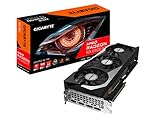


Our Top Picks
Top 3 picks at a glance
Why the Numbers Look So Close
The RX 6900 XT was AMD’s RDNA 2 flagship, launched in October 2020 at $999. The RX 7900 GRE arrived in July 2023 at $549 as a cut-down RDNA 3 card, first in China and later globally. Both have exactly 5120 stream processors, nearly the same boost clock and 16 GB of GDDR6 on a 256-bit bus. RDNA 3’s architectural gains, a faster memory configuration and a larger L2 cache give the GRE a small edge, but it also has half the Infinity Cache of the 6900 XT. The result is a newer card that lands only slightly ahead of an older flagship that cost nearly twice as much at launch.
Spec Comparison
| Specification | RX 6900 XT | RX 7900 GRE |
|---|---|---|
| Architecture | RDNA 2.0 | RDNA 3.0 |
| Release date | 28 October 2020 | 27 July 2023 |
| Launch MSRP | $999 | $549 |
| Stream processors | 5120 | 5120 |
| Boost clock | 2250 MHz | 2245 MHz |
| Process | 7 nm | 5 nm |
| TDP | 300 W | 260 W |
| Memory | 16 GB GDDR6 | 16 GB GDDR6 |
| Memory bus | 256-bit | 256-bit |
| Bandwidth | 512.0 GB/s | 576.0 GB/s |
| Cache | 4 MB L2 + 128 MB Infinity Cache | 6 MB L2 + 64 MB Infinity Cache |
| Interface | PCIe 4.0 x16 | PCIe 4.0 x16 |
| Power connectors | 2x 8-pin | 2x 8-pin |
| Length (reference) | 267 mm | 276 mm |
| Width | 3-slot | 2-slot |
| Display outputs | 1x HDMI 2.1, 2x DP 1.4a, 1x USB Type-C | 1x HDMI 2.1a, 2x DP 2.1, 1x USB Type-C |
Raster Performance: Single-Digit Gains
TechPowerUp’s reviews of factory-overclocked RX 7900 GRE models, the PowerColor Hellhound and the Sapphire Nitro+, both measured about a 10% uplift over the RX 6900 XT, with the Nitro+ slightly outperforming the RTX 4070 Super and beating the RTX 3090 at 1440p. Reference-clocked GRE results reported from TechPowerUp’s earlier testing were smaller, around 6-7.5% at 1440p and 6% at 4K. Aggregate benchmark sites put the gap as low as 3%. A realistic expectation is about 3-10% depending on the specific GRE model, the game and the resolution.
That is the kind of difference that turns 90 fps into somewhere around 93-99 fps at 1440p high settings, with real results shifting with settings, CPU and game patches. It is measurable in charts but hard to notice in play. Minimum frame rates follow the same pattern, so the GRE does not deliver a meaningfully smoother experience either. Owners running a high-refresh 1440p monitor will see the same tier of performance they already have.
Ray Tracing and Features: Where RDNA 3 Helps
Ray tracing
RDNA 3’s second-generation ray accelerators give the GRE a larger lead in ray-traced games than in raster, as noted in TechPowerUp-based comparisons. The improvement is real but still leaves both cards well behind Nvidia’s RTX 40 and 50 cards and AMD’s own RX 9070 series in heavy ray tracing.
Upscaling and frame generation
Both cards support FSR 3.1 upscaling and frame generation, plus AMD Fluid Motion Frames at the driver level. The difference is FSR 4.1, AMD’s machine-learning upscaler: RX 7000 cards, including the GRE, received official support in AMD’s June 2026 driver, with image quality AMD says matches the RX 9000 version. AMD has announced FSR 4.1 for RX 6000 cards for early 2027, and community testing of the INT8 model suggests a heavier performance cost on RDNA 2. For anyone who relies on upscaling at 1440p or 4K, this is the most tangible advantage the GRE holds today.
Media and display
The GRE adds hardware AV1 encoding, useful for streaming and recording with modern platforms, and DisplayPort 2.1 outputs for very high refresh monitors. The RX 6900 XT can decode AV1 but cannot encode it.
Driver focus
AMD moved RDNA 1 and RDNA 2 cards to a separate driver branch in late 2025. AMD has stated that those cards still receive new-game support and fixes, but new features arrive first on RDNA 3 and RDNA 4. That gives the GRE a modest longevity advantage, although RDNA 3 is itself now the previous generation.
Power, Heat and Case Fit
The GRE is rated at 260 W versus 300 W for the RX 6900 XT. Using GPU TDP plus CPU plus about 150 W headroom with a 125 W CPU:
- RX 6900 XT: 300 + 125 + 150 = about 575 W, so a quality 650-750 W unit.
- RX 7900 GRE: 260 + 125 + 150 = about 535 W, so a quality 650 W unit.
Both use two 8-pin connectors on reference designs, so no cabling changes are needed. The reference GRE is slightly longer at 276 mm versus 267 mm but drops from 3 slots to 2, which can free a slot or improve airflow below the card. Partner models of both vary widely in size.
A 40 W saving matters little on a power bill: at four hours of gaming a day, it is roughly 58 kWh a year, worth only a few dollars to around ten dollars depending on local electricity rates.
The Upgrade Math
Start with launch MSRP and set the RX 6900 XT at 100 performance points and the GRE at about 107:
- RX 6900 XT: $999 / 100 = about $9.99 per point.
- RX 7900 GRE: $549 / 107 = about $5.13 per point.
The GRE was clearly the better value as a new purchase, but that does not make it a good upgrade. On the used market, an RX 6900 XT typically sells for roughly $330-$400 and an RX 7900 GRE for roughly $400-$480. Selling one to buy the other costs around $50-$150 net plus the time and risk of two used-market transactions, for a single-digit performance gain. That money is better saved toward a card like the RX 9070 XT, which reviews place substantially ahead of the GRE and which offers native FSR 4 and much stronger ray tracing.
When the Switch Makes Sense
| Situation | Recommendation |
|---|---|
| Happy with RX 6900 XT performance | Keep it; the GRE adds little |
| Want FSR 4.1 now rather than in 2027 | The GRE delivers it, but the gain alone rarely justifies the swap cost |
| Need AV1 encoding for streaming | The GRE solves that, but so does any RX 9000 or RTX 40/50 card |
| Small case where a 3-slot card is a problem | The 2-slot GRE is a reasonable swap, ideally near zero net cost |
| RX 6900 XT is failing or out of warranty concerns | A GRE is acceptable, but an RX 9070 or RX 9070 XT is better value long term |
| Want a noticeable jump at 1440p or 4K | Skip the GRE; look at RX 9070 XT or RTX 5070 Ti class cards |
Frequently Asked Questions
Is the RX 7900 GRE faster than the RX 6900 XT?
Yes, but only slightly. TechPowerUp measured about a 10% lead for factory-overclocked GRE models, while reference-clocked results and aggregate sites show roughly 3-7%. The gap is a bit larger in ray-traced games.
Is it worth upgrading from an RX 6900 XT to an RX 7900 GRE?
For most owners, no. The performance gain is single-digit in most games and the VRAM stays at 16 GB. A larger jump, such as an RX 9070 XT, makes far more sense for the money.
Does the RX 7900 GRE use less power than the RX 6900 XT?
Yes, it is rated at 260 W versus 300 W. Both cards use two 8-pin connectors and run comfortably on a quality 650-750 W power supply. The power saving has only a small effect on electricity costs.
Can the RX 7900 GRE or RX 6900 XT use FSR 4?
The RX 7900 GRE officially supports FSR 4.1 since AMD’s June 2026 driver. The RX 6900 XT does not yet; AMD has announced FSR 4.1 for RX 6000 cards for early 2027. Until then the 6900 XT uses FSR 3.1 upscaling and frame generation plus AMD Fluid Motion Frames.
What does the RX 7900 GRE add besides performance?
It adds official FSR 4.1 support, hardware AV1 encoding, DisplayPort 2.1 outputs and a slimmer 2-slot reference design. It also sits on RDNA 3, which currently receives more driver optimization attention than RDNA 2. Apart from FSR 4.1 image quality, none of these change gaming performance much.

