
The best desktop computers in 2026 are the ones whose processor, graphics card, memory, storage, ports, and upgrade path match your workload—not necessarily the most expensive system on the shelf.
| Best for | Recommended configuration | Typical market range | Good examples |
|---|---|---|---|
| Everyday use and study | 6–8 CPU cores, 16GB RAM, 512GB SSD, integrated graphics | $400–$700 | Mac mini with M4; mainstream Windows mini PC or tower |
| Office work and light creation | 8 CPU cores, 16–32GB RAM, 1TB SSD, modern integrated or entry GPU | $600–$1,000 | Mac mini with M4 Pro; Lenovo IdeaCentre or Dell Inspiron tower class |
| 1080p gaming | 6–8 CPU cores, 16GB RAM, 1TB SSD, Radeon RX 7600 or GeForce RTX 4060 class | $800–$1,300 | HP Omen 25L; Lenovo Legion Tower 5 |
| 1440p gaming and streaming | 8 CPU cores, 32GB RAM, 1TB–2TB SSD, GeForce RTX 4070 Super or Radeon RX 7800 XT class | $1,300–$2,000 | Lenovo Legion Tower 5i; Alienware Aurora class |
| 4K gaming or demanding creation | 8–16 CPU cores, 32–64GB RAM, 2TB SSD, GeForce RTX 4080 Super or newer equivalent | $2,000–$3,500+ | Custom ATX desktop; high-end HP Omen or Corsair Vengeance system |
As an Amazon Associate we earn from qualifying purchases at no extra cost to you.


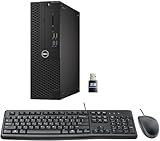

Top 3 picks at a glance
How to choose among the best desktop computers
Start with the monitor resolution, software, and number of years you expect to keep the computer. A desktop for web browsing may spend most of its life nearly idle, while a gaming or video-editing machine can run near its power limit for hours. The right choice is therefore a balance of sustained performance, noise, expansion, and total cost.
For everyday work: prioritize quiet operation and useful ports
Email, documents, video calls, web applications, and streaming do not require a dedicated graphics card. A recent six-core processor, 16GB of memory, and a 512GB or larger NVMe SSD are a sensible minimum for a computer intended to remain responsive for several years.
The Mac mini with M4 is particularly compact and efficient for macOS users. It has enough performance for office software, coding, photo organization, and moderate creative work, but it cannot be upgraded internally like a conventional tower. Remember to budget for a monitor, keyboard, and mouse, and check that your existing accessories are compatible with the available USB-C and HDMI connections.
For Windows, a small-form-factor business desktop or mainstream tower from Dell, HP, or Lenovo is easier to service than many ultra-small mini PCs. Look for two replaceable memory modules, a standard M.2 SSD slot, Wi-Fi 6 or newer, and at least one rear video output that matches your display.
For gaming: spend on the graphics card first
For most games, the graphics card has a larger effect on frame rate than moving between two processors from the same generation. A Radeon RX 7600 or GeForce RTX 4060 class system is appropriate for high-refresh 1080p gaming. At 1440p, move toward a GeForce RTX 4070 Super, Radeon RX 7800 XT, or a newer card in the same performance class.
For 4K, choose the fastest graphics card your budget permits and expect to use upscaling in demanding games. Nvidia’s DLSS and AMD’s FSR can raise performance, but they do not eliminate the need for adequate graphics memory. For a new 1440p gaming desktop, 12GB of VRAM is a more comfortable target than 8GB; 16GB or more is preferable for 4K textures and long-term use.
A gaming desktop should also include 32GB of system memory if the budget allows. Sixteen gigabytes still works for many games, but modern browsers, launchers, voice chat, recording software, and background applications can consume much of it. Confirm that the computer uses two memory modules rather than one, because dual-channel memory improves CPU performance and leaves a clearer upgrade path.
Match the desktop to your situation
| Your situation | Choose | Avoid | Why |
|---|---|---|---|
| Small desk, basic work | Mini PC or Mac mini, 16GB RAM, 512GB–1TB SSD | Large gaming tower with a dedicated GPU | Lower power use and less desk space |
| Competitive 1080p gaming | Fast six- or eight-core CPU, 32GB RAM, RTX 4060/RX 7600 class GPU | Spending heavily on 4K graphics hardware | CPU consistency and high frame rates matter more than ultra settings |
| 1440p single-player gaming | 32GB RAM, 12GB-plus GPU, 1TB–2TB SSD | 8GB graphics cards at a premium price | Higher resolution and textures increase VRAM demand |
| Video editing or 3D work | 8–16 CPU cores, 64GB RAM, dedicated GPU, two SSDs | 16GB systems with one small drive | Large projects need memory and fast scratch storage |
| Long ownership period | Standard ATX or mATX case, replaceable PSU, four RAM slots | Proprietary compact desktops | Parts can be replaced instead of replacing the whole computer |
Upgradeability can outweigh a faster processor
Prebuilt desktops vary substantially behind similar-looking specifications. Before buying, check whether the power supply uses standard connectors, whether the case accepts a longer graphics card, and whether the motherboard has accessible M.2 and memory slots.
A standard ATX gaming system generally offers the best upgrade path. You can add storage, replace the graphics card, increase memory, and sometimes install a more powerful processor. The Lenovo Legion Tower 5 and HP Omen 25L product families are examples of gaming desktops that can offer a more practical upgrade route than thin all-in-one computers, although the exact internal parts differ by configuration.
Small desktops are not automatically poor choices. They are excellent when space and efficiency matter, but their limitations are usually fixed: laptop-style memory, a restricted graphics upgrade path, an external power adapter, or no room for a second drive. Pay less for a compact computer if you already know you will replace it rather than upgrade it.
Power use: calculate the cost before buying
Power efficiency matters most when a computer is used many hours per day. Suppose a gaming desktop averages 350 watts while gaming for three hours daily and 60 watts for the remaining 21 hours. Its estimated daily consumption is:
(0.35kW × 3 hours) + (0.06kW × 21 hours) = 2.31kWh per day.
At an electricity rate of $0.20 per kWh, that is about $0.46 per day, or approximately $169 per year. A compact desktop averaging 35 watts at idle and 80 watts under work loads may cost considerably less, especially if it is left on continuously. Actual results vary with display power, sleep settings, game frame rates, and local electricity prices.
Do not select a power supply solely by adding the graphics card’s advertised wattage. A system with a 300-watt graphics card, a 120-watt processor, drives, fans, and transient spikes should normally use a quality 750-watt supply. That provides headroom without forcing the power supply to operate at its limit. Look for an 80 Plus Gold unit from a reputable manufacturer and the correct native connector for the graphics card.
Ports and networking deserve a pre-purchase check
Count the devices you will connect at the same time: monitor, webcam, microphone, external SSD, printer, game controller, and backup drive. A desktop with only two rear USB ports may require a hub immediately. For a gaming or creative system, useful targets include four or more rear USB-A ports, at least one USB-C port, 2.5Gb Ethernet if you transfer large files locally, and Wi-Fi 6E or Wi-Fi 7 when your router supports it.
Display outputs must be checked on the graphics card rather than only on the motherboard. For a 1440p monitor above 144Hz, DisplayPort is usually the safest connection. HDMI 2.1 is valuable for a 4K television or a 4K high-refresh monitor. Integrated graphics outputs may be disabled when a dedicated graphics card is installed, so connect the monitor to the graphics card.
When a custom-built desktop is better value
Choose a custom or configurable ATX desktop when you need a particular graphics card, quiet cooling, multiple drives, or future upgrades. It can deliver more performance per dollar, but you must account for Windows, assembly, troubleshooting, and warranty coverage for individual parts.
A prebuilt system is usually the better value when the manufacturer offers a substantial discount, you need one point of support, or you do not want to diagnose memory and driver problems. Compare the complete specification: exact CPU and GPU, memory layout, SSD capacity, power supply model, case airflow, and warranty—not just the product name.
Frequently asked questions
How much memory and storage should a general-purpose desktop have?
For web browsing, documents, video calls, web applications, and streaming, choose a recent six-core processor, 16GB of memory, and a 512GB or larger NVMe SSD. That combination should remain responsive for several years. If you plan to edit video, work with 3D projects, or keep many demanding applications open, the article recommends 64GB of memory and multiple SSDs.
Do I need to buy a monitor, keyboard, and mouse separately?
Often, yes. The article specifically says to budget for a monitor, keyboard, and mouse when choosing a compact desktop such as a Mac mini. Check whether your existing accessories match the computer’s available USB-C and HDMI connections. Some all-in-one computers include a keyboard and mouse, but the article’s general recommendations still require checking the complete configuration.
Should a gaming desktop use one memory module or two?
Choose two memory modules when possible. Dual-channel memory improves CPU performance and provides a clearer upgrade path. The article recommends 32GB of system memory for gaming if the budget allows, although 16GB still works for many games. Browsers, launchers, voice chat, recording software, and other background applications can consume a substantial portion of available memory.
What power supply should a desktop with a powerful graphics card use?
A desktop with a 300-watt graphics card and a 120-watt processor should normally use a quality 750-watt power supply, allowing room for drives, fans, and transient spikes. Look for an 80 Plus Gold unit from a reputable manufacturer with the correct native graphics-card connector. Do not choose a supply merely by adding the graphics card’s advertised wattage.
Where should I connect my monitor on a desktop with dedicated graphics?
Connect the monitor to the dedicated graphics card rather than the motherboard. Integrated-graphics outputs may be disabled when a dedicated card is installed. For a 1440p monitor above 144Hz, DisplayPort is usually the safest connection. HDMI 2.1 is valuable for a 4K television or a 4K high-refresh monitor, so check the graphics card’s actual outputs before buying.
Bottom line
For ordinary work, buy a quiet 16GB desktop with an SSD and strong connectivity. For gaming, allocate the largest share of the budget to the graphics card, then add 32GB of memory and at least 1TB of storage. For creative workloads, prioritize RAM capacity, sustained cooling, GPU memory, and separate project storage. If you expect to upgrade, a conventional tower with standard components is usually worth choosing over a smaller but sealed design.


