
Top 3 picks at a glance

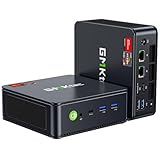
Best Mini PCs for Work, Streaming, and Light Gaming
The best mini PCs for most people are compact systems with a recent AMD Ryzen 7 or Intel Core Ultra processor, 32GB of upgradeable memory, and room for a second SSD; choose a Ryzen model with a Radeon 780M-class integrated GPU if light gaming matters, or prioritize quieter cooling and a richer port selection for an office or media setup.
Mini PCs can be excellent everyday computers, but their small cases make sustained performance, fan behavior, and upgrade access more important than headline boost speeds. The recommendations below are based on the kind of configuration to look for, rather than a single fixed SKU: manufacturers often sell several memory, storage, and processor variants under similar model names. Check the exact listing and chassis revision before buying.
As an Amazon Associate we earn from qualifying purchases at no extra cost to you.
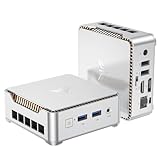

Quick picks by use
| Use case | Best fit | Why it suits the job | Trade-off to check |
|---|---|---|---|
| Office work and multitasking | Ryzen 7 or Core Ultra mini PC, 32GB RAM | Comfortable headroom for browsers, video calls, and office apps | Fan noise under sustained CPU load |
| Streaming and home theater | Recent Intel Core or Ryzen system with HDMI 2.1-class output | Efficient video playback and convenient display connectivity | Confirm codec support, refresh rate, and HDCP needs |
| Light gaming | Ryzen system with Radeon 780M-class integrated graphics | Among the stronger integrated-GPU options for playable esports and older games | Use dual-channel RAM; demanding new games still need reduced settings |
| Quiet desk setup | Lower-power processor in a chassis with generous ventilation | Less heat to remove can mean less frequent fan ramping | Smaller, cheaper cases may have more noticeable high-pitched fans |
What matters in everyday use
Performance that holds up after the first few minutes
Short bursts of work—opening apps, launching a browser, or exporting a small file—rarely challenge a modern mini PC. Longer tasks such as compiling code, rendering, or a long video call while many browser tabs are open create more heat. In a tight chassis, the processor may reduce its power to stay within temperature limits. A higher advertised boost clock is therefore less useful than a cooling system that can sustain performance without making the fan distracting.
For general work, a modern six-core processor is a sensible starting point; choose an eight-core Ryzen 7 or comparable Core Ultra configuration for heavier multitasking. A lower-power system can be a better fit than a top-end chip if the computer will sit close to you in a quiet room. Look for independent noise and sustained-load measurements for the exact chassis when available, since processor names alone do not predict acoustics.
RAM and storage: check what is replaceable
Many mini PCs use removable SO-DIMM memory and an M.2 NVMe SSD, but some compact systems have soldered RAM or only one storage slot. For a work-and-streaming PC, 16GB is usable; 32GB is a more comfortable target if you keep many tabs open, run creative apps, or want to reserve memory for integrated graphics. Integrated GPUs use system RAM, so two memory modules operating in dual-channel mode can improve gaming performance substantially compared with one module.
Before buying, confirm the maximum supported memory, the number and length of M.2 slots, and whether opening the case affects the warranty. If you plan to add a second SSD, check that the slot is not blocked by a wireless card or only accessible by removing delicate cables. A spare slot is useful only if the chassis can cool the additional drive and the system supports its capacity.
How much gaming can integrated graphics handle?
A Radeon 780M-class integrated GPU can make many esports titles and older games enjoyable, especially at 1080p with modest settings. It is not a substitute for a gaming desktop: newer graphics-heavy releases may require lower resolution, reduced texture quality, or a 30–45 fps target. Intel integrated graphics can handle casual and lighter games too, but results vary more by processor generation, memory configuration, and game.
Here is a practical bandwidth calculation for a high-refresh desk display. A 2560 × 1440 image at 144Hz contains about 531 million pixels per second (2560 × 1440 × 144). At 24 bits per pixel, that is roughly 12.7 gigabits per second before timing overhead and display-link encoding. This is why a port that merely says “HDMI” is not enough: confirm the precise HDMI or DisplayPort version and supported resolution/refresh combination. For gaming, also check that the cable and monitor input support the target mode.
For integrated-graphics gaming, start at 1920 × 1080, use low or medium presets, and turn on a game’s upscaling option if frame rates dip. Keep the mini PC’s vents unobstructed and connect both memory channels. These choices often help more than paying extra for a small increase in CPU clock speed.
Ports, footprint, and placement
A useful port set includes at least two USB-A ports for everyday accessories, USB-C for newer peripherals, wired Ethernet for reliable streaming or file transfers, and two display outputs if you use multiple monitors. USB-C does not automatically mean video output or fast charging; verify those features individually. For a TV setup, check whether the system supports the required HDR format, refresh rate, and copy protection for your streaming services.
The footprint can be smaller than a paperback book, and many models include a VESA mount for attaching the PC behind a monitor. That saves desk space but can make power-button access and cable changes awkward. A monitor mount may also restrict airflow, so leave clearance around the intake and exhaust vents. If you plan to add external drives, a webcam, and wired networking, count the occupied ports before choosing a tiny chassis with limited rear access.
Which kind should you choose?
| Your situation | Prioritize | Reason |
|---|---|---|
| Mostly documents, calls, and browsing | 16–32GB RAM, quiet cooling, Ethernet | Responsiveness and low fan noise matter more than peak graphics speed |
| Many apps and tabs at once | 32GB RAM and a recent Ryzen 7 or Core Ultra processor | More memory reduces slowdowns when workloads overlap |
| Casual games without a separate GPU | Radeon 780M-class graphics and dual-channel RAM | Memory bandwidth is shared with the integrated GPU |
| Media PC connected to a 4K TV | Verified 4K output, codec support, and suitable HDMI port | Connector labels alone do not guarantee the desired playback mode |
| Future storage expansion | Two accessible M.2 slots or a spare slot plus USB 3.x | Lets you add capacity without replacing the system drive |
Price and value
As a broad market guide, entry-level mini PCs for basic office use often fall around $200–$400, while well-equipped Ryzen 7 or Core Ultra systems commonly land around $400–$800. Higher-end compact systems can cost more, particularly when they include extra storage, faster networking, or stronger integrated graphics. Prices vary with memory, SSD capacity, and sales, so compare like-for-like configurations rather than the cheapest listing under a model family.
For most buyers, the best value is a midrange system with 32GB of dual-channel RAM, a 1TB SSD, and a chassis with accessible cooling and at least one upgrade path. Spend more for a better GPU only if your games benefit; spend less if your workload is mostly web-based and quiet operation is the priority. If demanding gaming, sustained rendering, or extensive internal expansion is central to your plans, a larger desktop is usually the better long-term purchase.
Frequently asked questions
Can a mini PC replace a larger desktop for demanding workloads?
Usually not if demanding gaming, sustained rendering, or extensive internal expansion is central to your plans. A larger desktop is generally the better long-term purchase for those needs. Mini PCs are well suited to everyday work, streaming, multitasking, and light gaming, but their compact cases can limit sustained performance, cooling, upgrade access, and graphics capability.
How can I tell whether a mini PC will support my monitor or TV?
Check the precise HDMI or DisplayPort version and the supported resolution and refresh-rate combination. Also verify HDR format, codec support, and copy-protection requirements for a TV streaming setup. The label “HDMI” alone is insufficient. The cable and the monitor or TV input must also support the display mode you want.
Is a mini PC easy to mount behind a monitor?
Many mini PCs include a VESA mount for attaching the computer behind a monitor, which can save desk space. However, mounting may make the power button and cable changes awkward. It can also restrict airflow, so leave clearance around the intake and exhaust vents rather than pressing the chassis tightly against another surface.
What should I verify before adding memory or another SSD?
Confirm whether the memory is removable, the maximum supported memory, the number and length of M.2 slots, and whether opening the case affects the warranty. For another SSD, check that the slot is accessible, not blocked by a wireless card or delicate cables, and able to support the desired capacity while cooling the additional drive.
Do I need wired Ethernet for a mini PC?
Wired Ethernet is useful for reliable streaming or file transfers, especially when those activities are important to your setup. A useful port selection also includes USB-A, USB-C, and display outputs. Before buying, count the ports needed for external drives, a webcam, networking, and other accessories, because tiny chassis designs may provide limited rear access.


