
The best chain hoists for most workshops are a 1-ton manual hoist with a 10–20 ft lift, a mechanical load brake, forged hooks, and a compatible beam trolley; heavier job-site work usually justifies a 2–5-ton model with a longer lift and a higher-grade alloy load chain.
As an Amazon Associate we earn from qualifying purchases at no extra cost to you.
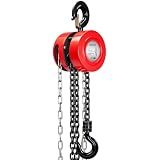
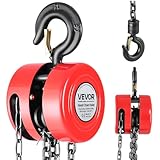


Top 3 picks at a glance
Best chain hoists compared
There is no single best chain hoist for every application. A compact 0.5-ton unit is easier to pull and store, while a 3-ton hoist offers substantially more capacity but needs stronger overhead structure and more effort at the hand chain. The table below compares the most useful categories for workshops, maintenance areas, and job sites.
| Hoist class | Rated capacity | Common lift heights | Typical operating effort | Best use | Typical market range |
|---|---|---|---|---|---|
| Compact workshop | 0.5 ton | 10–20 ft | Low to moderate | Engines, pumps, machinery positioning | $100–$250 |
| General-purpose | 1 ton | 10–30 ft | Moderate | Automotive repair and fabrication shops | $150–$400 |
| Heavy workshop or job site | 2–3 tons | 10–30 ft | High | Steelwork, machinery installation, construction maintenance | $300–$900 |
| Industrial-duty | 5 tons or more | 10–30 ft | Very high | Frequent lifts and large production equipment | $700–$2,000+ |
Top choices by use case
Best all-around workshop choice: 1-ton manual chain hoist
A 1-ton hoist is the most practical starting point for a vehicle workshop, farm shop, or general fabrication space. It can handle many engines, gearboxes, pumps, and machine components without becoming excessively large. Look for a short headroom design if the ceiling is low, and choose a 15- or 20-foot lift if the hoist will serve both a vehicle bay and a workbench area.
Established product families such as the Harrington LX, Yale VSIII, and CM Hurricane 360 represent the type of compact manual hoist buyers commonly consider in this category. Exact capacities, lift lengths, chain dimensions, and safety features vary by configuration, so verify the nameplate rather than assuming every model in a family has identical specifications.
Best for frequent heavy lifting: 2- to 5-ton industrial hoist
For repeated machinery installation or structural work, choose an industrial-duty hoist with a corrosion-resistant or hardened alloy load chain, enclosed gearing, and a serviceable mechanical brake. A higher-capacity hoist is not automatically safer if the supporting beam, trolley, sling, or hook cannot carry the load.
Industrial models are usually heavier and require more hand-chain travel. That trade-off is worthwhile when loads approach the capacity of a smaller hoist, but it can make precise positioning slower. If operators perform many lifts per shift, an electric chain hoist may be more appropriate than a manual unit.
Best for occasional job-site use: compact 0.5- or 1-ton hoist
A smaller hoist is easier to transport and can be rigged from a suitable beam clamp, gantry, or trolley. Choose one with a protected brake and a load chain that is clearly marked with its grade and size. Avoid ultra-light products with vague capacity labeling, plastic brake covers exposed to impact, or hooks that do not include safety latches.
How to choose the correct capacity
Capacity should be based on the total suspended load, not just the main object. Add lifting beams, shackles, slings, spreader bars, adapters, and any material that will rise with the load.
Worked example: Suppose an engine weighs 650 lb, the lifting plate weighs 35 lb, and two shackles and slings add 25 lb. The suspended total is 710 lb. A 1-ton hoist has a nominal 2,000-lb capacity, but a sensible selection may still be a 1-ton unit because 710 lb is only 35.5% of its rating. If the actual load could reach 1,450 lb, a 2-ton hoist gives a 550-lb nominal margin and is a more appropriate choice.
Do not use capacity margin to compensate for shock loading, side pulling, damaged rigging, or an uncertain load. The hoist is intended for a straight vertical lift. A load that is stuck, frozen, or pulled sideways can impose forces well beyond its static weight.
Features that matter more than marketing claims
Load chain durability
The load chain carries the suspended load, so it should be a properly rated alloy chain with consistent links and a traceable specification. Inspect for stretched links, gouges, corrosion, bent sections, and stiff or twisted links. A hand chain is not the same as a load chain; never substitute ordinary hardware-store chain.
For outdoor or damp work, select a chain and body finish suited to the environment, then keep the chain clean and lubricated according to the manufacturer’s instructions. Galvanized or plated components can resist surface corrosion, but no finish makes a hoist suitable for immersion or corrosive chemicals without additional approval.
Safety brake design
A mechanical load-pressure brake should hold the load when the operator releases the hand chain. Prefer a design with an enclosed brake or protected friction surfaces, especially where dust, welding debris, or rain could contaminate the mechanism. Some industrial hoists include overload limiting features, but these do not permit lifting beyond the rated capacity or pulling a jammed load free.
Hooks and latches
Forged hooks are preferable to hooks made from unidentified cast material. A safety latch helps prevent a sling or shackle from escaping when the line goes slack, although it does not make side loading safe. The upper and lower hooks should rotate or articulate as designed without binding, and the hook throat should not be widened or visibly twisted.
Mounting options
- Fixed top hook: Simple and inexpensive for a permanent lifting point or gantry.
- Eye or lug mounting: Useful where the hoist attaches to a trolley or engineered bracket.
- Beam trolley: Allows horizontal movement along an I-beam; confirm flange width, beam profile, and trolley capacity.
- Beam clamp: Fast to install for temporary work, but it must be rated for the exact beam and load direction.
- Portable gantry: A flexible job-site solution, provided the gantry’s rated capacity exceeds the complete suspended load.
Before mounting, verify the overhead structure. A ceiling joist, roof truss, or workshop frame is not automatically a lifting point. The supporting structure must be evaluated for vertical load, trolley movement, impact, and any local bending forces.
Decision matrix for common buyers
| Your situation | Recommended specification | Why |
|---|---|---|
| Occasional engine removal | 0.5–1 ton, 10–15 ft lift, short headroom | Enough capacity without excessive weight or hand-chain travel |
| One hoist for a general workshop | 1 ton, 15–20 ft lift, trolley-compatible top mounting | Balances reach, capacity, portability, and price |
| Machinery installation | 2–3 tons, 20–30 ft lift, enclosed brake | Provides more capacity margin and reach around tall equipment |
| Frequent production lifting | 3–5 tons or electric chain hoist, engineered trolley | Reduces operator fatigue and improves cycle time |
| Outdoor or dusty construction work | 0.5–2 tons, protected gearing and brake, corrosion-conscious finish | Better resistance to contamination and transport damage |
Ease of operation and lift height
Lift height is the distance from the upper suspension point to the lowest hook position. Measure the real working height, then account for the hoist body, trolley, sling angle, and the clearance needed to place the load. A 20-foot chain may not provide 20 feet of usable lift if the hoist hangs several feet below the beam.
Manual hoists use a hand chain, and the operator may need to pull several feet of chain for a small amount of hook movement. Higher-capacity models generally require more effort. For precise positioning, a smooth gear train and low-friction bearings are more useful than a claimed maximum lift speed.
Keep the hand chain aligned with the hand-chain wheel. Pulling at a sharp sideways angle can cause poor engagement, accelerated wear, or a jam. Stop if the chain becomes difficult to pull; investigate the load, brake, rigging, and alignment instead of applying a longer lever or powered tool.
Inspection checklist before every lift
- Confirm the load weight and ensure every component is within its rated capacity.
- Inspect the load chain for corrosion, deformation, twists, stretched links, and damage.
- Check both hooks, latches, suspension points, slings, shackles, and beam or trolley attachments.
- Test the brake with a small controlled lift before raising the load higher.
- Ensure the load is centered beneath the hoist and cannot snag nearby structures.
- Keep people clear of the suspended load and never leave it hanging unattended.
Frequently asked questions
Can a chain hoist be used for side pulling or freeing a stuck load?
No. The hoist is intended for a straight vertical lift, and a stuck, frozen, or sideways-pulled load can impose forces well beyond its static weight. Do not use capacity margin to compensate for side pulling, shock loading, damaged rigging, or an uncertain load. Stop if the chain becomes difficult to pull and investigate the load, brake, rigging, and alignment.
How do I calculate the load that the hoist must lift?
Add the weight of the main object to every item that will rise with it, including lifting beams, shackles, slings, spreader bars, adapters, and lifting plates. For example, the article’s engine, lifting plate, shackles, and slings total 710 lb. Select capacity for the complete suspended load, but do not treat extra capacity as permission for unsafe lifting conditions.
Can I attach a hoist to a ceiling joist or roof truss?
Not automatically. A ceiling joist, roof truss, or workshop frame is not automatically a lifting point. The supporting structure must be evaluated for the vertical load, trolley movement, impact, and local bending forces. Before mounting the hoist, also confirm that the beam clamp, trolley, gantry, bracket, or other attachment is rated for the complete suspended load and intended load direction.
What is the difference between a hand chain and a load chain?
A hand chain is used by the operator, while the load chain carries the suspended load. They are not interchangeable. The load chain should be a properly rated alloy chain with consistent links and a traceable specification. Never substitute ordinary hardware-store chain, and inspect the load chain for stretched links, gouges, corrosion, bent sections, and stiff or twisted links.
How much usable lift will a hoist provide?
Usable lift may be less than the stated chain length because the hoist body, trolley, sling angle, and required clearance occupy space below the beam. Measure the actual working height from the upper suspension point to the lowest hook position. A hoist hanging several feet below the beam will not provide the full length of its chain as usable hook travel.
Final buying advice
For most buyers, the best chain hoist is a 1-ton, short-headroom manual model with a 15- or 20-foot lift, alloy load chain, forged safety-latch hooks, an enclosed mechanical brake, and mounting hardware matched to the beam or gantry. Move to 2–5 tons when the measured load and duty cycle require it, not simply for a larger-looking capacity label. If lifting is frequent, repetitive, or too demanding by hand, compare the total installation cost of an electric chain hoist and engineered trolley rather than overworking a manual unit.


