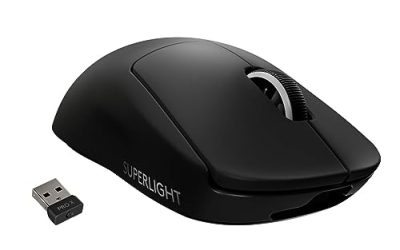
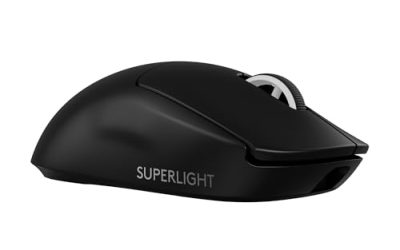
Our Short List of 3

- Connection: Wired
- Sensor: Optical, 6,400 DPI
- Buttons: 5 programmable
- Switches: Mechanical

- Connection: Wired USB
- Sensor: 200–8,000 DPI
- Buttons: 6
- Lighting: LIGHTSYNC RGB

- Connection: LIGHTSPEED wireless (USB receiver)
- Response time: 1 ms
- Sensor: HERO, 200–12,000 DPI
- Battery life: Up to 250 hours on one AA battery
All 3 Picks at a Glance
| Product | Specs | Action |
|---|---|---|
| 2. Razer DeathAdder Essential |
| Check price on Amazon |
| 3. Logitech G203 LIGHTSYNC |
| Check price on Amazon |
| 4. Logitech G305 LIGHTSPEED |
| Check price on Amazon |
A gaming mouse does not need a flagship sensor or a three-digit price tag to track accurately, click reliably, and survive years of ranked queues. The four mice below come from the entry-level lines of Razer, SteelSeries, and Logitech — the models each brand positions as its starting point for gaming — and they were selected from the specifications published on their Amazon listings, not from detailed research. Prices on entry-level gear move around frequently, so treat the listings themselves as the source of truth for current cost and availability. What follows compares the specs that actually matter at this tier: sensor range, polling rate, weight, buttons, and switch durability.
As an Amazon Associate, we earn from qualifying purchases.
Our Top Picks
Top 3 picks at a glance
Quick answer
If you want the best budget gaming mouse for most people, the SteelSeries Rival 3 is the strongest all-round wired option on published specs: a TrueMove Core sensor rated at 100–8,500 CPI, a 1000 Hz polling rate, a light 77 g shell, and switches rated for 60 million clicks. The Razer DeathAdder Essential suits larger hands and palm grips with its ergonomic shape, 6,400 DPI sensor, and mechanical switches. The Logitech G203 LIGHTSYNC adds RGB lighting and onboard memory to a compact wired design, while the Logitech G305 LIGHTSPEED is the wireless pick — a 1 ms connection, a HERO sensor up to 12,000 DPI, and up to 250 hours of play from a single AA battery.
Key takeaways
- Entry-level lines from major brands now include gaming-grade optical sensors, 1000 Hz polling, and programmable buttons — the essentials are covered at this tier.
- Wired picks remove battery worries entirely; the one wireless pick here runs up to 250 hours on a single AA battery.
- Weight is the biggest day-to-day difference: the Rival 3 is 77 g, while the G305 is the heaviest of the group at 99 g.
- Every pick below has at least five buttons, and three of the four offer six programmable buttons for game bindings.
The picks
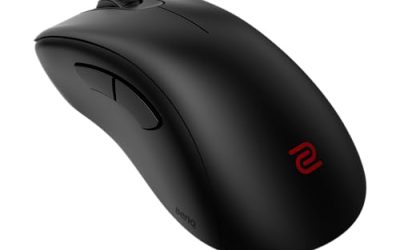
1. SteelSeries Rival 3
The Rival 3 is the most complete wired package in this group on paper. Its TrueMove Core optical sensor covers 100–8,500 CPI, which is more range than any player realistically uses in-game, and it polls at 1000 Hz with a 1 ms response time — the same polling figure as far more expensive mice. At 77 g it is also the lightest mouse here, which makes it easy to flick and reposition during fast shooters, and its six buttons give you the standard layout plus a CPI switch within reach.
Durability is the other headline. SteelSeries rates the mechanical switches for 60 million clicks, a figure that suggests the buttons should outlast the rest of the setup. The symmetrical shell suits claw and fingertip grips best, and because it is wired, there is no battery to manage and no wireless interference to think about. For a first gaming mouse or a spare that still performs, the Rival 3’s published spec sheet is hard to fault at this level.
Specs
- Connection: Wired
- Sensor: TrueMove Core optical, 100–8,500 CPI
- Polling rate: 1000 Hz (1 ms)
- Weight: 77 g
- Buttons: 6
- Switches: Mechanical, rated for 60 million clicks
See the SteelSeries Rival 3 on Amazon
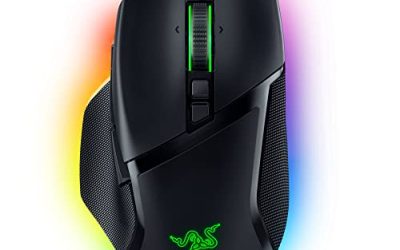
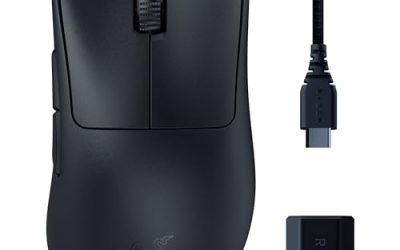
2. Razer DeathAdder Essential
- Connection: Wired
- Sensor: Optical, 6,400 DPI
- Buttons: 5 programmable
- Switches: Mechanical
The DeathAdder Essential carries one of the most copied ergonomic shapes in gaming into Razer’s entry-level line. The right-handed shell is built for palm and relaxed claw grips, with rubber side grips that help the mouse stay planted during long sessions. Its optical sensor is rated at 6,400 DPI — lower on paper than the Rival 3’s range, but well beyond the sensitivity settings most players actually settle on, and DPI headroom past a few thousand is rarely the deciding factor in real games.
Five programmable buttons cover the essentials: two primary clicks, a clickable wheel, and two thumb buttons that can be bound through Razer’s software to abilities, push-to-talk, or macros. The mechanical switches give the clicks a crisp, defined feel. If your hand is medium-to-large and you prefer a mouse that fills the palm rather than a small ambidextrous shell, the DeathAdder Essential is the natural fit in this roundup.
See the Razer DeathAdder Essential on Amazon
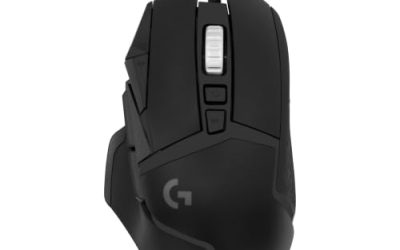
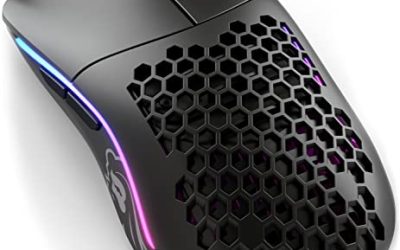
3. Logitech G203 LIGHTSYNC
- Connection: Wired USB
- Sensor: 200–8,000 DPI
- Buttons: 6
- Lighting: LIGHTSYNC RGB
The G203 LIGHTSYNC is Logitech’s entry-level wired mouse, and its spec sheet focuses on the fundamentals: a gaming-grade sensor adjustable from 200 to 8,000 DPI, six buttons, and a compact symmetrical shape that works for claw and fingertip grips and for smaller hands. Wired USB connection means zero input lag concerns beyond the cable itself and nothing to charge, ever.
What separates it from the other wired picks is presentation and memory. LIGHTSYNC RGB lighting can be customized and synced with other Logitech G gear, and onboard memory means your settings can be stored on the mouse rather than depending entirely on software being open. For players building a first setup who want a mouse that looks the part while keeping the core specs honest, the G203 is the pick — just note that its symmetrical shape offers less palm support than the DeathAdder for large hands.
See the Logitech G203 LIGHTSYNC on Amazon
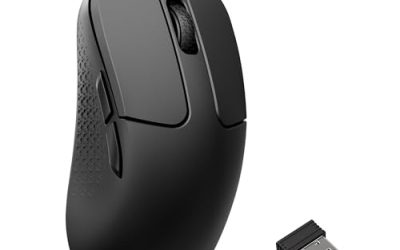
4. Logitech G305 LIGHTSPEED
- Connection: LIGHTSPEED wireless (USB receiver)
- Response time: 1 ms
- Sensor: HERO, 200–12,000 DPI
- Battery life: Up to 250 hours on one AA battery
The G305 LIGHTSPEED is the wireless option in this entry tier, and it avoids the compromises that used to define budget wireless. Logitech’s LIGHTSPEED connection reports at 1 ms, matching the wired picks here, and the HERO sensor delivers 200–12,000 DPI while sipping power — Logitech rates the mouse for up to 250 hours of continuous play on a single AA battery, so battery swaps are a rare event rather than a routine.
At 99 g it is the heaviest mouse in this group, largely because of that AA battery, but the weight is balanced and the compact symmetrical shell remains a favorite shape for claw and fingertip grips. Six programmable buttons match the wired Logitech and SteelSeries picks. If a clean desk and freedom from cable drag matter more to you than the last few grams of weight, the G305 is the budget wireless mouse to beat on published specs.
See the Logitech G305 LIGHTSPEED on Amazon
How to choose
Start with connection. Wired mice like the Rival 3, DeathAdder Essential, and G203 never need charging and sidestep any question of wireless interference; the trade-off is cable drag, which a mouse bungee or a high desk edge largely solves. The G305 shows the modern wireless case: a 1 ms report rate and 250-hour battery life mean the old latency and endurance objections mostly no longer apply, at the cost of extra weight from the battery.
Next, match shape to grip. Palm grippers with larger hands should look first at the DeathAdder Essential’s ergonomic shell. Claw and fingertip players, and anyone with smaller hands, will be better served by the symmetrical Rival 3, G203, or G305. Weight follows from that choice: the 77 g Rival 3 favors fast, low-sensitivity arm aiming in shooters, while the heavier G305 feels steadier and more planted.
Then check the sensor figures in context. Every sensor here — 6,400 DPI at the lowest — exceeds what games demand; in practice, most players use somewhere between 400 and 3,200 DPI, so treat headline DPI as headroom, not a ranking. Polling rate is more meaningful: the Rival 3 and G305 both report at 1000 Hz / 1 ms. Finally, count buttons against your games. Six buttons suit shooters and general play; if you play MMOs or MOBAs and want a thumb grid, you will need to step up beyond this entry tier, because none of these mice offers more than six.
Who should skip
Skip this entire tier if you play competitive shooters seriously and want ultralight shells under 70 g, 4,000 Hz or 8,000 Hz wireless polling, or optical switches — those features live in the brands’ performance lines, not their entry lines. MMO players who need a 12-button side grid should also look elsewhere, as should left-handed players, since three of these four mice are either right-handed ergonomic or small symmetrical designs that may not fit every hand. And if you want a rechargeable wireless mouse with a USB-C port rather than AA batteries, the G305’s battery approach will not suit you.
FAQ
Is a budget gaming mouse good enough for competitive play?
For most players, yes. The sensors in these entry-level models track accurately at the DPI settings people actually use, and the Rival 3 and G305 report at 1000 Hz / 1 ms, so input delay is not the bottleneck. Competitive specialists may still prefer the lighter weight and higher polling rates of performance-line mice, but aim and game sense will decide far more matches than the gap between these mice and flagship models.
Wired or wireless at this price level?
Wired models such as the Rival 3 and G203 are simpler: no batteries, no receivers to lose, and nothing to charge before a session. The G305 demonstrates that entry-level wireless has matured — 1 ms LIGHTSPEED reporting and up to 250 hours per AA battery remove the traditional drawbacks, leaving weight (99 g) as the main compromise. Choose based on whether you value a cable-free desk or the lightest possible mouse.
How much DPI do I actually need?
Far less than the headline numbers suggest. Most players settle between 400 and 3,200 DPI depending on game and sensitivity preference, so even the DeathAdder Essential’s 6,400 DPI ceiling leaves comfortable headroom. What matters more is that the sensor tracks consistently without unwanted acceleration, which the named sensors in these mice — TrueMove Core, HERO, and Razer’s optical sensor — are designed to do at their published ranges.
How long will an entry-level mouse last?
Switch ratings give a rough guide: the Rival 3’s switches are rated for 60 million clicks, which translates to years of heavy daily play for most people. Wired models also avoid battery degradation entirely. The G305’s AA battery is replaceable rather than a sealed cell, so its endurance does not decline the way a built-in rechargeable battery eventually does — when the battery runs down after up to 250 hours, you simply swap in a fresh AA.
Final verdict
The SteelSeries Rival 3 earns the top spot for most buyers: it is the lightest wired pick at 77 g, its TrueMove Core sensor and 1000 Hz polling match the numbers that matter, and its 60-million-click switch rating leads the group. Choose the Razer DeathAdder Essential if you have larger hands and prefer an ergonomic palm shape, the Logitech G203 LIGHTSYNC if you want RGB and onboard memory in a compact wired mouse, and the Logitech G305 LIGHTSPEED if you want to cut the cable without giving up 1 ms response or long battery life. All four are entry-level lines from established brands, so check the listings for the current price before buying — prices at this tier change often.
Product and ASIN Reference
| Product | ASIN |
|---|---|
| Razer DeathAdder Essential | B094PS5RZQ |
| SteelSeries Rival 3 | B08176SM7C |
| Logitech G203 LIGHTSYNC | B07YN73XN6 |
| Logitech G305 LIGHTSPEED | B07CMS5Q6P |
Related guides
More from Amazon
Programs that pair well with the guide above. Offers and eligibility are set by Amazon and may change.
A free business account with business pricing and bulk-buying tools for work, shop or home office.
Create a business accountFree shipping on eligible items, Prime Video and more. Eligible new members can start with a free trial.
Start a Prime free trialAudiobooks and podcasts to listen to on the go. Eligible new members can start with a free trial.
Try Audible freeAd-free music streaming. Eligible new subscribers can start with a free trial.
Try Music Unlimited freeAs an Amazon Associate we earn from qualifying purchases.