Our Short List of 3
All 5 Picks at a Glance
| Product | Specs | Action |
|---|---|---|
 ASUS ProArt Display PA279CRV 27-Inch 4K Monitor | Check price on Amazon | |
 BenQ PD2705U 27-Inch 4K Designer Monitor | Check price on Amazon | |
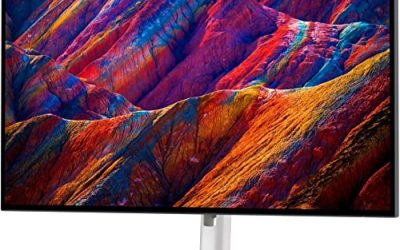
 Dell UltraSharp U2723QE 27-Inch 4K USB-C Hub Monitor | Check price on Amazon | |
 LG 27UP850-W 27-Inch 4K UHD IPS Monitor | Check price on Amazon | |
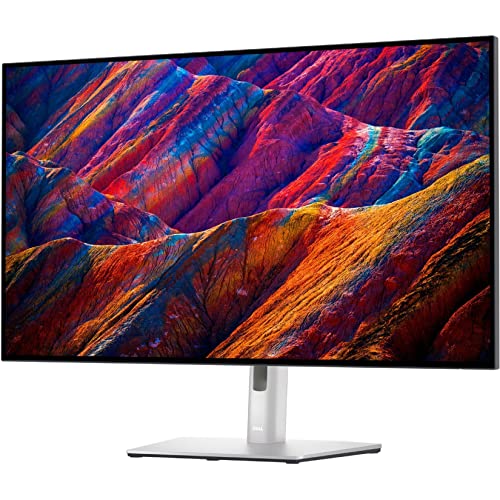 Dell UltraSharp U3223QE 32-Inch 4K USB-C Hub Monitor | Check price on Amazon |
The best 10 bit monitors are the ones that show colour the way it actually looks: smooth, natural, and free of the banding that makes a sunset look like a staircase. A 10-bit monitor can display over a billion colours, compared with around 16.7 million colours on a standard 8-bit monitor, and that difference is visible in any image with a smooth gradient, from a sky at dusk to a skin tone in a portrait to a subtle shadow in a photograph. If you edit photos, grade video, or design for print or screen, 10-bit colour is not a luxury; it is the difference between seeing what you are working on and guessing at it.
Bit depth describes how many steps of brightness a monitor can show for each colour channel. An 8-bit panel shows 256 steps per channel, which is enough for most everyday use but leaves visible steps in smooth gradients, because the jump from one step to the next is large enough for the eye to see. A 10-bit panel shows 1024 steps per channel, which makes the steps four times smaller and the gradient visibly smoother. Some monitors achieve 10-bit colour with a native 10-bit panel, while others use 8-bit plus frame rate control, a technique that rapidly flickers between two nearby colours to simulate the ones in between. Both approaches are sold as 10-bit, and both are smoother than 8-bit, though a native 10-bit panel is the more accurate of the two.
All five monitors in this guide are 4K IPS displays with 10-bit colour support, wide colour gamut coverage, and factory calibration.
Before you buy, check that the rest of your system can deliver 10-bit colour. Your graphics card needs to support 10-bit output, your cable needs enough bandwidth, and your software needs to be set to 10-bit mode. A 10-bit monitor connected over a cable or a setting that only carries 8-bit will still look good, but it will not show the smooth gradients you paid for. Check your graphics card specifications, use DisplayPort or a high-bandwidth HDMI connection, and enable 10-bit colour in your display settings and in your editing software.
Our Top Picks
 ASUS ProArt PA279CRV 27 Inch 4K UHD USB-C27 Inch24.1 x 8.46 x 16.07 Inches18.25 poundsCheck on Amazon
Top 3 picks at a glance
How to Choose
1. Understand native 10-bit and 8-bit plus frame rate control. A native 10-bit panel shows 1024 steps per channel directly, which is the most accurate approach. An 8-bit plus frame rate control panel, often written as 8-bit plus FRC, shows 256 steps directly and flickers rapidly between adjacent steps to simulate the ones in between. The simulation is fast enough that the eye sees a smooth gradient, and for most work it is indistinguishable from native 10-bit. If you do colour-critical work for print or broadcast, native 10-bit is worth seeking out; for most photo and design work, 8-bit plus FRC is enough.
2. Choose 4K resolution for detail. A 10-bit monitor shows colour smoothly, but resolution decides how much detail you can see. A 4K display at 27 inches shows text and images with crisp, clean edges, and it gives you enough room to keep your editing tools and your image side by side. A 32-inch 4K display gives you even more room, with text that stays comfortable to read. Avoid 10-bit at lower resolutions, because the colour will be smooth but the image will be soft.
3. Check colour gamut coverage and calibration. Bit depth and gamut are different things: bit depth decides how smoothly colours blend, while gamut decides how wide the range of colours is. A monitor that covers a wide gamut, including full sRGB and a high percentage of DCI-P3 or Adobe RGB, will show the colours your camera captured. A factory calibration report is a good sign, because it means the manufacturer has measured the panel and adjusted it before shipping. If you do colour-critical work, calibrate the monitor with a hardware calibrator as well.
4. Insist on an IPS panel. IPS panels show the most accurate colours and the widest viewing angles, which matters when you are judging colour or comparing two images side by side. TN panels are cheaper and faster, but their colours shift when you move your head, which makes them a poor choice for colour work. VA panels show deeper blacks, but their colour accuracy and viewing angles are narrower. For photo, video, and design work, IPS is the right default.
5. Check the connectivity and the bandwidth. A 4K 10-bit signal needs more bandwidth than a 4K 8-bit signal, so the cable and the port matter. DisplayPort is the preferred connection for 10-bit colour on a PC, because it has the bandwidth for 4K at 60 Hz in 10-bit without compression. HDMI can also work, but only on newer versions with enough bandwidth, so check the version of the port on your graphics card and on the monitor. USB-C with DisplayPort alternate mode can also carry a 10-bit signal, and it has the bonus of charging a laptop over the same cable.
6. Consider uniformity and the panel lottery. No two panels are identical, and some monitors show slightly brighter or warmer areas across the screen, which is called uniformity. A monitor with good uniformity will show a solid colour evenly from edge to edge, which matters when you are editing a photo and need to trust what you see. Factory calibration and a uniformity compensation feature help, and buying from a manufacturer with a good panel quality record reduces the risk. If you receive a monitor with visible uniformity problems, exchange it rather than living with it.
Top Picks
ASUS ProArt Display PA279CRV 27-Inch 4K Monitor
The ASUS ProArt Display PA279CRV is the colour specialist in this guide, and it is the pick to buy when 10-bit colour accuracy is your top priority. It is a 27-inch 4K IPS panel from ASUS’s ProArt line, which is aimed at creators and designers, with factory calibration, wide colour gamut coverage, and 10-bit colour support showing over a billion colours. It includes a calibration report in the box, and ASUS’s ProArt calibration software lets you keep the panel accurate over time.
Gradients on the PA279CRV are smooth and free of banding, which is the point of 10-bit colour, and the colour accuracy out of the box is among the best in this guide. Text is crisp and readable, and the panel covers a wide gamut that suits photo editing, design, and video work. It has USB-C with power delivery, DisplayPort, and HDMI inputs, plus a USB hub. The stand offers height, tilt, swivel, and pivot, and the monitor is designed to be calibrated regularly, which is what a working creator needs.
Who it is for: photographers, designers, and video editors who need accurate 10-bit colour and smooth gradients, and anyone for whom colour accuracy is a job requirement.
Caveats: it is a 60 Hz monitor aimed at creators rather than gamers, so it will not feel as smooth as a high-refresh display when scrolling. The ProArt features add cost over a basic 4K monitor, so if you only write code and never judge colour, a simpler 10-bit display may be the better value.
BenQ PD2705U 27-Inch 4K Designer Monitor
The BenQ PD2705U is the designer pick in this guide, and it is the one to buy when you want a 10-bit monitor built for design work with a dedicated colour mode switch. It is a 27-inch 4K IPS panel with 10-bit colour, wide gamut coverage, and factory calibration, plus BenQ’s Hotkey Puck, a small wired controller that lets you switch between colour modes, adjust brightness, and change inputs without reaching for the monitor’s buttons.
The Hotkey Puck is the feature that sets this monitor apart for working designers. It lets you switch between sRGB, DCI-P3, and Adobe RGB modes instantly, so you can check how a design will look in different colour spaces without digging through menus. Gradients are smooth, colour accuracy is strong, and the panel includes BenQ’s uniformity technology to keep the image even across the screen. It has USB-C with power delivery, DisplayPort, and HDMI inputs, plus a USB hub and built-in speakers. The stand offers height, tilt, swivel, and pivot.
Who it is for: designers and illustrators who switch between colour spaces during the day, and anyone who wants a dedicated controller for colour modes rather than a menu.
Caveats: the Hotkey Puck is wired, so it adds a small cable to your desk, and it takes up a USB port. The monitor is aimed at designers rather than gamers, so it runs at 60 Hz and will not feel as smooth as a high-refresh display.
Dell UltraSharp U2723QE 27-Inch 4K USB-C Hub Monitor
The Dell UltraSharp U2723QE is the benchmark pick in this guide, and it is the one to buy when you want a proven 10-bit 4K display with a full USB-C hub. It is a 27-inch 4K IPS panel with 10-bit colour support, a wide colour gamut, factory calibration, and a USB-C hub that delivers power to your laptop while connecting your peripherals. The stand offers height, tilt, swivel, and pivot adjustment, and the panel shows clean, readable text with excellent contrast.
Gradients are smooth and free of visible steps, and colour accuracy is strong out of the box, which makes it trustworthy for photo and design work as well as everyday computing. The USB-C hub includes multiple USB ports, an Ethernet port, and DisplayPort output for daisy-chaining a second monitor, which makes it a docking station as well as a display. It is the monitor most professionals end up with after trying cheaper options, and its popularity is a sign of how well the formula works for both colour work and general use.
Who it is for: anyone who wants a proven 10-bit monitor that does everything well, especially laptop users who will use the USB-C hub as a dock.
Caveats: it is a 60 Hz monitor, so it will not feel as smooth as a high-refresh gaming display when scrolling. The 10-bit support is part of a general-purpose professional display rather than a dedicated creator monitor, so if you need hardware calibration LUTs, the ASUS or BenQ picks above may suit you better.
LG 27UP850-W 27-Inch 4K UHD IPS Monitor
The LG 27UP850-W is the value choice in this guide, and it is the pick to buy when you want 10-bit colour and a 4K IPS display without paying for a premium brand. It is a 27-inch 4K IPS panel with 10-bit colour support, wide colour coverage, HDR support, and a USB-C input that delivers power to a laptop. The stand offers height, tilt, and pivot adjustment, and the panel shows clean, readable text with good colour accuracy.
Gradients are smooth, with no visible banding in skies, skin tones, or shadows, which is the benefit of 10-bit colour, and the wide gamut makes it suitable for design work as well as everyday use. The USB-C connection carries video and charging over a single cable, and the monitor includes a USB hub for peripherals. It is lighter and less imposing than the Dell, and it delivers most of what the Dell does at a lower outlay.
Who it is for: anyone who wants 10-bit colour on a sensible outlay, and anyone setting up a second 4K display to pair with an existing screen.
Caveats: the USB hub is more basic than the Dell’s, with fewer ports and no Ethernet, so it is a display with a hub rather than a full docking station. The stand has less swivel range, so check your desk layout before ordering.
Dell UltraSharp U3223QE 32-Inch 4K USB-C Hub Monitor
The Dell UltraSharp U3223QE is the big-screen pick in this guide, and it is the one to buy when you want 10-bit colour on the largest canvas available in this range. It is a 32-inch 4K IPS panel with 10-bit colour support, a wide colour gamut, factory calibration, and the same USB-C hub as its 27-inch sibling, delivering power to a laptop, connecting peripherals, and supporting a daisy-chained second monitor. The stand offers height, tilt, swivel, and pivot.
At 32 inches, a 4K display gives you substantially more room than a 27-inch one, with space for an image, a tools panel, and a timeline side by side. Gradients stay smooth across the larger screen, and colour accuracy is strong out of the box. The larger size also means text stays comfortable to read without scaling, which matters during long editing sessions. It is the monitor to buy if you have the desk space and you want to stop switching windows while you work.
Who it is for: photo and video editors who want the most room for their work, anyone replacing a dual-monitor setup with a single large screen, and laptop users who want a full docking station.
Caveats: it needs a deep desk, because a 32-inch screen sits further from your eyes than a 27-inch one, and it is the largest and heaviest pick here. Check your desk depth and your computer’s ability to drive 4K at 60 Hz in 10-bit before ordering.
Comparison Table
| Monitor | Size | Resolution | Panel | Bit Depth | Best For |
|---|---|---|---|---|---|
| ASUS ProArt PA279CRV | 27-inch | 4K | IPS | 10-bit | Colour accuracy |
| BenQ PD2705U | 27-inch | 4K | IPS | 10-bit | Design work, colour modes |
| Dell UltraSharp U2723QE | 27-inch | 4K | IPS | 10-bit | Proven all-rounder |
| LG 27UP850-W | 27-inch | 4K | IPS | 10-bit | Value 10-bit |
| Dell UltraSharp U3223QE | 32-inch | 4K | IPS | 10-bit | Maximum room |
Which One Is Right for You?
If colour accuracy is your job, buy the ASUS ProArt PA279CRV, which is calibrated for creators and includes software to keep it accurate over time. If you switch between colour spaces during the day, buy the BenQ PD2705U, whose Hotkey Puck lets you change modes instantly. If you want the safest, most proven choice, buy the Dell UltraSharp U2723QE, which does everything well and doubles as a docking station.
If you want 10-bit colour for less, buy the LG 27UP850-W, which delivers smooth gradients and a wide gamut at a lower outlay. If you want the most room, buy the Dell UltraSharp U3223QE, which gives you a 32-inch canvas for editing. Whichever you choose, connect it with DisplayPort or USB-C, enable 10-bit colour in your display settings and in your editing software, and calibrate the panel if your work depends on accurate colour.
Frequently Asked Questions
What is the difference between 8-bit and 10-bit colour?
An 8-bit panel shows 256 steps of brightness per colour channel, which adds up to around 16.7 million colours. A 10-bit panel shows 1024 steps per channel, which adds up to over a billion colours. The extra steps make smooth gradients look smooth instead of stepped, which is visible in skies, skin tones, and shadows. For everyday use the difference is subtle, but for photo editing, video grading, and design work it is clearly visible.
Do I need a special graphics card for a 10-bit monitor?
Your graphics card needs to support 10-bit output, which most modern discrete graphics cards do, and some recent integrated graphics chips do as well. You also need a cable with enough bandwidth, which usually means DisplayPort or a high-bandwidth HDMI connection, and you need to enable 10-bit colour in your display settings and in your editing software. A 10-bit monitor connected in 8-bit mode will still look good, but it will not show the smooth gradients you paid for.
Is 8-bit plus FRC as good as native 10-bit?
For most work, yes. An 8-bit plus FRC panel flickers rapidly between adjacent colours to simulate the ones in between, and the eye sees a smooth gradient. A native 10-bit panel shows the colours directly, which is more accurate, and it is the better choice for colour-critical work such as print or broadcast. For most photo and design work, the difference between the two is hard to see, and either is a large improvement over plain 8-bit.
Will a 10-bit monitor improve my photos?
It will not make a bad photo good, but it will let you see the photo you actually have, with smooth gradients and accurate colour, and it will let you edit it without introducing banding that was not there before.
Disclosure: As an Amazon Associate, we may earn from qualifying purchases.
Related guides
More from Amazon
Programs that pair well with the guide above. Offers and eligibility are set by Amazon and may change.
A free business account with business pricing and bulk-buying tools for work, shop or home office.
Create a business accountFree shipping on eligible items, Prime Video and more. Eligible new members can start with a free trial.
Start a Prime free trialAudiobooks and podcasts to listen to on the go. Eligible new members can start with a free trial.
Try Audible freeAd-free music streaming. Eligible new subscribers can start with a free trial.
Try Music Unlimited freeAs an Amazon Associate we earn from qualifying purchases.