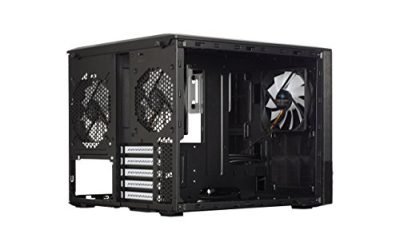
Our Short List of 3

- Best for: Office work, light design, and small teams buying their first workstation.
- Processor: Intel Core i5 14th Gen i5-14500
- vPro Technology
- Memory: 16 GB
- Storage: 512 GB SSD

- Best for: CAD, 3D modeling, and video editing where certified pro graphics matter.
- Processor: Intel Core i7-14700 vPro
- Graphics: NVIDIA T1000 8GB
- Memory: 32 GB RAM
- Storage: 1 TB SSD

- Best for: General professional work, data analysis, and buyers who want a complete HP setup out of the box.
- Processor: Intel Core i7 14th Gen i7-14700
- Memory: 32 GB DDR5 SDRAM
- Storage: 1 TB SSD
- Chipset: Intel W680
All 5 Picks at a Glance
| Product | Specs | Action |
|---|---|---|
| Lenovo ThinkStation P3 30GS00GQUS |
| Check price on Amazon |
| Lenovo ThinkStation P3 Tower with NVIDIA T1000 |
| Check price on Amazon |
| HP Z2 G9 Tower |
| Check price on Amazon |
 HP Z4 G5 Workstation |
| Check price on Amazon |
 Lenovo ThinkStation P3 Tower Gen 2 |
| Check price on Amazon |
A desktop workstation is not a gaming tower with a different badge. The real decision is whether the machine you buy matches the software you run every day, because a CAD model, a video timeline, or a dataset that stalls on a consumer desktop will stall on the wrong workstation too. Buyers who pick by processor name alone often end up with a fast chip, too little memory, and a graphics card their applications cannot use properly.
This guide is for engineers, video editors, 3D artists, data analysts, and office teams who need a tower that stays stable under long renders and heavy multitasking. Every machine below is a complete workstation sold on Amazon, and the specs listed come from its Amazon listing, so you can check the exact configuration before ordering.
Our Top Picks
Top 3 picks at a glance
Quick Picks
As an Amazon Associate we earn from qualifying purchases
| Product | Best for | Key spec from title |
|---|---|---|
| Lenovo ThinkStation P3 30GS00GQUS | Everyday professional work on a modest budget | Intel Core i5-14500, 16GB RAM, 512GB SSD |
| Lenovo ThinkStation P3 Tower with NVIDIA T1000 | CAD and design work with a pro graphics card | Intel Core i7-14700, NVIDIA T1000 8GB, 32GB RAM |
| HP Z2 G9 Tower | A dependable HP tower for general workstation tasks | Intel Core i7-14700, 32GB DDR5, 1TB SSD |
| HP Z4 G5 Workstation | Xeon power for simulation and heavy rendering | Intel Xeon w3-2525, 32GB DDR5, 1TB SSD |
| Lenovo ThinkStation P3 Tower Gen 2 | The newest platform for long-term professional use | Intel Core Ultra 9 285, 32GB RAM, 1TB SSD |
How to Choose
Match the processor to your software
A workstation processor matters most when your software uses many cores at once. Rendering, simulation, and video encoding spread work across cores, so a Core i7 or Xeon with more cores finishes those jobs sooner than a faster-clocked chip with fewer cores. Single-threaded CAD modeling, on the other hand, rewards clock speed more than core count. Check whether your main application lists multi-core support or certified processors, then buy the chip that fits that workload instead of chasing the biggest number on the box.
Get the memory and storage right
Memory is where workstation buyers underbuy most often. Sixteen gigabytes is enough for documents, spreadsheets, and light design work, but large assemblies, 4K timelines, and virtual machines need 32GB or more to avoid swapping to disk. Storage matters just as much: a 512GB SSD fills quickly once project files and applications pile up, so a 1TB drive is the safer starting point. Look for a tower with free memory slots and an extra drive bay, because adding memory later is far cheaper than replacing the whole machine.
Choose a professional graphics card
Consumer graphics cards are built for games, while professional cards like the NVIDIA T1000 or Quadro T400 carry drivers certified for CAD, 3D modeling, and video applications. That certification is what keeps viewports stable and prevents the odd crashes that waste hours on a deadline. If your work involves 3D viewports, GPU rendering, or multiple high-resolution monitors, a dedicated pro card is worth the extra cost. If you only run office software and browser-based tools, integrated graphics will do the job fine.
Check the chassis, cooling, and expansion
A workstation runs at full load for hours, so the case and cooling design matter more than they do on a home desktop. Towers with tool-less side panels, spare PCIe slots, and room for extra drives let you add a second SSD, more memory, or a stronger graphics card later. Check the front panel for the ports you use daily, such as USB-C and an audio jack, and confirm the machine has enough display outputs for your monitors. A cramped case with a weak power supply limits every upgrade you might want next year.
The 5 Best Options
Lenovo ThinkStation P3 30GS00GQUS
- Best for: Office work, light design, and small teams buying their first workstation.
- Processor: Intel Core i5 14th Gen i5-14500
- vPro Technology
- Memory: 16 GB
- Storage: 512 GB SSD
Office work, light design, and small teams buying their first workstation.
The 16GB of memory and integrated graphics will feel tight for large CAD files or video editing, so plan an upgrade if your workload grows.
This ThinkStation P3 is the sensible entry point for professional work that does not need a dedicated graphics card. The Core i5-14500 handles office suites, browser-based tools, light photo editing, and code compilation without fuss, while the tower chassis leaves room to add memory or a graphics card later. It suits small offices and home professionals who want a certified workstation platform rather than a consumer desktop dressed up for business.
Lenovo ThinkStation P3 Tower with NVIDIA T1000
- Best for: CAD, 3D modeling, and video editing where certified pro graphics matter.
- Processor: Intel Core i7-14700 vPro
- Graphics: NVIDIA T1000 8GB
- Memory: 32 GB RAM
- Storage: 1 TB SSD
CAD, 3D modeling, and video editing where certified pro graphics matter.
The T1000 is an entry-level pro card, so very large scenes or GPU rendering will run slower than on a workstation with a higher-tier graphics card.
This configuration of the ThinkStation P3 pairs a Core i7-14700 vPro processor with an NVIDIA T1000 graphics card, which is the combination most CAD and design users actually need. The 32GB of memory keeps large models and browser sessions open at the same time, the 1TB SSD holds project files without constant cleanup, and Wi-Fi 6E keeps the tower connected without running a cable across the room. It is the balanced pick for professionals who model, render, and edit every day.
HP Z2 G9 Tower
- Best for: General professional work, data analysis, and buyers who want a complete HP setup out of the box.
- Processor: Intel Core i7 14th Gen i7-14700
- Memory: 32 GB DDR5 SDRAM
- Storage: 1 TB SSD
- Chipset: Intel W680
General professional work, data analysis, and buyers who want a complete HP setup out of the box.
It uses integrated graphics, so add a dedicated graphics card before buying if your software needs GPU acceleration.
The HP Z2 G9 Tower is a straightforward workstation for buyers who want a reliable HP machine with a strong processor and plenty of memory. The Core i7-14700 and 32GB of DDR5 memory handle multitasking, large spreadsheets, data analysis, and photo work with ease, while the 1TB SSD keeps applications and files loading quickly. HP ships it with a wired keyboard and mouse, so it is ready to set up on a desk the day it arrives.
HP Z4 G5 Workstation
- Best for: Simulation, rendering, and engineering work that needs Xeon stability.
- Processor: Intel Xeon w3-2525
- Memory: 32 GB DDR5 SDRAM
- Storage: 1 TB SSD
- Chipset: Intel W790
Simulation, rendering, and engineering work that needs Xeon stability.
The Quadro T400 is a modest graphics card, so check that your application runs well on it before ordering, especially for GPU-heavy rendering.
The HP Z4 G5 steps up to Xeon hardware for work that punishes ordinary desktops. The Xeon w3-2525 processor, 32GB of DDR5 memory, and the W790 chipset are built for long renders, simulation, and dataset preparation, and the Quadro T400 adds certified graphics for CAD viewports. RAID support across several levels lets you configure storage for speed or redundancy, which matters when project files are irreplaceable. This is the tower for professionals whose jobs run for hours at full load.
Lenovo ThinkStation P3 Tower Gen 2
- Best for: Buyers who want the newest workstation platform and plan to keep the machine for many years.
- Processor: Intel Core Ultra 9 285
- vPro Technology
- Memory: 32 GB RAM
- Storage: 1 TB SSD
Buyers who want the newest workstation platform and plan to keep the machine for many years.
Newer platforms can have early driver quirks with older professional software, so confirm your key applications support the Core Ultra 9 before ordering.
The second-generation ThinkStation P3 Tower moves to the newest Intel platform with a Core Ultra 9 285 processor and the W880 chipset. That gives buyers the longest runway before the platform feels dated, along with 32GB of memory and a 1TB SSD for demanding daily work. The built-in DVD writer is a small but useful detail for offices that still archive to disc, and the tower layout keeps upgrade options open for years.
Which One Fits Your Situation
You run an office or small team
Choose the Lenovo ThinkStation P3 30GS00GQUS. Its Core i5 processor and 16GB of memory cover documents, email, accounting software, and browser work without paying for graphics power nobody will use. The tower form factor also means the IT person can add memory or a drive later instead of replacing the whole machine when the team grows.
You model in CAD or edit video daily
Choose the Lenovo ThinkStation P3 Tower with NVIDIA T1000. The certified T1000 graphics card keeps CAD viewports stable, the Core i7-14700 handles rendering and exports, and 32GB of memory with a 1TB SSD means large projects stay open and accessible. It is the most balanced machine in this guide for creative professionals.
You need Xeon stability for long jobs
Choose the HP Z4 G5 Workstation. Its Xeon processor and W790 chipset are designed for sustained loads like simulation and rendering, and the Quadro T400 adds certified graphics for engineering applications. RAID support also protects project files, which matters when a single job represents days of work. That stability is worth paying for when downtime would cost more than the machine itself.
You want the newest platform available
Choose the Lenovo ThinkStation P3 Tower Gen 2. The Core Ultra 9 285 and W880 chipset give you the latest platform in this guide, with 32GB of memory and a 1TB SSD for heavy daily use. It costs more than the older configurations, but it stays current longer and leaves more upgrade headroom for the future.
Common Mistakes
- Buying a workstation by processor name alone and ignoring the graphics card your software actually needs.
- Choosing 16GB of memory for large CAD assemblies or 4K video, then wondering why the machine slows down under load.
- Picking a 512GB drive for project-heavy work and running out of space within months.
- Ordering a tower without checking the display outputs and USB ports against the monitors and devices on your desk.
- Assuming any desktop with a strong processor is a workstation, when certified drivers and expansion options are what set real workstations apart.
Frequently Asked Questions
What makes a desktop workstation different from a regular desktop?
A workstation uses processors, memory, and graphics cards certified for professional software, with drivers that keep CAD and 3D applications stable during long sessions. Workstation towers also offer more memory slots, expansion bays, and cooling headroom than consumer desktops, so they handle sustained heavy loads and accept upgrades over several years of service.
How much memory does a desktop workstation need?
Sixteen gigabytes is enough for office work, light design, and general business use. Thirty-two gigabytes is the safer choice for CAD, video editing, large datasets, and virtual machines, because those workloads keep many large files in memory at once. Buyers who run several heavy applications together should look for a tower with free slots so memory can grow later.
Do I need a professional graphics card?
You need one if your software uses GPU acceleration or certified drivers, which covers most CAD, 3D modeling, and video applications. A card like the NVIDIA T1000 or Quadro T400 keeps viewports smooth and prevents the crashes that uncertified drivers can cause. Office software, spreadsheets, and browser tools run fine on integrated graphics.
Can I upgrade a workstation later?
Most tower workstations accept more memory, extra storage, and a stronger graphics card, but the details depend on the model. Check the number of free memory slots, spare drive bays, available PCIe slots, and the power supply capacity before ordering. A tower with room to grow costs less over time than a compact machine that forces a full replacement.
Related guides
More from Amazon
Programs that pair well with the guide above. Offers and eligibility are set by Amazon and may change.
A free business account with business pricing and bulk-buying tools for work, shop or home office.
Create a business accountFree shipping on eligible items, Prime Video and more. Eligible new members can start with a free trial.
Start a Prime free trialAudiobooks and podcasts to listen to on the go. Eligible new members can start with a free trial.
Try Audible freeAd-free music streaming. Eligible new subscribers can start with a free trial.
Try Music Unlimited freeAs an Amazon Associate we earn from qualifying purchases.