
A low-power NVMe SSD can make a meaningful difference in a laptop that already runs warm, spends long stretches away from an outlet, or has limited room for cooling. The challenge is that “low power” is not a standardized promise across retail listings. Drive capacity, PCIe generation, laptop compatibility, and the manufacturer’s available power information all matter before you buy.
For this 2026 roundup, we prioritized the listed M.2 2280 laptop form factor, clear capacity options, interface generation, stated performance where available, and price. The Transcend model is the only pick explicitly described as low power in the supplied product details; for every other drive, shoppers should confirm active and idle power specifications with the manufacturer before treating it as a battery-life-focused upgrade.
As an Amazon Associate we earn from qualifying purchases at no extra cost to you. Product prices and availability are accurate as of the date shown and are subject to change.


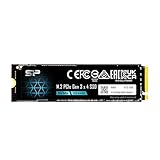


Top 3 picks at a glance
Quick Picks
| Product | Best for | Price |
|---|---|---|
| Sandisk Optimus 5100 500GB NVMe SSD | PCIe 4.0 buyers needing moderate capacity | $109.99 |
| Silicon Power 256GB NVMe M.2 PCIe Gen3x4 2280 SSD | Budget-conscious basic upgrades | $59.97 |
| Kingston NV3 1TB M.2 2280 NVMe SSD | Fast 1TB PCIe 4.0 storage | $156 |
| Silicon Power 1TB NVMe M.2 PCIe Gen3x4 2280 SSD | 1TB capacity in a Gen3x4 format | $161.97 |
| Silicon Power 512GB NVMe M.2 PCIe Gen3x4 2280 SSD | Middle-ground capacity for everyday laptops | $104.97 |
| Sandisk Optimus 5100 1TB NVMe SSD | PCIe 4.0 buyers who need 1TB | $184.99 |
| Silicon Power 2TB NVMe M.2 PCIe Gen3x4 2280 SSD | Large-capacity laptop storage | $254.97 |
| Transcend 256GB MTE110S PCIe 3.0 M.2 2280 SSD | Explicit low-power positioning | $73.99 |
How We Picked
Every drive here is listed in the M.2 2280 format, a common size for upgradeable laptops, but physical fit alone is not enough. We considered whether each drive’s PCIe generation suits an older or newer laptop, whether its capacity makes sense for a primary drive, and how its listed price compares with the other options. We also gave special weight to explicit power-related language rather than assuming that a newer interface or a smaller capacity automatically uses less power.
We did not assign invented wattage figures, battery-life gains, temperatures, benchmark scores, or endurance ratings. Those details were not supplied for this group. Before ordering, verify that your laptop accepts an M.2 2280 NVMe drive, supports the interface you are considering, and has an available M.2 slot.
The 8 Best Picks
1. Sandisk Optimus 5100 500GB NVMe SSD, PCIe 4.0, M.2 2280
The Sandisk Optimus 5100 500GB is a sensible starting point for a laptop owner who wants a PCIe 4.0 NVMe drive without moving up to 1TB. Its 500GB capacity can suit a streamlined work laptop, school machine, or secondary household computer where large local media libraries are not a priority. It is listed in the M.2 2280 format, so it belongs on the compatibility shortlist for laptops using that size. At $109.99, it costs less than the 1TB Optimus 5100 while keeping the same listed PCIe 4.0 interface. Skip it if 500GB will feel tight after accounting for your operating system, applications, and files.
- Pros: PCIe 4.0 interface; lower price than the 1TB Sandisk option.
- Con: No wattage or explicit low-power specification is provided.
2. Silicon Power 256GB NVMe M.2 PCIe Gen3x4 2280 SSD (SP256GBP34A60M28)
This 256GB Silicon Power drive is the lowest-priced pick in the lineup at $59.97, making it best for a basic upgrade where keeping cost down matters more than storing a large library of games, videos, or design files. The listed PCIe Gen3x4 interface is a practical match to consider for laptops built around PCIe 3.0 storage, while the M.2 2280 format keeps it relevant for many upgradeable systems. A 256GB drive is most comfortable for light workloads and disciplined file management. Skip it if this will be your only drive and you expect to keep lots of large files locally.
- Pros: Lowest listed price; PCIe Gen3x4 interface.
- Con: 256GB capacity is limited for a primary laptop drive.
3. Kingston NV3 1TB M.2 2280 NVMe SSD (SNV3S/1000G)
The Kingston NV3 is the performance-forward 1TB option for shoppers whose laptop supports PCIe 4.0 Gen 4×4 storage. It is listed at up to 6000 MB/s, giving buyers a concrete speed specification that the other products here do not provide. The 1TB capacity is a comfortable target for many primary laptops because it leaves more room for applications and personal files than 256GB or 500GB alternatives. At $156, it also costs less than the listed 1TB Silicon Power and Sandisk choices. Skip it if your laptop only supports PCIe 3.0 or if explicit low-power documentation is your top buying requirement.
- Pros: 1TB capacity; listed speeds up to 6000 MB/s.
- Con: The supplied details do not state power consumption.
4. Silicon Power 1TB NVMe M.2 PCIe Gen3x4 2280 SSD (SP001TBP34A60M28)
Choose the 1TB Silicon Power Gen3x4 drive if your laptop is designed around PCIe 3.0 NVMe storage and you want a full 1TB of space in the familiar M.2 2280 format. It provides a straightforward capacity upgrade for a work-from-home laptop, a student system, or a general family computer that needs more room than a 256GB or 512GB drive can offer. Its listed price is $161.97. That places it above the Kingston NV3 1TB in this list, so the value depends heavily on your laptop’s interface compatibility. Skip it if your system supports PCIe 4.0 and you want a listed speed figure for comparison.
- Pros: Spacious 1TB capacity; PCIe Gen3x4 format.
- Con: Higher listed price than the Kingston 1TB option.
5. Silicon Power 512GB NVMe M.2 PCIe Gen3x4 2280 SSD (SP512GBP34A60M28)
The 512GB Silicon Power model is the middle-capacity choice for buyers who find 256GB too restrictive but do not need 1TB. It is a reasonable fit for everyday laptop use involving office applications, web-based work, photos, and a modest local document collection. Like the other Silicon Power entries, it uses the listed M.2 2280 form factor and PCIe Gen3x4 interface. At $104.97, it costs slightly less than the 500GB PCIe 4.0 Sandisk Optimus 5100, though capacity and interface should not be compared without checking your laptop’s support. Skip it if you want ample headroom for large creative projects or game installations.
- Pros: Useful 512GB middle ground; PCIe Gen3x4 interface.
- Con: No explicit low-power claim in the provided details.
6. Sandisk Optimus 5100 1TB NVMe SSD, PCIe 4.0, M.2 2280
The 1TB Sandisk Optimus 5100 is for laptop owners who want the larger capacity version of the PCIe 4.0 Sandisk option. With 1TB available, it is better suited to a primary computer that handles a broader mix of work files, photos, applications, and offline media. Its M.2 2280 form factor and PCIe 4.0 interface make it a candidate for compatible modern laptops, provided the laptop has an open NVMe slot. The listed price is $184.99, which is the premium 1TB PCIe 4.0 price point among these picks. Skip it if you are shopping mainly on price or your laptop uses PCIe 3.0.
- Pros: 1TB capacity; PCIe 4.0 interface.
- Con: More expensive than the other listed 1TB drives.
7. Silicon Power 2TB NVMe M.2 PCIe Gen3x4 2280 SSD (SP002TBP34A60M28)
This 2TB Silicon Power SSD is the capacity leader of the group and the right choice for a laptop that needs to carry substantial local storage. It can be especially appealing for users keeping large photo collections, extensive project folders, or sizable software libraries on one machine. The drive is listed as M.2 2280 with a PCIe Gen3x4 interface, so confirm both the slot and protocol in your laptop before purchase. At $254.97, it is also the most expensive model here. Skip it if your actual storage needs are modest; paying for 2TB makes less sense when a 512GB or 1TB drive will comfortably fit your files.
- Pros: Largest 2TB capacity; PCIe Gen3x4 interface.
- Con: Highest listed price in this roundup.
8. Transcend 256GB MTE110S PCIe 3.0 M.2 2280 SSD, 1600MB/s, Low Power
The Transcend MTE110S is the clearest match for the low-power focus of this guide because its supplied description explicitly says “Low Power.” It is a 256GB PCIe 3.0 M.2 2280 SSD with a listed speed of 1600MB/s, making it most appropriate for light-duty laptops, basic replacements, or users who prioritize documented power positioning over maximum capacity. At $73.99, it costs more than the 256GB Silicon Power option, but it offers the power-related wording that the Silicon Power listing does not. Skip it if you need 1TB or 2TB, or if your workload calls for more storage headroom.
- Pros: Explicit low-power positioning; listed 1600MB/s speed.
- Con: Only 256GB of storage.
Buying Guide
Confirm M.2 2280 NVMe Compatibility
All eight picks are listed as M.2 2280 drives, but not every laptop accepts an M.2 2280 NVMe SSD. Check your laptop’s service manual or existing drive before buying. Also confirm that the slot supports NVMe rather than another storage protocol, and verify whether the laptop has a spare slot or requires replacing its current drive.
Match PCIe Generation to Your Laptop
This list includes PCIe 3.0/Gen3x4 and PCIe 4.0/Gen 4×4 options. A PCIe 4.0 drive may be worth considering for a compatible laptop, while a PCIe Gen3x4 drive can be the more direct fit for an older system. Interface support should guide the decision before price or advertised speed.
Buy Enough Capacity Without Overbuying
For light use, 256GB may be sufficient. A 500GB or 512GB drive offers more flexibility for everyday computing, while 1TB is a stronger all-around choice for a primary laptop. The 2TB Silicon Power model is for users with genuinely large local storage needs. Remember that the operating system and installed software consume part of the advertised capacity.
Our Verdict
For the most direct answer to the low-power question, the Transcend 256GB MTE110S stands out because it is explicitly labeled low power. If you need more space, choose based on laptop compatibility first: the Kingston NV3 offers 1TB, PCIe 4.0 Gen 4×4, and listed speeds up to 6000 MB/s at $156, while the Silicon Power range provides 256GB through 2TB PCIe Gen3x4 options. Confirm manufacturer power specifications before expecting a particular battery-life result from any model not explicitly positioned for low-power use.
FAQ
What is the best low-power NVMe SSD in this list?
The Transcend 256GB MTE110S is the strongest fit because it is the only product whose supplied description explicitly includes “Low Power.”
Will an M.2 2280 SSD fit every laptop?
No. M.2 2280 is a common format, but your laptop must have a compatible M.2 slot that supports NVMe storage. Check the laptop documentation before ordering.
Is 256GB enough for a laptop SSD?
It can be enough for light use, documents, browsing, and a modest application collection. For a primary laptop with more files or software, 500GB, 512GB, or 1TB offers more breathing room.
Should I choose PCIe 3.0 or PCIe 4.0?
Choose the interface your laptop supports. PCIe 4.0 options include the Sandisk Optimus 5100 models and Kingston NV3, while the Silicon Power Gen3x4 models and Transcend MTE110S are listed as PCIe 3.0-class options.


