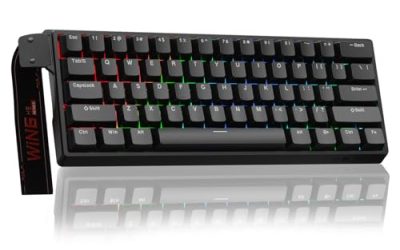
The best acoustic mechanical keyboards for most buyers are gasket-mounted, foam-damped 75% boards, and the Keychron Q1 Max is the strongest all-round pick. “Acoustic” here means a keyboard tuned for how it sounds: a deep, even “thock” with little spring ping or case hollowness. Sound comes from a stack of choices (case, mounting, plate, foam, switch, keycaps), so this guide ranks boards by how well they are built for it and shows what to change if you buy one that is not.
Quick comparison of the picks
| Pick | Best for | Key specs (per manufacturer) | Price range |
|---|---|---|---|
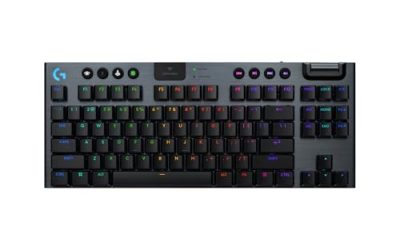
| Keychron Q1 Max | Best overall | 75% layout, CNC aluminum case, gasket mount, hot-swap, QMK/VIA, 2.4 GHz and Bluetooth plus USB-C | Premium |
| Keychron V1 Max | Best budget-minded | 75% layout, plastic case, gasket mount, hot-swap, QMK/VIA, wireless, knob | Mid-range |
| Keychron Q6 Max | Best full-size | 100% layout with numpad, aluminum case, gasket mount, hot-swap, wireless | Premium |
| NuPhy Halo75 V2 | Best out-of-box sound without metal | 75% layout, gasket-style mount, hot-swap, wireless, plastic case with foam | Mid-range to premium |
| MonsGeek M1 V5 (aluminum) | Best value metal board | 75% layout, aluminum case, gasket mount, hot-swap, check variant for wired or wireless | Mid-range |
Models are revised often, so confirm the exact variant, switch type and wireless options on the manufacturer’s page before buying.
What makes a keyboard “acoustic”
Six layers shape the sound. The table below shows what each does and what to look for.
| Layer | Deeper, “thocky” choice | Higher, “clacky” choice |
|---|---|---|
| Case | Thick aluminum (roughly 1.5 to 2 kg total board weight) or dense plastic with foam | Thin, hollow plastic with no damping |
| Mounting | Gasket mount (plate floats on rubber or foam strips) | Tray or top mount with rigid contact |
| Plate | PC, POM or FR4 (flexible, muted) | Brass, steel or aluminum (stiff, brighter) |
| Foam | Case foam, switch-pad foam, plate-side foam | Empty case cavity |
| Switch | Pre-lubed linear, 40 to 50 g spring, longer-pole or smooth housings | Unlubed tactile or clicky with scratchy spring |
| Keycaps | Thick PBT (about 1.5 mm walls), Cherry or OEM profile | Thin ABS, SA or tall profiles can ring |
Gasket mounting, a flexible plate and foam are what most reviewers credit for the soft, rounded sound people call creamy or thocky. That combination is why every pick here uses a gasket design.
Best overall: Keychron Q1 Max
The Q1 Max pairs a CNC aluminum body with a double-gasket mount, case foam and a switch pad, per Keychron’s spec sheet. That gives it a dense, low-pitched sound with little hollow echo from the factory. It also has QMK/VIA remapping, hot-swap sockets and 2.4 GHz wireless, which matters for gaming latency.
Who it suits: anyone who wants a one-box acoustic board with no tinkering. Trade-off: it is heavy (about 2 kg class) and expensive, and its 75% layout drops the numpad.
Best budget-minded: Keychron V1 Max
The V1 Max keeps the gasket mount and the wireless and software features in a plastic case. A plastic body resonates more than aluminum, so the sound is lighter and a bit less deep. Adding a layer of foam to the case and swapping to heavier PBT caps closes much of the gap.
Who it suits: buyers who want a thock-leaning board without paying for metal. Trade-off: less mass means more case noise and less sound refinement.
Best full-size: Keychron Q6 Max
Full-size boards have a bigger, more open cavity, which can sound boomy. The Q6 Max counters this with an aluminum shell and gasket mount, and keeps the numpad for spreadsheets and sims. It is a sensible pick for work and play on one desk.
Who it suits: people who need a numpad and want acoustics. Trade-off: it is wide, heavy and takes mouse space.
Best plastic-case alternative: NuPhy Halo75 V2
NuPhy tunes its sound with foam and a gasket-style structure, and ships with its own switch and keycap options. It suits compact desks and buyers who prefer a lighter board. Trade-off: the sound is slightly lighter than the aluminum Keychron, and keycaps vary by configuration.
Best value metal board: MonsGeek M1 V5
The M1 V5 offers an aluminum gasket-mounted 75% layout at a lower price than the big-name aluminum boards. Variants differ in wired or wireless connectivity and switch type, so check the listing. Trade-off: software and fit-and-finish can feel less polished than the Keychron.
How to choose: a decision matrix
| Your situation | Choose | Why |
|---|---|---|
| Want the best sound with zero modding | Aluminum gasket board (Q1 Max) | Mass and foam are already built in |
| Tight budget, willing to do small mods | V1 Max or NuPhy plus foam and PBT caps | Mods recover much of the deficit |
| Need a numpad | Q6 Max | Aluminum helps tame the larger cavity |
| Competitive FPS, latency first | Any pick on 2.4 GHz or USB-C | Avoid Bluetooth for ranked play |
| Shared office or night use | Linear switches, thick PBT, extra foam | Lower pitch and less impact noise |
| Want to build and tune | Barebones hot-swap kit plus your own switches | Full control over every layer |
Switch choice matters more than people expect
Linear switches with a 40 to 50 g spring are the usual starting point for a deep sound. Tactile switches add a bump sound at the top of the stroke. Clicky switches add a high-pitched click that overrides everything else, so avoid them if acoustics are the goal. Factory-lubed switches reduce spring ping, which is the most common complaint on cheap boards.
Worked example: is lubing switches worth the time?
A 75% board has roughly 82 switches. If you open, lube and reassemble each in about 2 minutes, that is 82 × 2 = 164 minutes, or just under 2 hours 45 minutes, plus stabilizer work. Pre-lubed switches skip that. If your board already ships with lubed linears, spend the time on stabilizers instead: a rattly spacebar is audible on every press and affects the sound more than any single switch.
Cheap mods that help, in order
- Lube and clip the stabilizers. Fixes the rattle on large keys, which is the loudest flaw on most boards.
- Add a layer of case foam. Removes hollow echo from the cavity.
- Add a switch pad (thin foam under the PCB). Softens the bottom-out sound and lowers the pitch.
- Switch to thicker PBT keycaps. Lowers pitch and reduces ring.
- Change the plate material if the board allows. A PC or POM plate is softer than metal.
Test each change on its own so you know what actually helped.
Gaming considerations
An acoustic build does not hurt gaming. Gasket mounts add a little flex, which some players like and others find mushy. For competitive play, use the 2.4 GHz dongle or wired mode, and set the polling rate to 1000 Hz, which these boards typically support. Magnetic (Hall-effect) gaming boards are tuned for rapid triggering rather than sound, so treat them as a separate category.
Frequently Asked Questions
What does “acoustic mechanical keyboard” mean?
It is not an official category. It describes mechanical keyboards built or tuned for pleasant typing sound, usually a deep, soft thock rather than a sharp clack. Gasket mounting, case foam, lubed linear switches and thick keycaps are the common ingredients.
Is thocky the same as quiet?
No. Thocky refers to pitch and tone, not volume. A deep-sounding board can still be loud in a shared room. For lower volume, add foam, use O-rings or soft switches with a short travel, and choose linears rather than clickies.
Does an aluminum case always sound better than plastic?
Not always, but it usually gives a denser, less hollow sound because it adds mass and resists resonance. A well-damped plastic case with foam can sound better than a poorly tuned aluminum one. Mounting style and foam matter at least as much as the case material.
Are linear switches better for acoustics?
Linears are the easier route to a clean, deep sound because there is no tactile bump noise. Tactile switches can sound great too, particularly with a lubed, silent-ish bump, but they are harder to get consistent. Avoid clicky switches if you want a muted profile.
Can I improve a cheap keyboard instead of buying a new one?
Yes, if it has hot-swap sockets and an openable case. Start with stabilizer tuning and case foam, then try heavier PBT keycaps. If the case is glued shut or has a thin hollow shell, the ceiling is lower and a gasket-mounted board is the better investment.
Should I buy wireless for an acoustic build?
Wireless is fine for most users. The battery adds some weight inside the case, and 2.4 GHz is preferable to Bluetooth for games because of lower latency. Wired is simplest if you never move the keyboard.
Related guides
More from Amazon
Programs that pair well with the guide above. Offers and eligibility are set by Amazon and may change.
A free business account with business pricing and bulk-buying tools for work, shop or home office.
Create a business accountFree shipping on eligible items, Prime Video and more. Eligible new members can start with a free trial.
Start a Prime free trialAudiobooks and podcasts to listen to on the go. Eligible new members can start with a free trial.
Try Audible freeAd-free music streaming. Eligible new subscribers can start with a free trial.
Try Music Unlimited freeAs an Amazon Associate we earn from qualifying purchases.