
A blackout can cost more than an evening of downtime. A router rebooting mid-call, a NAS losing write access to a RAID volume, or a gaming rig dying during a patch download are all real consequences of skipping an uninterruptled power supply. The market, however, is crowded with units that share the same VA rating while delivering wildly different runtimes, output waveforms, and surge protection. Narrowing it down requires matching the device to the workload rather than chasing the highest number on the label.
This roundup compares eight units ranging from compact standby models under $70 to premium line-interactive UPS systems above $200, using published specifications and aggregated owner feedback available in 2026. The dividing line between a worthwhile purchase and a regrettable one usually comes down to three things: whether the output waveform is clean enough for active-PFC power supplies, whether the runtime at your actual load is adequate for a graceful shutdown, and whether the outlet layout physically fits your equipment. The products below were selected to cover the most common scenarios buyers encounter.
As an Amazon Associate we earn from qualifying purchases at no extra cost to you.
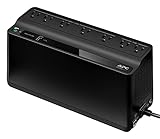


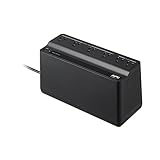


Top 3 picks at a glance
Quick Picks
| Product | Best for | Price |
|---|---|---|
| APC BE600M1 | Home office PC and router | $83.99 |
| CyberPower ST425 | Single entry-level desktop | $59.95 |
| CyberPower CP1500PFCLCD | Active-PFC workstation or NAS | $239.95 |
| CyberPower EC850LCD | Light-duty with eco-mode | $119.95 |
| APC BX1500M | Mid-tower PC with AVR needs | $189.99 |
| APC BE425M | Router and small electronics | $62.50 |
| CyberPower ST625U | Console or modest PC setup | $79.95 |
| CyberPower CP1500AVRLCD3 | Home server with LCD monitoring | $199.95 |
How We Picked
Four criteria drove the shortlist: output waveform compatibility (pure sine wave matters for modern active-PFC supplies, while stepped-approximated sine works fine on older or low-draw electronics), runtime headroom at typical loads rather than rated maximums, physical outlet spacing for bulky power bricks, and surge-protection ratings on the battery-backed outlets. Owner reports on software compatibility and long-term battery replacement costs were weighed as secondary signals.
The 8 Best Uninterrupted Power Supply in 2026
APC BE600M1
This 600VA/330W standby unit suits anyone who needs a single PC and a router to survive a brief outage without spending over ninety dollars. Owner feedback consistently praises the compact footprint and the fact that APC’s PowerChute software handles shutdown sequences reliably across Windows and macOS.
- Proven software ecosystem with straightforward configuration
- Low profile fits behind most desks without cable management gymnastics
- Only six outlets, with limited spacing between the rear ports
Skip it if your system draws more than roughly 300W sustained, or if you need an LCD to check remaining battery at a glance.
CyberPower ST425
At $59.95, the 425VA ST425 is the cheapest credible option for a single entry-level desktop or a budget gaming rig that you simply need to close gracefully. The eight-outlet layout includes surge-only ports for peripherals, which keeps the battery-backed circuit uncluttered.
- Lowest price point in this roundup while still providing surge protection
- Lightweight and small enough for a shelf or under-monitor stand
- Approximate sine wave output can cause buzzing in some active-PFC supplies
Skip it if you pair it with a high-efficiency PSU that demands clean power, or if you need more than a few minutes of runtime at load.
CyberPower CP1500PFCLCD
The 1500VA/1000W pure sine wave CP1500PFCLCD is the go-to choice for NAS arrays, workstations with active-PFC supplies, and anyone whose equipment will refuse to boot on a stepped waveform. Twelve outlets and automatic voltage regulation make it a genuine all-in-one solution.
- Pure sine wave output eliminates the waveform-compatibility risk entirely
- UL-certified construction and a clear LCD showing load, input voltage, and remaining runtime
- Replacement battery cost is high relative to the unit’s own price
Skip it if your total connected load stays well under 400W and you want to keep the purchase under a hundred dollars.
CyberPower EC850LCD
The 850VA Ecologic model targets users who want AVR and an LCD readout without paying premium-tier prices. Its eco-mode cuts power to unused outlets when the main load is low, a feature owners appreciate in dorms or small apartments where multiple low-draw devices share one UPS.
- Switchable eco-mode reduces phantom load on connected peripherals
- Backlit LCD makes remaining runtime readable without software
- Approximate sine wave output limits compatibility with some modern PSUs
Skip it if you need pure sine wave power or if your primary concern is running a high-draw GPU workstation.
APC BX1500M
A line-interactive 1500VA/900W design with AVR, the BX1500M handles brownouts and sags by adjusting voltage rather than switching to battery, preserving cycle life. It is well suited to a mid-tower PC plus a monitor and speakers in areas with unreliable grid voltage.
- Automatic voltage regulation extends battery life during frequent minor fluctuations
- APC’s PowerChute integration provides scheduled shutdowns and email alerts
- Bulky chassis requires dedicated floor or shelf space
Skip it if desk real estate is scarce or if you need a pure sine wave for sensitive audio equipment.
APC BE425M
Rated at 425VA/225W, the BE425M is built for routers, small NAS enclosures, and USB-powered peripherals rather than full desktops. Owners report that it keeps internet equipment alive through short flickers that would otherwise drop a connection mid-update.
- Compact enough to mount vertically behind a desk or attach under a shelf
- Reliable standby switchover with minimal audible transfer noise
- Very limited runtime under anything resembling a real load
Skip it if you expect more than one or two minutes of holdover at 100W or more; it simply is not designed for that.
CyberPower ST625U
The 625VA ST625U sits between toy-tier and serious-tier, offering enough headroom for a small-form-factor PC or a gaming console paired with a TV. The standby topology keeps cost low, and owner reports note solid runtime at roughly half load.
- Reasonable VA rating for the price band, giving useful shutdown windows
- Simple two-button control scheme with no confusing menu system
- No AVR, so it transfers to battery on every minor voltage dip
Skip it if you live in an area with frequent voltage sag, because the lack of AVR will drain the battery faster over time.
CyberPower CP1500AVRLCD3
A line-interactive 1500VA unit with a front LCD and Intelligent Power software, the CP1500AVRLCD3 is aimed at home-server owners who want local monitoring without a dedicated management card. It shares the same form-factor DNA as the PFCLCD but uses stepped-approximated output.
- Detailed LCD and companion software give real-time visibility into input and output conditions
- AVR handles brownouts without battery use, stretching service intervals
- Stepped-approximated sine wave can trigger alerts on some active-PFC supplies
Skip it if your server’s power supply specifically requires a pure sine wave; choose the PFCLCD variant instead.
Buying Guide
Waveform Type and PSU Compatibility
Active-PFC power supplies, common in builds from the last five years, expect a clean sinusoidal input. A stepped-approximated waveform can cause audible coil whine, unexpected shutdowns, or in rare cases damage over time. If your PSU is labeled as active-PFC and draws more than 400W under load, prioritize a pure sine wave model even if it costs more upfront.
Runtime Versus VA Rating
VA ratings are theoretical maximums. A 600VA unit at 330W real power will not last the same duration as a 1500VA unit at 1000W. Estimate your actual draw with a plug-in meter or check your PSU’s efficiency curve, then look at manufacturer runtime charts at 50 percent and 80 percent load. For shutdown purposes, three to five minutes at your real load is sufficient; for bridging short outages, aim for more.
Outlet Spacing and Physical Form Factor
Spec sheets rarely tell you whether a 120W GPU power brick will block neighboring outlets. Compact standby units tend to cluster ports tightly, while tower-style models often space them for larger adapters. If you plan to plug in multiple wall-wort chargers or a transformer-based monitor, confirm physical fitment before purchasing or budget for a short power strip on the surge-only circuit.
Our Verdict
The CyberPower CP1500PFCLCD is the top pick for anyone whose equipment uses an active-PFC supply, because it removes waveform risk entirely while offering AVR and twelve outlets. The APC BE600M1 is the best budget choice for a standard desktop and router combo under $100. However, if you primarily run a NAS that must stay online through brief grid fluctuations, the APC BX1500M wins on runtime and software integration at a lower price than the CP1500PFCLCD.
FAQ
Can I plug a laser printer into a UPS?
No. Laser printers draw a large inrush current during warm-up that can overload a small UPS and trip its internal breaker. Reserve battery-backed outlets for computers, monitors, and network gear; use surge-only ports for peripherals with high instantaneous draw.
How often do UPS batteries need replacement?
Most sealed lead-acid batteries inside consumer UPS units last three to five years under normal use. Environmental temperature is the biggest factor; storing or operating a UPS above roughly 25 degrees Celsius significantly shortens cycle life.
Is AVR the same as voltage regulation?
Yes, automatic voltage regulation is the generic term. Line-interactive UPS models include AVR that corrects minor input sags and spikes without switching to battery, which conserves battery cycles and reduces the chance of unexpected shutdowns.
Will a UPS protect against lightning?
No. A UPS with surge protection can absorb smaller transient spikes, but a direct or nearby lightning strike delivers energy far beyond what consumer-grade MOVs can handle. Use whole-home or panel-level surge protection as the primary defense for storm-prone areas.


