
If you own Milwaukee M18 batteries and need to power something that doesn’t plug into a battery directly—a small appliance, a bench tool, a hobby motor—the search for a reliable milwaukee power supply adapter quickly becomes frustrating. The market is flooded with lookalike third-party units that claim similar wattage numbers but differ wildly in build quality, protection circuits, and real-world endurance. Some handle brief surges without complaint; others overheat on sustained loads or fail within months of daily use.
What separates a good pick from a bad one comes down to three things: whether the unit is an inverter (DC to AC) or a voltage regulator (DC to adjustable DC), how much continuous wattage it actually delivers versus what the label promises, and whether the connection to the battery is secure enough to avoid voltage sag under load. The eight products below span compact 175-watt inverters, budget 300-watt regulators, a 3600-watt jobsite unit, and a raw DIY adapter kit—each solving a different slice of the same underlying problem.
As an Amazon Associate we earn from qualifying purchases at no extra cost to you.




Top 3 picks at a glance
Quick Picks
| Product | Best for | Price |
|---|---|---|
| Milwaukee 2846-20 M18 175W TOP-Off | Reliable AC power from M18 | $118.99 |
| 220W Azocek Power Inverter | Budget AC output, higher wattage | $27.99 |
| Kzreect 300W Voltage Regulator | Adjustable DC bench work | $53.99 |
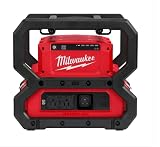
| Milwaukee M18 CARRY ON 3600W/1800W | Jobsite power for demanding tools | $739.99 |
| Azocek 300W Voltage Regulator | General DC-to-adjustable conversion | $53.99 |
| Vortlink 300W Voltage Regulator | Same category, alternate brand | $53.99 |
| 300W Power Voltage Regulator (unbranded) | Lowest-cost 300W DC option | $45.04 |
| Power Wheel Adapter Kit | DIY robotics and RC projects | $9.99 |
How We Picked
For a milwaukee power supply selection, the decisive criteria are output type (AC inverter versus DC voltage regulator), rated continuous wattage relative to your actual load, the robustness of the battery interface under sustained draw, and whether the price justified the protection features included. Owner feedback on thermal behavior, surge handling, and long-term reliability informed the ranking where published specs alone were ambiguous.
The 8 Best Milwaukee Power Supply in 2026
Milwaukee 2846-20 M18 18V 175W TOP-Off Li-Ion Compact Inverter Power Supply
This is the only inverter on the list that Milwaukee itself designed for the M18 platform, and that pedigree shows. It converts battery DC to usable AC power in a package small enough to toss in a tool bag, making it ideal for charging laptops, running small radios, or powering low-draw equipment on a job site without hauling a generator.
- Pro: Genuine Milwaukee compatibility means the TOP-Off circuit correctly reads M18 fuel gauge data and avoids over-discharge damage to the battery.
- Pro: Compact footprint and integrated battery mount eliminate the need for separate cables or adapters.
- Con: 175 watts continuous output limits it to small electronics; it will trip on anything with a motor surge beyond roughly 300 watts.
Skip this if you need more than 175 watts of AC or if you want adjustable DC output instead. The price is the highest among inverters here, and third-party alternatives deliver more wattage per dollar.
220W Azocek Power Inverter Compatible with Milwaukee 18V Battery
At under twenty-eight dollars, this unit undercuts the official Milwaukee inverter by a wide margin while pushing 220 watts of rated AC output. It suits homeowners or weekend mechanics who occasionally need a battery-powered AC source for a phone charger, a small fan, or a laptop during a power outage and are unwilling to spend over a hundred dollars for that privilege.
- Pro: Best wattage-per-dollar ratio of any AC inverter in this roundup.
- Pro: Standard AC outlets accept common two- and three-prong plugs without adapters.
- Con: Owner reports on sustained loads near the 220-watt ceiling note significant heat buildup and occasional shutdowns, suggesting the rating is a peak rather than a reliable continuous figure.
Skip this if you plan to run it near full capacity for extended periods or if you need precise voltage regulation on the AC side. For intermittent low-to-mid draw, it is a reasonable budget entry.
Kzreect 300W Voltage Regulator Compatible with Milwaukee 18V Battery
This product is not an inverter. It is a DC-to-adjustable-DC voltage regulator that steps the raw 18-volt battery output down (or up within range) to a selectable 2 to 30 volts, making it the right milwaukee power supply for bench electronics, hobby motors, LED arrays, or anything that runs on variable DC.
- Pro: Wide 2 to 30-volt output range covers most low-voltage DC projects in a single unit.
- Pro: Direct battery mount means no additional wiring harness required for basic use.
- Con: No AC output whatsoever, so it cannot power wall-plug devices regardless of adapter size.
Skip this if your goal is to run household electronics or power tools with AC motors. If you already know you need variable DC and want a tidy, battery-mounted solution, the 300-watt ceiling is generous for most hobby applications.
Milwaukee M18 CARRY ON 3600W/1800W Power Supply (Bare Tool)
The CARRY ON is in a different weight class from everything else on this list. Rated at 3600 peak and 1800 continuous watts, it is designed to run demanding corded tools—sawzalls, compressors, small panel saws—directly off M18 batteries in a portable, no-gas form factor. This is the milwaukee power supply for professionals who need serious AC output on site without a fuel-powered generator.
- Pro: 1800 watts continuous is enough for most single-corded-tool jobs, with headroom for motor start-up surges up to 3600.
- Pro: Milwaukee build quality, integrated battery management, and a form factor designed for jobsite abuse.
- Con: The bare-tool price of roughly $740 excludes batteries, which are necessary for operation, pushing the true cost well above $800 for a functional setup.
Skip this if your loads are under 300 watts or if budget is a primary concern. The CARRY ON is overkill for phone charging or small appliances and makes sense only when you regularly run high-draw corded equipment off battery power.
Azocek 300W Voltage Regulator Compatible with Milwaukee 18V Battery
Functionally identical in specification to the Kzreect model above—a 300-watt DC-to-adjustable-DC regulator for 18-volt M18 batteries—this Azocek unit enters the market at the same $53.99 price point. It targets the same buyer: hobbyists, makers, and small-shop owners who want variable DC output without a wall-powered bench supply.
- Pro: 300-watt headroom handles DC loads that smaller regulators would struggle with, such as mid-size motors or dense LED panels.
- Pro: Compact, battery-mounted design keeps the workbench free of external power bricks.
- Con: Limited brand visibility and shorter track record compared to Milwaukee-made products, making long-term support and replacement parts harder to source.
Skip this if you want the most established name for a voltage regulator or if your load exceeds 300 watts. For general adjustable-DC use, it occupies the same niche as the Kzreect and Vortlink entries.
Vortlink 300W Voltage Regulator Compatible with Milwaukee 18V Battery
The Vortlink 300-watt regulator completes the trio of identically specced, identically priced third-party voltage regulators in this roundup. Like the Kzreect and Azocek models, it converts M18 battery power into adjustable DC within a 2 to 30-volt window at up to 300 watts continuous.
- Pro: Price-matched to competitors while offering the same wattage envelope, giving buyers no financial reason to avoid it.
- Pro: Battery-direct mounting eliminates cable clutter on the bench.
- Con: No distinguishing feature sets it apart from the other two 300-watt regulators at the same price, making brand selection largely arbitrary.
Skip this if you are comparing units hoping to find a meaningful spec difference between the three identically priced 300-watt regulators—there is not one in the published data. Any of the three will serve the same purpose.
300W Power Voltage Regulator Compatible with Milwaukee 18V Battery
Sold without a prominent brand name, this unit is the least expensive entry in the 300-watt voltage regulator category at just under $46. The specification sheet mirrors the Kzreect, Azocek, and Vortlink models: 300 watts of adjustable DC output from an M18 battery pack, with no meaningful wattage or voltage-range advantage either way.
- Pro: Roughly $9 cheaper than the branded equivalents, which matters if you are building a multi-unit setup on a tight hobby budget.
- Pro: Same 300-watt rating and 2 to 30-volt output window as the alternatives.
- Con: Absence of a recognizable brand raises questions about quality-control consistency and what recourse exists if the unit fails outside a short return window.
Skip this if brand reputation or warranty support influences your buying decision. The $9 savings is real, but it is small enough that paying the $53.99 price for a named brand is a defensible choice for most buyers.
Power Wheel Adapter for Milwaukee M18 Battery
This is the most stripped-down option in the lineup: a raw conversion kit consisting of a battery adapter, a switch, an inline fuse, wire terminals, 12-gauge wire, and a power connector. It does not regulate voltage, invert to AC, or offer any protection beyond the fuse. It is designed for DIY builders wiring M18 packs into RC cars, small robotics projects, or custom equipment where the builder handles their own regulation downstream.
- Pro: At $9.99, it is by far the cheapest way to extract battery power for a custom project.
- Pro: 12-gauge wire and included fuse provide a safe baseline for moderate current draw without additional sourcing.
- Con: No voltage regulation or output control—the 18-volt raw battery feed is all you get, and you must design your own circuit protection beyond the fuse.
Skip this if you need a plug-and-play milwaukee power supply or have no experience with custom wiring. For experienced builders who already own regulators or ESCs and simply need a reliable battery-to-project interface, it is a smart accessory.
Buying Guide
AC Inverter or DC Voltage Regulator: Match the Output to the Load
The first decision is whether your device accepts AC wall power or runs on DC. M18 batteries supply raw DC. An inverter converts that to AC; a voltage regulator adjusts DC to a selectable level. Choosing wrong means the unit is useless regardless of wattage. Laptops, radios, and corded tools need an inverter. Motors, LEDs, hobby circuits, and electronics projects need a voltage regulator.
Continuous Wattage Versus Peak Rating
Published wattage figures on budget units often represent peak or theoretical maximums rather than sustained output. Look for owner feedback mentioning thermal behavior at load—repeated reports of shutdowns or excessive heat near the stated ceiling are a strong signal that continuous output is lower than advertised. The CARRY ON’s 1800-watt continuous / 3600-watt peak split is a clear example of an honest dual rating.
Battery Interface Quality and Safety Protections
A loose or poorly machined battery mount causes voltage sag under load, which stresses the battery and destabilizes output. Check that the unit includes over-discharge protection (the TOP-Off circuit on the Milwaukee 2846 is the benchmark here), short-circuit protection, and thermal cutoffs. On raw adapter kits like the Power Wheel, you supply your own protections, so assess whether your downstream electronics already handle them.
Our Verdict
For most users seeking a milwaukee power supply that converts M18 battery energy into safe, plug-in AC power, the Milwaukee 2846-20 remains the best overall choice in 2026 thanks to its correct battery communication, compact form, and dependable 175-watt output backed by a mature support network. The budget pick is the 220W Azocek Inverter at $27.99, which delivers more rated watts per dollar for intermittent, lower-stakes use despite thermal concerns at sustained load. If your primary need is adjustable DC for bench work or hobby projects, any of the 300-watt voltage regulators will serve equally well, and the unbranded unit at $45.04 is the most cost-effective entry point into that category.
FAQ
Can a Milwaukee M18 power supply run a space heater?
No. A typical small space heater draws 750 to 1500 watts, far beyond what any M18-compatible inverter here supplies continuously. The CARRY ON’s 1800-watt output could technically power one, but the battery drain would be so extreme that runtime would be measured in minutes rather than hours, and the cost of a single large battery needed for meaningful runtime makes it impractical.
Are the third-party voltage regulators safe for my M18 battery?
Published specs suggest they draw from the battery without dedicated over-discharge cutoffs that Milwaukee’s own TOP-Off system provides. Owner feedback is mixed on long-term battery health when using these units daily. If you use one, avoid draining the pack below roughly 20 percent and remove it once the regulator’s low-voltage indicator appears, if equipped.
What does “bare tool” mean on the CARRY ON listing?
Bare tool means the unit ships without batteries or a charger, consistent with Milwaukee’s convention for standalone power tools. You must supply your own M18 battery packs for operation, which adds to the effective purchase price.
Is the Power Wheel Adapter compatible with non-M18 batteries?
No. The adapter’s mechanical keying and terminal layout are specific to the Milwaukee M18 battery form factor. Attempting to force other battery styles risks short circuits, poor contact, or physical damage to both the battery and the adapter.


