The best Ryzen 7 CPU for gaming in 2026 is the Ryzen 7 9800X3D for most high-end builds, the Ryzen 7 7800X3D if you want a cheaper AM5 option, and the Ryzen 7 5700X3D if you are staying on an AM4 board. The newer Ryzen 7 9850X3D adds a slightly higher clock for a higher spend. All of them are 8-core, 16-thread chips, so the real choice is between 3D V-Cache, platform and spend.
Quick Answer: Which Ryzen 7 Should You Buy?
| Your situation | Pick | Platform |
|---|---|---|
| Fastest gaming, spend is secondary | Ryzen 7 9850X3D or 9800X3D | AM5, DDR5 |
| Best value high-end gaming on AM5 | Ryzen 7 7800X3D | AM5, DDR5 |
| Good gaming plus productivity, no V-Cache | Ryzen 7 9700X | AM5, DDR5 |
| Cheaper AM5 entry for 8 cores | Ryzen 7 7700X or 7700 | AM5, DDR5 |
| Upgrade an AM4 board for gaming | Ryzen 7 5700X3D or 5800X3D | AM4, DDR4 |
| Cheapest 8-core on AM4 | Ryzen 7 5700X | AM4, DDR4 |
| No graphics card yet | Ryzen 7 5700G | AM4, DDR4 |
The pattern behind this table is simple. In games, extra L3 cache from AMD 3D V-Cache matters more than raw clock speed. That is why a 7800X3D often beats a higher-clocked 9700X in cache-sensitive games, according to published reviews.
How We Chose These Ryzen 7 CPUs
This guide is research-based. We did not use these processors ourselves. Picks come from AMD specification sheets, the Wikipedia list of AMD Ryzen processors, store listings and published editorial reviews. We applied five rules.
- Eight cores and 16 threads on every pick, because that is the Ryzen 7 definition.
- 3D V-Cache first for pure gaming, since cache has the biggest effect on frame rates and minimum frame rates.
- Platform cost counted, including motherboard and memory type (DDR5 for AM5, DDR4 for AM4).
- Current availability as a new retail chip. Older models are mentioned only where a store listing exists.
- No exact prices. We use spend tiers because prices change often.
Ryzen 7 Gaming CPUs Compared
| CPU | Cores / threads | Base / boost | L3 cache | TDP | Socket | Released |
|---|---|---|---|---|---|---|
| Ryzen 7 9850X3D | 8 / 16 | 4.7 / 5.6 GHz | 96 MB | 120 W | AM5 | Jan 2026 |
| Ryzen 7 9800X3D | 8 / 16 | 4.7 / 5.2 GHz | 96 MB | 120 W | AM5 | Nov 2024 |
| Ryzen 7 7800X3D | 8 / 16 | 4.2 / 5.0 GHz | 96 MB | 120 W | AM5 | Apr 2023 |
| Ryzen 7 9700X | 8 / 16 | 3.8 / 5.5 GHz | 32 MB | 65 W | AM5 | Aug 2024 |
| Ryzen 7 7700X | 8 / 16 | 4.5 / 5.4 GHz | 32 MB | 105 W | AM5 | Sep 2022 |
| Ryzen 7 5800X3D | 8 / 16 | 3.4 / 4.5 GHz | 96 MB | 105 W | AM4 | Apr 2022 |
| Ryzen 7 5700X3D | 8 / 16 | 3.0 / 4.1 GHz | 96 MB | 105 W | AM4 | Jan 2024 |
| Ryzen 7 5700X | 8 / 16 | 3.4 / 4.6 GHz | 32 MB | 65 W | AM4 | Apr 2022 |
| Ryzen 7 5700G | 8 / 16 | 3.8 / 4.6 GHz | 16 MB | not confirmed | AM4 | 2021 |
Specs come from AMD figures as listed on Wikipedia, and for the 9850X3D from published coverage of its launch. The 5700G includes built-in graphics.
1. AMD Ryzen 7 9800X3D: Best Overall for Gaming
- Cores / threads: 8 / 16 (Zen 5)
- Clocks: 4.7 GHz base, 5.2 GHz boost
- L3 cache: 96 MB with 3D V-Cache
- TDP: 120 W, Socket AM5
- Tier: premium
Best for: high-refresh 1080p and 1440p gaming where the processor is the limit. Skip if: you mostly play at 4K with a mid-range graphics card, where the gap to cheaper chips narrows.
This is the chip most editorial reviews name as the gaming leader of the last two years. It pairs 96 MB of L3 with a high boost clock and runs on a platform that will keep getting new AMD chips. If you want one processor for a long-lived build, this is it.
Pros: top-tier gaming, strong minimum frame rates, long AM5 life. Cons: premium tier, DDR5 and AM5 board required, a good cooler is advised.
2. AMD Ryzen 7 9850X3D: Fastest Ryzen 7 for Gaming
- Cores / threads: 8 / 16
- Clocks: 4.7 GHz base, 5.6 GHz boost
- L3 cache: 96 MB (64 MB stacked plus 32 MB on die)
- TDP: 120 W, Socket AM5
- Release: January 2026
- Tier: premium
Best for: buyers who want the very top of the Ryzen 7 range. Skip if: you care about spend per frame, since the 9800X3D gets close.
The 9850X3D keeps the same core layout as the 9800X3D but boosts 400 MHz higher. Published coverage from GamersNexus found it at best around 4 percent faster than the 9800X3D in games and sometimes identical. That makes it an enthusiast pick rather than a value pick.
Pros: highest clocks in the Ryzen 7 line, same platform as the 9800X3D. Cons: premium tier, small gain over the 9800X3D.
3. AMD Ryzen 7 7800X3D: Best Value High-End Gaming CPU
- Cores / threads: 8 / 16 (Zen 4)
- Clocks: 4.2 GHz base, 5.0 GHz boost
- L3 cache: 96 MB with 3D V-Cache
- TDP: 120 W, Socket AM5
- Tier: upper mid-range to premium
Best for: gamers who want near-top performance at a lower spend than the 9000 series X3D chips. Skip if: you need the newest platform features beyond AM5 basics.
Released in April 2023, the 7800X3D remains a strong gaming processor because 96 MB of L3 helps the games that depend on cache. It uses the same AM5 socket as the 9800X3D, so a later upgrade is simple. Stock levels and spend have changed over time, so check the current listing.
Pros: excellent gaming, lower power draw than many rivals, AM5 upgrade path. Cons: slower than the 9800X3D, lower multi-core output than 12-core chips.
4. AMD Ryzen 7 9700X: Best Non-X3D Ryzen 7
- Cores / threads: 8 / 16 (Zen 5)
- Clocks: 3.8 GHz base, 5.5 GHz boost
- L3 cache: 32 MB
- TDP: 65 W, Socket AM5
- Tier: mid-range
Best for: mixed gaming and productivity with a low power draw. Skip if: your priority is the highest gaming frame rates, where X3D chips win.
The 9700X is rated at 65 W, so it is easy to cool and to power. Without 3D V-Cache it trails the X3D chips in many games, but it gives strong all-round performance and runs quietly. It also suits buyers who plan to add a V-Cache chip later on the same board.
Pros: efficient, easy to cool, strong productivity. Cons: less gaming performance than X3D models.
5. AMD Ryzen 7 7700X: Best Budget Entry to AM5
- Cores / threads: 8 / 16 (Zen 4)
- Clocks: 4.5 GHz base, 5.4 GHz boost
- L3 cache: 32 MB
- TDP: 105 W, Socket AM5
- Tier: mid-range
Best for: an AM5 build on a tight budget. Skip if: a 7800X3D or 9700X is available at a similar spend.
The 7700X was the first Ryzen 7 on AM5 and is the lowest-cost way to start an AM5 platform with eight cores. Its sibling, the Ryzen 7 7700, has the same 8-core layout at a 65 W rating and a 3.8 GHz base clock. Both are good enough for 1080p and 1440p gaming with a mid-range graphics card.
Pros: lower entry point to AM5, solid gaming. Cons: runs warm for its tier, older than the 9000 series.
6. AMD Ryzen 7 5700X3D: Best AM4 Upgrade for Gaming
- Cores / threads: 8 / 16 (Zen 3)
- Clocks: 3.0 GHz base, 4.1 GHz boost
- L3 cache: 96 MB with 3D V-Cache
- TDP: 105 W, Socket AM4
- Tier: mid-range
Best for: owners of an AM4 board and DDR4 memory who want a big gaming upgrade without replacing the platform. Skip if: you are building a new PC. An AM5 chip is a better long-term base.
Released in January 2024, the 5700X3D brings 96 MB of L3 to AM4 at lower clocks than the 5800X3D. For a Ryzen 5 3600 or 5600 owner it is often the most cost-effective gaming upgrade, because the board and RAM stay the same. Check your board BIOS supports it before you buy.
Pros: large cache on a cheap platform, drop-in upgrade, easy to cool. Cons: end-of-line socket, locked multiplier.
7. AMD Ryzen 7 5800X3D: Best AM4 Gaming CPU
- Cores / threads: 8 / 16 (Zen 3)
- Clocks: 3.4 GHz base, 4.5 GHz boost
- L3 cache: 96 MB with 3D V-Cache
- TDP: 105 W, Socket AM4
- Tier: mid-range to upper mid-range
Best for: maximum gaming from an AM4 board. Skip if: the 5700X3D is available for noticeably less, since the real-world gap is small.
The 5800X3D launched in April 2022 as the first V-Cache desktop chip and became a long-running AM4 favourite. It has higher clocks than the 5700X3D. Two listings exist for this chip, so confirm you are buying a new retail unit.
Pros: strongest AM4 gaming chip, mature platform. Cons: end-of-line socket, no overclocking of the multiplier.
8. AMD Ryzen 7 5700X: Best Budget 8-Core on AM4
- Cores / threads: 8 / 16 (Zen 3)
- Clocks: 3.4 GHz base, 4.6 GHz boost
- L3 cache: 32 MB
- TDP: 65 W, Socket AM4
- Tier: budget to mid-range
Best for: a low-cost 8-core upgrade with low heat. Skip if: you can afford a V-Cache model for gaming.
The 5700X is rated at 65 W and works with modest coolers. It is strong for streaming, editing and everyday work, and good enough for gaming with a mid-range graphics card. A listing shows the retail chip without a cooler, so plan to buy one.
Pros: cheap, efficient, wide board support. Cons: trails V-Cache models in games.
9. AMD Ryzen 7 5700G: Best Ryzen 7 for Gaming Without a Graphics Card
- Cores / threads: 8 / 16 (Zen 3)
- Clocks: 3.8 GHz base, 4.6 GHz boost
- L3 cache: 16 MB
- Socket: AM4 with Radeon graphics built in
- Tier: budget to mid-range
Best for: a starter PC that plays lighter games before you add a graphics card. Skip if: you will install a graphics card right away. A 5700X or 5700X3D gives more for the spend.
The 5700G combines eight cores with built-in Radeon graphics. It handles esports and older games at lower settings and gives you a working PC while you save for a graphics card. Dual-channel memory matters a lot for the built-in graphics.
Pros: no graphics card needed, 8 cores, low heat. Cons: smaller cache than other picks, modern games limited at lower settings.
Buying Guide: How to Pick a Ryzen 7 for Gaming
Start with the platform
| Platform | Memory | Good for | Cost note |
|---|---|---|---|
| AM5 | DDR5 | New builds, long-term upgrades | Higher board and memory spend |
| AM4 | DDR4 | Existing boards, tight budgets | Lowest total spend, end of line |
Then decide whether you need 3D V-Cache
- Yes if you play competitive shooters, simulation or strategy games, or you chase high refresh rates. V-Cache helps most here.
- No if you mostly stream, edit, or play at 4K with a mid-range card. A 9700X or 5700X covers this at a lower spend.
Match the processor to your graphics card
| Graphics card class | Sensible Ryzen 7 |
|---|---|
| Entry level (1080p) | 5700X, 7700 |
| Mid-range (1080p to 1440p) | 5700X3D, 7700X, 9700X |
| Upper mid-range (1440p) | 7800X3D, 5800X3D |
| High-end (1440p to 4K) | 9800X3D, 9850X3D |
Plan the cooler and motherboard
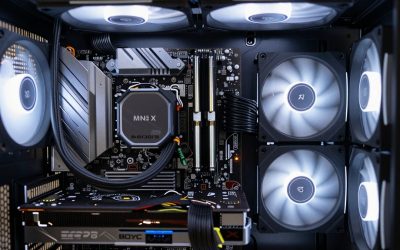
- X3D chips with a 120 W rating benefit from a good dual-tower air cooler or a 240 to 360 mm AIO.
- 65 W chips such as the 9700X and 5700X are happy with a mid-range tower.
- Retail Ryzen 7 chips on AM5 are sold without a cooler in typical packages, so budget for one.
- For AM4, confirm your board BIOS supports the exact chip before buying.
What 3D V-Cache Actually Changes in Games
AMD 3D V-Cache stacks an extra layer of L3 cache on top of the cores. A standard Ryzen 7 such as the 9700X or 7700X has 32 MB of L3, while the X3D versions carry 96 MB. Games repeatedly fetch the same data for physics, AI and world state, and a larger cache keeps more of that data close to the cores instead of in slower system memory.
- Biggest gains show up in processor-limited situations: high refresh rate shooters, large strategy maps, simulation games and busy open worlds.
- Smaller gains show up at 4K with a mid-range graphics card, where the graphics card is the limit and the processor waits.
- Little to no gain appears in office, browsing and most media work, where a standard Ryzen 7 does just as well.
Exact differences vary by game, settings, graphics card and patch, so treat any single number you see as a snapshot rather than a rule.
Gaming vs Productivity: What Each Ryzen 7 Is Best At
| Use | Best fit | Why |
|---|---|---|
| High refresh rate gaming | 9850X3D, 9800X3D, 7800X3D | 96 MB L3 and high boost clocks |
| Gaming on an old AM4 board | 5700X3D, 5800X3D | 96 MB L3 without a new platform |
| Streaming and editing | 9700X, 5700X | Eight efficient cores at 65 W |
| Quiet small-form-factor build | 9700X, 5700X | Low power and heat |
| First PC without a graphics card | 5700G | Built-in Radeon graphics |
All Ryzen 7 chips share the same eight-core, 16-thread layout, so multi-core workloads such as video export finish in similar time within a generation. If heavy rendering is your main task, a 12-core or 16-core Ryzen 9 is a better fit than any Ryzen 7.
AM5 Setup Notes for Ryzen 7 Buyers
- Pick a B650 or B850 class board for most Ryzen 7 builds. Higher-end boards add extra connectivity, not extra gaming performance.
- Use DDR5 in a two-stick kit. Dual channel is the standard configuration, and AMD EXPO profiles set rated speeds in the BIOS.
- Update the BIOS before installing a newer chip if the board is old stock. A board that predates the 9000 series may need a BIOS flash to recognise it.
- Install the chipset driver from AMD so power and boost behaviour are correct in Windows.
- Add a decent cooler. Retail packaging for many Ryzen 7 chips has no cooler, so a tower or AIO is part of the build.
AM4 Upgrade Notes for Ryzen 7 Buyers
- Find your exact board model and open the maker CPU support page.
- Look for the minimum BIOS version for the 5700X3D, 5800X3D or 5700X.
- Flash the BIOS before swapping while the old processor is still installed.
- Reuse DDR4 and check that your memory profile is still enabled afterwards.
- Check cooler capacity. A 105 W-class chip needs a better cooler than a basic stock-class heatsink.
Common Mistakes When Buying a Ryzen 7 for Gaming
- Paying for the 9850X3D when a 9800X3D or 7800X3D gives similar results in the games you play.
- Buying a standard Ryzen 7 for a processor-limited game and expecting X3D-level frame rates.
- Forgetting platform cost. The chip is one line of the budget. The board, DDR5 and cooler can cost as much.
- Ignoring the graphics card. A top Ryzen 7 with an entry-level card will not run much faster than a mid-range chip with the same card.
- Buying an AM4 chip for a new build. AM4 is end of line, so choose it only to upgrade an existing board.
Worked Example: Cost per Platform
A simple way to compare is to count what you must buy together with the chip.
| Item | AM4 (5700X3D) | AM5 (7800X3D) |
|---|---|---|
| Processor | Yes | Yes |
| New motherboard | Not needed if you own AM4 | Required |
| New memory | Not needed if you own DDR4 | DDR5 required |
| Cooler | Reuse a 105 W-class cooler | New AM5-compatible cooler may be needed |
| Total parts to buy | 1 part | 3 or 4 parts |
If you already own a working AM4 board, the 5700X3D is the shortest path to a big gaming gain. If you are starting fresh, the extra parts for AM5 buy you a platform with a future upgrade path.
Frequently Asked Questions
What is the best Ryzen 7 for gaming?
The Ryzen 7 9800X3D is the best overall for most builds. The 9850X3D is slightly faster, and the 7800X3D is the better value pick on AM5.
Is Ryzen 7 better than Ryzen 5 for gaming?
Not by much in many games. Ryzen 7 adds two cores, but a Ryzen 5 with V-Cache can match or beat a non-X3D Ryzen 7. Cache matters more than core count for gaming.
Is the Ryzen 7 7800X3D still worth buying in 2026?
Yes, if the current spend is reasonable. It uses AM5, has 96 MB of L3 and stays close to newer X3D chips in games.
Do I need a cooler for a Ryzen 7?
Yes. Retail packages for many Ryzen 7 chips come without a cooler. Pair 120 W X3D chips with a good tower or AIO, and 65 W chips with a mid-range tower.
Should I buy AM4 or AM5 in 2026?
Buy AM5 for a new build, because it has newer chips and DDR5. Choose AM4 only if you already own a compatible board and DDR4 memory.
Is the Ryzen 7 9700X good for gaming?
Yes. It is efficient and fast, but X3D chips lead in many games. It is a good pick if you also work on the PC.
Does the Ryzen 7 5700G need a graphics card?
No. It has Radeon graphics built in and can run lighter games. A discrete card is better for modern titles.
Sources
- Wikipedia, List of AMD Ryzen processors
- AMD, Ryzen desktop processor product pages
- GamersNexus, AMD Ryzen 7 9850X3D review
- PCGamesN, AMD Ryzen 7 9850X3D guide
- Club386, AMD Ryzen 7 9850X3D specs
Last updated: October 2026