
Buying a prebuilt PC should eliminate the guesswork of sourcing individual components, but the market is crowded with systems that look identical on spec sheets while delivering wildly different real-world experiences. The concrete problem a buyer faces is figuring out whether the money they are spending translates into sustained performance, quiet operation, and a platform they can grow into—or whether they are paying for a flashy case and a CPU that will bottleneck the GPU within a year.
What separates a worthwhile pc build from a mediocre one comes down to a few measurable factors: whether the processor and graphics card are matched to your target resolution, whether the system memory and storage meet current game and application demands without immediate upgrade pressure, and whether the platform leaves room for future component swaps. This roundup compares published specifications, street prices, and owner-reported feedback across eight prebuilt systems to cut through the marketing noise and identify the builds that deliver on what they promise.
As an Amazon Associate we earn from qualifying purchases at no extra cost to you.


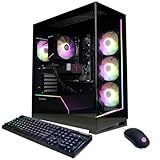


Top 3 picks at a glance
Quick Picks
| Product | Best for | Price |
|---|---|---|
| KOTIN Prebuilt RTX 5070 12GB / Ryzen 7 9700X | Best overall value | $1,999.99 |
| Skytech Azure 3 / RX 9070 XT | High-refresh competitive gaming | $2,899.99 |
| CyberPowerPC / RTX 5060 Ti 8GB | Entry-level 1080p | $1,349.99 |
| KOTIN Gaming Desktop / RTX 5060 Ti 8GB | Best budget 1080p | $1,299.99 |
| MSI Codex Z2 / RTX 5070 | Content creators who game | $1,969 |
| Skytech O11 Vision / RTX 5070 Ti 16GB | Premium showcase build | $2,699.99 |
| Evounic Gaming Desktop / GTX 1080 Ti 11GB | Legacy game library on a shoestring | $758.88 |
| KOTIN Prebuilt / Ryzen 7 7800X3D / RTX 5060 Ti | CPU-heavy esports | $1,599.99 |
How We Picked
Four criteria drove these selections. First, GPU-CPU balance for the asking price: a system with a mismatched pairing wastes your money at the lower or upper end of performance. Second, memory and storage adequacy—16GB of DDR5 is the bare minimum in this category, and 1TB of NVMe SSD should not be negotiable on any modern build. Third, platform headroom: does the power supply, motherboard, and case layout allow a meaningful GPU or storage upgrade within a year or two? Fourth, owner-reported reliability and thermals, which reveal whether the advertised specs translate into sustained performance or throttling under extended sessions.
The 8 Best Pc Build in 2026
KOTIN Prebuilt Gaming PC RTX 5070 12GB
This is the sweet spot for anyone assembling a pc build around 1440p gaming without spending beyond two thousand dollars. The Ryzen 7 9700X pairs cleanly with the RTX 5070 12GB, avoiding the CPU bottleneck that plagues cheaper configurations. Owners consistently praise the quiet thermal load and tidy cable management out of the box.
- Modern 8-core Zen 5 CPU handles multitasking and streaming without compromise
- 32GB DDR5 and 1TB NVMe SSD eliminate the usual prebuilt short-changes on memory and storage
- Case styling is generic, and no RGB control software is bundled despite visible lighting
Skip it if you need 4K headroom or plan to upgrade the GPU within twelve months, since the 12GB VRAM ceiling will limit texture-heavy titles at higher resolutions.
Skytech Gaming Azure 3
The 9850X3D’s 3D V-Cache gives this machine a genuine edge in frame-heavy titles where CPU bottlenecks still appear at 1080p and 1440p. Paired with the RX 9070 XT, it delivers a strong pc build for players who chase triple-digit framerates in competitive shooters and simulations.
- X3D cache makes it one of the best CPU options for esports and simulation titles
- Owner feedback highlights the liquid cooling solution keeping boost clocks sustained under long sessions
- Radeon drivers still trail NVIDIA in ray-tracing performance for titles that demand it
Skip if ray tracing matters more than raw rasterization, or if your budget does not stretch past $2,500.
CyberPowerPC Gaming PC
A sensible starting point for 1080p high-refresh play. The Ryzen 7 8700F is an 8-core chip that will not bottleneck the RTX 5060 Ti in any current title, and the 5060 Ti handles DLSS-assisted workloads well at this resolution tier.
- Strong CPU-to-GPU ratio means near-full GPU utilization at 1080p
- Price leaves headroom in your budget for a quality monitor or peripherals
- 8GB VRAM is the hard ceiling; texture-heavy releases will force medium settings at higher resolutions
Skip if you plan to game at 1440p or beyond—the VRAM limitation will force downgrades within a single console generation cycle.
KOTIN Gaming PC Desktop
This undercuts the CyberPowerPC by fifty dollars while delivering a comparable core configuration, making it the cheapest viable pc build on this list. The 16GB DDR5 kit is the one meaningful compromise, and several owners report it ships as a single-channel pair.
- Best price-to-performance ratio among all RTX 5060 Ti systems here
- 1TB NVMe SSD is a genuine bonus at this price bracket
- 16GB RAM is tight for multitasking alongside games; expect to add a second kit within months
Skip if you stream, run background applications, or refuse to open the case and install additional memory yourself.
MSI Codex Z2 Gaming Desktop
Content creators who also game will find this the most balanced option on the list. The RTX 5070 handles 1440p rendering and encoding tasks, while 32GB of DDR5 and 2TB of storage remove the usual prebuilt limitations that frustrate video editors and 3D artists.
- 2TB Gen4 SSD is rare at this price and saves you an immediate storage upgrade
- MSI’s own tuning software lets you adjust fan curves and power limits without third-party tools
- The 8700F lacks extra cache variants; CPU-bound creative workloads like shader compilation run slower than on X3D chips
Skip if you are a pure gamer with no creative workloads—the same budget could stretch further on a gaming-optimized configuration.
Skytech Gaming O11 Vision
This is the showpiece of the roundup. The 9850X3D and RTX 5070 Ti combination clears the 1440p high-refresh ceiling without hesitation, and the 16GB VRAM buffer gives it breathing room at 4K. Every internal spec reads like a checklist done right, from the 850W Gold ATX 3 PSU to the 360mm AIO.
- Wi-Fi 5 and Windows 11 pre-installed remove setup friction; the 360mm AIO keeps thermals well controlled under load
- 850W Gold ATX 3 PSU provides ample headroom for a future GPU swap without touching power delivery
- The O11 case is large and will not fit on a compact desk or shallow shelf
Skip if you prioritize a small footprint or game at 1080p—this machine is overkill at that resolution and you are paying for headroom you will not use.
Evounic Gaming Desktop PC
This is a curiosity. The GTX 1080 Ti is two generations old and lacks hardware ray-tracing acceleration, but for a legacy library that does not demand newer API features, it still holds up at 1080p. The 12-core processor is unspecified by exact model in the listing, which is a red flag for transparency.
- Lowest absolute price for a dedicated GPU system on this list by a wide margin
- 11GB VRAM exceeds what many current-mid-range cards offer, useful for VRAM-hungry older titles
- Platform is unclear and the upgrade path is likely limited; modern display outputs are not guaranteed on this GPU
Skip unless you are assembling a secondary machine for emulation or a known set of older games and cannot stretch past eight hundred dollars.
KOTIN Prebuilt Ryzen 7 7800X3D
The 7800X3D remains one of the most sought-after gaming CPUs for its cache advantage in frame-competitive titles. Pairing it with a 5060 Ti at this price makes this a focused pc build for esports and simulation gamers who care more about consistent minimum frame rates than GPU raw throughput.
- 7800X3D’s 3D V-Cache delivers superior minimum frame rates in titles like Warzone and Assetto Corsa
- 1TB NVMe SSD keeps load times fast without a budget cut on storage
- Only 16GB RAM and 8GB VRAM together mean multitasking and texture settings both need careful attention
Skip if you play AAA single-player titles at 1440p with ray tracing enabled—the GPU and system memory will both fall short.
Buying Guide
GPU Tier and VRAM Floor
The single most decisive spec in any pc build for gaming is the graphics card, and specifically its VRAM capacity. In the current software landscape, 8GB is adequate for 1080p but will force setting reductions in demanding 1440p titles. Twelve gigabytes is the comfortable floor for 1440p with high textures, and sixteen gigabytes provides insurance for 4K play. When comparing systems at similar prices, prioritize the one with more VRAM—it cannot be upgraded without replacing the entire card.
CPU Platform Choice: X3D vs. Standard
AMD’s X3D chips carry 3D V-Cache that dramatically improves minimum frame rates and frametime consistency in CPU-bound scenarios like esports, racing simulations, and large-scale strategy games. If you primarily play single-player AAA titles where the GPU is the bottleneck, a standard Ryzen 7 chip delivers nearly identical experience at a lower cost. Match the CPU choice to your genre priorities rather than chasing the highest model number.
RAM and Storage Baseline
Do not accept less than 16GB of DDR5, and treat 32GB as the comfortable default if your budget allows it. Prebuilt systems that ship with 16GB often use a single stick, leaving one slot open for an easy upgrade. On storage, a 1TB NVMe SSD is the practical minimum for a game library of any size. If a system ships with less, factor in the cost of an immediate add-on before comparing it to alternatives with more generous out-of-box storage.
Our Verdict
The KOTIN Prebuilt with the RTX 5070 and Ryzen 7 9700X is the top pick. It hits the price-to-performance sweet spot for the broadest range of gamers—strong 1440p capability, 32GB of RAM, a full terabyte of NVMe storage, and a modern Zen 5 CPU that will not need replacing for several years. For the tightest budgets, the KOTIN Gaming Desktop at $1,299.99 is the best entry-level pc build here, provided you are willing to add more memory shortly after purchase. However, if you need a system that will not require a GPU upgrade for several years and you value a future-proofed power supply, the Skytech O11 Vision justifies its premium through the 16GB VRAM buffer and 850W ATX 3 PSU.
FAQ
Is a prebuilt PC better than building your own?
Prebuilts offer warranty coverage on the full system and eliminate compatibility risk, which matters if you are new to PC hardware. Custom builds typically deliver better component quality per dollar and easier long-term upgrades. The right choice depends on how much you value convenience versus control over your build.
How much VRAM do I need in a gaming PC?
Eight gigabytes is sufficient for 1080p at current settings, twelve gigabytes provides headroom for 1440p, and sixteen gigabytes is the safe starting point for 4K. Since GPU VRAM cannot be upgraded independently, err toward more capacity if the price difference is small.
Should I buy a system with 16GB or 32GB of RAM?
Thirty-two gigabytes is the recommended baseline for gaming paired with streaming, Discord, and a browser open in the background. Sixteen gigabytes will still run games but leaves little room for multitasking. If a cheaper system ships with 16GB and one empty slot, plan on a memory upgrade within a few months.
Do prebuilt PCs run hotter than custom builds?
Not inherently. Many prebuilts in this roundup include liquid cooling or well-designed airflow cases that keep temperatures comparable to custom builds. The difference appears in budget systems that ship with basic air coolers underpowered for their CPU’s TDP. Check owner-reported thermal behavior before purchasing a system you plan to run under sustained load.


