
Finding the right TDK Lambda power supply means matching a specific voltage, current, and form factor to a load that cannot tolerate fluctuation. Industrial automation panels, LED drivers, telecom equipment, and embedded systems each demand a different profile from a PSU, and the penalty for guessing wrong is either wasted budget or a stalled production line. TDK Lambda has built a reputation for tight regulation and long service intervals, but their catalog spans everything from fifteen-watt DIN rail bricks to kilowatt-class enclosed units, which makes selection confusing for buyers who need a clear comparison.
This roundup sorts eight models by their published specifications, street prices, and recurring themes in owner feedback so you can shortlist quickly. The units covered here are not interchangeable; a low-current signal supply will not replace a 22-amp enclosure, and a DIN rail converter solves a different problem than an open-frame module bolted to a heatsink. We focus on the concrete distinctions that matter in the field: headroom, input range, mounting constraints, and the practical trade-offs that emerge once a supply is installed and running for months under load.
As an Amazon Associate we earn from qualifying purchases at no extra cost to you.


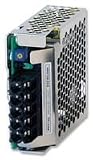


Top 3 picks at a glance
Quick Picks
| Product | Best for | Price |
|---|---|---|
| SWS1000L-48 | High-current industrial loads | $815.52 |
| JWS300-24 | Mid-range 24V automation panels | $149.98 |
| HWS15A-24/A | Low-power signal and sensor circuits | $76.73 |
| HWS150A-24/A | General-purpose 24V enclosures | $199.99 |
| RWS300B-48 | 48V telecom and LED systems | $214.99 |
| HWS15A-5/A | 5V logic and microcontroller boards | $68.85 |
| DPP120-24-3 | DIN rail control cabinets | $267.17 |
| DTM65PW240D | Compact medical and test equipment | $115.79 |
How We Picked
We weighted four factors: published output ratings versus real-world headroom needs, input voltage tolerance for environments with unstable mains, form factor constraints that dictate mounting options in a panel or enclosure, and the price-per-watt ratio as it relates to expected service life. Owner feedback informed the final ranking where specs alone were ambiguous, particularly around thermal behavior under sustained load and noise floor sensitivity in analog-adjacent applications.
The 8 Best Tdk Lambda Power Supply in 2026
TDK-Lambda SWS1000L-48-1000W Single Output Power Supply (48V, 22A, 1056W)
This is the heavy hitter for anyone driving 48V loads that exceed a few hundred watts—conveyor drives, large LED arrays, or multi-axis motion stages. Owners praise its ability to deliver the full 1056W rating without noticeable derating at moderate ambient temperatures. The 22A continuous output gives substantial headroom for inrush currents that smaller supplies would trip over.
- Pro: True 1056W output with no asterisk; handles inrush gracefully.
- Pro: 48V platform aligns with common industrial motor and lighting standards.
- Con: Physical size and weight demand a dedicated mounting position in tight panels.
Skip this unit if your total load stays under 300W; you are paying for capacity you will never draw, and a smaller model will run cooler with less wasted energy.
Switching Power Supply for TDK-Lambda JWS300-24 24V 14A 300W
The JWS300-24 sits in the sweet spot for mid-size control panels running PLCs, relays, and a handful of actuators. Fourteen amps at 24V covers most automation scenarios without the bulk of a kilowatt-class supply. Feedback highlights consistent voltage regulation even when loads switch on and off rapidly, a common complaint with cheaper alternatives.
- Pro: 14A provides comfortable margin for simultaneous relay energizing.
- Pro: Proven platform with wide availability of replacement parts.
- Con: Limited input voltage range compared to newer universal-input designs.
Not ideal for 48V systems or applications exceeding 250W sustained draw.
Tdk-Lambda Power Supply, Ac-Dc, 24V, 0.65A – HWS15A-24/A
At fifteen watts and 0.65A, this module is meant for signal-level tasks: powering a sensor loop, a small relay coil, or a logic interface inside an instrument chassis. Owners value its compact footprint and the fact that it delivers exactly what TDK Lambda promises—no thermal surprises in a sealed enclosure.
- Pro: Tiny profile fits where larger supplies physically cannot.
- Pro: Low standby power draw makes it suitable for always-on monitoring circuits.
- Con: 0.65A ceiling rules out anything beyond signal-level loads.
Do not consider this for any application that might require even modest current bursts; it is strictly a micro-power solution.
TDK-LAMBDA HWS150A-24/A Power Supply 100-240V-AC 6.5A AMP 24V-DC
The HWS150A-24/A is a general-purpose enclosed supply that handles 100-240VAC input, making it region-agnostic for export equipment or mixed-voltage installations. Six point five amps at 24V suits small machine controllers, barcode printers, and compact motion stages. Users note it runs quietly with no audible fan noise under typical loads.
- Pro: Universal AC input eliminates the need for region-specific SKUs.
- Pro: Enclosed chassis provides inherent protection against dust and minor contact.
- Con: 6.5A can become tight when multiple devices share a single 24V rail.
Pass on this if your combined load approaches or exceeds the rated current; the JWS300-24 offers more headroom at a modest price increase.
RWS300B-48, Switching Power Supplies 48Vout 6.3A 302.4W 85-265VAC
This unit targets 48V systems that need a wide input tolerance. The 85-265VAC range handles brownout conditions and international mains without a separate stabilizer. At 6.3A and 302.4W, it fills the gap between signal supplies and the SWS1000L-48 for mid-power 48V applications like network equipment or small motor drives.
- Pro: Extremely broad input range for unpredictable power environments.
- Pro: 48V output matches telecom and PoE-adjacent infrastructure.
- Con: 6.3A limits headroom for loads with significant inrush.
If your 48V load ever exceeds roughly 250W continuous, step up to the SWS1000L-48 instead.
Tdk-Lambda Power Supply, Ac-Dc, 5V, 3A – HWS15A-5/A
Five volts at three amps is the classic microcontroller and logic-level supply, useful inside test fixtures, legacy equipment retrofits, or educational hardware. Owners appreciate the stable rail and the fact that it fits the same mounting pattern as its 24V sibling, simplifying inventory for shops that stock both variants.
- Pro: Clean 5V rail suitable for sensitive digital logic.
- Pro: Shares a common form factor with HWS15A-24/A, easing panel layout.
- Con: Only 15W total output; not upgradeable without replacing the module.
Skip this entirely if your 5V load might exceed two amps; the margin for transient spikes is thin.
TDK LAMBDA DPP120-24-3 AC-DC CONV, DIN RAIL, 1 O/P, 120W, 5A, 24V
DIN rail mounting is the entire reason this supply exists. For panel builders who standardize on rail-mounted components, the DPP120-24-3 drops onto a 35mm rail and connects in minutes without drilling or brackets. Five amps at 24V covers a respectable range of PLCs and I/O modules per rail section.
- Pro: Tool-free DIN rail installation saves assembly time significantly.
- Pro: Compact width allows multiple units side by side in a narrow enclosure.
- Con: Higher price per watt than open-frame equivalents in the same power class.
Not the right choice if you have bench-top space and want maximum watt-per-dollar; a panel-mount enclosed unit will be cheaper.
TDK-Lambda DTM65PW240D AC/DC Power Supply, 1 Output, 65 W, 24 V, 2.71 A
The DTM65PW240D is a medical-grade open-frame module designed for compact enclosures where certification standards demand low leakage current and high dielectric isolation. Twenty-four volts at 2.71A fits diagnostic instruments, portable analyzers, and small bench devices. Engineers in regulated industries choose it specifically for its safety architecture rather than raw power.
- Pro: Meets medical-safety isolation requirements out of the box.
- Pro: Open-frame design allows direct thermal coupling to a chassis for passive cooling.
- Con: 2.71A ceiling makes it unsuitable for anything beyond light instrumentation loads.
Do not deploy this in non-critical industrial settings where a standard enclosed supply would be cheaper and easier to install.
Buying Guide
Match Current to Your Worst-Case Load
Sum every device on your voltage rail, then add a burst margin for the component with the highest inrush current—motors, large relay banks, and capacitive LED drivers are the usual suspects. A supply rated at 14A like the JWS300-24 handles simultaneous relay switching that a 6.5A unit like the HWS150A-24/A might trip. Size for the peak, not the average, or accept nuisance shutdowns.
Input Range Determines Resilience
Units rated 100-240VAC, such as the HWS150A-24/A and RWS300B-48, tolerate brownouts and international mains. Narrower ranges demand stable, predictable line voltage. If equipment ships to regions with known grid instability or you operate generators alongside utility power, a wide-range input eliminates a whole class of field failures.
Form Factor Is a Constraint, Not a Preference
DIN rail, open frame, and enclosed chassis each solve a different installation problem. Panel builders standardize on rail for speed. Medical and instrumentation designers pick open frame for thermal coupling to a chassis. Enclosed units suit general automation where dust and contact protection matter. Choose the form factor first, then match electrical specs within that category.
Our Verdict
The SWS1000L-48 is the top pick when you genuinely need kilowatt-class 48V power and want the reliability reputation that comes with a full-rated TDK Lambda platform. For most buyers operating under 300W on a 24V rail, the JWS300-24 delivers the best balance of current headroom, proven longevity, and price. However, if your design is panel-centric and assembly speed outweighs raw watt count, the DPP120-24-3 earns its premium through installation convenience that no bolt-in alternative replicates.
FAQ
Can a TDK Lambda power supply replace a generic 24V unit in existing equipment?
Yes, provided the voltage, current rating, and physical dimensions match the original specification. Check mounting hole patterns and terminal block spacing before assuming a drop-in swap works in a prebuilt enclosure.
Do these supplies need derating at higher ambient temperatures?
Most TDK Lambda models specify a derating curve above a defined ambient threshold, commonly around 40 to 50 degrees Celsius. Enclosed or DIN rail units in tightly packed panels will see elevated internal temperatures, so verify the published curve against your real environment rather than rating plate numbers alone.
Is the DPP120-24-3 suitable for outdoor or harsh environments?
The DIN rail design assumes an indoor enclosure. Without a protective housing rated for dust and moisture ingress, direct exposure to the elements voids reliability expectations and may create safety hazards.
What warranty or support considerations matter when buying TDK Lambda supplies?
Authorized distributors typically carry the manufacturer warranty, while surplus or unlisted sellers may not provide coverage. For 2026 purchases intended for production equipment, sourcing through a recognized channel ensures access to replacement parts and technical documentation if a field failure occurs.


