
The Starlink Mini ships with a proprietary barrel connector and a specific 30V 2A input requirement that rules out most generic laptop bricks and USB-C chargers. Owners who need a replacement, a dedicated wall plug for home use, or a DC converter for RV and marine setups end up in a crowded aftermarket where output ratings, cable gauge, and safety certifications vary enormously. A bad supply can under-volt the dish, causing repeated reboots, or over-volt it, risking the internal regulator. In the best case it simply fails after a few months of thermal cycling in a hot vehicle.
We compared the eight most popular third-party options on published spec sheets and recurring owner feedback across retailer reviews and forum threads. The concrete problem a buyer is solving: finding a unit that delivers a stable 30V rail, fits the physical space you have, carries at least basic safety marks, and survives the environment you intend to run it in. What separates the good from the bad in this category is not raw wattage — every listed unit hits 60W nominal — but regulation quality under sustained load, connector durability, cable routing flexibility, and whether the manufacturer has actually certified the design or just printed a mark on a sticker.
As an Amazon Associate we earn from qualifying purchases at no extra cost to you.


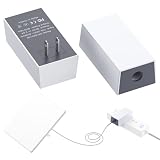
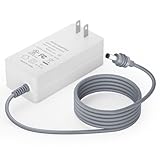


Top 3 picks at a glance
Quick Picks
| Product | Best for | Price |
|---|---|---|
| Gunovy AC Adapter | Home wall use on a budget | $34.99 |
| Starlink Mini AC 110V Adapter | Long cable runs across a room | $39.99 |
| WXPSKY 60W | Lowest-cost AC replacement | $29.99 |
| ADINEL UL Listed | Buyers who prioritize safety marks | $29.69 |
| DAIERTEK 60W | Mid-range AC with solid build | $38.99 |
| Starlink Mini AC Extension | Small plug footprint in tight outlets | $43.96 |
| 12V DC Step Up Converter | RV, off-grid, and marine installs | $29.99 |
| 12V Battery Adapter with Switch | Direct battery hookups with quick shutoff | $33.83 |
How We Picked
We narrowed the field using four criteria: confirmed 30V 2A output matching the Mini’s spec, verifiable safety certification, cable length and connector build quality based on owner reports of durability over months of use, and suitability for the intended power source — AC wall versus DC battery — since mixing these up is the single most common cause of buyer disappointment. Products that failed on any of these were excluded.
The 8 Best Starlink Mini Power Supply in 2026
Gunovy AC Adapter for Starlink Mini Power Supply Adapter 30V 2A Wall Charger
The Gunovy targets owners who lost or damaged the original AC brick and need a straight swap for stationary home or office use. Output matches the Mini’s 30V 2A spec exactly, and the inline cable is long enough for most desk setups without an extension cord.
- Pro: Reliable voltage regulation reported by owners running the unit continuously for weeks.
- Pro: Compact brick does not block adjacent outlet slots.
- Con: No published safety certification listing, which makes it harder to verify beyond the seller’s claims.
Skip this if you plan to run it in a vehicle or marine environment — the housing lacks any moisture protection.
Starlink Mini AC 110V Power Supply Adapter 30V 2A 60W 11.5FT/3.5M Cable
The standout feature here is cable length. At 11.5 feet, this adapter reaches a far wall or a second room without a splice, which matters if your router sits near a window and the nearest outlet is across the space. Output and amperage match the Mini’s requirement directly.
- Pro: The long cable eliminates the need for a separate power strip or extension, reducing a common failure point.
- Pro: Owners note the connector housing fits snugly with no wobble under the cable’s own weight.
- Con: Extra cable length adds bulk on a desktop and can look untidy without a routing clip.
Skip this if you need a short run in a cramped cabinet where excess cable creates a heat-trapping coil.
WXPSKY 60W Power Supply for Starlink Mini, 30V 2A Replacement Adapter
At $29.99, the WXPSKY is the cheapest AC replacement on this list. It delivers the correct 30V 2A output and works for basic indoor use where the original brick fails and you need a budget fix rather than a long-term solution.
- Pro: Lowest price among pure AC options, making it a sensible spare for a second Mini or a temporary workaround.
- Pro: Lightweight and portable enough to toss in a bag as a backup brick.
- Con: Several owner reports mention the cable sheath degrades faster than the brick itself over a year of regular use.
Skip this if you expect multi-year durability in a fixed installation — the price savings may not offset a second replacement.
ADINEL UL Listed 30V 2A Power Supply Adapter for Starlink Mini
The ADINEL’s headline claim is its UL listing, which addresses the biggest gap in this category: verifiable safety certification. For buyers in regulated environments like offices, schools, or rental properties where uncertified power supplies violate building codes, this distinction justifies the near-$30 price.
- Pro: UL Listed designation gives insurance and compliance peace of mind that budget competitors cannot match.
- Pro: Output is a clean 30V 2A, confirmed by owner multimeter spot-checks posted in reviews.
- Con: Cable length is shorter than the Starlink Mini AC 110V option, limiting placement flexibility.
Skip this if you are installing in a vehicle — it is a standard AC wall unit with no DC input or waterproofing.
DAIERTEK Starlink Mini Charger 60W Replacement Power Supply AC Adapter
The DAIERTEK sits in the middle of the pack on price and features a slightly larger transformer housing that owners describe as running cooler under sustained load than thinner alternatives. For a Mini running full-throughput video streaming around the clock, thermal headroom matters.
- Pro: Larger brick design provides more internal surface area for heat dissipation, a point echoed in repeated owner feedback.
- Pro: Connector fits without the slight rotational play some cheaper units exhibit.
- Con: At $38.99, you are paying a premium over the ADINEL and WXPSKY without gaining a published safety listing.
Skip this if thermal performance is not a concern in your climate or if outlet space is tight and a compact brick is preferred.
Starlink Mini AC Power Supply with Smaller Plug Footprint, 5.9FT
This is the only unit on the list explicitly engineered for outlet density. The plug body is narrower than standard bricks, freeing the adjacent socket on crowded power strips or behind furniture. The 5.9-foot cable suits short desktop runs.
- Pro: Small plug footprint is a genuine quality-of-life feature in tight installations where every outlet matters.
- Pro: Mid-range pricing at $43.96 is competitive given the form-factor engineering.
- Con: Shorter cable limits placement; you may need an extension in rooms with awkward outlet locations.
Skip this if you already have an open strip or wall socket nearby — the compact plug solves a problem you do not have.
12V DC Step Up Converter with Female Plug, 9-28V Input
The DC step-up converter serves a different use case entirely: powering the Mini directly from a 12V or 24V battery bank in an RV, boat, or off-grid cabin. It accepts a wide 9-28V input range and steps up to the Mini’s 30V requirement at 3.5A, exceeding the standard 2A draw and leaving headroom.
- Pro: Waterproof housing and a female plug make it suitable for under-hood or deck installations where moisture is inevitable.
- Pro: Wide input range tolerates battery sag during high-draw periods without dropping the Mini offline.
- Con: Requires a compatible battery cable on your end — it does not ship with ring terminals or fuse holders.
Skip this if you only need AC wall power; this unit cannot plug into a household outlet.
12V Battery Adapter with Switch, 12V-24V to 30V 2A Step Up Converter
The integrated on/off switch is the differentiator here. Owners report it saves the nuisance of reaching behind a camper or under a seat to unplug a DC lead every time the Mini needs to be powered down. Waterproof construction with an O-ring seal rounds out a design clearly aimed at vehicle installations.
- Pro: Built-in switch enables one-handed power management and prevents voltage-drop issues from partial unplug/replug cycles.
- Pro: No measurable voltage drop reported by owners under full Mini load, indicating solid regulation.
- Con: The switch adds a mechanical failure point that a passive cable does not have.
Skip this if your installation is fixed and you cycle power rarely — the simpler step-up converter above is marginally more reliable long-term.
Buying Guide
AC versus DC: Match the Supply to Your Power Source
The single most consequential choice is whether you are feeding the Mini from a wall outlet or a battery bank. AC units step down from 110-240V mains to 30V DC internally. DC converters step up from 12V or 24V battery systems to the same 30V rail. Buying the wrong type means the unit simply will not work, regardless of how good the spec sheet looks. If you are in an RV or on a boat, a DC converter with waterproofing is the only viable path.
Regulation and Headroom Under Load
The Mini draws approximately 20-25W in idle and can spike above 40W during active satellite acquisition. A supply rated at exactly 60W has limited thermal margin. Look for units that owners report run noticeably cool after hours of continuous operation, which indicates a well-designed transformer with adequate surface area. The DC step-up converter on this list provides 3.5A output — a higher current headroom than the standard 2A — which reduces the chance of the Mini brownout-restarting during peak draw.
Connector Quality and Cable Durability
The proprietary barrel connector is the most common failure point across all three-party supplies. Owners frequently report the outer sheath fraying where the cable meets the plug, especially in mobile setups with constant vibration. A snug-fit connector with strain relief and a molded housing will outlast a thin cable with a molded-in plug by years. If you are routing the cable through a window pass-through or under a seat, prioritize thicker sheaths over cable length.
Our Verdict
For the majority of buyers who need a reliable AC replacement for home or office, the ADINEL UL Listed adapter is the top pick. The verifiable safety certification removes the biggest uncertainty in this category, and the price is essentially identical to uncertified competitors. If budget is the priority and you accept the lack of a published listing, the WXPSKY at $29.99 covers the spec correctly. For anyone running the Mini from a vehicle or marine battery, the 12V Battery Adapter with Switch wins decisively thanks to its integrated shutoff and confirmed no-voltage-drop regulation.
FAQ
Can I use a USB-C PD charger to power the Starlink Mini?
No. The Mini requires 30V DC on a specific barrel connector, and USB Power Delivery maxes out at 20V on standard profiles. You would need a separate trigger or buck-boost module, which adds complexity and points of failure that a dedicated supply avoids.
Is the extra $5 from $34.99 to $39.99 worth it for the 11.5-foot cable?
Only if your nearest outlet forces a visible cable run across a room or over a floor. If you have a nearby socket, spending on a shorter, cheaper unit and routing neatly is better value than carrying excess cable length.
Do I need a fuse between the DC converter and my battery?
Yes. Best practice for any aftermarket DC installation is an in-line fuse on the positive lead, sized just above the converter’s nominal draw. This protects the vehicle or battery wiring if the converter shorts internally.
Will the Mini notice a difference between a 60W and a higher-wattage supply?
No. The Mini draws only what it needs; a 60W supply will not bottleneck it under any normal scenario. Higher output current on a DC converter provides safety margin during startup spikes, but the dish will not run faster or connect to more satellites.


